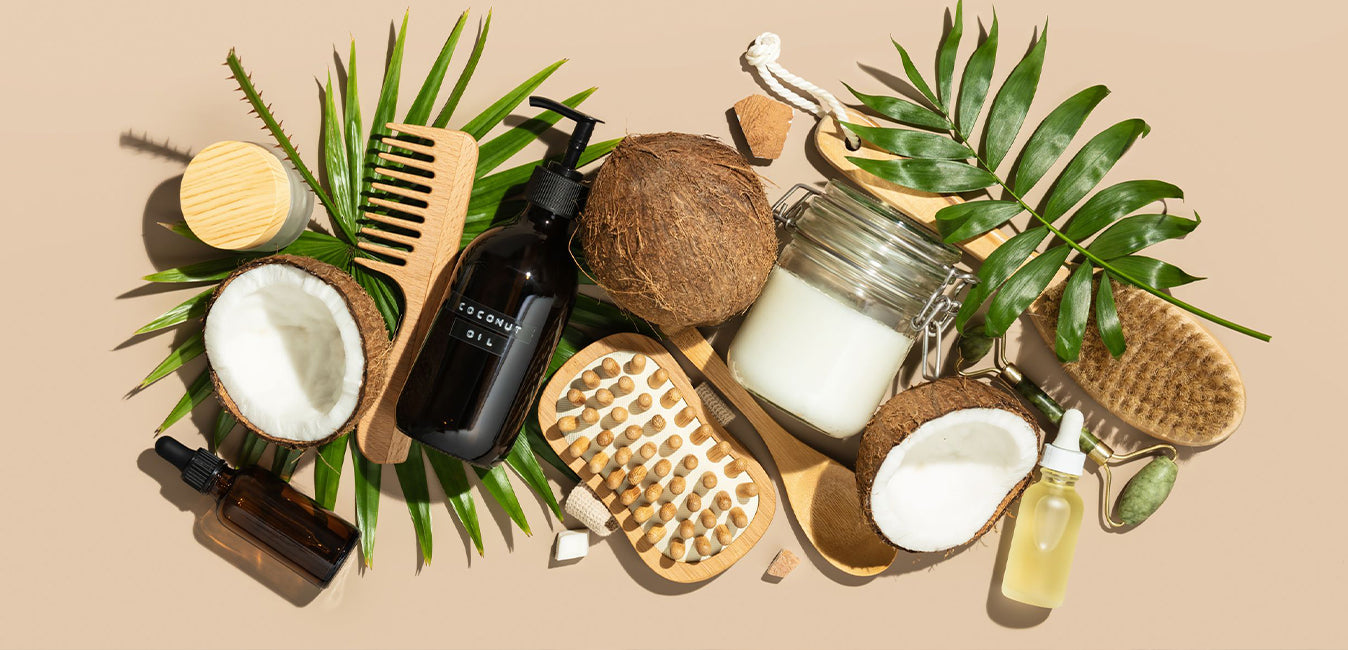
Sri Lanka has cultivated coconuts for centuries, and the island's warm climate, coastal soils, and traditional farming practices produce some of the world's most nutrient-dense coconut crops. Virgin coconut oil — extracted from fresh coconut meat rather than dried copra — captures that quality in its most unrefined form. Unlike refined coconut oil, it undergoes no bleaching, deodorising, or chemical processing, which means the oil's natural fatty acid profile, mild coconut aroma, and heat-sensitive micronutrients remain largely intact.
How is virgin coconut oil different from other coconut oils?
The defining characteristic of virgin coconut oil is the raw material and the extraction method. Freshly harvested coconut meat (or fresh-pressed coconut milk) is the starting point. Temperature during drying and pressing is kept as low as practically possible — typically well below the thresholds used in standard copra milling — so that the oil reaches the bottle without the high-heat or solvent steps that strip refined grades of their character.
After extraction, only high-quality filtration is applied. There are no additives, no hydrogenation, and no bleaching agents. The result is an oil that is naturally white when solid and water-clear when liquid, with a clean, recognisably coconut scent.
Cocos nucifera, the coconut palm, is classified as one of the most economically important crops in Sri Lanka, and the country's Coconut Triangle — the districts of Kurunegala, Puttalam, and Gampaha — accounts for the bulk of certified organic and conventional production used in premium oil extraction.
What makes the fatty acid profile of virgin coconut oil significant?
Roughly 90 percent of virgin coconut oil's fat content is saturated, but the majority of those saturated fats are medium-chain triglycerides (MCTs) rather than the long-chain saturated fats found in animal products. The most abundant single fatty acid is lauric acid, which typically accounts for around 45–50 percent of the oil's composition. Lauric acid is relatively rare in the food supply — human breast milk is one of the few other significant dietary sources.
MCTs are metabolised differently from long-chain fats. Rather than being packaged into lipoproteins and circulated through the lymphatic system, they travel directly to the liver, where they are rapidly converted into energy. This metabolic pathway is why MCT-enriched formulations appear in clinical nutrition products, including specialised infant formulas and enteral feeds for critical-care patients.
Research into lauric acid's antimicrobial and antiviral properties is ongoing. Laboratory studies have shown activity against certain lipid-coated viruses and gram-positive bacteria, though the clinical relevance of dietary intake remains an active area of investigation. Separately, a body of emerging research is examining whether coconut oil's ketogenic potential may offer supportive benefits for neurodegenerative conditions, including Alzheimer's disease, though this work is still at an early stage and should not be interpreted as medical guidance.
How can virgin coconut oil be used in cooking?
With a smoke point of around 177 °C (350 °F), virgin coconut oil is well suited to moderate-heat cooking — sautéing vegetables, pan-frying fish, or making traditional Sri Lankan curries where the coconut note is a welcome flavour component. At higher temperatures, refined coconut oil or a more neutral oil is generally preferable.
It also works as a direct substitute for butter or neutral oils in baking, adding a subtle coconut flavour to cakes, biscuits, and energy balls. A small amount stirred into warm porridge or smoothies is a straightforward way to incorporate MCTs into a daily routine. Sri Lankan cuisine uses coconut in many forms — fresh milk, desiccated flesh, and oil — and virgin coconut oil slots naturally into that tradition.
What are the skin and hair benefits of virgin coconut oil?
Topically, virgin coconut oil functions as an occlusive moisturiser — it forms a light barrier on the skin surface that slows transepidermal water loss. Its lauric acid content gives it mild antimicrobial properties that may help manage minor skin irritation. It is gentle enough to use on sensitive or very young skin, which is why it remains a traditional choice in Sri Lankan households for infant massage.
As a hair treatment, it penetrates the hair shaft more effectively than many mineral-oil-based products because of its relatively low molecular weight. Applied before washing, it can reduce protein loss from the hair during wet-combing. As a scalp treatment, its antifungal properties may support management of dandruff when used consistently.
Oil pulling — swishing a tablespoon of oil around the mouth for several minutes, then discarding it — is an Ayurvedic practice that has attracted renewed attention. Proponents suggest it supports oral hygiene; its mechanism is thought to involve the saponification of bacteria. Virgin coconut oil is one of the traditional oils used for this practice, and its pleasant flavour makes it more palatable than some alternatives.
Is organic virgin coconut oil meaningfully different from conventional?
Organic-certified virgin coconut oil is produced under cultivation standards that prohibit synthetic pesticides and fertilisers. Because coconut palms are not typically high-input crops and because the oil itself undergoes only physical processing (no solvent extraction), the practical difference between organic and conventional virgin coconut oil is smaller than it might be for, say, a leafy vegetable. That said, organic certification provides a documented chain of custody and supports farming systems that tend to better preserve soil ecology and biodiversity around the plantation.
Sri Lanka has a well-developed organic certification infrastructure, and several producers hold internationally recognised certifications (including EU Organic and USDA Organic equivalents). When sourcing for health or wellness use, checking for a recognised third-party certificate is a reliable way to verify claims.
How should virgin coconut oil be stored?
Virgin coconut oil is naturally stable thanks to its high saturated fat content. Unlike polyunsaturated oils, it does not oxidise rapidly at room temperature. Store it in a sealed container away from direct sunlight. In cooler climates or during Sri Lanka's brief cooler months, the oil will solidify into a white solid — this is entirely normal and does not affect quality. Gently warming the jar in warm water will return it to a liquid state. A typical shelf life from production is around 18–24 months, though exact figures vary by producer and packaging.
What should I look for when choosing a Sri Lankan virgin coconut oil?
A few markers are worth checking before buying:
- Extraction method: Cold-pressed or expeller-pressed at low temperature is preferable for a true virgin grade.
- Colour and clarity: Clear (liquid) or white (solid) with no yellow tinge. A yellow colour can indicate heat damage or blending with older oil.
- Aroma: Clean, mild coconut scent. No rancid, sour, or chemical notes.
- Certification: Organic certification from a recognised body if that matters to your use case. ISO 22000 or HACCP certification is a good indicator of manufacturing hygiene standards.
- Packaging: Glass is inert and preferred for long storage. Food-grade HDPE is acceptable. Avoid products in non-food-grade plastics.