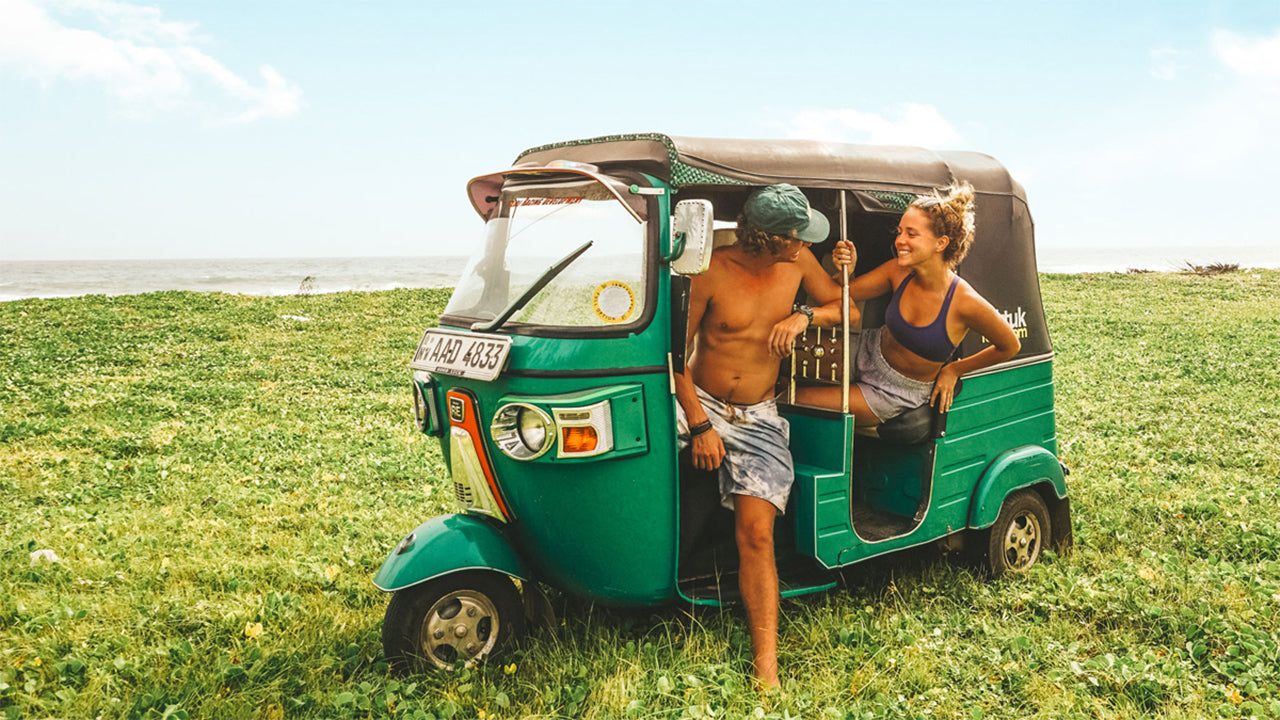
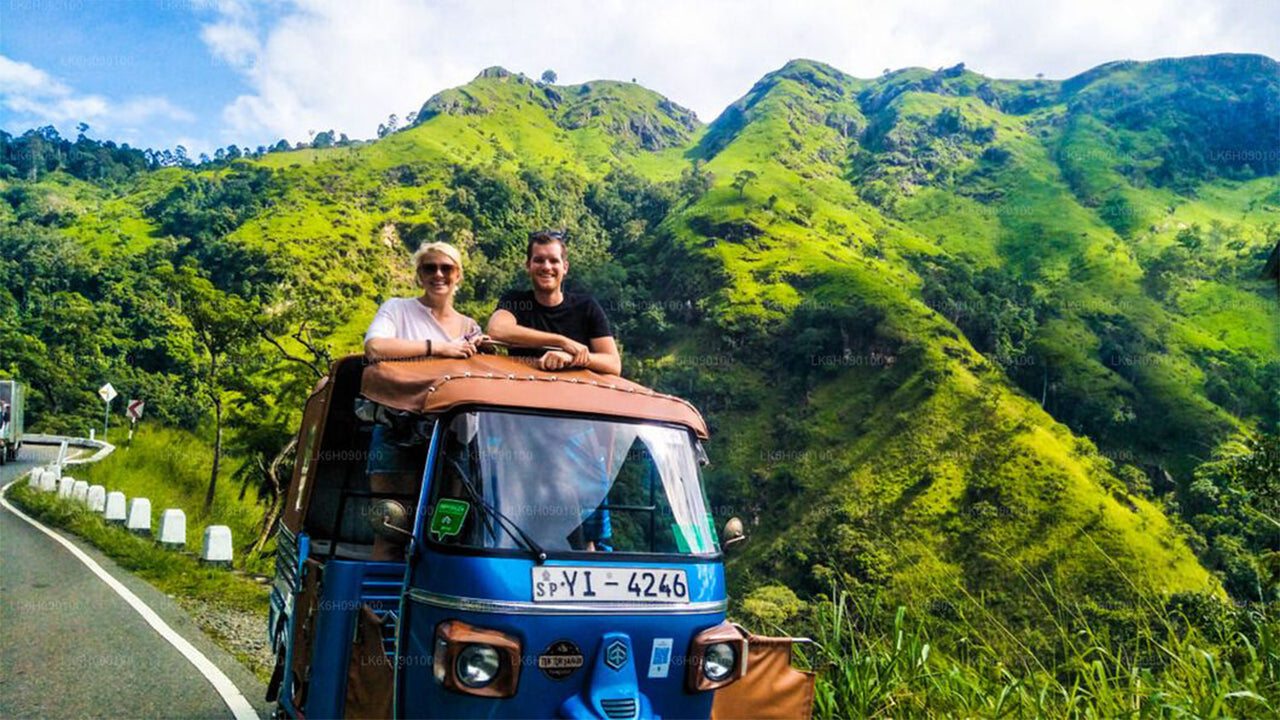
The three-wheeled auto-rickshaw — universally known in Sri Lanka as the tuk tuk — is one of the most practical and characterful ways to move around the island. Compact enough to thread through narrow lanes, cheap enough for short hops, and available in virtually every town and city, they are a daily reality for millions of locals and an easy option for any visitor willing to embrace a little organised chaos.
What exactly is a tuk tuk?
Sri Lanka's tuk tuks are three-wheeled motorised vehicles based on the Bajaj Auto-rickshaw platform. They seat two or three passengers behind the driver, are open on the sides, and are powered by small petrol or — increasingly — electric motors. The fleet is enormous: estimates put the number of registered three-wheelers in Sri Lanka well into the hundreds of thousands, making them far more visible than conventional taxis in most parts of the country.
Beyond daily transport, tuk tuks have become a cultural symbol. Their exteriors are often decked with stickers, religious motifs, LED lighting, and hand-painted slogans — a rolling folk-art form that says a great deal about Sri Lankan popular culture. If you are looking for an immersive day out rather than a simple transfer, a dedicated Tuk-Tuk Safari lets you explore villages and countryside at a relaxed pace with a local driver as your guide.
How do you hail a tuk tuk in Sri Lanka?
There are three reliable methods, each with its own trade-offs:
- Flag one down on the street. Stand on the roadside and raise your hand — drivers will pull over. Before you get in, agree on a price or confirm the meter is on. This method is fast and works everywhere, but requires a little confidence in negotiating, particularly in tourist-heavy areas where opening offers tend to be higher.
- Use a ride-hailing app. Several apps operate in Sri Lanka and connect passengers with metered tuk tuks. Fare, route, and driver details are all visible in the app before you confirm the ride, which removes the negotiation step entirely. This is generally the most transparent option for first-time visitors.
- Ask your hotel or guesthouse. Most accommodation, from budget guesthouses to large hotels, can call a trusted driver for you. These rides typically cost a little more than a street tuk tuk, but the driver is vetted and the hotel can communicate your destination clearly if there is a language barrier.
How much does a tuk tuk ride cost?
Fares vary depending on the method you use and where you are travelling:
| Method | How the fare works | Typical short city ride |
|---|---|---|
| Metered tuk tuk | Meter runs from the moment you depart; you pay what is shown | A few US dollars or less |
| App-based ride | Fare calculated by distance before the trip starts | Similar to metered, sometimes slightly lower |
| Negotiated (non-metered) | Agree a price before you depart — do not get in until a figure is settled | Varies; always negotiate |
| Hotel-arranged | Usually a fixed rate set by the property | Slightly above metered |
Sri Lanka's transport authority has mandated that all tuk tuks carry a functioning meter, so insisting on the meter is entirely reasonable. Longer journeys between towns will obviously cost more; for anything beyond a city transfer, a private taxi or driver is often more comfortable and better value per kilometre.
Are tuk tuks safe?
Tuk tuks are a safe mode of transport when used sensibly. The main risks are being overcharged — not uncommon in busy tourist zones — and the general hazards of Sri Lankan road traffic, which can feel hectic to visitors from countries with stricter lane discipline. Drivers are typically highly experienced at reading the flow of local traffic and navigating through congested streets.
To travel with confidence:
- Use an app or hotel-arranged tuk tuk whenever possible, especially for your first few rides.
- If you negotiate a roadside tuk tuk, agree the fare clearly before the journey starts.
- Keep valuables in a bag on your lap rather than on the open sides of the vehicle.
- Share your trip details with someone if you are travelling alone at night.
Tuk tuks are open vehicles, which means they offer little protection in a collision. For longer inter-city transfers or journeys on mountain roads, a closed vehicle is a more prudent choice.
How do you communicate your destination to the driver?
English proficiency varies considerably among drivers. App-based tuk tuks solve this problem automatically — the route is loaded on the driver's phone. For street tuk tuks, the following approaches work well:
- Show a map on your phone with the pin dropped at your destination.
- Write the destination name in both English and Sinhala (for areas outside the Tamil-speaking north and east) and show it to the driver.
- Ask your hotel's front desk to explain your destination in Sinhala or Tamil before you leave — most staff are happy to help.
- Screenshot your destination from Google Maps so you can show it offline, even without a data signal.
Where in Sri Lanka are tuk tuks most useful?
Tuk tuks are genuinely practical for short to medium urban journeys. In Colombo they are the fastest option for navigating the city's dense one-way systems and back streets. A Colombo city tour by tuk tuk gives you a street-level perspective that a private car simply cannot match. Similarly, wandering the lanes around Galle Fort is far easier in a tuk tuk than in a full-size vehicle — consider combining it with a Galle city tour to get your bearings. In Kandy, tuk tuks are a quick way to hop between the lake, the Temple of the Tooth, and the market; the Kandy city tour is a natural complement.
In smaller towns and rural areas, tuk tuks are just as common but the distances tend to be shorter and fares lower. In the hill country around Ella, drivers often know the scenic spots and can act as informal guides.
Tuk tuk etiquette and practical tips
- Carry small change. Drivers often have limited change for large notes, particularly early in the morning.
- Confirm the meter is running before the journey starts if you have agreed to a metered fare.
- Sit in the middle of the rear bench when the vehicle is in motion — it keeps weight balanced and reduces side exposure.
- Agree on any waiting time fee upfront if you want the driver to wait while you visit a site.
- Be polite when negotiating. A firm but friendly tone works far better than aggressive bargaining and sets a good tone for the whole ride.
- Do not share personal accommodation details with a driver you have just met — a general area is enough.
Tuk tuk vs. taxi: when should you choose which?
The table below is a rough guide — your specific journey will always be the deciding factor.
| Factor | Tuk Tuk | Taxi / Private Car |
|---|---|---|
| Short city hops (under 5 km) | Ideal | Works, but can be slower in traffic |
| Inter-city transfers | Possible but tiring and exposed | Recommended |
| Mountain or winding roads | Not advisable | Recommended |
| Night travel | Use with caution; app-based is safer | Preferred |
| Luggage | One small bag maximum | Full luggage capacity |
| Atmosphere and experience | Immersive, street-level | Comfortable, air-conditioned |
For airport transfers, longer touring itineraries, or any journey where comfort and reliability are priorities, a private driver is the better choice. Lakpura can arrange professional drivers for all of these through our standard transfer and touring services.