Lakpura
Lakpura®

Thiruketheeswaram Kovil

Thiruketheeswaram Kovil stands on the northwestern coast of Sri Lanka near Mannar, a place where salt flats, shallow lagoons, and centuries of devotion converge. Dedicated to Lord Shiva, it is one of the Panch Ishwarams — the five historically sanctioned Shiva temples of the island — and is widely regarded as among the oldest continuously venerated Hindu sites in Sri Lanka. For Tamil Hindus across the island and the wider diaspora, it carries the same weight that a cathedral city might carry for Catholic pilgrims in Europe.

What is the significance of Thiruketheeswaram Kovil?

The Panch Ishwarams are the five Shiva temples considered most sacred in Sri Lanka, and Thiruketheeswaram is the northernmost of them. Hindu tradition holds that the presiding deity here — Ketheeswaram — is a self-manifested swayambhu lingam, meaning the divine form arose of its own accord rather than being installed by human hands. This belief elevates the site above ordinary temples and explains why it has drawn pilgrims for millennia rather than mere centuries.

The temple is also woven into the narrative of the Ramayana. According to tradition, the site was venerated by figures from that epic, including King Ravana himself, who is said to have worshipped Lord Shiva here. Whether one approaches this as mythology or as a pointer to a very ancient culture of worship, the result is the same: Thiruketheeswaram carries a depth of religious memory that few sites in the region can match.

Shaivism — the tradition centred on Lord Shiva — has deep roots across northern and north-central Sri Lanka, and Thiruketheeswaram has long been one of its principal focal points. Inscriptions and accounts from medieval travellers confirm that the site attracted royal patronage and large-scale pilgrimage long before the colonial period.

What happened to the temple over the centuries?

The temple's history is one of destruction and revival. Portuguese colonisers dismantled much of the original structure in the sixteenth and seventeenth centuries, and for a long period the sacred lingam was hidden by devotees to protect it from desecration. The site fell into relative obscurity during the colonial era, with religious activity constrained and the physical temple largely in ruins.

Systematic restoration began in the twentieth century, driven by Sri Lankan Tamil communities and Hindu religious organisations. The main shrine, the surrounding mandapams (pillared halls), and the towering gopuram were rebuilt or substantially restored. The effort was interrupted again during decades of civil conflict in the north, which restricted access to Mannar for much of the late twentieth century. Since the end of the conflict in 2009, the temple has reopened fully, undergone further restoration, and resumed its role as a major pilgrimage centre.

What does the temple look like?

Thiruketheeswaram is built in the Dravidian style that characterises the great temple complexes of Tamil Nadu in southern India — the same tradition seen at Madurai, Thanjavur, and Chidambaram, though on a smaller scale. The most immediately striking feature is the gopuram, the multi-tiered gateway tower covered in brightly painted stucco sculptures of deities, celestial beings, and mythological scenes. The colours are intentional and symbolic: the gopuram functions as both an architectural statement and a visual scripture.

Inside the enclosure, the main sanctum houses the Ketheeswaram lingam. Surrounding shrines are dedicated to the goddess Parvati and various subsidiary deities. Carved stone pillars support the mandapam roofs, and the ritual tank — used for ceremonial bathing and festival processions — sits within the complex grounds. The overall layout follows the classical agamic plan: a sacred geometry that orientates every element of the temple according to ancient priestly texts.

When are the main festivals at Thiruketheeswaram?

The temple's most important annual event is Maha Shivaratri (the Great Night of Shiva), observed on the new moon night in February or March according to the Hindu calendar. Tens of thousands of devotees gather for all-night prayers, the chanting of Shaivite hymns, and elaborate rituals. The atmosphere is notably intense: many pilgrims fast through the preceding day, and the sounds of the thevaram — classical devotional hymns — carry across the surrounding landscape through the night.

The annual Brahmotsavam (festival of the chariot) is another major event, typically spanning several days and culminating in the processional chariot being drawn through the surrounding lanes by devotees. Other occasions include Skanda Sashti, Thai Pongal, and the monthly pradosham observance. Pilgrims planning a visit around a festival should arrange accommodation in Mannar well in advance, as the town's capacity is limited.

Where exactly is Thiruketheeswaram and how do I get there?

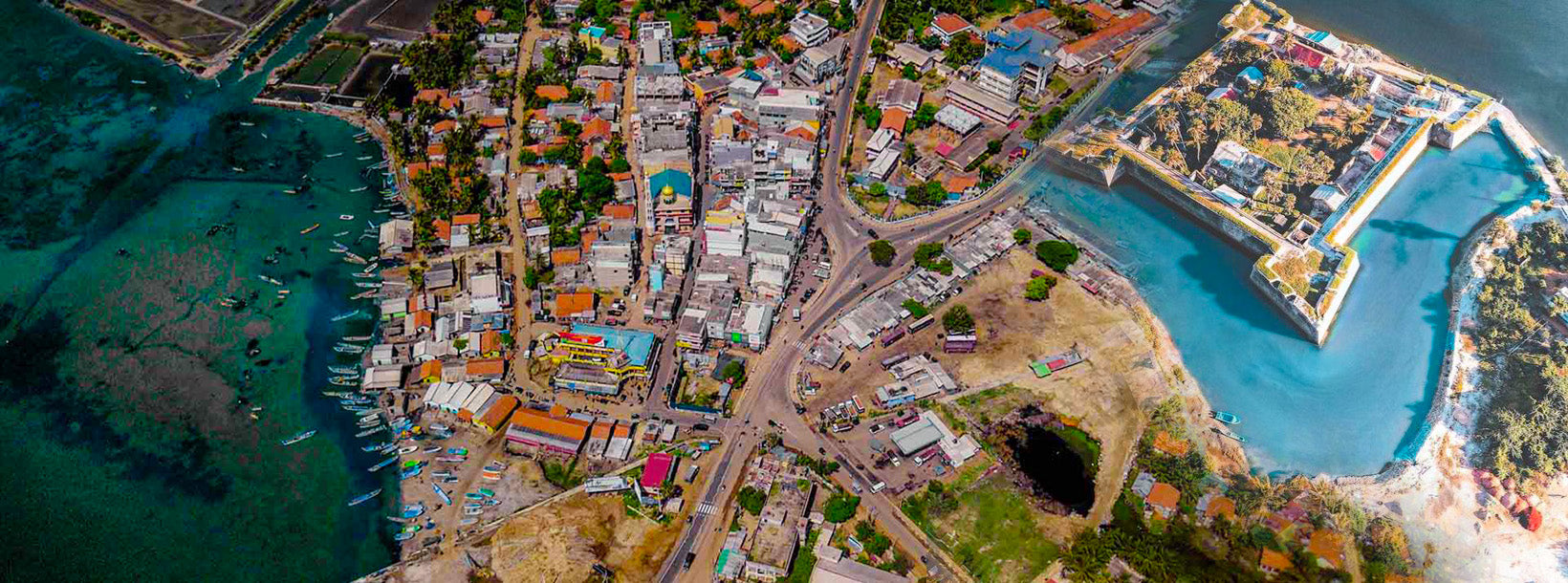
The temple is located at Mattotam, a coastal area roughly 5 kilometres north of Mannar town, in the Northern Province of Sri Lanka. The Mannar district sits on a narrow peninsula connected to the mainland by a causeway, with the Gulf of Mannar to the west and the Palk Strait to the northeast.

From Colombo, the drive to Mannar takes around four to five hours via the A14 highway through Puttalam and Vavuniya — a long but manageable day trip, though an overnight stay in or near Mannar is strongly recommended. Trains run from Colombo to Mannar via Vavuniya, and the journey takes around six to eight hours depending on the service. From Jaffna in the far north, Mannar is approximately two to three hours by road.

The road from Mannar town to the temple is straightforward; three-wheelers (tuk-tuks) are available from the town centre and drivers are familiar with the route. Visiting early in the morning, when the first puja (ritual offering) takes place, is rewarding — the light at that hour over the surrounding lagoon landscape is particularly calm.

What can visitors expect when they arrive?

The temple is open to devotees and visitors of all backgrounds, though some inner sanctum areas may be restricted to Hindus during active worship. Visitors should dress modestly — shoulders and knees covered — and remove footwear before entering. Photography within the main shrine is generally not permitted during puja rituals; follow the guidance of temple staff.

The surrounding landscape adds a quiet dimension to the visit. Mannar is one of Sri Lanka's drier, more austere districts — dominated by scrub forest, salt pans, and the vast shallow waters of the gulf. The Wilpattu National Park, one of the island's oldest and most rewarding wildlife reserves, lies around 60–70 kilometres to the south and pairs well with a Mannar itinerary for those with a few days available in the northwest.

The famous Mannar baobab tree — an African baobab believed to have been planted by Arab traders over a thousand years ago — is a short distance from the temple and worth a brief detour. The Mannar Fort, a Dutch colonial structure near the town centre, adds another layer to the district's layered history.

Is Thiruketheeswaram suitable for non-Hindu visitors?

The temple welcomes respectful visitors of any faith who are interested in Hindu religious art, architecture, and living devotional practice. Non-Hindus will find the experience genuinely informative rather than merely ornamental: the rituals performed here follow classical Shaivite agamic procedures that have been transmitted largely unchanged for many generations. Arriving when a puja is in progress — the ringing of bells, the smoke of camphor, the rhythmic Sanskrit recitation — conveys something of the temple's living function that no amount of description can fully capture.

Those with a broader interest in Sri Lanka's religious plurality may also find it useful to know that Mannar has historically been home to communities of multiple faiths, including a significant Catholic population — the result of Portuguese and later Dutch and British colonial influence — as well as the ancient Muslim community descended from Arab and Moorish traders.

Ask Lakpura® Agent