Keerimalai Springs sit at the northwestern tip of Sri Lanka's Jaffna Peninsula, a short distance west of Palaly along the coast. Despite the name, the water is not hot — it is cool and fresh, rising from a limestone aquifer beneath the Tellipallai-Maviddapuram plain. What makes the site unusual is its geography: the bathing tank is built directly beside the sea, with only a low stone wall separating the freshwater pool from the salt water of the Palk Strait. Step to one side and you are in the ocean; step to the other and you are in crystal-clear spring water.
What is the story behind Keerimalai Springs?
Local tradition connects the springs to a Pandyan princess named Maruthapura Veeravalli, said to have arrived in the north of Sri Lanka afflicted with a condition that had given her a horse-shaped head. After bathing in the Keerimalai waters she was miraculously cured, and in gratitude she is credited with establishing the Hindu Kovil that still stands at the site today. The name "Keerimalai" itself is thought to derive from the Tamil words for deer and hill — an older topographic reference to the landscape here before the shrine rose to prominence.
The springs are also linked, through underground hydrology, to the Nilavarai Bottomless Well, a mysterious freshwater shaft located more than ten kilometres away near Chunnakam. The same sub-surface aquifer is believed to feed both sites, and the connection has deepened the sense of sacredness local communities attach to Keerimalai.
Why do Hindu pilgrims visit Keerimalai?
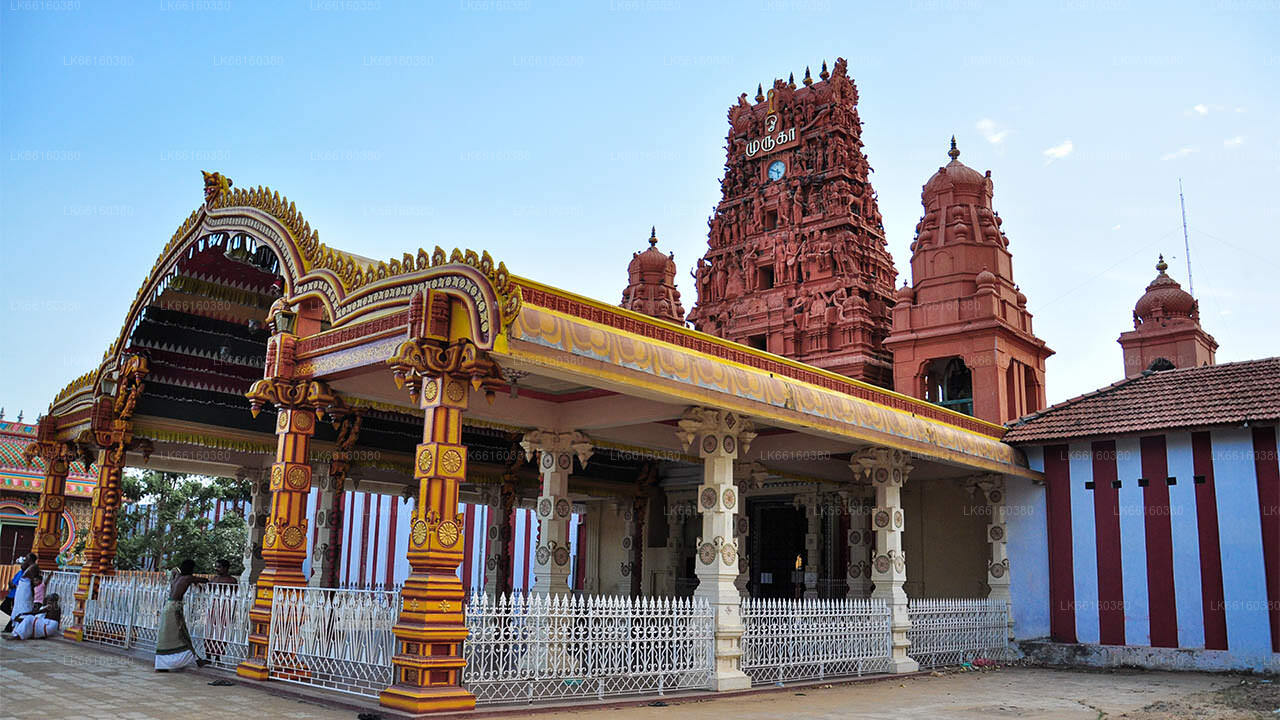
For the Tamil Hindu community, Keerimalai is one of the most revered bathing sites in northern Sri Lanka. The spring water is believed to possess purifying and healing properties, drawing pilgrims who immerse themselves as an act of devotion before or after visiting the adjacent Naguleswaram Shiva Temple — one of the Pancha Ishwarams, the five great Shiva temples of Sri Lanka. Offerings, ritual bathing, and prayer are woven together here in a way that makes Keerimalai far more than a scenic curiosity.
Religious observances intensify during the Tamil month of Panguni (March–April) and around the festival of Shivaratri, when devotees arrive in considerable numbers. Outside of these periods the site settles into a quieter rhythm, though it is rarely empty.
What can visitors see and do at Keerimalai?
The spring complex itself is modest in size but rich in atmosphere. The bathing tanks are segregated by gender — there are separate enclosures for men and women. The water is clear enough to see the bottom, and on calm mornings the contrast between the turquoise sea on one side and the still pool on the other is striking.
- Naguleswaram Shiva Temple: The kovil adjacent to the tank is among the oldest and most sacred in the north. Even non-Hindu visitors are generally welcome to observe respectfully from the outer precincts.
- Dambakola Patuna: The route to Dambakola Patuna Viharaya, a historically significant Buddhist site believed to be where the Bodhi sapling first arrived in Sri Lanka, passes close to Keerimalai — making a combined visit straightforward.
- Coastal scenery: The rocky shoreline around the tank offers unobstructed views across the Palk Strait toward India. Sunrise here can be quietly spectacular.
When is the best time to visit Keerimalai Springs?
Arriving early in the morning — ideally before 8 a.m. — gives you the best experience. By late morning, particularly on weekends and public holidays, buses from Jaffna town and further afield bring large groups of pilgrims and tourists, and the tanks become crowded. Weekday mornings outside of festival periods are the most peaceful.
In terms of season, the Jaffna Peninsula is driest and most accessible between April and September. The northeast monsoon (October through January) brings rain and occasionally rough seas, though the springs themselves are unaffected by weather. Road access has improved significantly since the reopening of the northern routes, and the journey from Jaffna town is now straightforward by tuk-tuk, private car, or local bus.
How do I get to Keerimalai from Jaffna?
From Jaffna town, take the Palali Road northward and follow signs toward Keerimalai. The distance is around 15 kilometres and typically takes 25–35 minutes by road. Local buses run along this route, and tuk-tuks are readily available in Jaffna for a direct journey. Army checkpoints that once complicated access in the post-war years have been largely removed, and civilians move freely through the area. If you are combining Keerimalai with Dambakola Patuna, a private vehicle makes the logistics considerably easier.
For travellers arriving from Colombo, private drivers and taxis can arrange full-day northern excursions that include Keerimalai alongside Jaffna Fort, Nainativu, and other peninsula highlights.
Is there anything else near Keerimalai worth visiting?
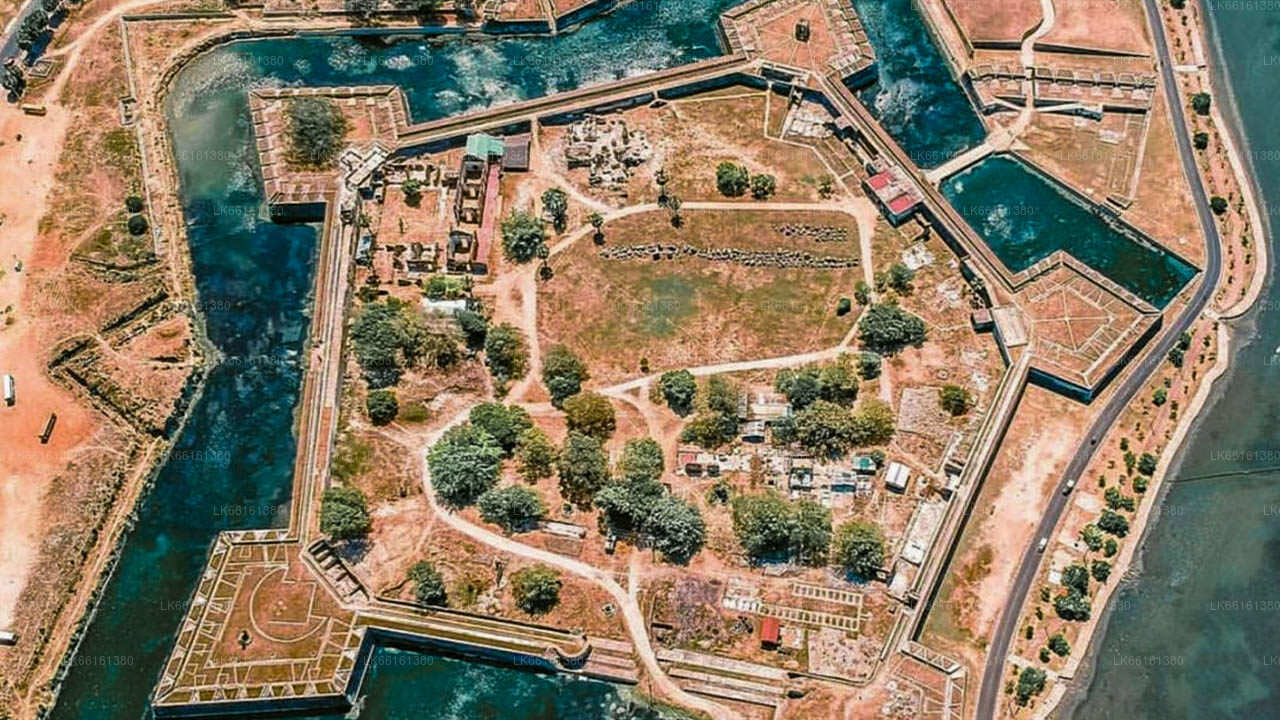
The Jaffna Peninsula rewards slow exploration. Within a short drive of Keerimalai you will find Casuarina Beach, the Nagadipa Vihara on Nainativu Island (accessible by boat from Kurikadduwan), and the Dutch-era fortifications of Jaffna town. The Nilavarai Bottomless Well, said to share an underground connection with the Keerimalai aquifer, is also within day-trip range and has its own quiet fascination.
What should visitors know before they go?
- Dress modestly — this is an active place of Hindu worship. Cover shoulders and knees before approaching the kovil.
- Bring a change of clothes and a towel if you intend to bathe. Changing facilities are basic.
- Photography inside the kovil precincts may be restricted — ask before pointing a camera at worshippers or the inner sanctum.
- There is no formal entry fee for the springs, though donations at the temple are customary.
- Food stalls near the site sell snacks and drinks, but bring water if you are visiting in the midday heat.
- The road surface on the final approach to Keerimalai can be uneven — a higher-clearance vehicle is more comfortable than a low saloon car.