Sri Lankan handicrafts are among the most varied and technically accomplished in South Asia. Shaped by centuries of Buddhist devotion, trade with Arab and European merchants, and the ingenuity of local artisans working with materials found in their own backyards, these crafts are living records of the island's history. Whether you spend an afternoon in a Kandy workshop or browse a craft market in Galle, what you find here cannot easily be replicated elsewhere.
What are the main types of Sri Lankan handicrafts?
Sri Lanka's craft traditions span several distinct disciplines, each with its own regional heartland and techniques passed down through families over many generations.
- Wood carving: Craftspeople in and around Kandy and Ambalangoda produce sculptures, furniture panels, and decorative objects — many drawing on Buddhist iconography such as lotus motifs, elephants, and deity figures. Ebony, teak, and nadun are favoured timbers.
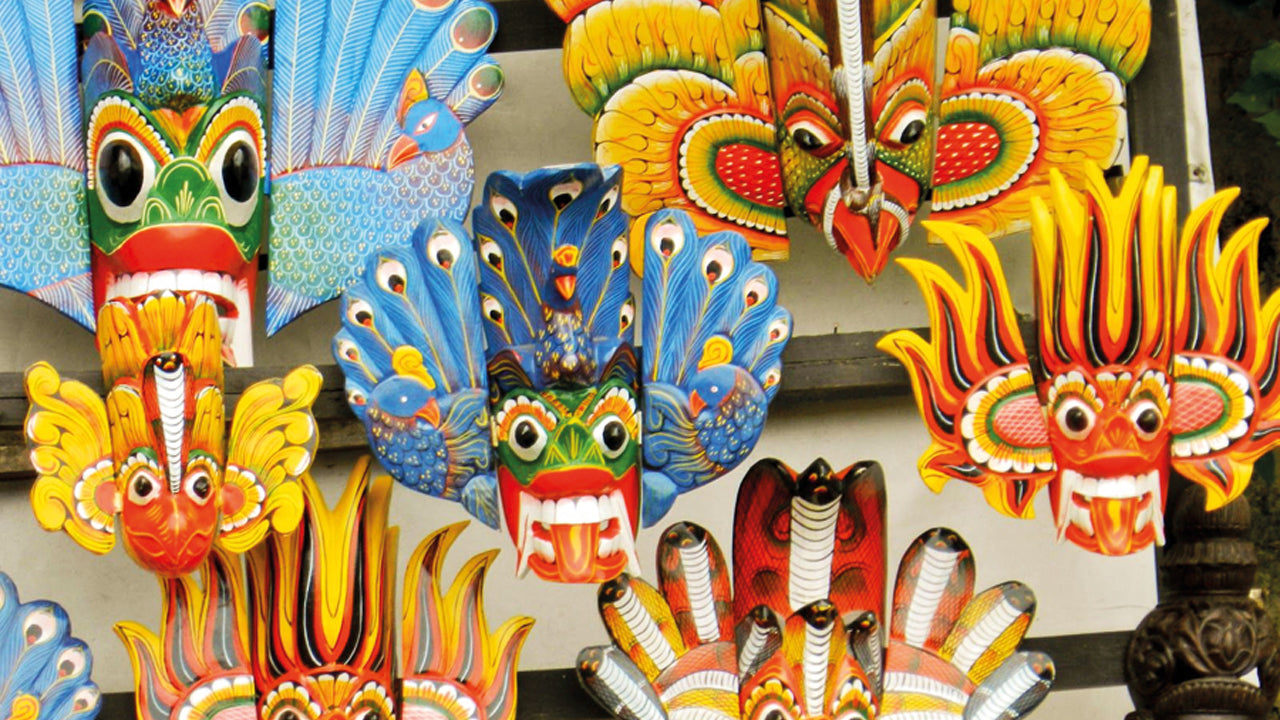
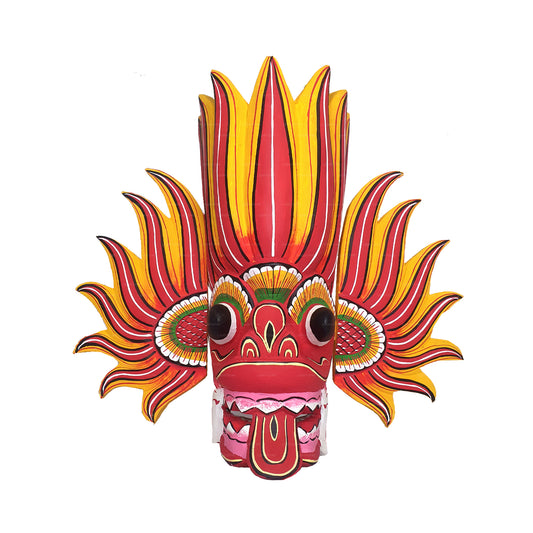
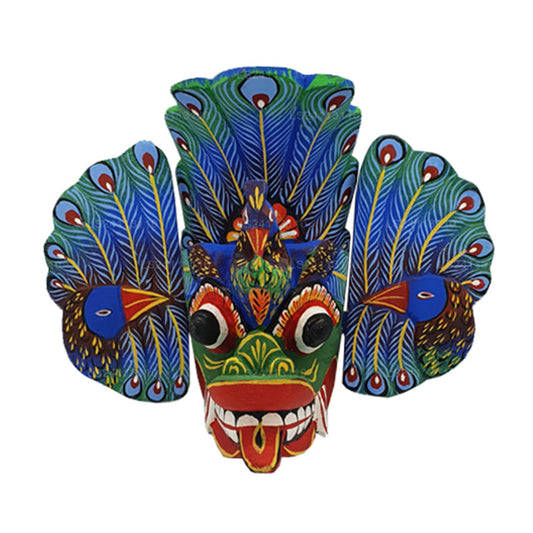
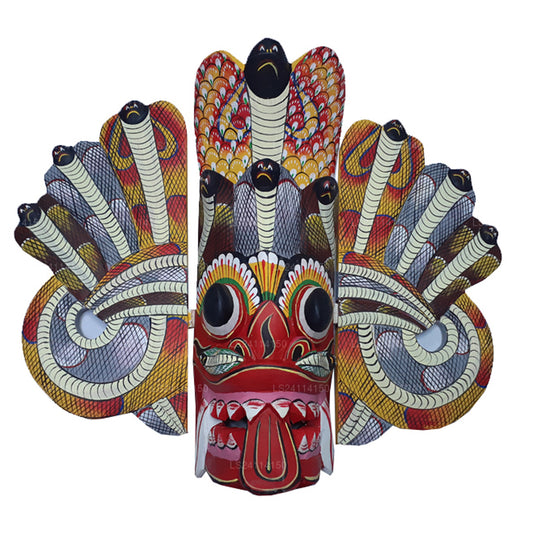
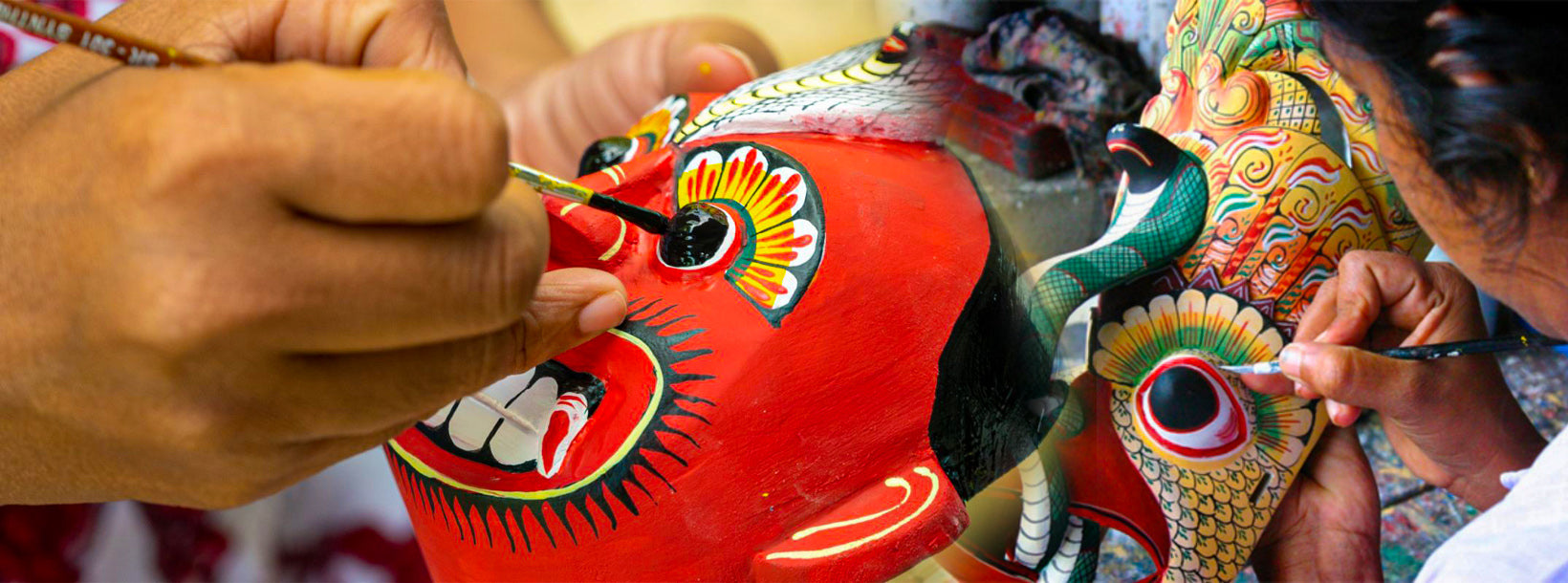
- Mask making: The village of Ambalangoda in the Southern Province is the acknowledged centre of Sri Lanka's mask-carving tradition. Kolam and raksha masks, painted in bold reds, golds, and greens, are used in ritual dances and healing ceremonies. Museums here document the craft's ceremonial origins in detail.
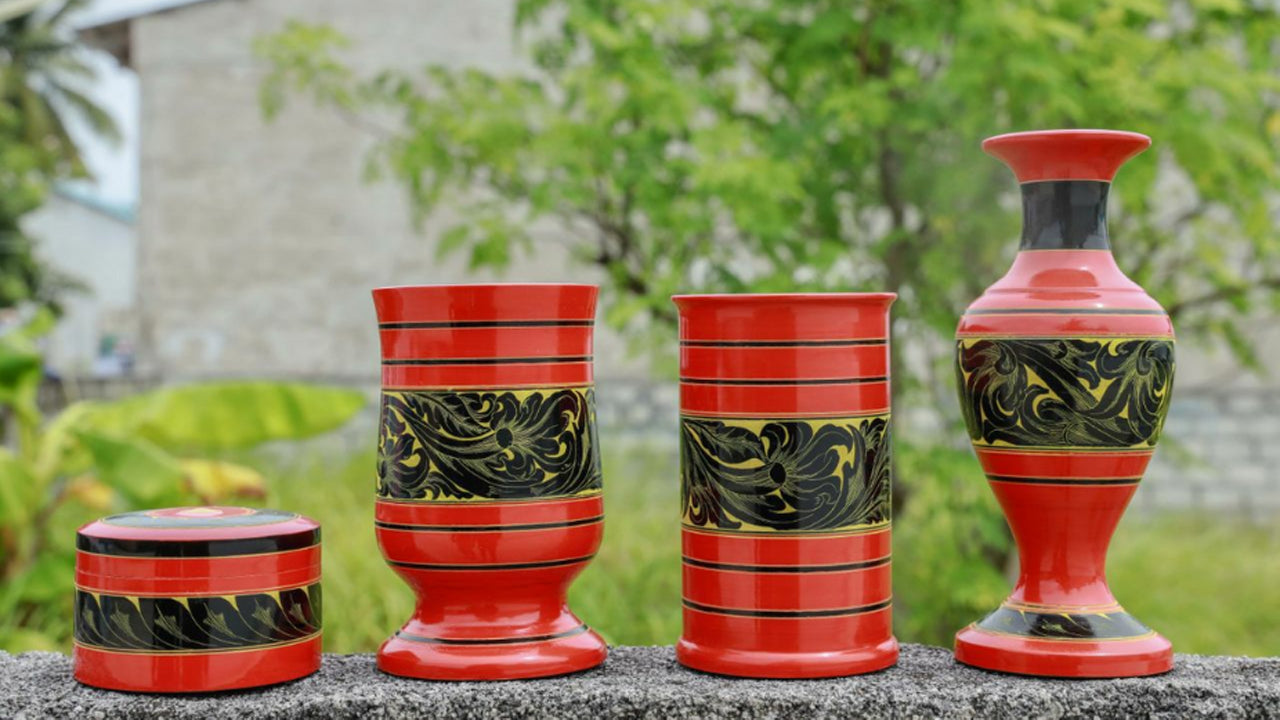
- Lacquerware: Centred in the Kandy region, lacquerware involves coating turned wooden objects — boxes, trays, bowls — with layers of resin-based lacquer in intricate geometric and floral patterns. The craft requires patience and a steady hand; high-quality pieces can take several sessions to complete.
- Brassware: Kandyan-style brass oil lamps (raban pahana), offering bowls, and ornamental elephants are produced by smiths using sand-casting and hand-finishing techniques. They remain popular purchases for both devotional use and home decoration.
- Weaving: Handwoven textiles made from coconut fibre, reed, and pandanus leaves have been produced in the low-country for centuries. Dumbara mats — woven in the Kandy hill country using a distinctive striped pattern — are considered some of the finest examples of Sri Lankan textile heritage.
- Pottery and terracotta: Wheel-thrown and hand-built pottery is a speciality of the Southern and Northern provinces, with utilitarian ware for cooking and storing water sitting alongside more decorative forms.
- Lace and embroidery: Portuguese and Dutch colonial influence left a lasting mark on Galle's lacemaking tradition. Needle lace and bobbin lace produced here — particularly around the Galle Fort area — remain painstaking craft achievements, with patterns handed down almost unchanged for two centuries.
- Silverware and gemstone jewellery: Sri Lanka's status as one of the world's foremost gem-producing countries feeds directly into its jewellery traditions. Silversmiths in the central hills and Colombo produce rings, pendants, and bangles set with sapphires, rubies, cat's-eye chrysoberyl, and other stones unique to the island.
Which regions of Sri Lanka are known for which crafts?
Understanding the regional geography of Sri Lankan crafts helps you plan where to go, not just what to buy.
| Region | Signature crafts | Key locations |
|---|---|---|
| Kandy & Central Hills | Lacquerware, brassware, Dumbara woven mats, silver jewellery | Kandy city, Akurana, Matale |
| Southern Province | Mask carving, wood carving, pottery, lace | Ambalangoda, Galle, Matara |
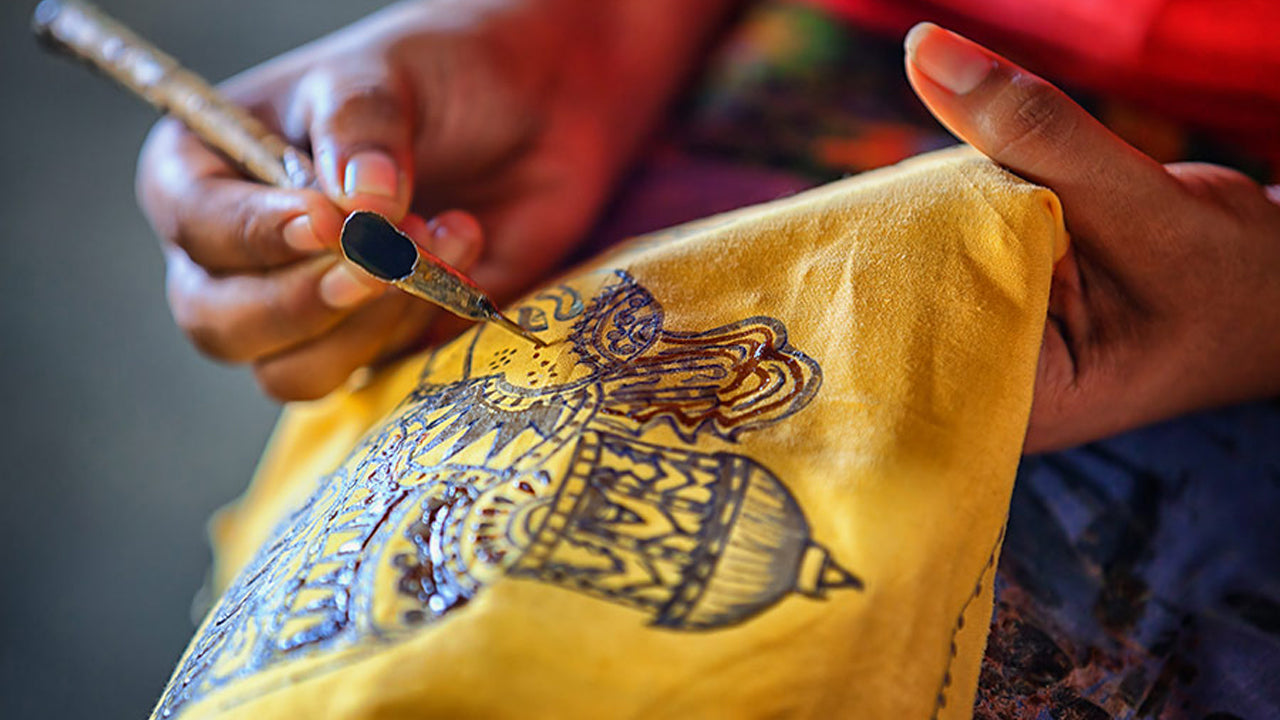
| Western Province | Batik, reed weaving, coconut-shell products | Negombo, Colombo suburbs, Moratuwa |
| North-Central Province | Terracotta pottery, hand-loom textiles | Anuradhapura, Kekirawa |
| Eastern Province | Brass and copperwork, traditional weaving | Batticaloa, Ampara |
| Sabaragamuwa | Gem cutting and setting, rattan basketry | Ratnapura |
A Kandy city tour is one of the most practical ways to survey multiple craft workshops in a single day, since many are clustered along the road to Peradeniya and near the Arts and Crafts Centre in the city centre.
What is the history behind Sri Lankan craft traditions?
Many of Sri Lanka's craft forms predate written history. Archaeological excavations at ancient sites including Polonnaruwa have unearthed bronze castings, carved stone panels, and ivory artefacts that demonstrate the sophistication of court-sponsored artisanship in the medieval period. Buddhist monastery construction generated sustained demand for skilled carpenters, metalworkers, and painters — demand that kept craft guilds active and innovative for centuries.
Colonial contact introduced new motifs and materials without entirely displacing indigenous traditions. Dutch lace techniques layered over existing embroidery knowledge in the south; Portuguese devotional art merged with local wood-carving idioms in the western coastal strip. The result is a craft landscape that is simultaneously ancient and hybrid — harder to categorise than many travellers expect.
How can you tell high-quality Sri Lankan crafts from low-grade tourist items?
The volume of craft tourism has inevitably produced a spectrum of quality. A few practical indicators help distinguish work of genuine craftsmanship from mass-produced imitations.
- Weight and material: Genuine brass items are heavy; lacquerware should have a depth and evenness of colour that spray-painted replicas cannot achieve.
- Tool marks: Hand-carved pieces carry subtle irregularities — slight variations in line depth, tool marks visible under close inspection — that machine-produced goods lack.
- Seller transparency: Reputable craft producers and fair-trade cooperatives will tell you the artisan's name, village, or workshop. Reluctance to provide provenance is a reasonable warning sign.
- Certification: The Sri Lanka Export Development Board and Sri Lanka Handicrafts Board certify registered producers. Products from these sources meet documented quality standards.
- Price: Exceptional work takes exceptional time. If a price seems too low for the stated material and detail, it usually is.
Where can you buy authentic Sri Lankan handicrafts?
Several purchasing environments offer different balances of variety, authenticity, and price.
- Government craft emporiums: The Laksala chain, operated by the Sri Lanka Handicrafts Board, has outlets in Colombo, Kandy, and other major tourist hubs. Prices are fixed, quality is vetted, and items carry provenance documentation.
- Craft villages: Ambalangoda for masks and carving, Akurana near Kandy for brassware, and Piliyandala for batik offer the chance to buy directly from makers and often to watch work in progress.
- Artisan markets: Galle Fort hosts weekend markets with a strong craft presence. The Pettah market in Colombo is less curated but can yield unexpected finds for experienced buyers.
- Boutique stores: A number of design-led shops in Colombo's Colombo 3 and Colombo 7 districts curate contemporary takes on traditional craft — appealing if you want craft-influenced homewares rather than purely traditional forms.
- Workshop visits with a guide: Arranged visits to working studios — often included in cultural tour itineraries — give you context that transforms a purchase from a souvenir into something you understand and genuinely value.
How do Sri Lankan handicrafts support local communities?
For many rural families, craft production is a primary or significant secondary income source. Unlike factory employment, it is work that can be done at home, around agricultural cycles, and passed between generations without formal training infrastructure. Fair-trade cooperatives active in regions such as the Sinharaja buffer zone and the central highlands link artisans directly to international buyers, cutting out intermediaries and returning a larger share of the sale price to the maker.
Purchasing from verified cooperatives, craft emporiums, or directly from village workshops makes a measurable difference. The Sri Lanka Handicrafts Board estimates that several hundred thousand people derive some portion of their income from craft production — a figure that underscores how consequential the choices of even a small number of informed visitors can be.
What should you know about travelling with handicrafts?
Most Sri Lankan crafts can be exported freely. However, antiques — items estimated to be more than 50 years old — require an export permit from the Department of Archaeology. Ivory, even worked ivory sold as craft, is governed by CITES regulations and generally cannot be exported. If in doubt, ask for documentation at the point of purchase. Reputable sellers in tourist centres are familiar with these rules and will advise correctly.
For fragile items such as lacquerware or ceramics, most dedicated craft shops will wrap and box purchases for air travel. Larger pieces — carved furniture, substantial brassware — can be shipped; a number of Colombo freight agents specialise in packing and shipping craft purchases internationally.