Sri Lanka's royal lineage stretches across more than two millennia, shaping the island's religion, architecture, agriculture, and national identity. From the legendary arrival of King Vijaya in 543 BCE to the British annexation of the Kandyan Kingdom in 1815, the island was governed by dynasties whose ambitions and achievements are still visible today — in crumbling stupas, vast irrigation reservoirs, and ancient palace complexes that continue to draw visitors from around the world.
Who was the first king of Sri Lanka?
According to the Mahavamsa, the Pali-language chronicle that remains the primary historical source for ancient Sri Lanka, King Vijaya arrived on the island in 543 BCE, the same day as the death of the Buddha — a detail the chronicle uses to frame Sri Lanka's destiny as a land where Buddhism would flourish. Vijaya, traditionally portrayed as a prince exiled from a kingdom in northern India, established the first royal lineage and ruled for 38 years from Thammanna Nuwara.
His successors — Upathissa, Panduwasa Dewa, and Abhaya — continued to consolidate power in the north, before King Pandukabhaya relocated the capital to Anuradhapura around 437 BCE. That city would serve as the island's political and spiritual heart for over a thousand years.
What made the Anuradhapura period so significant?
The Anuradhapura Kingdom (circa 437 BCE – 1017 CE) represents the longest and arguably most formative chapter of Sri Lankan royal history. It was during this period that Buddhism was formally introduced to the island, infrastructure on a monumental scale was built, and the concept of a unified Sinhalese Buddhist state began to take shape.
King Devanampiyathissa (307–267 BCE) is credited with receiving Buddhism from Emperor Ashoka's mission led by Mahinda Thero, establishing the Mahavihara monastery and the sacred Bodhi tree — a sapling from the original tree under which the Buddha attained enlightenment — at Anuradhapura. Both the tree and the site remain active places of pilgrimage today.
The period was not without conflict. The South Indian Chola ruler Elara governed Anuradhapura for 44 years (205–161 BCE) and is remembered in the chronicles as a just, if foreign, ruler. It fell to King Dutugemunu (161–137 BCE) to drive out the Chola forces and reunify the island under a single Sinhalese Buddhist crown — an act of nation-building that has made Dutugemunu one of the most celebrated figures in Sri Lankan memory. He commissioned the Ruwanwelisaya stupa, one of the largest brick structures of the ancient world, and the Brazen Palace, whose stone pillars still stand at Anuradhapura.
Which kings left the greatest architectural legacy?
Several monarchs stand out for the scale and sophistication of what they built:
- Dutugemunu (161–137 BCE) — Ruwanwelisaya stupa, Brazen Palace, Mirisawetiya stupa, Anuradhapura.
- Mahasena (277–304 CE) — credited with constructing or expanding 16 major irrigation reservoirs, including the Minneriya tank, and commissioning the Jetavanaramaya stupa, which at the time was among the tallest structures on earth.
- Parakramabahu I (1153–1186 CE) — the most celebrated ruler of the Polonnaruwa Kingdom, he reorganised the entire island's irrigation network and created the Parakrama Samudraya, a vast reservoir still in use today. His reign also produced the Gal Vihara rock temple and the Royal Palace complex.
- Nissanka Malla (1187–1196 CE) — the last powerful monarch of Polonnaruwa, remembered for his prolific rock inscriptions and for consolidating trade relationships across South and Southeast Asia.
The stupas commissioned by these rulers remain some of the most recognisable landmarks on the island, combining religious devotion with remarkable feats of engineering.
How did Buddhism shape Sri Lankan kingship?
From the reign of Devanampiyathissa onward, Sri Lankan kings derived much of their legitimacy from their role as protectors and patrons of the Theravada Buddhist tradition. The concept of the dhammika raja — the righteous ruler who governs according to Buddhist principles — ran through the political culture of every major dynasty. Kings funded monasteries, sponsored the copying of scriptures, and organised the great convocations that preserved the Pali canon.
This relationship between crown and sangha (the monastic order) was not merely ceremonial. Monasteries held land, educated the population through institutions like the Dhamma school, and provided the administrative literacy on which royal governance depended. The annual Esala Perahera festival in Kandy, still held each July and August, is a direct continuation of a royal procession tradition that dates to the Kandyan Kingdom.
What happened after the fall of Polonnaruwa?
After the decline of Polonnaruwa in the early 13th century — caused by a combination of invasions, prolonged droughts, and the collapse of the irrigation system — political power fragmented. Successive capitals were established at Dambadeniya, Yapahuwa, Kurunegala, Gampola, and Kotte, each reflecting the shifting pressures of invasion and internal rivalry.
The Kandyan Kingdom (roughly 1469–1815 CE) became the last refuge of Sinhalese royal power as Portuguese and then Dutch colonial forces controlled the coastal lowlands. The Kandyan kings managed a precarious independence for over three centuries, using the rugged central highlands and shrewd diplomacy to resist complete subjugation. The kingdom finally fell to the British in 1815, when the Kandyan chiefs signed the Kandyan Convention handing sovereignty to the British Crown — ending more than 2,300 years of indigenous monarchy.
A useful companion to understanding this period is the story of Ehelepola Nilame, the high-ranking chief whose betrayal and subsequent tragedy encapsulate the political turbulence of the kingdom's final years.
Complete chronological list of Sri Lanka's early kings
The table below covers the rulers from the founding of the island's first dynasty through the early Anuradhapura period, as recorded in the Mahavamsa. Dates are traditional and some overlap with scholarly estimates.
| King / Queen | Ruling Period | Reign (BCE/CE) | Capital |
|---|---|---|---|
| Vijaya | 38 years | 543–505 BCE | Thammanna Nuwara |
| Upathissa | 1 year | 505–504 BCE | Upathissa Nuwara |
| Panduwasa Dewa | 30 years | 504–474 BCE | Upathissa Nuwara |
| Abhaya | 20 years | 474–454 BCE | Upathissa Nuwara |
| Pandukabhaya | 70 years | 437–367 BCE | Anuradhapura |
| Mutasiwa | 60 years | 367–307 BCE | Anuradhapura |
| Devanampiyathissa | 40 years | 307–267 BCE | Anuradhapura |
| Uththiya | 10 years | 267–257 BCE | Anuradhapura |
| Mahasiwa | 10 years | 257–247 BCE | Anuradhapura |
| Surathissa | 10 years | 247–237 BCE | Anuradhapura |
| Sena & Guththika | 10 years | 237–215 BCE | Anuradhapura |
| Asela | 10 years | 215–205 BCE | Anuradhapura |
| Elara | 44 years | 205–161 BCE | Anuradhapura |
| Dutugemunu | 24 years | 161–137 BCE | Anuradhapura |
| Saddhathissa | 18 years | 137–119 BCE | Anuradhapura |
Where can travellers explore Sri Lanka's royal heritage today?
The most concentrated evidence of royal achievement lies within the ancient cities of the Cultural Triangle — Anuradhapura, Polonnaruwa, and the rock fortress of Sigiriya, built by King Kashyapa (477–495 CE) atop a sheer granite outcrop. Together, these sites form part of a UNESCO World Heritage landscape that rewards at least three to four days of dedicated exploration.
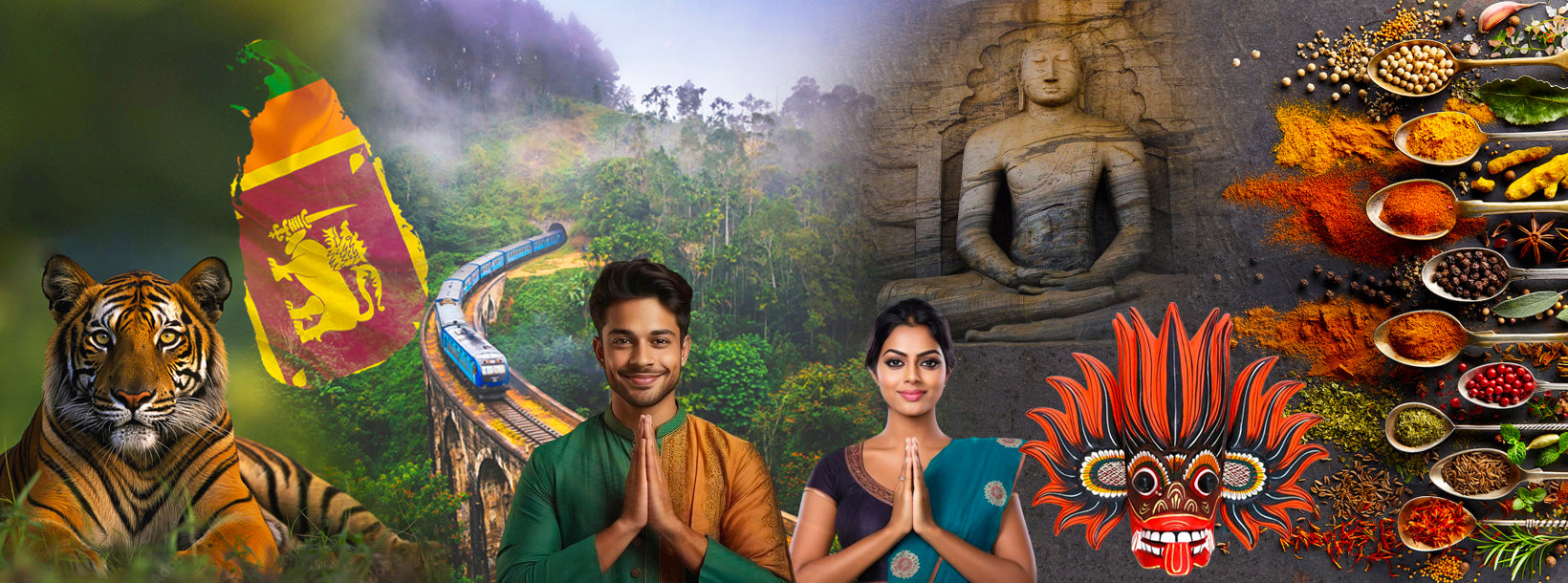
Polonnaruwa in particular offers a remarkably intact royal city: the Royal Palace, Council Chamber, Audience Hall, and the serene Gal Vihara rock carvings are all within walking or cycling distance of one another. The Kandy city area preserves a different layer of royal culture — the Temple of the Tooth Relic, built to house the Buddha's tooth relic that served as a symbol of sovereignty for Kandyan kings, sits at the heart of the city alongside royal gardens and the Kandy Lake, which was constructed by the last king, Sri Wickrama Rajasinha, in 1807.