Sri Lanka sits at the edge of one of the Indian Ocean's richest marine corridors, and its coastal waters are home to an impressive variety of dolphin species year-round. Whether you are scanning the horizon from a boat off the southern cape or drifting through the calm lagoons near Kalpitiya, encounters with large, fast-moving pods are surprisingly common — and reliably memorable.
Where are the best places to watch dolphins in Sri Lanka?
Two stretches of coastline dominate dolphin-watching itineraries in Sri Lanka.
- Kalpitiya, North Western Province: The shallow banks and open water around Alankuda Beach make Kalpitiya the most productive single location for dolphin sightings in Sri Lanka. Spinner and bottlenose dolphins are the most frequently spotted species here, and large pods — sometimes numbering in the hundreds — are regularly seen between November and April.
- Mirissa and Dondra, Southern Province: The deep water off Mirissa and the waters around Dondra Head are traditionally associated with blue whale watching, but the same trips frequently encounter spinner and spotted dolphins. The season aligns closely with Kalpitiya: November through April, when the northeast monsoon settles the seas on the south coast.
A short boat ride from either location is typically enough to reach open water where pods are active. Departures generally leave early in the morning to take advantage of calmer conditions and better light for spotting dorsal fins.
When is the best time to see dolphins in Sri Lanka?
The timing of dolphin sightings is closely linked to Sri Lanka's monsoon calendar. On the south and west coasts — including Mirissa and Kalpitiya — the window from November to April offers the calmest seas and the highest probability of encounters. During these months, large migratory pods move through the area and tend to be highly visible.
The east coast, around Trincomalee and Pigeon Island, comes into its own between May and September, when the southwest monsoon subsides and the Bay of Bengal waters settle. Spinner dolphins are regularly seen in that region during this season, often acrobatically leaping near the surface.
Which dolphin species can I see in Sri Lanka?
Sri Lankan waters support at least six dolphin species with reasonable regularity. Each has distinct habits and markings that make identification straightforward with a little preparation.
Spinner Dolphin (Stenella longirostris)
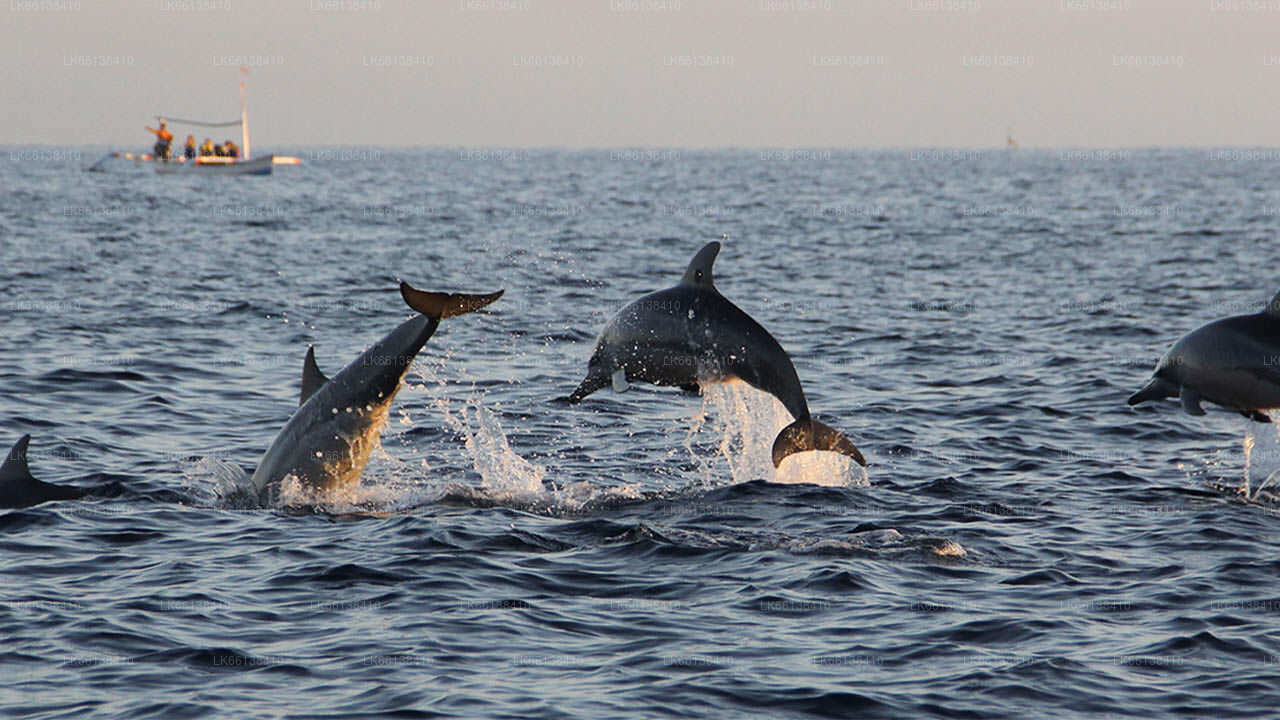
The spinner dolphin is arguably the most entertaining species to watch. It earns its name from a habit of leaping clear of the water and rotating along its body axis — sometimes completing several full rotations before re-entering. Adults typically range from around 130 to 235 cm in length. Spinners are the species most commonly seen off both Kalpitiya and Mirissa, and they often approach boats with curiosity.
Bottlenose Dolphin (Tursiops truncatus)
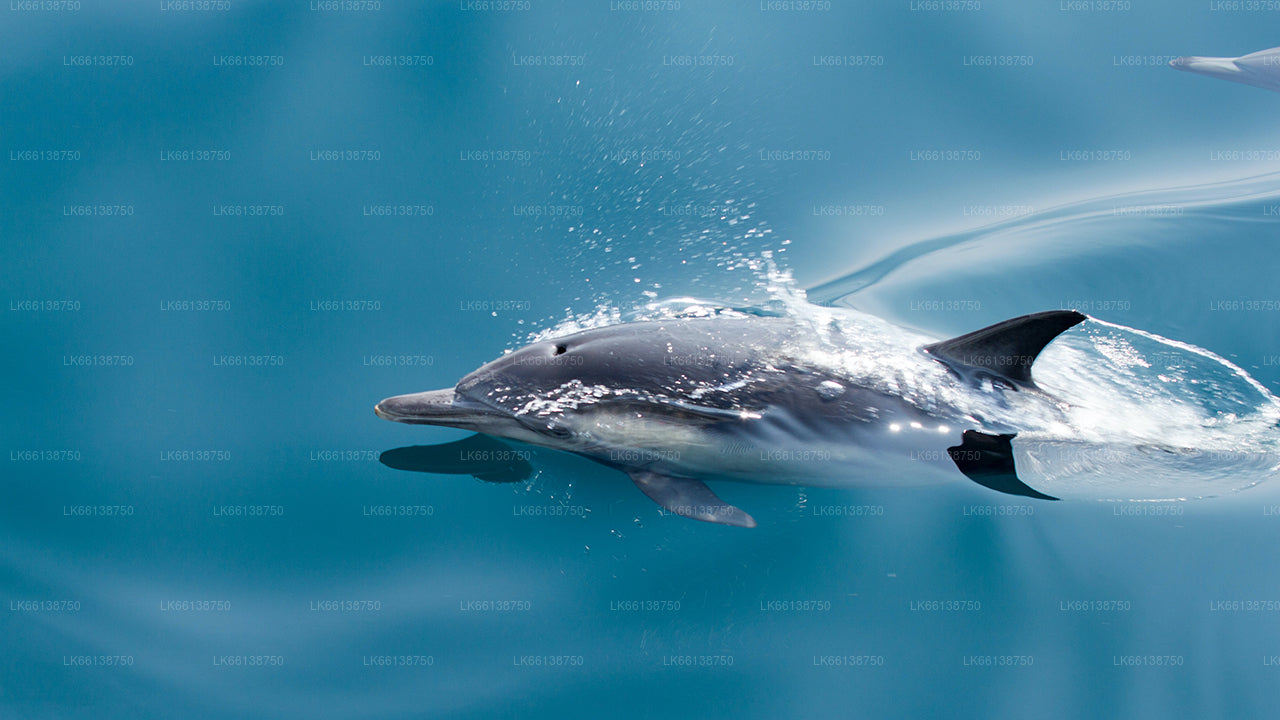
The bottlenose dolphin is the most widely recognised cetacean in the world and one of the most reliably sighted off Sri Lanka's coasts. Pods typically number between 10 and 30 individuals, though groups of over a thousand have been recorded in highly productive feeding grounds. Bottlenose dolphins are highly social and use echolocation — producing clicks and tones — both to communicate and to hunt forage fish.
Spotted Dolphin (Stenella attenuata)
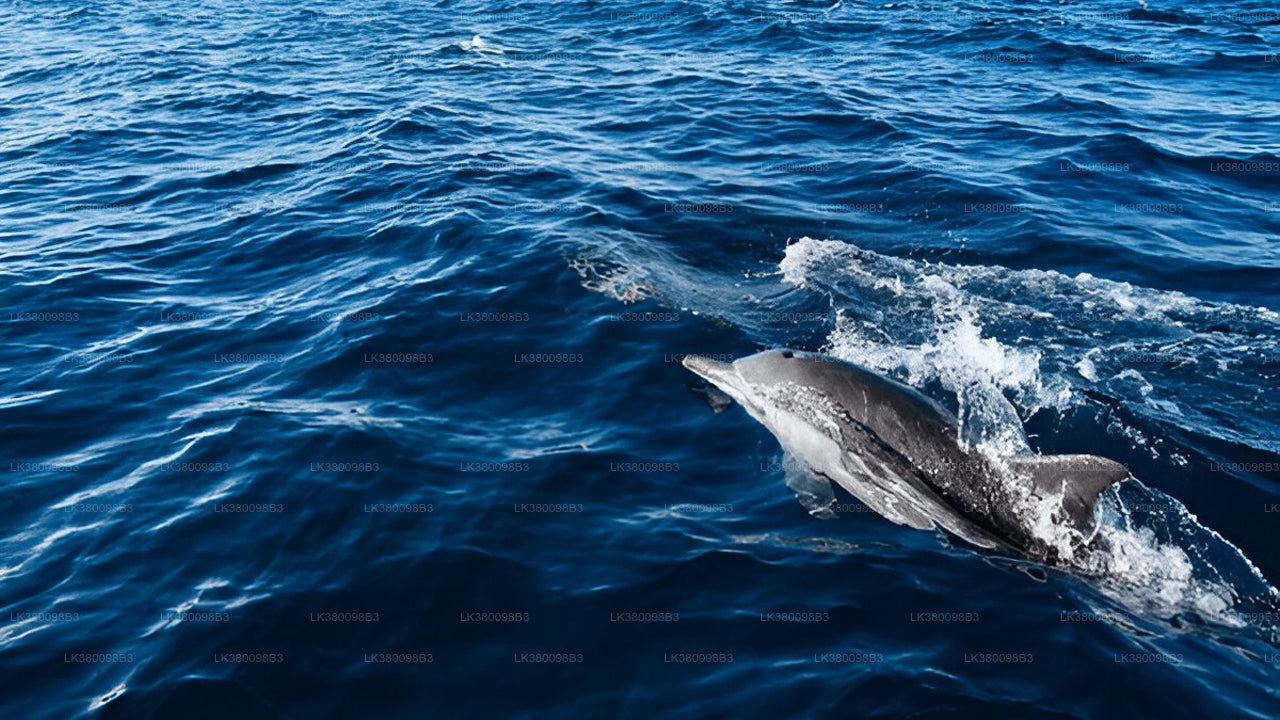
The pantropical spotted dolphin is found across tropical and temperate oceans worldwide. Adults carry a distinctive dappled pattern that becomes more pronounced with age, making older individuals easy to identify. The global population exceeds two million, placing it among the most abundant cetacean species, though it has faced significant pressure from tuna seine fishing in some parts of its range.
Striped Dolphin (Stenella coeruleoalba)
The striped dolphin's bold lateral stripe — running from the eye toward the tail — sets it apart visually from other species in the water. It prefers deeper, offshore conditions and feeds on small pelagic fish and squid. Though less frequently encountered close to shore, it is occasionally seen during longer offshore excursions from the southern coast.
Fraser's Dolphin (Lagenodelphis hosei)
Also known as the Sarawak dolphin, Fraser's dolphin favours the deep oceanic waters of the Pacific and Indian Oceans. Adults can reach around 2.7 metres and weigh up to 200 kg. They travel in tightly packed groups of 100 to 1,000 individuals and are vigorous swimmers — a large pod in full movement creates a dramatic churning display on the surface.
Risso's Dolphin (Grampus griseus)
Risso's dolphin is a larger, more heavily built species, recognisable by its blunt, beakless head and pale, heavily scarred skin — the scars accumulate through social interaction and squid predation over the animal's lifetime. Sightings in Sri Lankan waters are less common than other species but do occur in deeper offshore zones, particularly in the south.
How do I get to Kalpitiya for dolphin watching?
Kalpitiya is located on the northwestern coast, roughly 160 km north of Colombo. The most practical approach is by road via Chilaw and Puttalam; the journey takes around three to four hours depending on traffic. Alankuda Beach, the main departure point for dolphin-watching boats, is a further short drive along the peninsula. Most visitors stay overnight in the area to catch the early-morning departures that coincide with peak dolphin activity.
What else can I combine with dolphin watching in Sri Lanka?
A dolphin-watching trip pairs naturally with other coastal and marine experiences. If you are based in the south, a visit to the Kosgoda Sea Turtle Conservation Project adds a meaningful conservation dimension to a coastal itinerary. Further along the southern coast, the calm backwaters of Madu Ganga offer a very different pace — mangrove channels, bird life, and traditional fishing communities accessible by small boat.
On the north-western circuit, Kalpitiya sits within easy reach of Wilpattu National Park, one of Sri Lanka's oldest and largest wildlife reserves. Combining a dawn dolphin excursion with an afternoon leopard-spotting safari at Wilpattu makes for a genuinely varied day.
Travellers visiting the east coast during the May-to-September window can also explore Pigeon Island, a marine national park near Trincomalee known for blacktip reef sharks, hawksbill turtles, and hard coral reefs — often within the same snorkelling trip that crosses dolphin-rich water.
Is dolphin watching in Sri Lanka responsible and ethical?
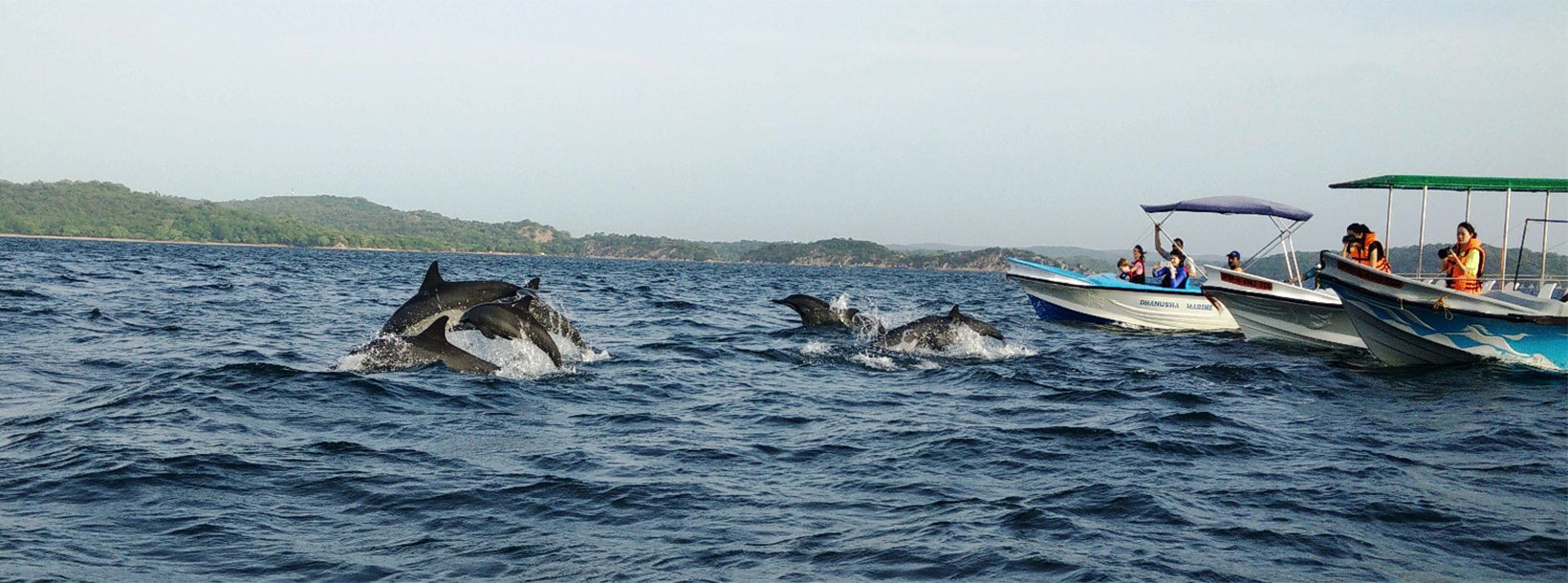
The quality of the experience depends heavily on the operator and vessel. Reputable operators follow guidelines that include keeping a respectful distance from pods, limiting time spent near any single group, and switching off engines when dolphins are nearby. These practices protect the animals from disturbance and tend to produce better sightings, since undisturbed dolphins behave more naturally and approach boats on their own terms.
When selecting a boat or excursion, asking whether the operator follows Sri Lanka's Department of Wildlife Conservation guidelines is a good starting point. Smaller vessels with quieter engines generally cause less disruption than large whale-watching catamarans, though the latter can be more stable in offshore swell.