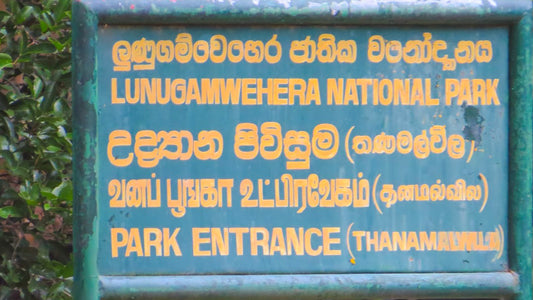
Lunugamvehera National Park occupies a quiet but ecologically critical position in southern Sri Lanka. Established in 1995, this 23,499-hectare reserve was created primarily to protect the catchment area of the Lunugamvehera reservoir and to safeguard a natural corridor that elephants use when moving between Udawalawe National Park to the west and Yala National Park to the east. Because it sits between two of the country's most visited wildlife destinations, it remains comparatively uncrowded — which makes it genuinely rewarding for visitors who prefer quieter game drives.
What wildlife can I see at Lunugamvehera National Park?
Elephants are the headline species. The park functions as a movement corridor, so sightings often involve small herds in transit rather than resident groups, and encounters can be remarkably close. Beyond elephants, the dry-mixed evergreen forest and reservoir margins support an impressive range of mammals, birds, and reptiles.
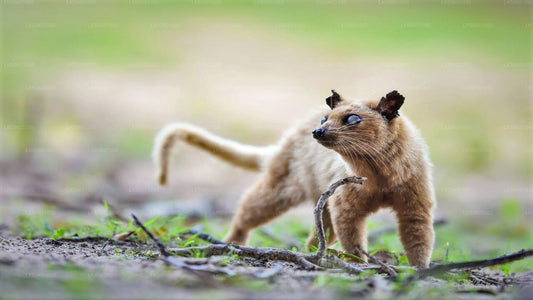
- Mammals: Sri Lankan elephant, Sri Lankan buffalo, spotted deer, mouse deer, fishing cat, grey mongoose, and wild boar
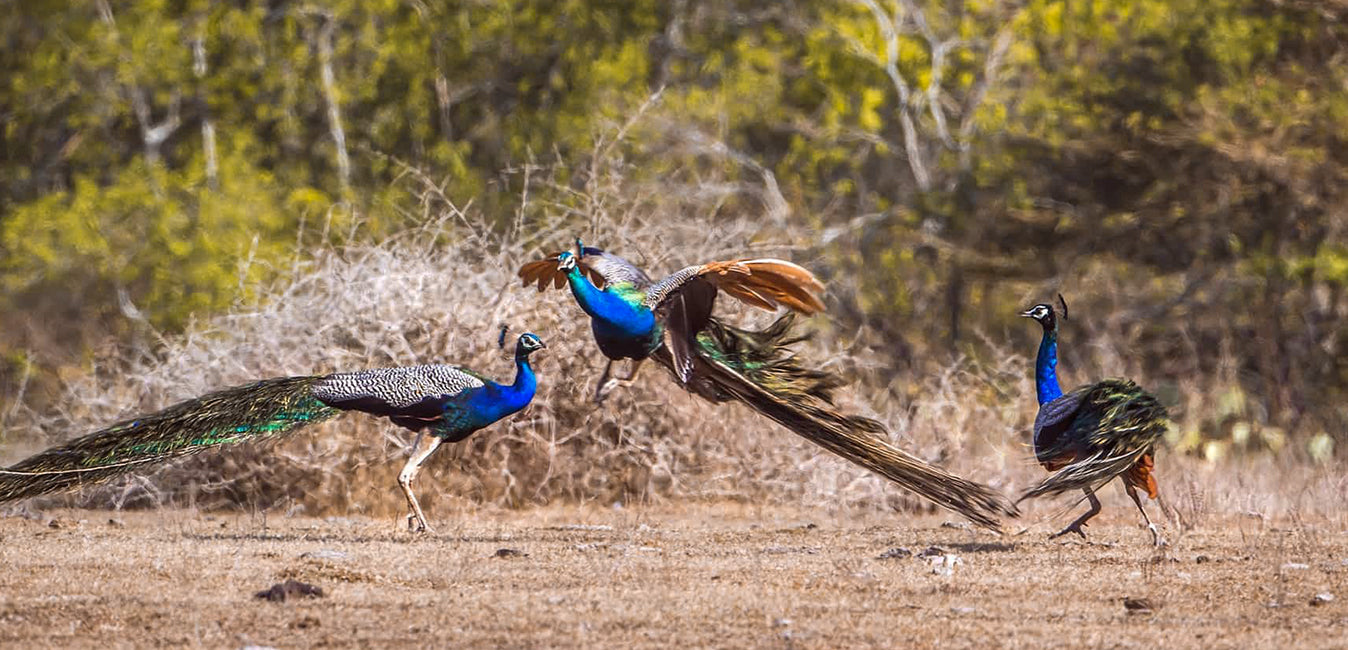
- Birds: Around 183 species have been recorded, making the reservoir edges particularly productive for water birds — painted storks, open-billed storks, and various herons are regularly seen
- Reptiles and amphibians: 33 reptile species and 12 amphibian species, including mugger crocodiles along the reservoir
- Fish: 21 freshwater species in the reservoir and connected waterways
The reservoir itself — covering roughly 3,283 hectares of the park's total area — draws large concentrations of wildlife to its banks, especially during dry-season months when water elsewhere becomes scarce.
When is the best time to visit Lunugamvehera National Park?
The park sits in Sri Lanka's dry zone and records temperatures typically around 30 °C year-round. Rainfall is concentrated between November and January, when the Kirindi Oya catchment receives its main monsoon input. Visiting during or just after the rains means lush vegetation and full water levels, but tracks can be muddy and visibility through the forest is reduced.
The dry season — roughly May to October — draws wildlife to the reservoir margins in larger numbers and offers clearer sightings. This period overlaps with peak season at nearby Yala, so Lunugamvehera is an appealing alternative if Yala feels overcrowded. The park is open to visitors throughout the year.
Why is Lunugamvehera ecologically important?
The park's location is its defining characteristic. It protects the upper catchment of the Lunugamvehera reservoir, which feeds water into five downstream tanks along the Kirindi Oya river system. Those tanks, in turn, sustain the wetland hydrology of Bundala National Park — a Ramsar-listed site and important wintering ground for migratory birds. Damage to the Lunugamvehera catchment would ripple downstream through the entire system.
The elephant corridor function is equally significant. Loss of connected forest between Yala and Udawalawe would fragment two of Sri Lanka's largest elephant populations. Lunugamvehera provides the green bridge that allows seasonal movement, genetic exchange, and reduces human-elephant conflict by giving animals a safe route rather than forcing them through agricultural land.
How do I get to Lunugamvehera National Park from Colombo?
The park is approximately 261 km from Colombo, situated in the Moneragala District of Uva Province. The most practical route follows the Southern Expressway (E01) towards Hambantota before turning inland toward Tissamaharama. From Tissa, the park entrance is accessible via a short drive north. Journey time by road is typically four to five hours depending on traffic and the route taken.
There is no scheduled public transport that reaches the park gate conveniently, so a private vehicle or organised safari transfer is the practical choice for most visitors. Combining Lunugamvehera with a visit to Bundala or Yala on the same trip makes geographical sense, as all three parks lie within a roughly one-hour drive of each other.
What should I know before entering the park?
Entry requires a permit, which covers the conservation fee and tracker services. Visitors must be accompanied inside the park — self-drive without a tracker is not permitted. Safari vehicles are typically 4WD jeeps; a naturalist guide can be arranged for a more detailed wildlife interpretation experience. There are no lodges inside the park itself, so accommodation is based in Tissamaharama or Hambantota and the short drive in is made at dawn or dusk, when wildlife activity peaks.
| Detail | Information |
|---|---|
| Established | 1995 |
| Total area | Approximately 23,499 ha |
| Reservoir area | Approximately 3,283 ha |
| District | Moneragala, Uva Province |
| Distance from Colombo | Approximately 261 km |
| Best months | May – October (dry season) |
| Park open | Year-round |
How does Lunugamvehera compare to Yala and Udawalawe?
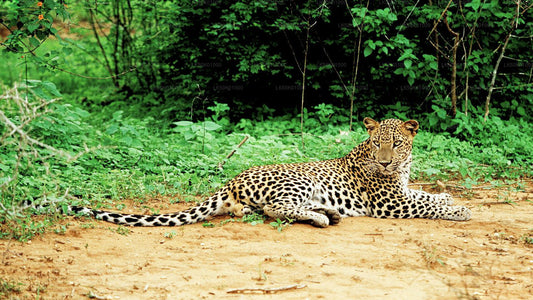
Yala is famous for leopards but can be very busy — dozens of jeeps may converge on a single sighting in peak season. Udawalawe is the benchmark for reliable elephant encounters and has the added draw of the Elephant Transit Home nearby. Lunugamvehera offers something different: a less commercialised experience where the focus is on the landscape and the corridor ecology rather than a single flagship species.
Visitor numbers are substantially lower than at either neighbouring park, tracks are less congested, and the reservoir scenery — particularly at dawn with water birds active along the banks — has a quieter character that some travellers find more satisfying. For birders especially, the combination of forest interior and open water makes this one of the more productive parks in the south.
What flora characterises the park?
The dominant vegetation is dry mixed evergreen forest, a formation characteristic of Sri Lanka's southeastern dry zone. Tall emergent trees form a canopy over dense understorey scrub, with patches of open grassland and scrub near the reservoir margins. The forest composition includes species typical of the dry lowlands, providing habitat structure for the park's full range of fauna. The reservoir shores support aquatic and semi-aquatic vegetation that underpins the waterbird diversity for which the park is noted.
Is Lunugamvehera National Park suitable for families?
Safari game drives suit most ages and require no physical exertion — the jeep does the work. Children who have an interest in animals and can maintain quiet during drives will find the park rewarding. Early morning or late afternoon departures are standard, so families should account for the pre-dawn start or plan to spend a night locally. There are no walking trails or facilities inside the park beyond the vehicle track network, so expectations should be set accordingly.