Lakpura
Lakpura®

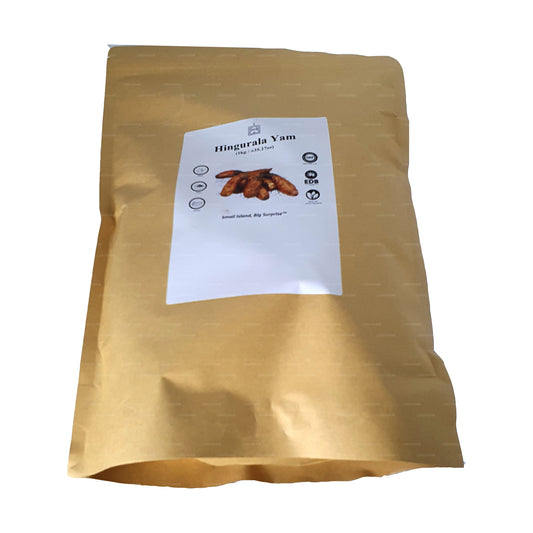
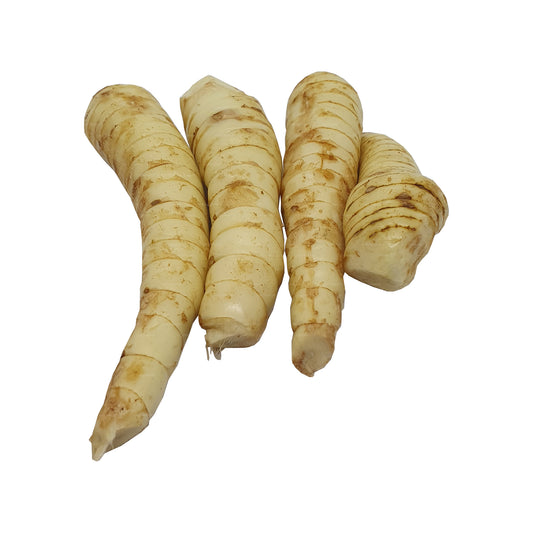
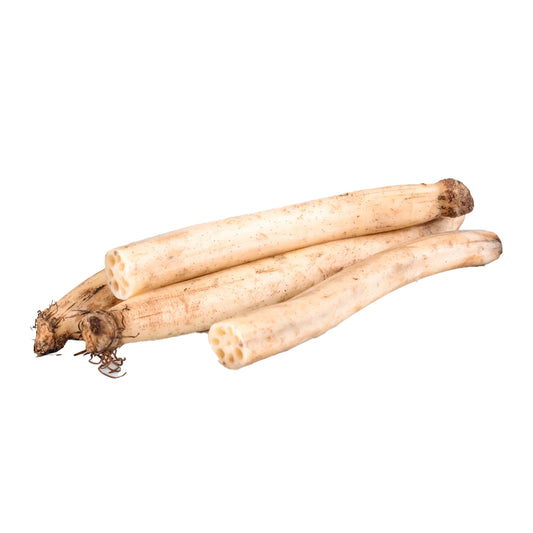
Elephant Foot Yam (Amorphophallus paeoniifolius)

Elephant foot yam (Amorphophallus paeoniifolius), also called whitespot giant arum, is one of the more distinctive tropical tuber crops cultivated across Africa, South Asia, Southeast Asia, and the Pacific islands. In Sri Lanka it goes by the Sinhala name Kidaran (කිදාරං), and while it is not as widely promoted as export crops like Ceylon black pepper or Ceylon tea, it plays a quiet but consistent role in local home cooking and traditional medicine.

What exactly is elephant foot yam?

The plant belongs to the family Araceae and produces a large, rounded corm that can weigh several kilograms — its rough, grey-brown surface and flattened shape are what inspired the common name. Above ground, a single stout stem emerges, topped by a large compound leaf that can spread impressively wide. At maturity the plant reaches roughly 2 to 2.5 metres in height. Before the leaf emerges each season, the plant may produce a striking inflorescence — a large, fleshy spathe surrounding a central spadix — though this is rarely seen in cultivated garden plots.

The edible part is the underground corm. Raw corms contain calcium oxalate crystals that cause intense itching and irritation of the mouth and skin, so the yam is always cooked before eating. Prolonged boiling, steaming, or roasting neutralises these crystals fully.

Where does elephant foot yam come from originally?

For a long time, India was considered the centre of domestication for this crop, partly because it features so prominently in Indian cuisine and traditional medicine. A genetic study published in 2017, however, found that wild populations in Island Southeast Asia carry significantly higher genetic diversity than those in India, suggesting that domestication likely began in that region and spread westward over centuries. Today the crop is cultivated across a broad tropical belt — from Madagascar and East Africa through South Asia and into New Guinea and Oceania.

Within South Asia, India remains the largest producer and consumer, but the yam is also grown in Bangladesh, Sri Lanka, and parts of Nepal, where it is valued both as a subsistence crop and as a commercial vegetable.

How is elephant foot yam used in Sri Lankan cooking?

In Sri Lankan households, Kidaran is most commonly prepared as a curry — the corm is cut into chunks, boiled or steamed to remove bitterness, then cooked in coconut milk with turmeric, green chilli, and mustard seeds. It can also be dry-fried with grated coconut for a drier side dish, or incorporated into mixed vegetable curries alongside other root vegetables.

  • Curry: The most common preparation — simmered in coconut milk with spices until tender.
  • Dry fry (thel dala): Sliced and pan-fried with mustard seeds, curry leaves, and dried chilli.
  • Boiled and mashed: Sometimes served simply with a squeeze of lime and salt as a filling side.
  • Pickles and preserves: Less common but found in some regional households, particularly in the dry zone.

The corm's dense, starchy flesh holds its shape well during cooking, which makes it a practical choice for slow-cooked curries. Its flavour is mild and earthy, absorbing spices readily.

What are the nutritional and medicinal properties of Kidaran?

Elephant foot yam is a reasonable source of carbohydrates and dietary fibre, and it contains moderate amounts of vitamins B6 and C as well as potassium. Because the raw corm is inedible, its nutritional profile is always assessed after cooking.

In Ayurvedic and traditional Sri Lankan medicine, the yam has been used for centuries to support digestive health, and extracts from the corm feature in formulations aimed at managing haemorrhoids and intestinal disorders. Modern phytochemical research has identified various bioactive compounds in the corm, including glucomannans and flavonoids, though clinical studies in humans remain limited. Treatments derived from traditional knowledge should always be discussed with a qualified practitioner.

How is the plant grown in Sri Lanka?

Elephant foot yam is a warm-season crop that thrives in well-drained, loamy soils with good organic matter content. It tolerates partial shade, which makes it well-suited to intercropping beneath coconut palms or fruit trees — a common practice in Sri Lankan smallholder gardens. Planting typically uses a section of the parent corm as a propagule.

The crop takes roughly six to eight months to mature from planting to harvest, and a single well-grown corm can yield a substantial weight of edible material, making it an efficient use of garden space. It is grown across several regions of Sri Lanka, including the wet zone and the intermediate zone, though it rarely appears in large commercial monocultures on the island.

Where can you find elephant foot yam dishes in Sri Lanka?

Kidaran curry is predominantly a home-cooked dish and is less commonly found on mainstream restaurant menus. Travellers most likely to encounter it are those staying with local families, visiting rural areas, or joining cooking-focused tours in destinations such as the Sigiriya Village area, where traditional Sri Lankan cuisine is prepared for guests. Village-style cooking demonstrations in the Cultural Triangle region often include seasonal root vegetables, and Kidaran may feature depending on the harvest cycle.

Fresh corms are sold at local markets (pola) throughout the island, usually during the main growing season. The corms are easy to identify by their large size and distinctive rough exterior, though buyers should confirm proper preparation before cooking at home.

How does elephant foot yam compare with other tropical root vegetables?

Common name Scientific name Sinhala name Primary use in Sri Lanka
Elephant foot yam Amorphophallus paeoniifolius Kidaran (කිදාරං) Curries, dry fries
Sweet potato Ipomoea batatas Bathala (බතල) Boiled, curried, street food
Cassava (tapioca) Manihot esculenta Manioc (මැනිකෝ) Boiled, fried, flour
Greater yam Dioscorea alata Ala (අල) Boiled, curried

Is elephant foot yam related to other plants in the arum family?

Yes — Amorphophallus paeoniifolius is a member of Araceae, the arum family, which includes a wide range of tropical plants, some cultivated for food and others purely ornamental. Its closest relatives in the genus include Amorphophallus titanum, the corpse flower of Sumatra, famous for its enormous inflorescence and powerful odour. Unlike that species, elephant foot yam is valued entirely for its corm rather than its flower, and cultivation is focused on maximising tuber yield. The shared characteristic across edible Araceae is the presence of calcium oxalate crystals that must be broken down by cooking.

Ask Lakpura® Agent