Adams Bridge Ram Sethu


Adam's Bridge, also known as Rama's Bridge or Rama Setu, is a chain of natural limestone shoals, between Pamban Island, also known as Rameswaram Island, off the south-eastern coast of Tamil Nadu, India, and Mannar Island, off the north-western coast of Sri Lanka. Geological evidence suggests that this bridge is a former land connection between India and Sri Lanka.
The feature is 48 km (30 mi) long and separates the Gulf of Mannar (southwest) from the Palk Strait (northeast). Some of the regions are dry, and the sea in the area rarely exceeds 1 metre (3 ft) in depth, thus hindering navigation. It was reportedly passable on foot until the 15th century when storms deepened the channel. Ramanathaswamy Temple records say that Adam's Bridge was entirely above sea level until it broke in a cyclone in 1480.
Historical mentions and etymologyThe ancient Indian Sanskrit epic Ramayana (7th century BCE to 3rd century CE) written by Valmiki mentions a bridge constructed by god Rama through his Vanara (ape-men) army to reach Lanka and rescue his wife Sita from the Rakshasa king, Ravana. The location of the Lanka of the Ramayana has been widely interpreted as being present-day Sri Lanka making this stretch of land Nala's or Rama's bridge. Analysis of several of the older Ramayana versions by scholars for evidence of historicity have led to the identification of Lankapura no further south than the Godavari River. These are based on geographical, botanical, and folkloristic evidences as no archaeological evidence has been found. Scholars differ on the possible geography of the Ramayana but several suggestions since the work of H.D. Sankalia locate the Lanka of the epic somewhere in the eastern part of present-day Madhya Pradesh.
The western world first encountered it in Ibn Khordadbeh's Book of Roads and Kingdoms (c.?850), in which he refers to it as Set Bandhai or Bridge of the Sea. Some early Islamic sources refer to a mountain in Sri Lanka as Adam's Peak (where the biblical Adam supposedly fell to earth). The sources describe Adam as crossing from Sri Lanka to India via the bridge after his expulsion from the Garden of Eden, leading to the name of Adam's Bridge. Alberuni (c.?1030) was probably the first to describe it in such a manner. A British cartographer in 1804 prepared the earliest map that calls this area by the name Adam's bridge.
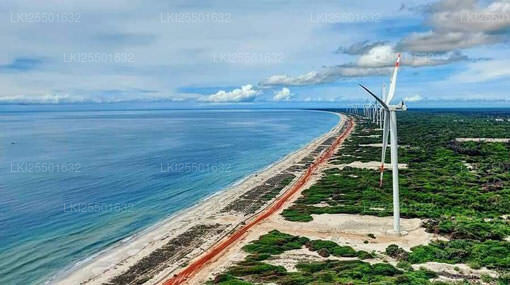
LocationThe bridge starts as a chain of shoals from the Dhanushkodi tip of India's Pamban Island. It ends at Sri Lanka's Mannar Island. Pamban Island is accessed from the Indian mainland by the 2-km-long Pamban Bridge. Mannar Island is connected to mainland Sri Lanka by a causeway.
Origin legendsIndian culture and religion include legends that the structure is of supernatural origin. According to the Hindu epic, Ramayana, Ravana, the demon king of Lanka (Sri Lanka) kidnapped Rama's wife Sita and took her to Lankapura, doing this for revenge against Rama and his brother Lakshmana for having cut off the nose of Ravana's sister, Shurpanakha. Shurpanakha had