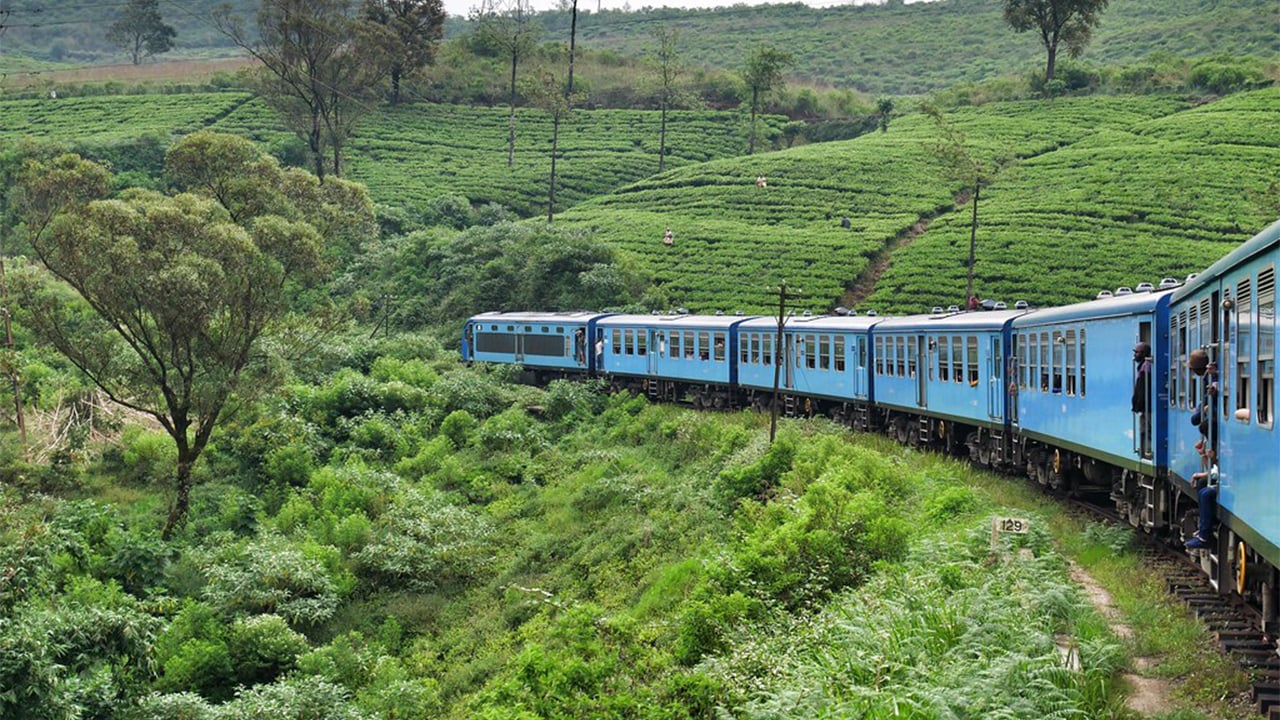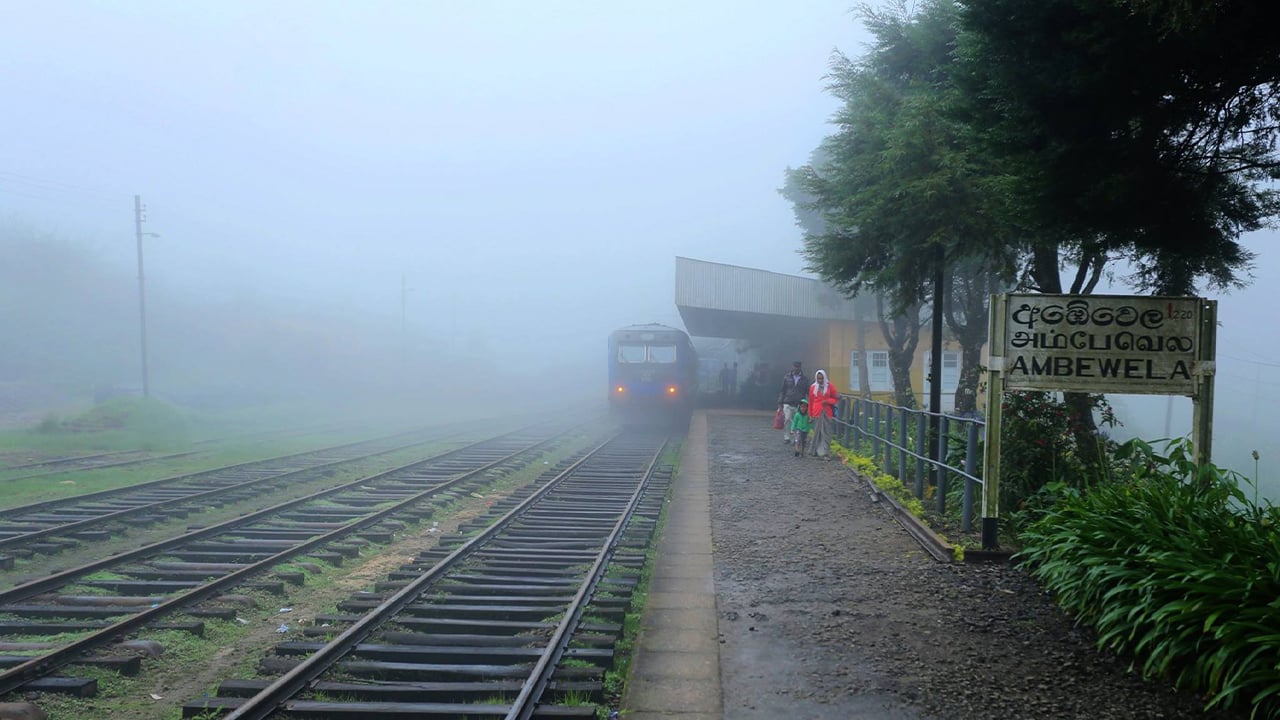


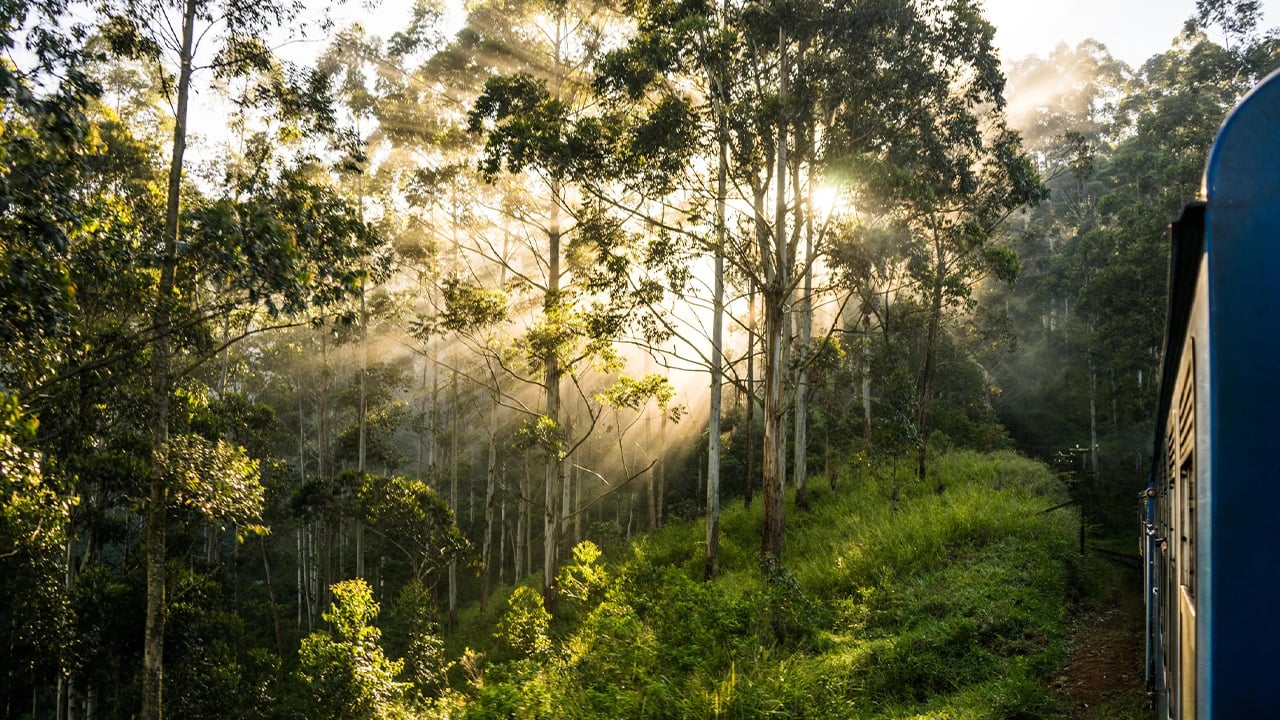
Sitting at roughly 1,829 metres (6,000 feet) above sea level, Ambewela Railway Station is one of the highest railway stations in Sri Lanka. It occupies a quiet stretch of the Colombo–Badulla main line — the same route that winds through tea country, cloud forest, and open grassland before dropping toward the southern plains. For travellers who make the upcountry train journey, Ambewela is a natural pause: a small, colonial-era platform where the air is noticeably cooler and the horizon opens across rolling pasture.
What is the history of Ambewela Railway Station?
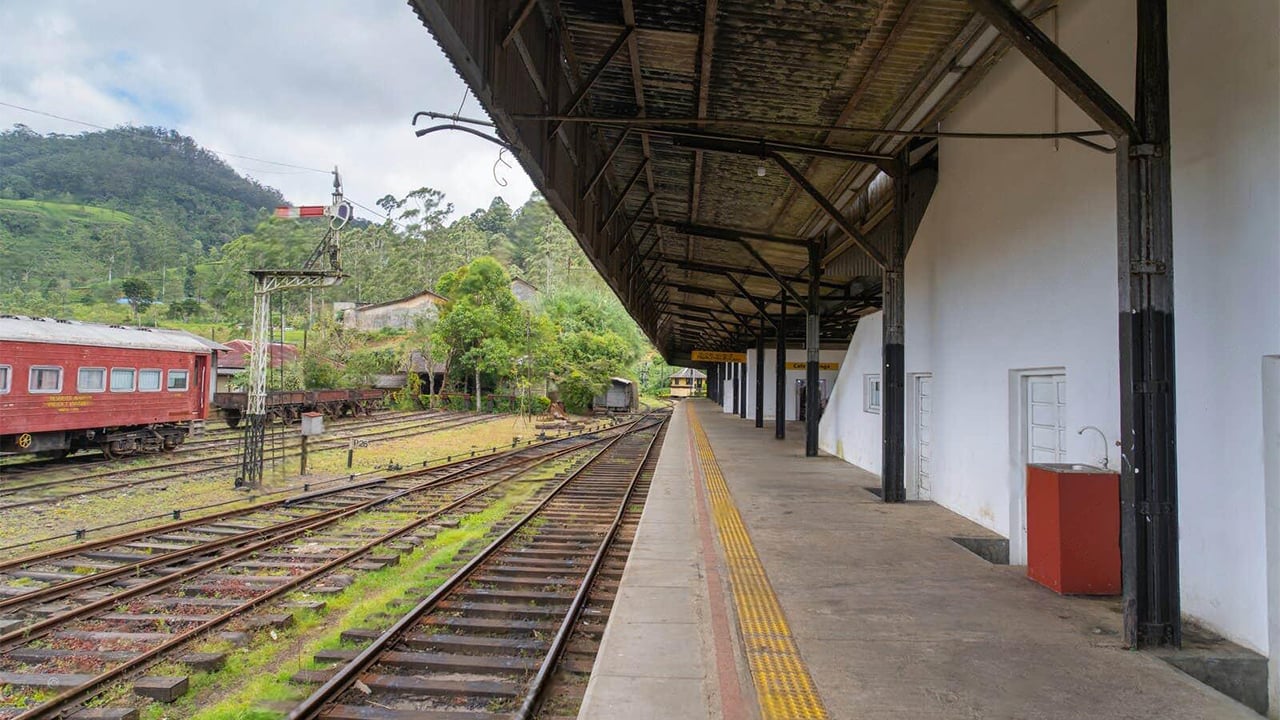
The station was established during the British colonial period as part of the broader effort to connect the Central Highlands with Colombo and the coast. Rail access was critical for the upcountry economy: it moved tea, dairy produce, and other highland goods down to the ports, and brought workers and supplies back up. Ambewela's station building reflects the functional colonial aesthetic common to this line — whitewashed walls, a sloping roof, and a modest platform that has changed very little over the decades. That architectural continuity is part of its appeal today.
The line through Ambewela is part of the Colombo–Badulla railway, which was progressively extended through the late 19th and early 20th centuries. The mountain sections required careful engineering, including tight curves and steep gradients that are still navigated at low speed — which, from a traveller's point of view, is ideal.
What makes the train ride through Ambewela special?
The segment of track around Ambewela passes through some of the most open highland scenery on the entire line. Unlike the forested gorges closer to Kandy or the narrow cuts around Ella, the landscape here is wide and grassland-dominated, with views that stretch across mist-softened ridges. On clear mornings the light is sharp and the distant hills are distinct; by mid-afternoon, low cloud often rolls in and wraps the station in a soft haze.
Dairy farms dominate the land around the station, and the sight of Friesian cattle grazing on open pasture at this altitude has led to Ambewela being nicknamed the "Little New Zealand" of Sri Lanka. The comparison is informal but the landscape does carry a distinctly temperate quality — cooler, greener, and more open than visitors accustomed to lowland Sri Lanka might expect.
The route is also notable for passing through stretches of cloud forest and tea country. Ceylon tea estates cling to the hillsides on either side of the track for much of the journey, and their ordered rows of bushes provide a visual counterpoint to the wilder grassland around Ambewela itself.
How do I get to Ambewela by train?
Ambewela is served by trains running along the Colombo Fort–Badulla main line. Most travellers join the route at Colombo Fort, Kandy, Nanu Oya (the stop for Nuwara Eliya), or Ella, depending on their wider itinerary. The journey from Ella to Ambewela is a popular short segment — roughly two hours of highland scenery — and tickets can be booked in advance through Lakpura for reserved seating in the observation or second-class carriages.
Train frequency on this line is limited; there are only a handful of services per day, and the most scenic runs are the morning trains when visibility tends to be clearest. Checking the schedule before finalising accommodation in the area is advisable, as missing the key morning departure significantly limits what you can do with the rest of the day.
| Journey | Approximate Duration | Key Scenery |
|---|---|---|
| Ella → Ambewela | Around 1 hour 50 minutes to 2 hours | Highland grassland, tea estates, open ridges |
| Nanu Oya → Ambewela | Around 30–40 minutes | Rolling pasture, cloud-line views |
| Kandy → Ambewela | Around 4 to 4½ hours | Full highland panorama, forest, waterfalls, tea country |
What can I do near Ambewela Railway Station?
The station sits within easy reach of several worthwhile destinations. Ambewela Farm — a government-run dairy operation — is one of the best-known attractions in the area and can be visited on foot or by tuk-tuk from the station. It produces milk, yoghurt, and cheese at an elevation that gives the dairy a distinctive character, and the farm itself offers a glimpse into a side of Sri Lankan agriculture that most visitors never encounter.
Horton Plains National Park, a UNESCO World Heritage-listed plateau, is roughly an hour away by road. The park protects a significant area of montane grassland and forest, and its most-visited feature — World's End, a near-vertical escarpment with views down to the lowlands — is best reached in the early morning before cloud builds. Many travellers combine a morning train arrival at Ambewela with an afternoon visit to Horton Plains.
The town of Nuwara Eliya, Sri Lanka's hill-country resort town, is accessible from the nearby Nanu Oya station or by road from Ambewela. Its colonial-era architecture, racecourse, and tea estates make it a natural complement to the station visit. The Grand Hotel, Nuwara Eliya is among the most historically significant properties in the area for those wanting to extend a stay in the highlands.
What is the best time of year to visit Ambewela?
The highlands around Ambewela have two distinct monsoon influences. The inter-monsoon months of January to March are generally the driest and clearest, making them the most reliable for unobstructed views. July and August bring the southwest monsoon to the western slopes, and October to December can be wet from the northeast monsoon. That said, the station's elevation means cloud and mist are possible at any time of year — which many visitors find adds to the atmosphere rather than detracting from it.
Early morning departures offer the best light and the clearest air. If the primary goal is photography or unobstructed views from the train, aim for a train that passes Ambewela before 10 a.m.
Is Ambewela Railway Station worth visiting for its own sake?
The station is not a major heritage attraction in the way that some of Sri Lanka's ancient sites are, but it rewards travellers who are drawn to quiet, atmospheric places. The platform is rarely crowded, the colonial-era structure is well-preserved, and the surrounding landscape — open grassland, dairy farms, mist-wrapped hills — creates a mood that is unlike anywhere else on the island. It functions best as part of a wider highlands itinerary rather than as a standalone destination, but as a stop along one of the world's most scenic rail routes, it is genuinely memorable.
Ambewela railway station timetable
13 trains call at Ambewela on a typical day.
Main Line · 221.5 km from Colombo Fort · Central Province
Station telephone: 052-2222114
| Departs | Towards | Train | Runs |
|---|---|---|---|
| 02:33 am | Badulla | Daily | |
| 04:18 am | Badulla | Night Mail | Daily |
| 08:39 am | Colombo Fort | Udarata Menike | Daily |
| 09:53 am | Badulla | Daily | |
| 11:17 am | Colombo Fort | Daily | |
| 11:31 am | Ella | Saturday and Sunday Only | |
| 01:20 pm | Colombo Fort | Podi Menike | Daily |
| 01:42 pm | Badulla | Denuwara Menike | Daily |
| 03:07 pm | Kandy | Daily | |
| 03:08 pm | Badulla | Podi Menike | Daily |
| 04:35 pm | Kandy | Saturday and Sunday Only | |
| 04:38 pm | Badulla | Udarata Menike | Daily |
| 09:32 pm | Colombo Fort | Night Mail | Daily |
Timetable mirrored from published Sri Lanka Railways schedules, last checked 2026-09-28. Times can change without notice — confirm with the railway before travelling. See the whole network on the Sri Lanka railway station list.
Nearby places
10 places within about 25 km, nearest first.
Related reading
2 pages on closely related subjects.