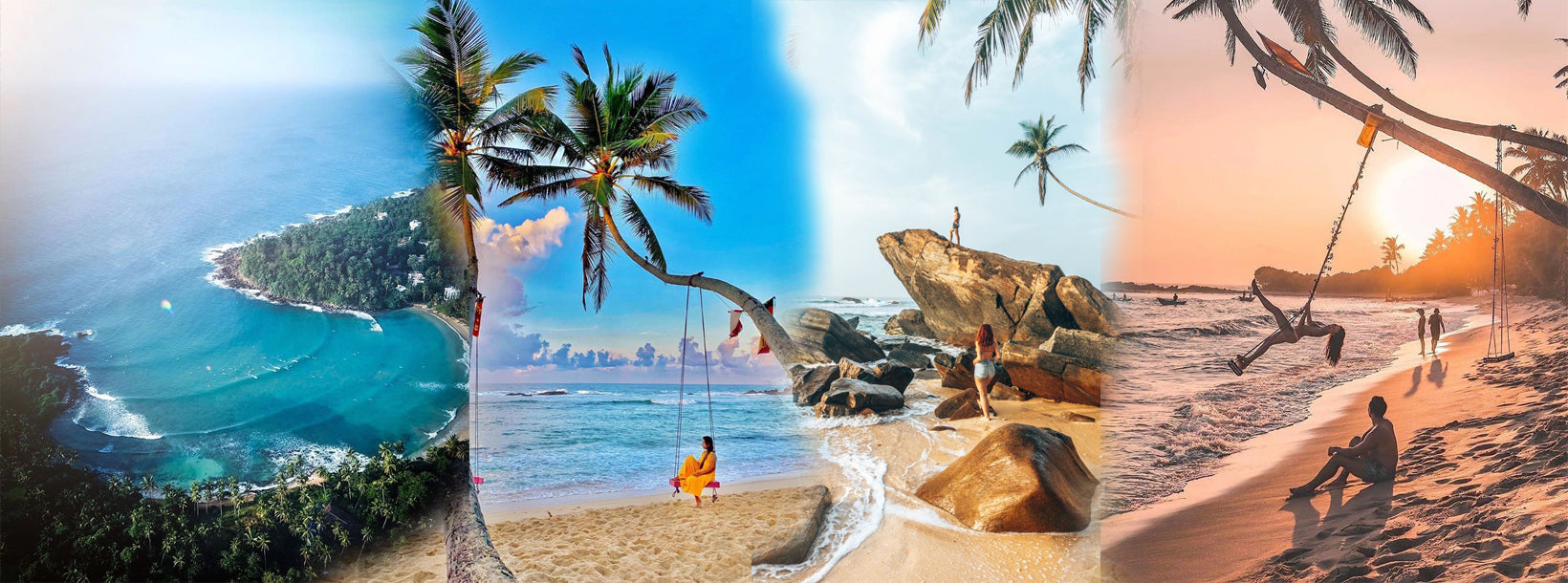
Hiriketiya is a small crescent bay on Sri Lanka's southern coast, tucked just west of Dickwella in the Matara District. A decade ago it was barely on the map; today it draws surfers, slow-travel enthusiasts, and digital nomads who come for the consistent waves and stay for the unhurried rhythm of the place. What sets it apart from the better-known beaches further along the coast is scale: the bay is compact enough to feel intimate, yet it supports a genuine community of cafés, surf schools, and boutique stays.
What does Hiriketiya look like, and what is the beach like?
The bay curves in a near-perfect arc, sheltered at both ends by low rocky headlands that keep the worst of the open-ocean swell manageable. The sand is pale and relatively coarse — typical of Sri Lanka's deep south — and the water shifts from pale green in the shallows to a deeper blue beyond the break. A fringe of coconut palms and tropical vegetation lines the landward edge, and a single lane road behind the beach is lined with guesthouses, cafés, and small surf shops. There are no resort complexes here; the scale stays deliberately human.
Is Hiriketiya good for surfing, and who is it suited to?
The bay's orientation and the reef formation at its southern end produce a wave that is particularly forgiving for beginners and intermediates. The peak breaks consistently during the main surfing season, which runs roughly from November through to April, when the southwest monsoon is absent and the sea is relatively calm. More experienced surfers often use the bay as a warm-up spot before heading to nearby breaks around Midigama or Weligama for longer, more technical rides. Several surf schools operate from the beach, offering board rental and lessons at varying skill levels.
- Best season for surfing: November to April
- Wave type: reef-influenced beach break, generally mellow
- Skill level: beginner to intermediate; advanced surfers will find the bay a supplement rather than a destination in itself
- Board rental and lessons: available directly on the beach from multiple operators
When is the best time to visit Hiriketiya?
The southern coast of Sri Lanka is at its driest and clearest between November and April, which aligns with the island's northeast monsoon season — a period when the north and east of the country receive rain but the south stays largely dry. Sea conditions in this window are calm, making swimming and surfing comfortable. May through October brings the southwest monsoon, and while the coast is not entirely off-limits during this period, seas can be rough and some days unsuitable for swimming. If visiting in the shoulder months — October or late April — conditions can be good and the beach noticeably less crowded.
How do I get to Hiriketiya from Colombo?
Hiriketiya sits around 200 km south of Colombo, and the journey by private car or transfer typically takes between three and a half to four and a half hours depending on traffic through Galle and Matara. The Southern Expressway (E01) reduces the first leg significantly; from the Matara interchange it is a relatively short drive along the coastal road to Dickwella and then on to the bay. There is no train station at Hiriketiya itself — the nearest main station is Matara, from which a tuk-tuk or taxi onward is the standard option. For most visitors arriving at Bandaranaike International Airport in Negombo, a private transfer arranged in advance is the most convenient and stress-free way to reach the bay directly.
What else is there to do near Hiriketiya?
The bay itself has enough to fill a few days, but the surrounding area rewards those who venture out. The Kudawella Blowhole, also known as Hummanaya, is one of the largest natural blowholes in Asia and lies within easy reach — a short tuk-tuk ride along the coast. Dickwella Beach, just a couple of kilometres away, is broader and less sheltered, giving a different feel to Hiriketiya's enclosed bay. Further afield, the Kalametiya Bird Sanctuary offers a quieter, more nature-focused experience: the lagoon and scrub habitat support a wide range of resident and migratory waterbirds, and guided boat trips into the sanctuary can be arranged from Hiriketiya. To the east, Tangalle provides a wider range of restaurants and facilities without the crowds of Unawatuna or Mirissa.
- Kudawella Blowhole (Hummanaya): roughly 3 km from Hiriketiya; most active at high tide
- Dickwella Beach: open, family-friendly beach a short drive away
- Kalametiya Bird Sanctuary: around 20 km east; boat-based birdwatching excursions available
- Tangalle: around 20 km east; good base for day trips to Rekawa Turtle Beach
- Weligama and Midigama: around 25–30 km west; more advanced surf breaks and a lively beach town scene
Where to stay at Hiriketiya
Accommodation is concentrated along the single road that follows the bay and on the lanes that run inland from it. Options range from simple surf camps — shared dorms and communal kitchens designed for budget-conscious surfers — to stylish boutique studios and villa-style properties that have developed as the bay's reputation has grown. Most places are small by design, typically fewer than a dozen rooms, and booking ahead during peak season (December to March) is advisable. Properties sit close to the water, meaning a short walk to the beach from almost any address.
What are the beaches and water conditions like for swimming?
Swimming is generally comfortable from November to April when the sea is calm. The bay's sheltered shape means it is usually safer than the exposed beaches in the area, but a degree of wave activity is always present — this is a surf beach first. Children and non-swimmers should stay in the shallower sections at mid-bay and keep clear of the break zone near the headlands. During the southwest monsoon, rip currents can develop and local advice should always be followed before entering the water.
Can Hiriketiya be combined with a broader Sri Lanka itinerary?
Very easily. The southern coast location puts Hiriketiya within manageable driving distance of Yala National Park to the east, the hill country around Ella to the northeast, and the historic Galle Fort to the northwest. A popular routing for travellers combines a few nights in Hiriketiya with a wildlife safari at Udawalawe or Yala and then a scenic train journey up to Ella — all achievable within a two-week itinerary. Private tours with combined transfers and safari stops can be arranged to link the beach directly with inland highlights without backtracking to Colombo.