Cloves (Karabu Nati)


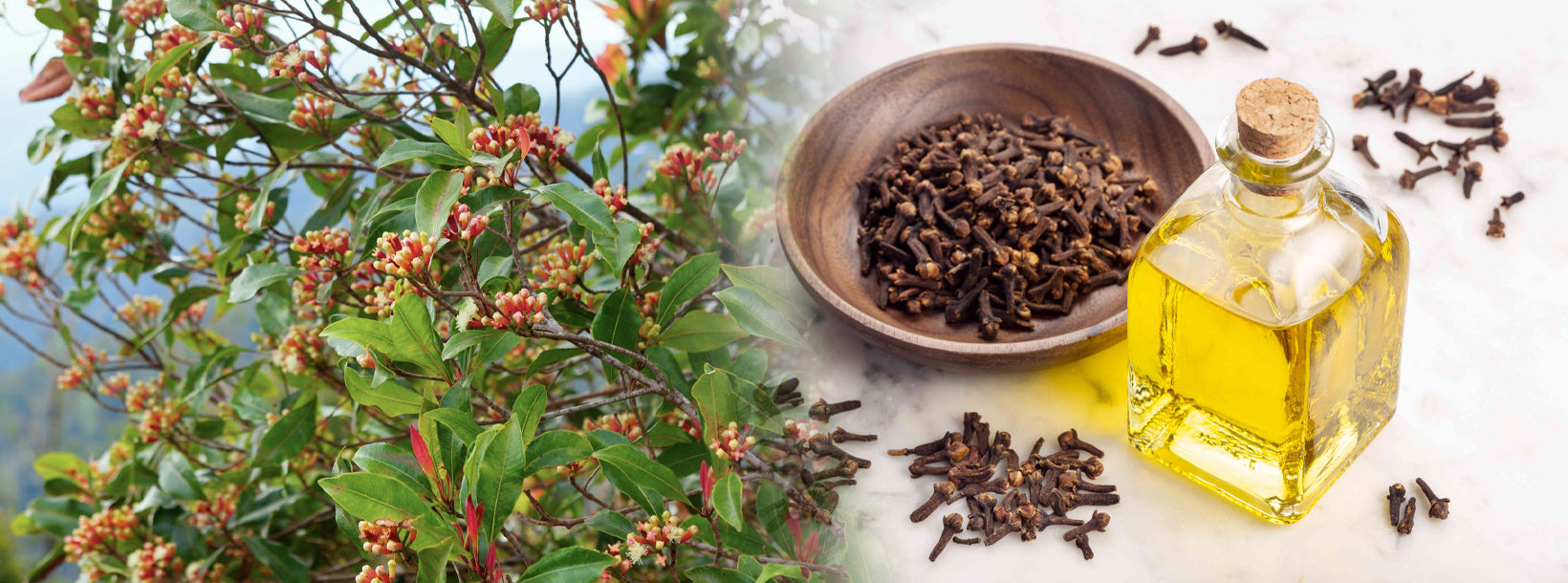
Cloves are the aromatic flower buds of a tree in the family Myrtaceae, Syzygium aromaticum. They are native to the Maluku Islands (or Moluccas) in Indonesia, and are commonly used as a spice, flavoring or fragrance in consumer products, such as toothpaste, soaps, or cosmetics. Cloves are available throughout the year owing to different harvest seasons across various countries. Although the time and manner of introduction of cloves into Sri Lanka are not known, the general belief is that the Arabs or colonists brought the crop to the island as Sri Lanka was a major market for spices.
Clove grows well in a humid tropical climate from sea level up to an elevation of about 1,000m. Average rainfall of 1,750 - 2,500mm. per annum is sufficient for the crop. It is necessary, however for the dry periods to alternate with the moist ones for good flowering. Still, it cannot withstand prolonged drought. Clove is cultivated in the wet zones of the mid-country, that is, in the districts of Matale, Kegalle, and Kandy. However, cultivation of clove is also being considered in the low country.
Clove suppliers in Sri Lanka export a range of products to the global market including the finest clove buds and clove oil to the global market. The country is one of the top exporters of clove to the global markets and provides for nearly 8.5% of the global demand for clove whole fruits, buds, and stems, mainly exporting to India, the USA, Saudi Arabia, UAE, and Germany.
Usage of Cloves
Clove oils, dried flower buds, leaves, and stems are used to make medicine. Clove oil contains a chemical called eugenol that might help decrease pain and fight infections. Clove is also a popular ingredient in cigarettes.
Clove is largely used as dried whole buds. Ground clove is a major ingredient in curry mixtures, and clove oil is used for flavouring food, in the pharmaceutical industry, and in the perfume industry.
Cloves are used either whole or ground to add flavour for both sweet and savoury foods in pickling and the production of sauces and ketchup. It is also used in the cigarette industry as a flavouring agent.
Elaborating on the medicinal value of clove oil, it must be noted that it is an important natural antibacterial drug. It is used in many ?elds, including dentistry, pharmaceuticals, and aromatherapy. It is used as an analgesic, antiseptic, warming, disinfectant, and antibacterial because it inhibits the growth or kills most pathogens, such as E.scherichia coli, Mycobacterium phlei, Bacillus subtilis, Streptococcus aureus, Aspergillus niger, Penicillium chrysogenum. Clove oil is recommended for inhalation in the treatment of sore throat, colds, catarrh and in?ammation of the mucous membranes of the mouth. It also helps in the treatment of any breathing problems, general weakness and neuralgia.


You may also like
-
Lakpura ægte kanel gøer (250 g)
Normalpris Fra $3.87 USDNormalpris$4.29 USDUdsalgspris Fra $3.87 USDUdsalg -
Lakpura® Dehydrerede Karryblade
Normalpris Fra $1.93 USDNormalpris$2.15 USDUdsalgspris Fra $1.93 USDUdsalg -
Lakpura® Dehydrerede Belimal (Aegle Marmelos) Blomster
Normalpris Fra $3.14 USDNormalpris$3.49 USDUdsalgspris Fra $3.14 USDUdsalg -
Lakpura dehydreret Pandan Rampe blade
Normalpris Fra $1.93 USDNormalpris$2.15 USDUdsalgspris Fra $1.93 USDUdsalg