The Lake House — officially Associated Newspapers of Ceylon Limited (ANCL) — stands as one of Colombo's most recognisable colonial-era institutions. Founded in 1926 by media pioneer D.R. Wijewardena, the building served for decades as the nerve centre of Sri Lanka's print journalism, housing some of the most widely read newspapers in the country. Today it remains an active media organisation and a reference point for anyone tracing the arc of Sri Lanka's modern history.

What is the history behind The Lake House?
D.R. Wijewardena established ANCL during the late colonial period, at a time when a Ceylonese-owned press was a significant act of cultural assertion. The organisation grew to publish titles in Sinhala, Tamil, and English, reaching readers across the island and playing a formative role in shaping public discourse during the independence movement and the decades that followed. After independence in 1948, The Lake House continued to operate as a major media group before being nationalised in 1973, a move that remains a reference point in discussions of press freedom in Sri Lanka.
The building's position near Colombo's broader heritage circuit means it often features on walking tours of the Fort and Slave Island neighbourhoods, where colonial-period architecture is concentrated.
What does The Lake House look like architecturally?
The structure reflects the British colonial building style that dominated Colombo's civic and commercial centre in the early twentieth century. Its brick façade, classical columns, and symmetrical composition are characteristic of the period — functional yet formally composed. The building's scale and prominent placement near Beira Lake give it a presence that is easy to appreciate from the street even without entering.
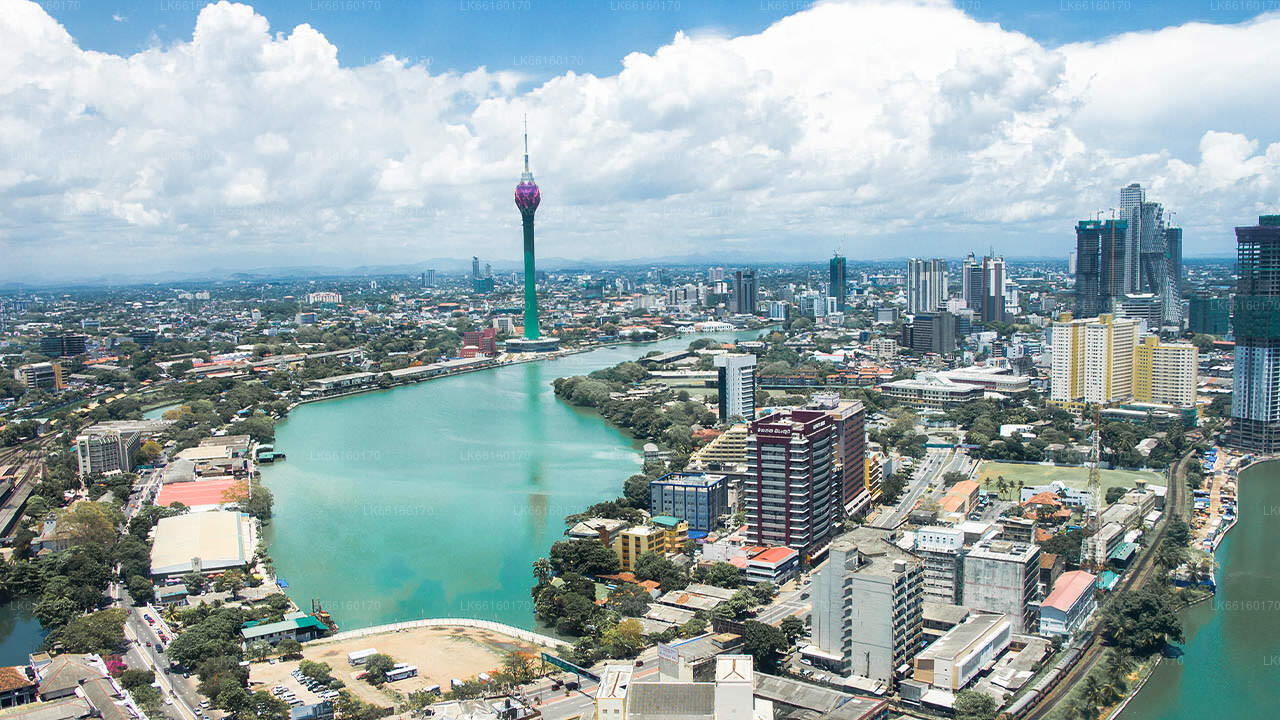
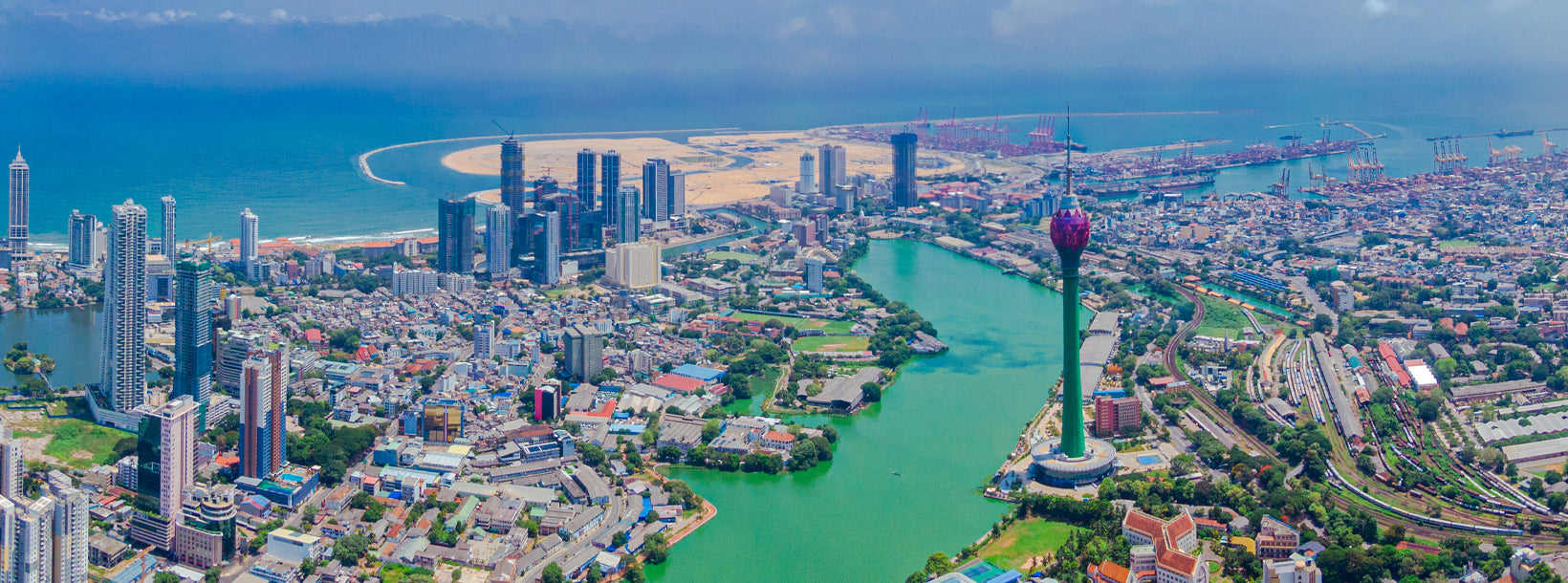
The surrounding area rewards a slow walk. Beira Lake itself provides an open foreground that allows a clear view of the façade, and the adjacent streets are lined with other administrative and commercial buildings of similar vintage. The Colombo Lotus Tower, visible from many points in the city, offers a sharp visual contrast — a modern landmark rising just a short distance from these colonial-era structures.
Can visitors enter The Lake House?
The building functions as a working media headquarters, so general public access to the interior is not available. Visitors come primarily to view the exterior, photograph the façade, and absorb its place in the streetscape. For those with a professional interest in journalism or media history, formal arrangements with ANCL may be possible, but these are not a standard tourist offering.

The exterior visit requires no fee and no advance planning. It works naturally as a stop within a longer walk through the Fort district, combined with nearby landmarks such as the Old Parliament Building, Colombo Harbour, and the streets around Chatham Street.
When is the best time to visit The Lake House?
The Lake House can be visited at any point in the year. Colombo's climate is warm and humid throughout, with the heaviest rain falling during the south-west monsoon from around May to August and the north-east monsoon from October to January. Outside peak rain periods, morning visits are generally more comfortable — temperatures are lower and the light is well suited to photography of the building's façade.
The Fort and Slave Island areas are most active on weekdays during business hours, which gives a livelier sense of the city's commercial energy. Weekends are quieter and allow a more leisurely walk.
How do I get to The Lake House from central Colombo?
The building is located close to Beira Lake in the Fort district, making it straightforward to reach from most central hotels. A short taxi or three-wheeler ride from Colombo Fort railway station or from the Galle Face Green area covers the distance in well under ten minutes in light traffic. For those using public transport, buses running through Fort pass within walking distance.
Colombo's traffic can be heavy during morning and evening peak hours. Travelling by tuk-tuk or on foot from nearby points in Fort is often faster than a longer taxi ride at those times.
What else can I see near The Lake House?
The Fort district packs a high density of historic and architectural interest into a compact area. Beira Lake is directly adjacent and worth a short walk along its promenade. The Old Parliament Building, the Colombo Lighthouse, and the General Post Office are all within easy reach on foot. Slightly further afield, Pettah — Colombo's busiest market district — offers a vivid contrast in street life and commerce.
- Beira Lake: the open water immediately beside The Lake House, offering views back toward the building
- Old Parliament Building: a fine colonial structure a short walk away, now housing the Presidential Secretariat
- Galle Face Green: Colombo's seafront esplanade, around ten minutes on foot
- Pettah Market: a ten-to-fifteen minute walk, the commercial heart of the city with a very different character
- Slave Island (Kompanna Veediya): a historically layered neighbourhood with colonial and post-colonial buildings
Why does The Lake House matter to Sri Lanka's story?
Few buildings in Colombo carry as much meaning for the history of ideas as The Lake House. At its peak, the newspapers produced here shaped political debate, reported on independence, covered the early years of post-colonial governance, and reached a readership spanning every region of the island. The press, in the decades before radio and television became dominant, was the primary medium through which a national public sphere took shape — and The Lake House sat at the centre of that process.
For visitors interested in moving beyond temples and beaches to understand how modern Sri Lanka was formed, The Lake House offers a tangible point of connection to that story. It belongs in the same conversation as the country's other colonial-period civic institutions, even if its significance is less universally recognised than, say, the monuments of the ancient kingdoms.