Standing at the junction of Chatham Street and Janadhipathi Mawatha in Colombo Fort, the Old Colombo Lighthouse — more commonly known today as the Colombo Fort Clock Tower — is one of the city's most quietly remarkable colonial landmarks. The tower no longer guides ships into harbour, but it has kept time for Colombo's streets for well over a century and a half, and its layered history rewards anyone curious enough to pause and look up.

What is the history of the Colombo Fort Clock Tower?
The tower was constructed between 1856 and 1857 by the Public Works Department, under the supervision of John Flemming Churchill, then Director General of Public Works. It was formally commissioned on 25 March 1857. At 29 metres (95 ft), it was the tallest structure in Colombo at the time of its completion.
The design is credited to Emily Elizabeth Ward, wife of Governor Sir Henry George Ward (1797–1860) — an unusual attribution for a public building of that era, and one that distinguishes this structure from the many anonymous colonial commissions of the period. The project reflected both the ambitions of the colonial administration and the personal influence that certain figures within the Governor's circle could exercise over the built environment of Colombo.
The clock itself has an equally interesting backstory. It was originally commissioned in 1814, during the tenure of Governor Sir Robert Brownrigg (1759–1833), at a cost of £1,200. For reasons that were primarily economic, the mechanism sat in a warehouse for more than four decades before finally being installed in 1857. The clockmaker responsible was Dent — the same celebrated English firm that manufactured the clock movement for the Elizabeth Tower at Westminster Palace (famously known by the name of its bell, Big Ben) in 1852.
How did the clock tower also function as a lighthouse?
In the mid-nineteenth century, Colombo's harbour was far less developed than it is today, and a lighthouse positioned within the fort made practical sense for vessels navigating the coastline. The tower served a dual purpose from early in its life, combining a public timepiece with a navigational light for ships approaching the port.
Over time, however, the expanding city worked against it. As taller commercial and administrative buildings rose around Colombo Fort, they gradually obscured the lighthouse beam. The light was formally decommissioned on 12 July 1952. Its replacement, the Galle Buck Lighthouse, was subsequently erected on Marine Drive to resume navigational duties from a less obstructed position.
It is worth noting that an earlier Colombo lighthouse had existed before the current tower. That original structure was a neo-classical building on a bastion at the ocean edge of the fort, featuring a 23-metre wooden light tower rising from a two-storey circular brick building surrounded by a colonnade. Erected in 1829, it was demolished along with the fort ramparts between 1869 and 1871.
What are the architectural and mechanical features of the tower?
The tower's clock mechanism is its most historically significant feature. Manufactured by Dent of London, it belongs to the same tradition of precision English horology that produced some of the most accurate public clocks of the Victorian era. The movement has kept the tower functional as a timepiece long after its role as a lighthouse ended.
The bell arrangement in the tower consists of a main bell weighing approximately 150 kg and two auxiliary bells of around 152 kg each. Together they produce the chiming sequence that has marked the hours for residents of Colombo Fort across generations.
The exterior of the tower reflects the restrained colonial architectural style prevalent in mid-nineteenth century Colombo — functional in structure but considered in its proportions. Its position at a major intersection of what was once the administrative heart of colonial Ceylon means it has been a visual anchor for the surrounding streetscape throughout successive eras of the city's development.
Where exactly is the Clock Tower located, and how do I get there?
The tower stands at the intersection of Chatham Street and Janadhipathi Mawatha (formerly Queens Road) in Colombo Fort — the historic commercial and administrative core of the city. The area is well served by public transport, and the tower is within comfortable walking distance of the Colombo Fort railway station.
If you are combining the Clock Tower visit with a broader exploration of the capital, a Colombo city tour is a practical way to cover the Fort district alongside other landmarks such as the Old Parliament, the Dutch Hospital, and the National Museum. The Fort district is most comfortably explored on foot in the early morning or late afternoon, when traffic is lighter and the temperature more forgiving.
Is the Clock Tower open to visitors?
The tower itself is not open to the public for interior access — it functions as a working monument within a busy commercial district rather than a managed tourist site. Visitors can, and regularly do, view and photograph the exterior freely. The surrounding streets of Colombo Fort offer considerable interest in their own right, with colonial-era buildings, the restored Dutch Hospital shopping precinct, and the harbour promenade all within easy reach.
What else can I see near the Old Colombo Lighthouse?
The Fort district concentrates a dense layer of colonial and post-colonial heritage within a relatively compact area. Key points of interest within walking distance include the Old Parliament Building (now the Presidential Secretariat), the Lighthouse Clock Tower's near neighbour on Janadhipathi Mawatha, and the Dutch Hospital — a seventeenth-century VOC structure now adapted into a dining and retail precinct.
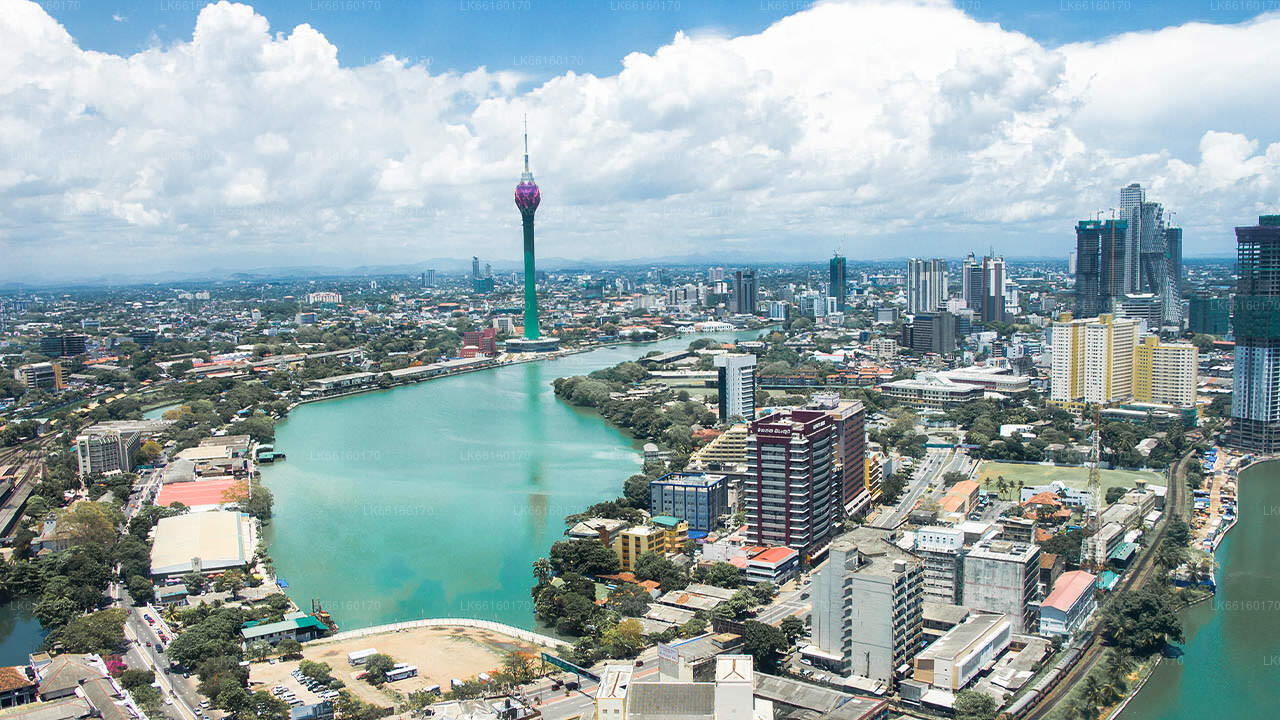
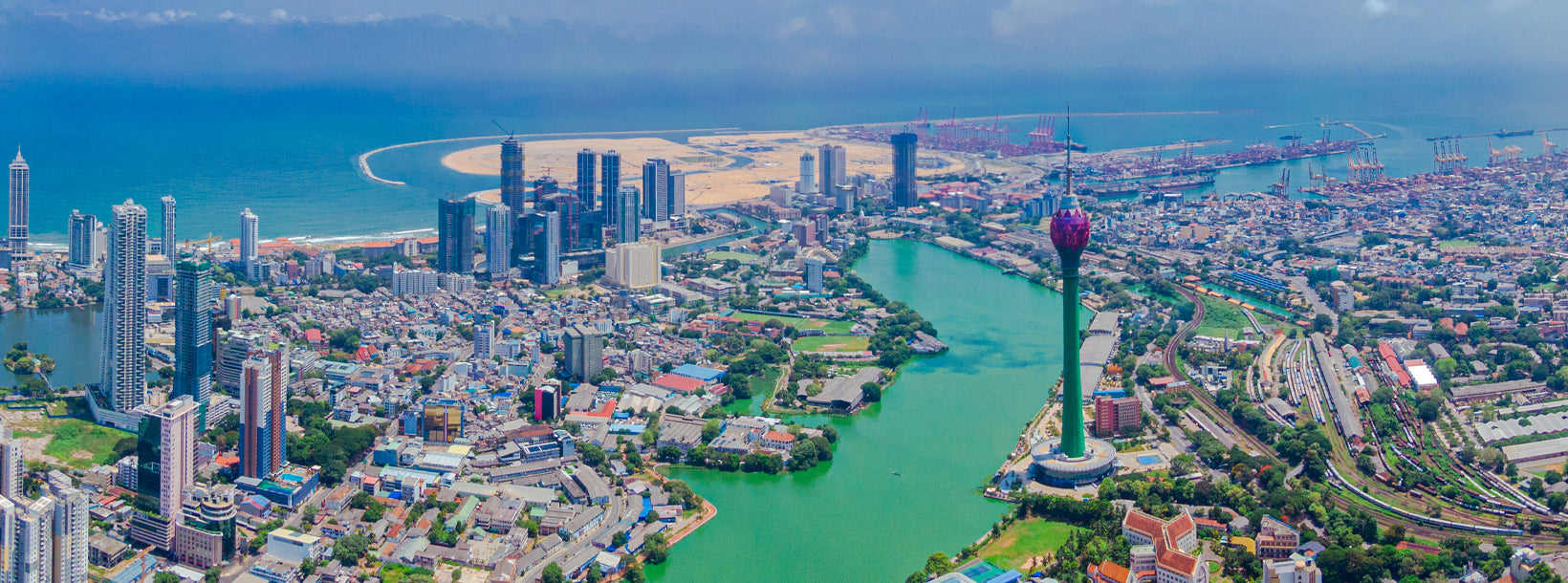
For those with an interest in Colombo's more contemporary architecture, the Colombo Lotus Tower — visible on the city skyline — represents the modern counterpoint to the Clock Tower's Victorian heritage, and makes for an interesting juxtaposition when considering how Colombo's built identity has evolved over nearly two centuries.
The harbour waterfront, accessible from Marine Drive, provides context for understanding why a lighthouse was needed here at all. Standing at the water's edge, the historical logic of the Fort as a maritime command point becomes immediately clear.
Why does this landmark matter in the broader context of Colombo's history?
The Clock Tower is more than an architectural curiosity. It represents a specific moment in the colonial administration of Ceylon — when the British were reshaping Colombo from a modest fortified port into a regional commercial hub. The decades around its construction saw the demolition of the old fort ramparts, the expansion of the harbour, and the laying out of the street grid that still defines central Colombo today.
The story of the clock mechanism — commissioned in 1814, warehoused for 43 years, and then finally installed — also speaks to the economic constraints and shifting priorities of colonial governance in a way that official histories tend to underplay. That a timepiece ordered by one governor was only put to use under another, nearly half a century later, is a small but telling detail about how colonial infrastructure was actually built.
For travellers passing through Colombo at the start or end of a Sri Lanka itinerary, the Clock Tower offers a brief but grounding encounter with the city's layered past — one that requires no entry fee and no more than twenty minutes to appreciate properly.