Colombo Harbour sits at the heart of Sri Lanka's relationship with the sea — a relationship that stretches back more than two millennia. Today it is the largest and busiest port in South Asia, processing millions of containers a year and anchoring Sri Lanka's position as a key transshipment hub on the Indian Ocean trade corridor. For visitors arriving by cruise ship, the harbour is also the first impression of the island: a working waterfront framed by the towers of a rapidly changing city.
Why is Colombo Harbour considered so strategically important?
The port's value has always come from geography. Colombo sits almost exactly at the midpoint of the major east–west shipping lanes between Europe, the Middle East, and East Asia, making it a natural call for vessels that need to transship cargo without making long detours. The harbour has a dredged depth of around 15 metres, allowing it to accommodate large container vessels. Ranked consistently among the top 35 ports in the world by container throughput, it handles approximately 15 percent of all transshipment cargo moving through South Asian waters. The Sri Lanka Navy also maintains a fleet base here, underscoring the port's dual commercial and strategic role.

What is the history behind Colombo Harbour?
Long before any colonial power arrived, the natural anchorage at Colombo was well known to traders crossing the ancient Silk Route. Roman, Arab, and Chinese merchants recorded it as a reliable provisioning stop. By the 8th century, Arab Muslim traders had established a permanent presence, using Colombo as a regional trading base. Indians and Persians are generally considered to be among the earliest groups to use the anchorage systematically.
The Portuguese reached the harbour in 1505, the first European power to land on the island. Within a decade they had expelled the existing Muslim trading community and begun constructing a fortified settlement in 1517 — the origin of what would eventually become Colombo Fort. Control passed to the Dutch in the mid-17th century. The Dutch were less interested in the port itself than in the lucrative cinnamon harvest of the interior, and they maintained the fort primarily to protect that trade rather than to develop the harbour as a commercial entity.
The British took possession in 1796 and made Colombo the capital of their new colony, Ceylon. Under British administration, civilian infrastructure grew steadily around the harbour: warehouses, customs offices, residential districts, and eventually a proper breakwater that transformed a natural roadstead into a sheltered modern port. Independence in 1948 brought the harbour into Sri Lankan hands, and a series of major development programmes followed.
How did the port modernise through the late 20th century?
The Sri Lanka Ports Authority was established in 1980, giving the harbour a dedicated administrative body for the first time. Through the early 1980s the port underwent substantial infrastructure investment to handle containerised cargo — the global shipping standard that had by then replaced bulk break-bulk loading. Two container terminals were operational by the end of the decade, with three more following in the early 1990s. This expansion, combined with the port's inherent locational advantage, made Colombo increasingly attractive to major mainline shipping services across Asia, Europe, and the Americas. By 2004 the port was processing around 2.2 million TEUs annually, rising to approximately 2.45 million TEUs the following year.
What did the South Asia Gateway Terminal expansion involve?
A large-scale expansion project costing around USD 1.2 billion began in 2008, led by the Sri Lanka Ports Authority in partnership with Hyundai Engineering and Construction. The project reached completion in April 2012. Its primary aim was to increase annual container handling capacity significantly and to accommodate the new generation of ultra-large container vessels carrying upwards of 12,000 TEUs — ships that many smaller regional ports cannot serve at all.
The harbour's current berth infrastructure includes feeder berths for smaller intra-regional vessels and dedicated container berths equipped with ship-to-shore cranes. These cranes run on rail tracks along the quay, using specialised spreaders that lock onto standardised corner castings on each container, allowing rapid and precise loading and unloading even in challenging conditions.
What facilities does Colombo Harbour offer today?
- Container terminals with multiple deep-water berths capable of receiving the largest vessels in current commercial use.
- Feeder berths handling shorter-haul routes connecting Colombo to smaller ports across South and Southeast Asia.
- Passenger and cruise terminal welcoming international cruise lines and providing a direct gateway into the city.
- Naval base for the Sri Lanka Navy, operating alongside the commercial port.
- Cold-storage and warehousing facilities supporting the export of perishable goods, including tea, seafood, and fresh produce.
How does Colombo Harbour connect to the wider city?
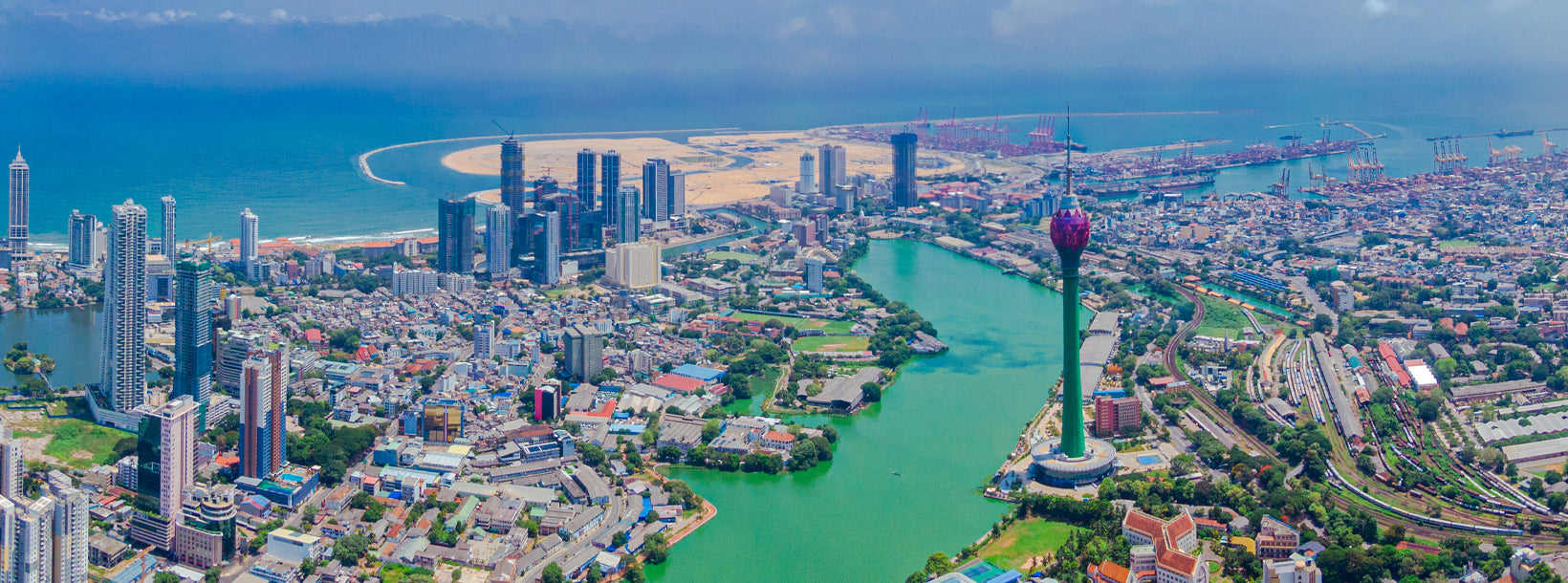
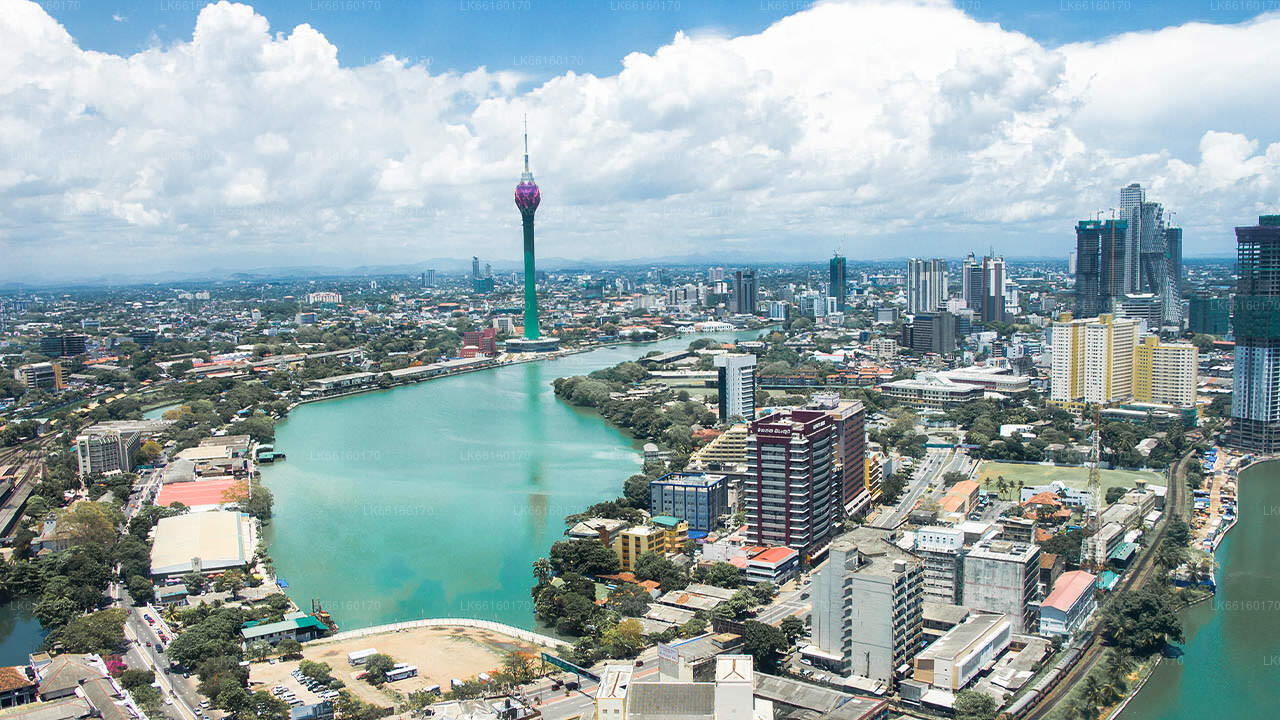
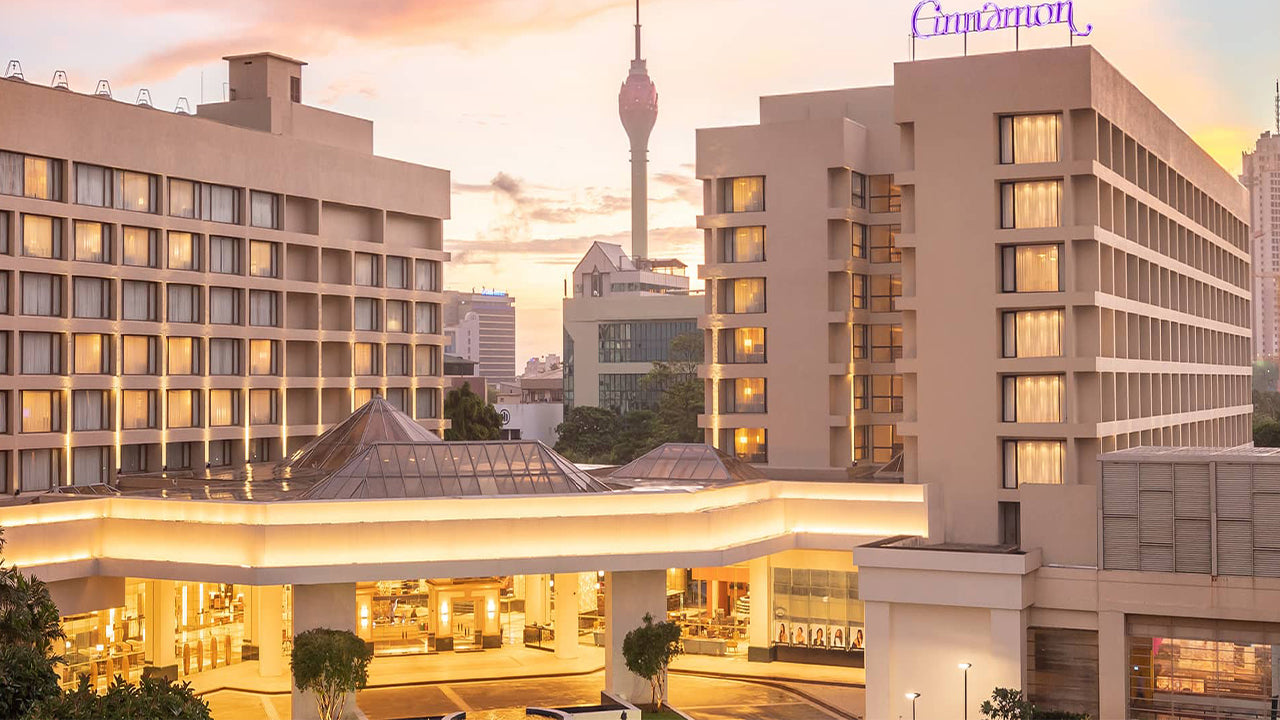
The harbour occupies the western edge of Colombo Fort, the commercial and administrative core of the capital. The area immediately surrounding the port has changed considerably in recent years. The Colombo Lotus Tower, now the tallest self-supported structure in South Asia, is visible from the water. Reclamation projects have extended the city's footprint into the sea to the south of the harbour, adding new districts and infrastructure to what was once open ocean.
For travellers, the harbour district is typically the starting point for a broader exploration of the capital. A Colombo city tour can take in the Fort area, the Pettah bazaar immediately inland from the port, colonial-era architecture, and the modern commercial neighbourhoods stretching south along Galle Road — all within a manageable half-day itinerary.
Can visitors access or tour Colombo Harbour?
Public access to the working commercial terminals is restricted for security reasons, as is standard at any major international port. Cruise passengers arrive at a dedicated terminal with immigration and customs facilities. The harbour can be observed from several points along the Colombo seafront, and the historic Fort district immediately adjacent offers considerable historical and architectural interest. Guided city tours typically include the Fort area and can provide context for the harbour's role in shaping Colombo's urban layout.
What exports pass through Colombo Harbour?
Sri Lanka's principal export categories — Ceylon tea, apparel and textiles, rubber products, spices including black pepper, and electronics — all move through Colombo. As a transshipment hub, the port also handles enormous volumes of cargo that originates or is destined for other countries in the region, particularly India, Bangladesh, and the Maldives. This transshipment function accounts for a significant proportion of total container volumes and is a key reason why global carriers include Colombo as a regular port of call.