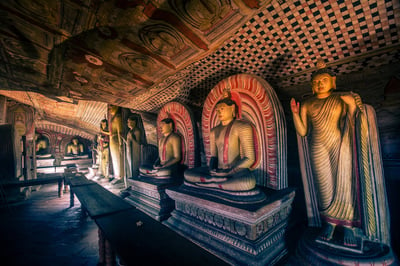
معبد دامبولا الكهفي — المعروف على نطاق واسع بالمعبد الذهبي لـ دامبولا — هو أكبر مجمع معبد كهفي وأفضله حفظاً في سريلانكا، وأحد أبرز المواقع التراثية في البلاد. حظي المجمع باعتراف منظمة اليونسكو وإدراجه ضمن مواقع التراث العالمي عام 1991، ويقع فوق هضبة جرانيتية ترتفع نحو 160 متراً عن السهول المحيطة، مما يجعله مرئياً من مسافات بعيدة عبر المثلث الثقافي.
ما هو المعبد الذهبي في دامبولا؟
يمتد المعبد عبر خمسة كهوف منحوتة في صخرة ضخمة واحدة مُدلاة، ويضم 153 تمثالاً للبوذا، وثلاثة تماثيل لملوك سريلانكا، وأربع صور لآلهة هندوسية من بينها فيشنو وغانيشا. تتبع الأسقف المرسومة التضاريس الطبيعية للصخرة دون أن تترك سطحاً مستوياً إلا وزيّنته الزخارف — إذ تغطي اللوحات الجدارية مجتمعةً نحو 2,100 متر مربع، لتشكّل واحدة من أوسع مجموعات الفسيفساء المستمرة في آسيا. وتشمل الموضوعات إغواء البوذا بالشيطان مارا، وأول خطبه في سارناث، ومشاهد من حكايات جاتاكا.
على الرغم من أن الكهوف الخمسة تُزار بالتسلسل، فإن لكل منها طابعه الخاص وتاريخه الراعي المميز. يُعدّ الكهف الثاني (معبد ماهاراجا فيهاريا) الأكبر والأكثر زخرفة، إذ يبلغ عرضه نحو 52 متراً، ويضم 56 تمثالاً للبوذا تحت أروع سقف مرسوم في المجمع. أما الكهف الأول (معبد ديفاراجا فيهاريا) فيهيمن عليه تمثال مونوليثي واحد لبوذا مستلقٍ، يُعتقد أنه من أقدم التماثيل في المجمع.
ما عمر معبد دامبولا الكهفي؟
سكن البشر الأوائل من سريلانكا هذه الملاجئ الصخرية قبل وصول البوذية بأمد بعيد. وقد كشفت الحفريات في الموقع المجاور إيبانكاتووا عن مدافن تحتوي على رفات بشرية يُقدّر عمرها بنحو 2,700 عام، مما يدل على استمرار الحضور البشري في هذه المنطقة عبر آلاف السنين.
تحوّل مجمع الكهوف رسمياً إلى معبد بوذي في القرن الأول قبل الميلاد على يد الملك فالاغامبا (المعروف أيضاً بـ فاطاغاماني أبهايا) من أنورادابورا. إذ نُفي من عاصمته نحو 15 عاماً إثر غزو جنوب الهند، فلجأ إلى هذه الكهوف. وحين استعاد أنورادابورا، عاد وقدّس الكهوف مكاناً للعبادة وفاءً بنذره. وواصل الملوك اللاحقون الزيادة في زخرفة المجمع؛ فقام الملك نيسانكا مالا من بولونارووا بتذهيب الكهوف وإضافة نحو 70 تمثالاً للبوذا عام 1190 ميلادياً. وفي القرن الثامن عشر، أشرف ملوك كاندي على برنامج ترميم وإعادة رسم شامل. وفي عام 1938، أُضيفت أروقة مقوّسة ومداخل مثلثية إلى واجهات الكهوف، مما منح المجمع مظهره الخارجي المميز باللون الأبيض. وثمة حافة مجرى منحوتة على امتداد الصخرة المُدلاة بالكامل تحفظ الأجزاء الداخلية جافة بشكل لافت حتى خلال موسم الرياح الموسمية الغزيرة.
ما هي الكهوف الخمسة في دامبولا؟
- الكهف الأول – ديفاراجا فيهاريا (معبد رب الآلهة): أقدم الكهوف، تهيمن عليه تمثال بوذا مستلقٍ بطول 14 متراً وصورة للإله Vishnu في حجرة منفصلة.
- الكهف الثاني – ماهاراجا فيهاريا (معبد الملوك العظماء): أكبر الكهوف، ويضم تمثالَي الملك فالاغامبا والملك نيسانكا مالا، وسقفاً مرسوماً بإتقان بالغ، وخزاناً حجرياً يتغذى من تسرب المياه الطبيعي — ويُقال إن ماءه لم ينضب قط.
- الكهف الثالث – ماها ألوت فيهاريا (المعبد الكبير الجديد): بُني بأمر من أحد ملوك كاندي في القرن الثامن عشر، ويتميز بسقف مرسوم بجمال بديع وتمثال كبير لبوذا جالسٍ.
- الكهف الرابع – باشيما فيهاريا (المعبد الغربي): كهف أصغر حجماً تتوسطه داغوبا (ستوبا)؛ يرى الموروث المحلي أن الداغوبا كانت تحتوي في يوم ما على مجوهرات تعود للملكة سوماواثي.
- الكهف الخامس – ديفانا ألوت فيهاريا (المعبد الجديد الثاني): أحدث الكهوف إضافةً، استُخدم في الأصل مستودعاً ثم حُوّل إلى معبد؛ ويضم تمثال بوذا مستلقٍ وصوراً لآلهة محلية.
أين تقع دامبولا وكيف أصل إليها؟
تقع دامبولا في المقاطعة الشمالية الوسطى، على بعد نحو 148 كم شمال شرق كولومبو، و72 كم شمال كاندي، و43 كم شمال ماتالي. أيسر طريقة للوصول إلى المعبد من كولومبو أو كاندي هي بالسيارة الخاصة أو عبر تحويلة مع سائق مرشد، مما يتيح لك أيضاً الجمع بين دامبولا ومواقع مجاورة كـ قلعة صخرة سيغيريا في يوم واحد.
تسير حافلات عامة بانتظام بين كولومبو وكاندي ومدينة دامبولا، ويقع مدخل المعبد الكهفي على بعد نحو 1.5 كم من محطة الحافلات الرئيسية. تستغرق الصعود من موقف السيارات إلى مداخل الكهوف نحو 20 دقيقة سيراً على الأقدام عبر درج حجري عريض. يجب خلع الأحذية قبل الدخول إلى الكهوف، لذا يُستحسن ارتداء الصنادل لتسهيل الزيارة.
ما أفضل وقت لزيارة دامبولا؟
يفتح المعبد الكهفي أبوابه طوال العام. تتمتع الكهوف الداخلية بمأوى طبيعي، فنادراً ما تعيق الأمطار الزيارة. للحصول على ظروف صعود مريحة، تُفضَّل عموماً الأشهر الأكثر برودة وجفافاً من نوفمبر حتى أبريل. تتيح الزيارات الصباحية الباكرة (يفتح المجمع عادةً نحو الساعة 7 صباحاً) استكشاف الكهوف قبل وصول المجموعات السياحية الكبيرة وحين يكون الضوء على الأسقف المرسومة في أبهى حلله.
تقع دامبولا ضمن المنطقة الجافة، لذا تتلقى أمطاراً أقل مقارنةً بمناطق التلال أو الساحل الجنوبي الغربي. وتميل أشهر يناير حتى أبريل إلى تقديم الطقس الأكثر استقراراً في هذا الجزء من سريلانكا.
ما الذي يجب معرفته قبل الزيارة؟
- ارتدِ ملابس محتشمة — يجب تغطية الكتفين والركبتين. تتوفر الأثواب للاستئجار عند المدخل.
- اخلع حذاءك وقبعتك قبل دخول كل كهف. تتوفر مرفق لحفظ الأحذية عند مستوى مدخل الكهوف.
- يُسمح بالتصوير داخل الكهوف، غير أنه يُنصح بتجنب استخدام الفلاش الموجه نحو اللوحات الجدارية حفاظاً على أصباغها.
- يوجد مكتب بيع التذاكر عند قاعدة الصخرة. تُفرض رسوم دخول على الزوار الأجانب؛ يُرجى التحقق من الأسعار الحالية لدى شباك التذاكر أو عبر مشغّل رحلتك.
- تعيش القرود في منطقة الدرج وعلى قمة الصخرة. أبقِ حقائبك مغلقة وتجنب التواصل البصري معها أو تقديم الطعام لها.
- تتوفر جولات مصحوبة بمرشدين وتضيف سياقاً ثرياً للزيارة — إذ تزخر الأيقونوغرافيا بالتفاصيل، ويستطيع المرشد السياحي المتمكن شرح التسلسل السردي للمشاهد المرسومة على الأسقف.
ما الذي يوجد بالقرب من معبد دامبولا الكهفي؟
تقع دامبولا في قلب المثلث الثقافي لـ سريلانكا، مما يجعلها قاعدة مثالية لاستكشاف عدد من أبرز مواقع التراث العالمي. تقع سيغيريا، القلعة الصخرية الأثرية، على بعد نحو 20 كم شمال شرق المنطقة. وتقع المدينة الوسيطة بولونارووا على بعد نحو 65 كم شمال شرقاً، في حين تبعد أنورادابورا — أولى عواصم سريلانكا الأثرية — نحو 65 كم شمال غرباً. أما الحديقة الوطنية منيريا الشهيرة بتجمعات الأفيال الموسمية، فتقع على بعد أقل من ساعة بالسيارة. وتوفر منطقة هاباراناه المجاورة أيضاً ركوب الفيلة وجولات دراجات في القرى.
تحت الصخرة، يضم مجمع المعبد الذهبي تمثالاً كبيراً لبوذا جالسٍ باللون الذهبي يمكن رؤيته من الطريق الرئيسي، فضلاً عن مبنى معبد أحدث يشمل متحفاً صغيراً يوفر سياقاً تاريخياً لتاريخ صون الموقع.
الصون والتراث الحيّ
لا يزال دير دامبولا الكهفي مكاناً نشطاً للعبادة حتى اليوم — إذ يقيم رهبان في المجمع، وتُقام القرابين والشعائر الدينية يومياً داخل الكهوف. وقد ركّزت أعمال الصون منذ الستينيات على تنظيف اللوحات الجدارية ووضع طلاءات واقية، فيما تتواصل الجهود منذ الثمانينيات في التركيز على السلامة الهيكلية ومنع تسرب الرطوبة. يجعل التعايش بين الممارسة الدينية الحيّة والسياحة التراثية من دامبولا أحد أكثر المواقع الثقافية حيويةً في سريلانكا، بدلاً من أن يكون مجرد أثر تاريخي.
أماكن قريبة
أماكن ضمن نحو 25 كم (12)، الأقرب أولاً.
- Dambulla Cave Templeأقل من 1 كم
- Rangiri Dambulla International Stadium (Dambulla)أقل من 1 كم
- Dambulla Museum1 كم
- Dambulu Somavathi complex1 كم
- مدينة دامبولا1 كم
- Gam Udawa Ground2 كم
- Popham's Arboretum2 كم
- Dambulla Sixers (Dambulla Thunders)2 كم
- Ibbankatuwa Wewa2 كم
- Ibbankatuwa megalithic burial site3 كم
- Talakiriyagama City6 كم
- Galewela Town14 كم
قراءات ذات صلة
صفحات عن مواضيع وثيقة الصلة: 3.