Among the eighteen sanniya masks that form the heart of Sri Lanka's ritual mask-making tradition, the Bihiri Sanniya stands out for its quiet, unsettling symbolism. Associated with temporary deafness, this mask has been part of healing ceremonies and ritual drama for centuries — a carved object that sits at the crossroads of art, medicine, and belief.
What is the Bihiri Sanniya mask?
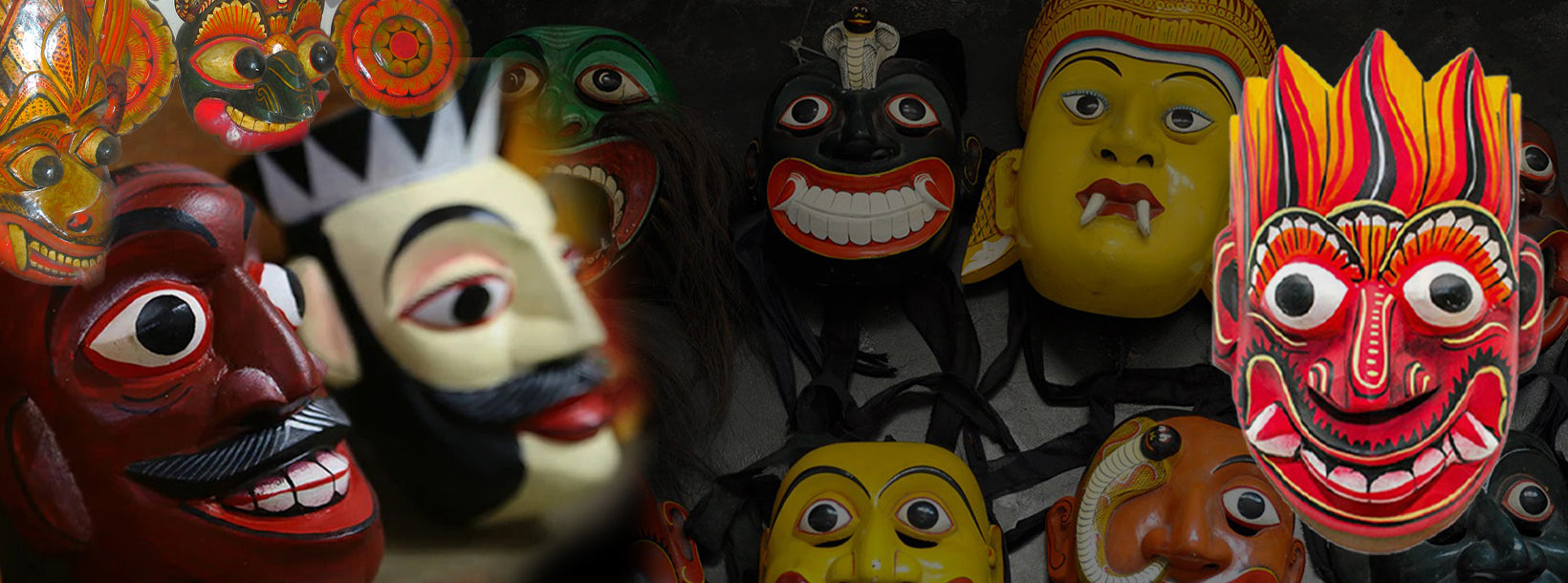
The word bihiri refers to deafness in Sinhala, and the Bihiri Sanniya mask represents the demon held responsible for afflictions of hearing in traditional Sri Lankan cosmology. It belongs to the broader category of sanniya masks — a set of eighteen demonic figures, each linked to a specific ailment or misfortune. Together they feature in the Sanni Yakuma, an all-night ritual performed by a masked dancer, or adura, to expel illness from a patient.
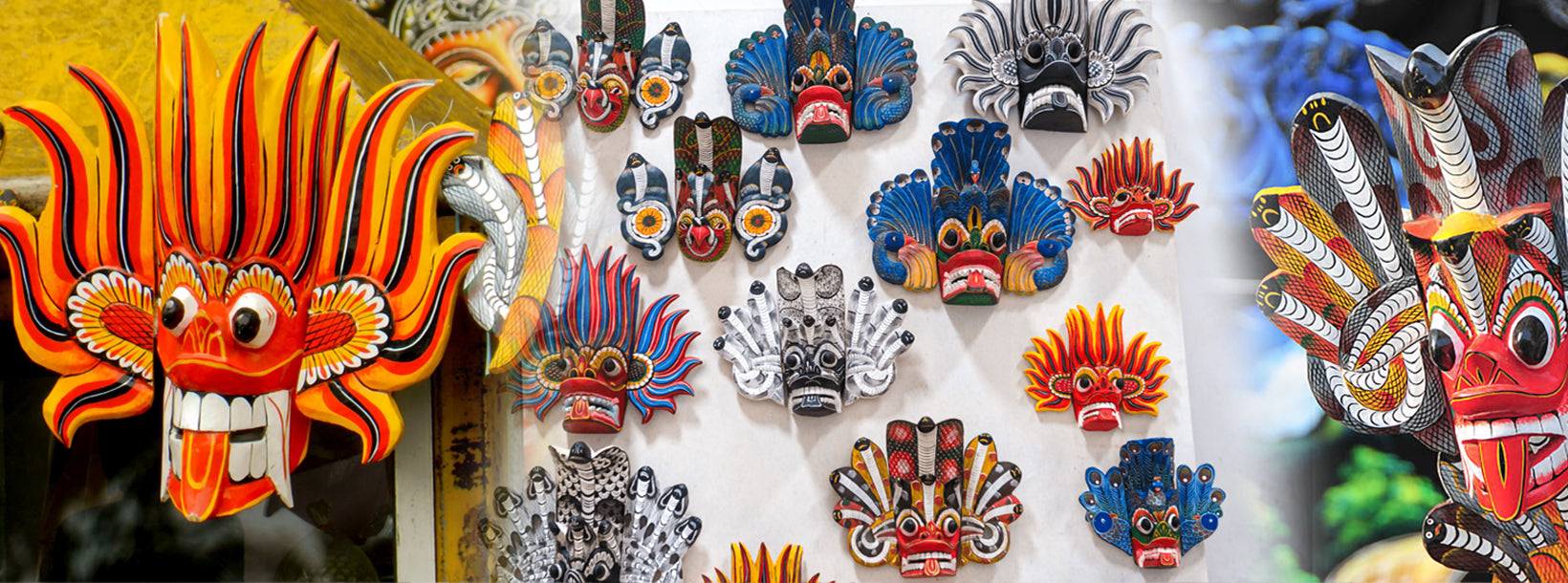
What makes the Bihiri Sanniya immediately recognisable is the serpent carved along one side of the mask. According to traditional belief, the serpent was understood as a symbol of deafness — its presence on the mask serves both as an identification mark and as a visual invocation of the affliction being addressed. The craftsmanship is deliberate: every element carries meaning.
Where does Sri Lankan mask-making come from?
The craft of making sanniya masks has its deepest roots in Ambalangoda, a coastal town on the southwestern shore of the island roughly halfway between Colombo and Galle. For generations, specific families in Ambalangoda maintained the tradition almost exclusively, passing carving and painting techniques from father to son. The Madu Ganga estuary district, close by, historically supported both fishing communities and artisan households, and mask-making was woven into that local economy.
Over time the tradition has spread across the island. Today skilled artisans in several regions carve and paint masks, though collectors and scholars still regard Ambalangoda as the spiritual home of the craft. A museum in the town dedicated to mask-making offers a survey of all eighteen sanniya figures alongside kolam and raksha masks.
How are Bihiri Sanniya masks made?
Authentic sanniya masks are carved from kaduru wood (Strychnos nux-vomica), a lightweight, fine-grained timber that holds detail well and is light enough to be worn comfortably during hours of performance. Some artisans also work with balsa or similar soft woods when producing pieces intended for display rather than ceremony.
The carving process begins with a rough block shaped to the approximate dimensions of a human face. The carver then works inward, defining the brow, the eye sockets, the nose and the characteristic wide-open mouth that gives sanniya masks their theatrical expressiveness. The serpent motif on the Bihiri Sanniya is carved in relief, typically on one cheek or along the temple. Once carved, the mask is sanded, sealed, and painted in bold mineral pigments — reds, whites, blacks, and yellows that remain vivid even after decades.
Beyond masks, many artisans repurpose offcuts and wood scraps into functional objects: doorstoppers, wall plaques, small decorative pieces. Nothing goes to waste in a traditional workshop.
What role do sanniya masks play in Sri Lankan ritual?
The Sanni Yakuma ceremony, in which all eighteen sanniya figures appear, is one of the most elaborate healing rituals in Sri Lankan folk religion. A trained dancer-healer performs through the night, embodying each demon in sequence, negotiating with them on behalf of the patient. The ceremony draws on pre-Buddhist animist traditions that have survived alongside Theravada Buddhism for well over a millennium.
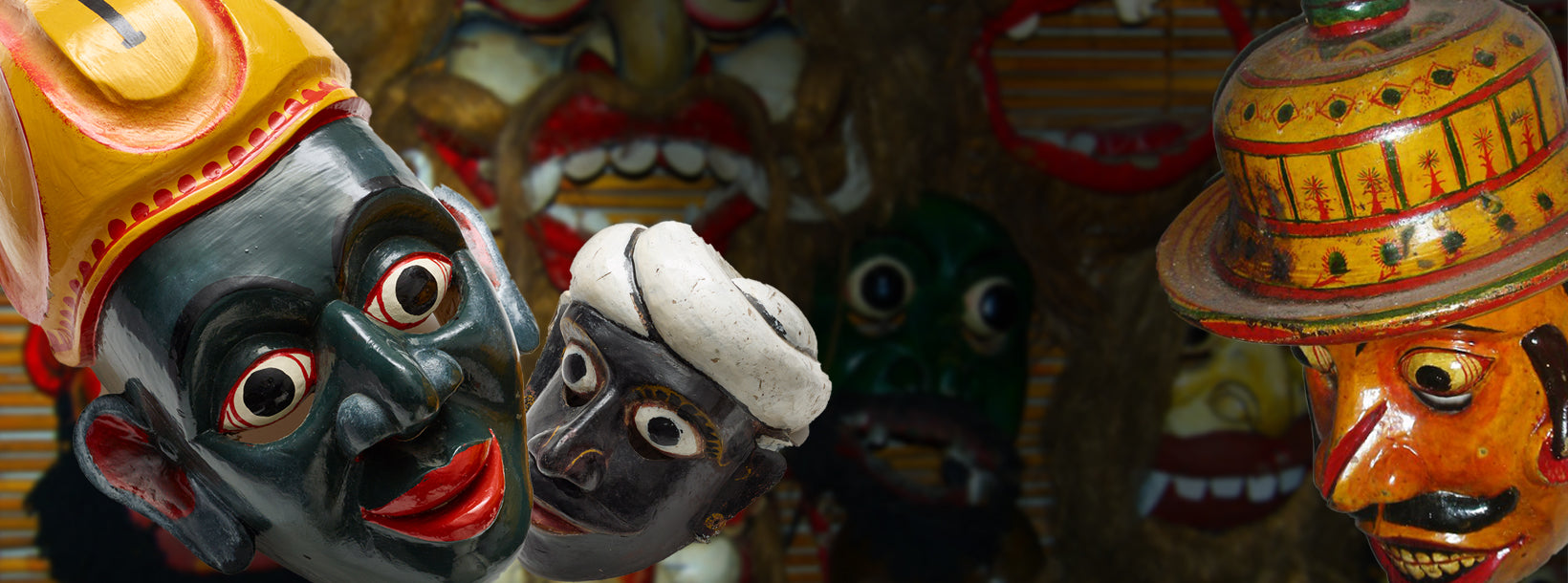
Beyond healing rituals, sanniya masks appear in kolam dance-drama, a narrative performance tradition that uses masks to portray a wide cast of human and supernatural characters. In this context the masks shift from the purely ritual to the theatrical, becoming tools for storytelling and social commentary. The Esala Perahera Festival in Kandy, while centred on different performance forms, reflects the same continuum of costumed ritual that makes sanniya masks culturally significant.
Is the Bihiri Sanniya mask a good piece to collect?
For collectors interested in South Asian folk art, sanniya masks represent excellent value relative to their cultural depth. Pieces made by experienced Ambalangoda carvers are hand-finished, unique in small details, and directly connected to a living ceremonial tradition — not a revival or a tourist reproduction. The Bihiri Sanniya in particular tends to appeal to collectors drawn to the symbolism of the serpent motif and to scholars of folk medicine traditions.
When buying, look for clean tool marks, consistent paint application without cracking, and a well-defined serpent carving. Masks intended for wall display are typically lighter than performance masks, and the reverse side will usually be hollowed out less deeply. Provenance from a named artisan or workshop adds considerably to long-term value.
How does the Bihiri Sanniya compare to other sanniya masks?
| Mask | Affliction represented | Distinctive feature |
|---|---|---|
| Bihiri Sanniya | Deafness | Serpent carved on face |
| Pissu Sanniya | Madness / mental disturbance | Wild, distorted expression |
| Selesma Sanniya | Colds and mucus ailments | Mucus imagery in carving details |
| Vatha Sanniya | Wind-related ailments, rheumatism | Contorted posture motifs |
| Kora Sanniya | Lameness | Asymmetric facial features |
| Kapala Sanniya | Headaches / skull ailments | Exaggerated cranial detailing |
Where can I buy an authentic Bihiri Sanniya mask?
Lakpura sources Bihiri Sanniya masks directly from artisans who maintain the traditional carving practices. Each piece is checked for quality and ships with secure packaging to protect the paintwork in transit. Purchasing through a responsible channel also ensures that the payment reaches the maker rather than an intermediary margin chain — supporting the continuation of the craft in the communities where it originated.