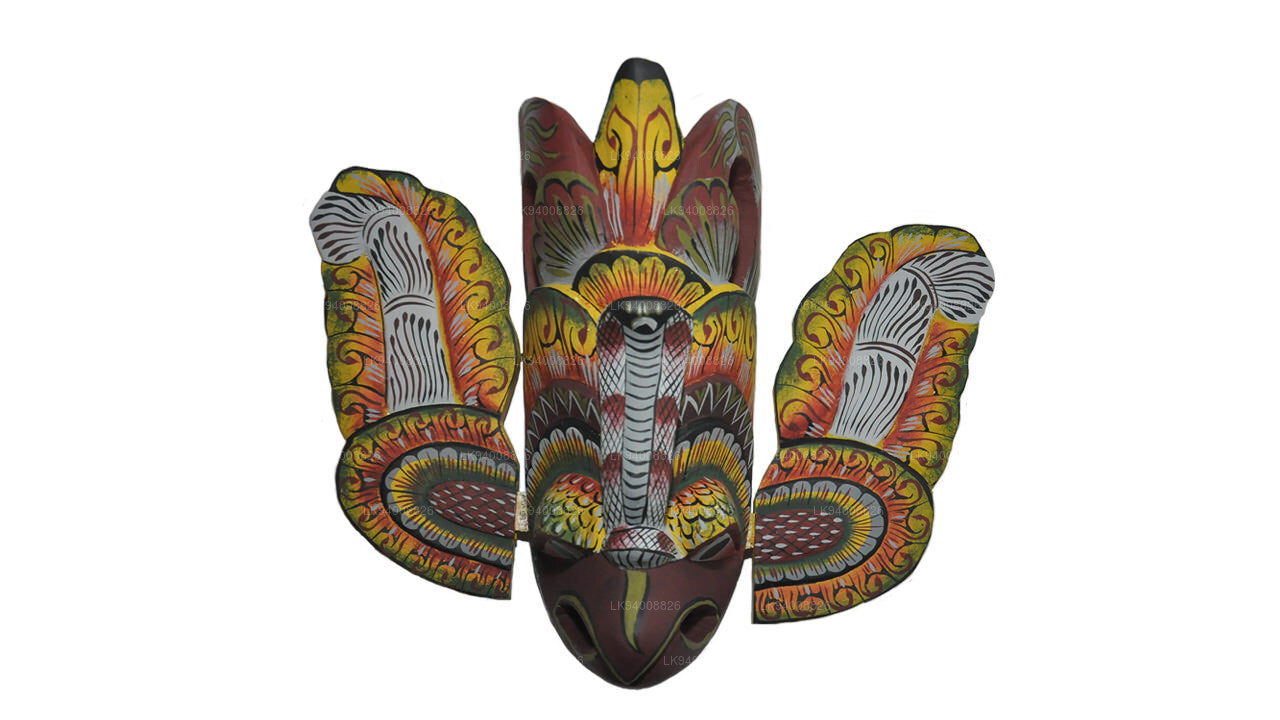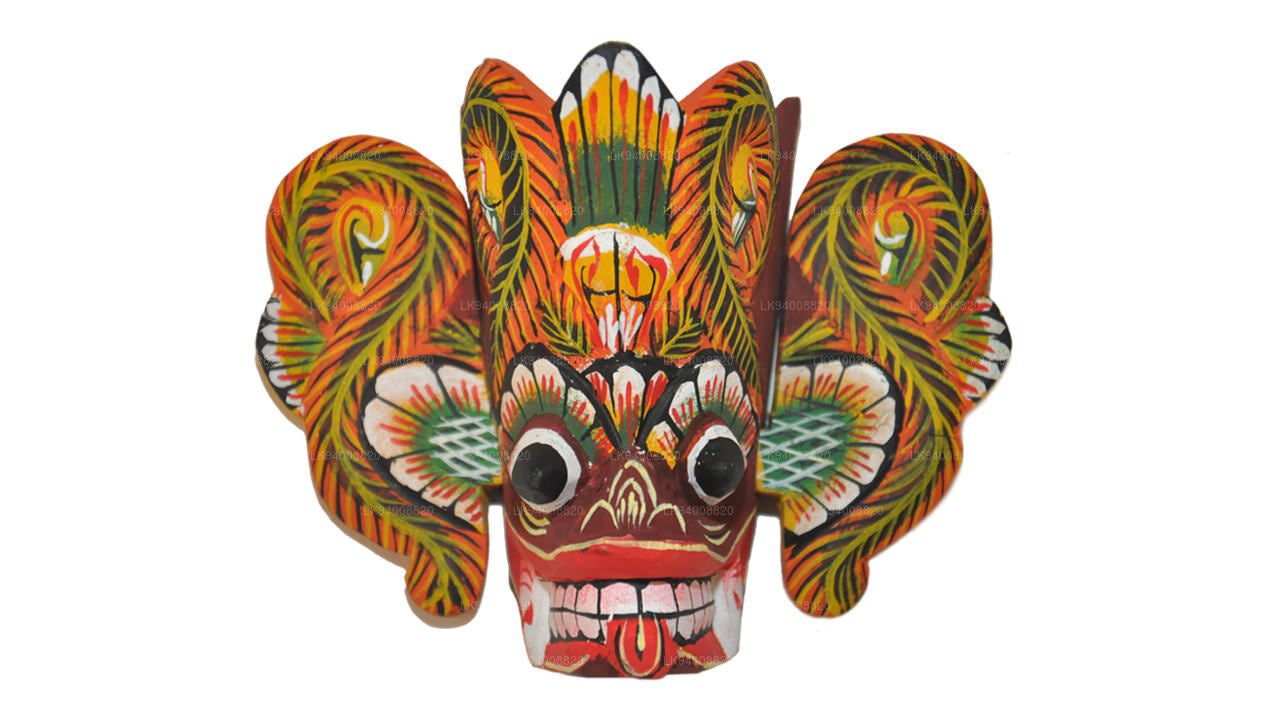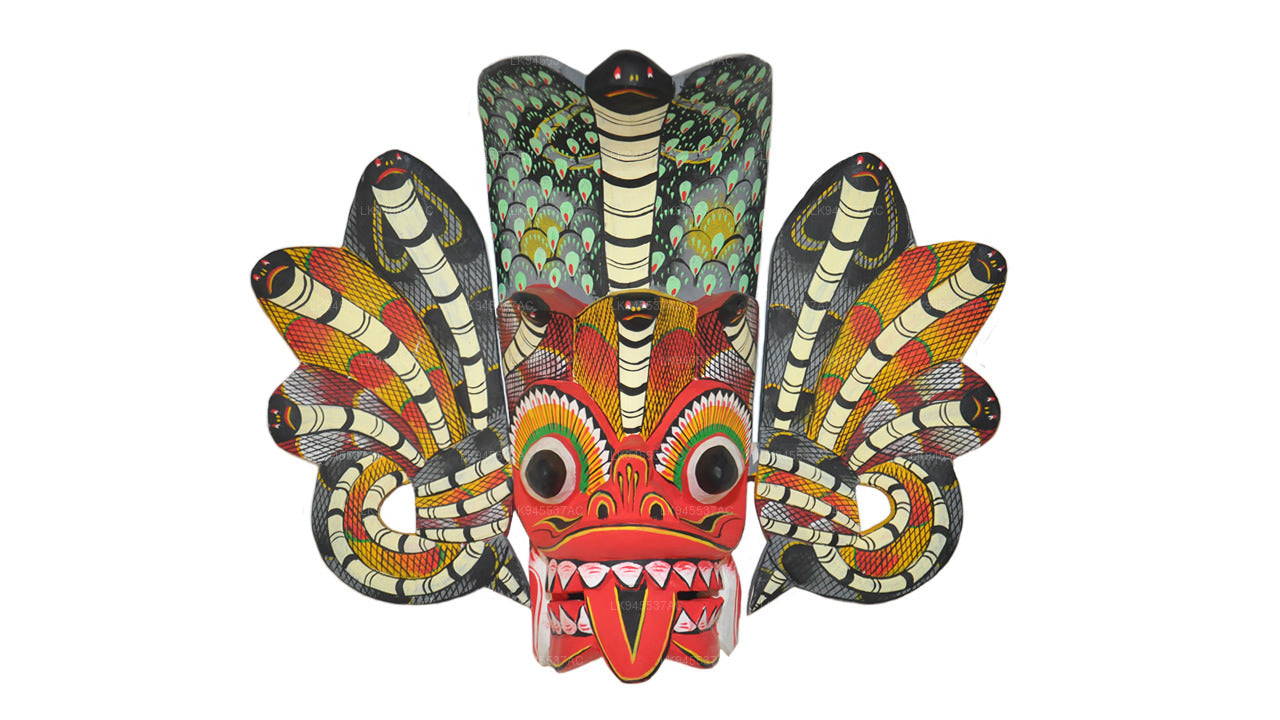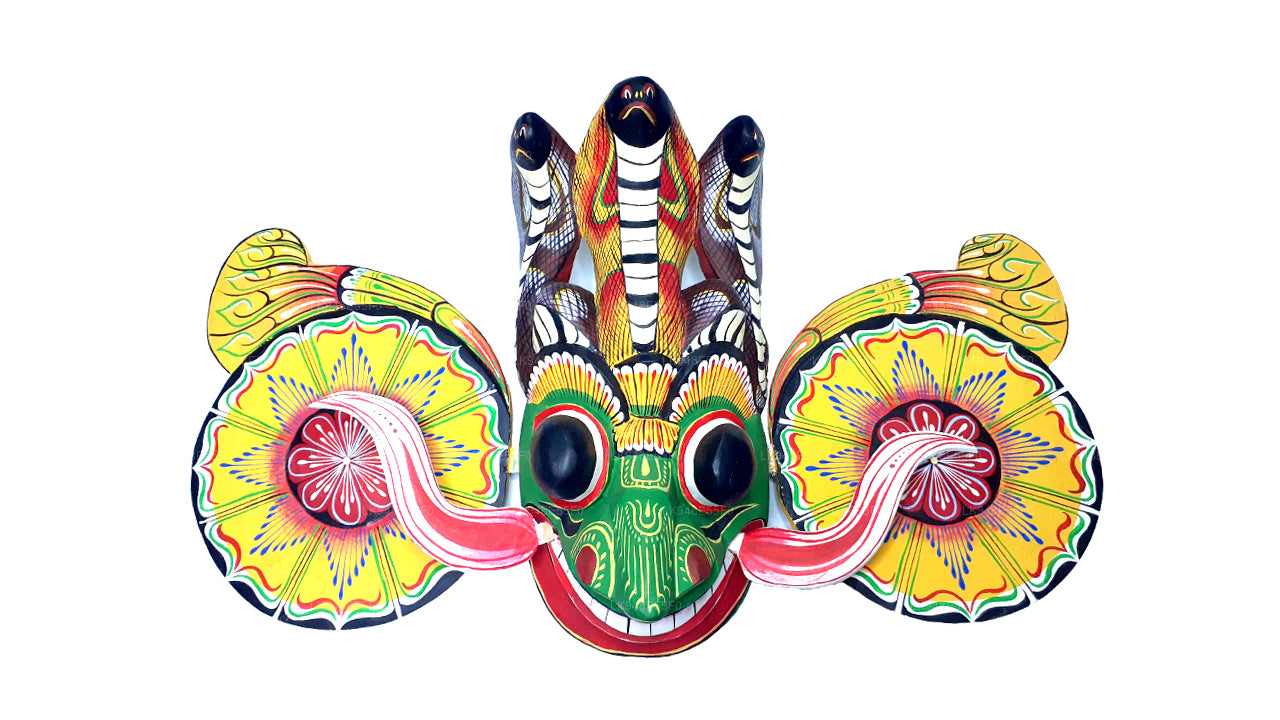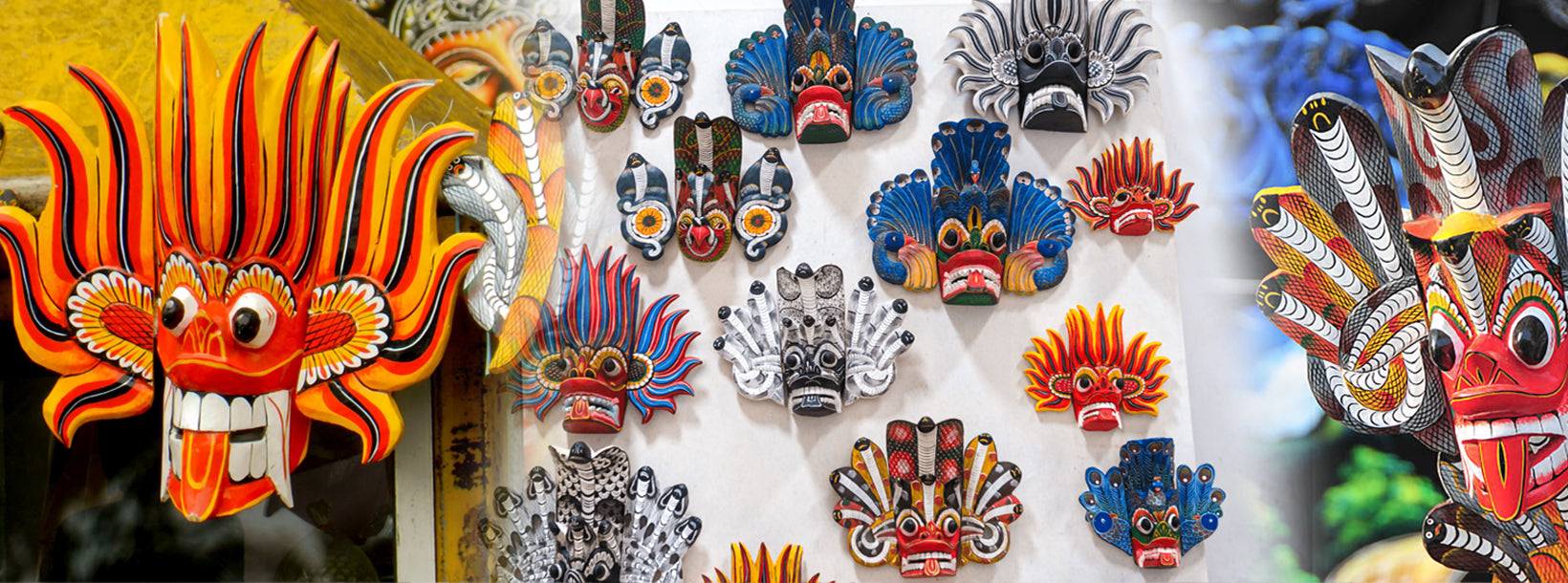
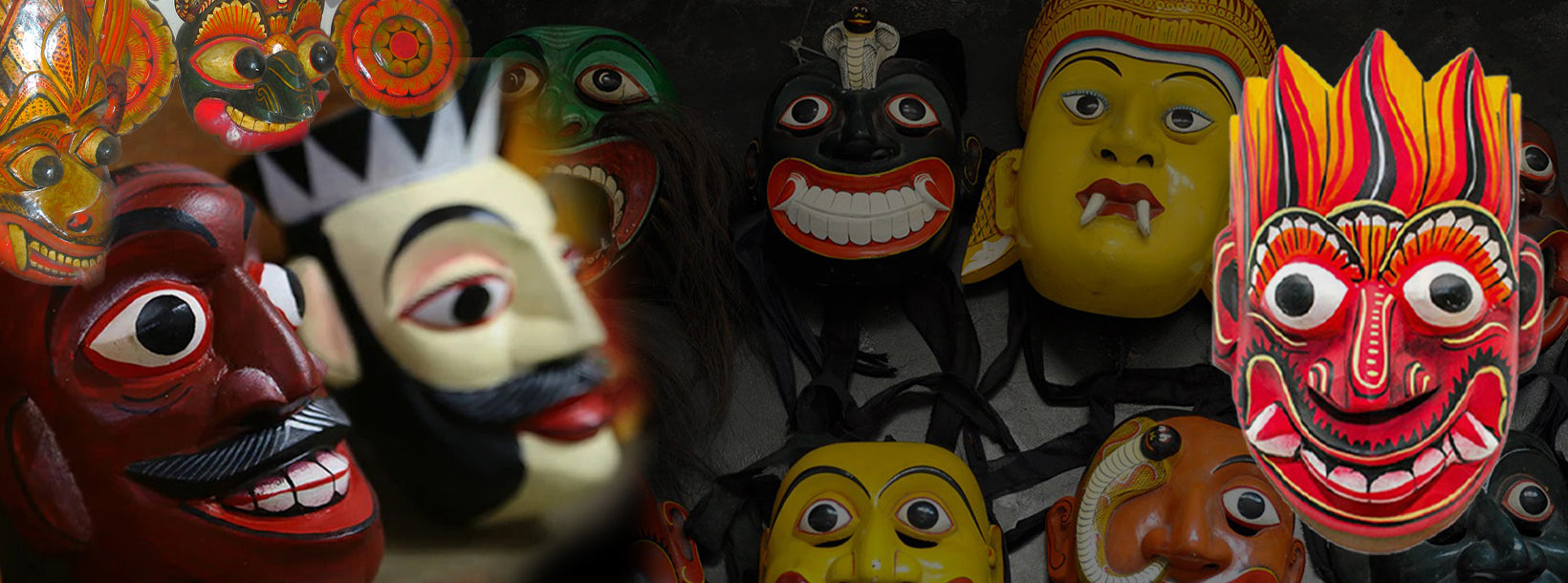
Raksha masks are among the most recognizable artifacts of Sri Lankan folk art. Carved from a light wood — most commonly kaduru (Nux vomica) — and painted in bold, contrasting colours, they depict a pantheon of demons whose fearsome expressions are intended not to frighten, but to protect. The word raksha itself translates from Sanskrit as "demon" or "guardian," and that duality sits at the heart of the tradition: these are protective objects that wear a threatening face.
What is the origin of Raksha masks in Sri Lanka?
The tradition is rooted in the ancient Kolam ritual, a form of masked dance-drama performed in the low country regions of Sri Lanka, particularly in the Southern and Sabaragamuwa provinces. Kolam dates back several centuries and serves both ritual and theatrical purposes — it narrates mythological stories, addresses social commentary, and invokes spiritual protection for a community.
Within the Kolam framework, Raksha masks represent the final act of the performance. They are understood as a tribute to the Rakshasas, a legendary race said to have ruled Sri Lanka in a primordial era. According to tradition, the Rakshasas could take 24 different forms, each with its own characteristics, though only a subset of these forms appears regularly in performance today.
The craft has its strongest living tradition in the village of Ariyapala, near Ambalangoda on the southern coast — a town that has become so closely associated with mask-making that it houses a dedicated mask museum where visitors can study both historical and contemporary pieces.
What are the main types of Raksha masks?
Each Raksha mask type carries distinct visual markers and symbolic meaning. The most commonly encountered forms include:
- Maru Raksha — associated with the demon of death, typically depicted with cobra hoods fanning around the face and an expression of intense ferocity.
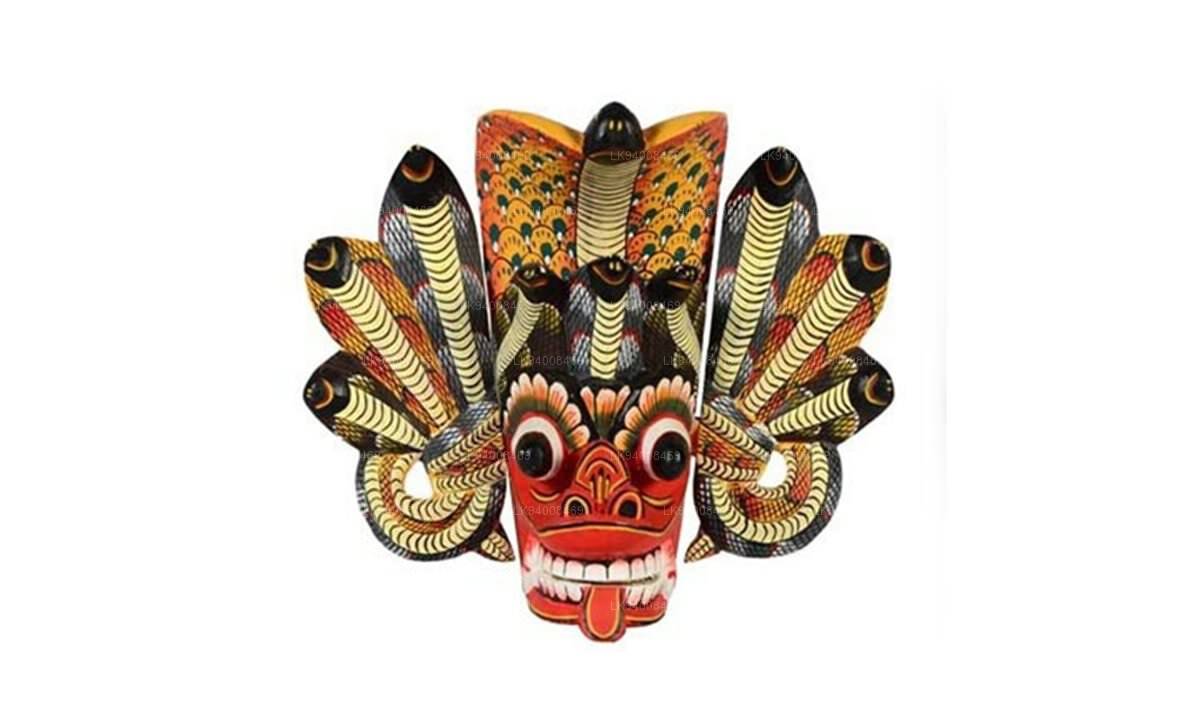
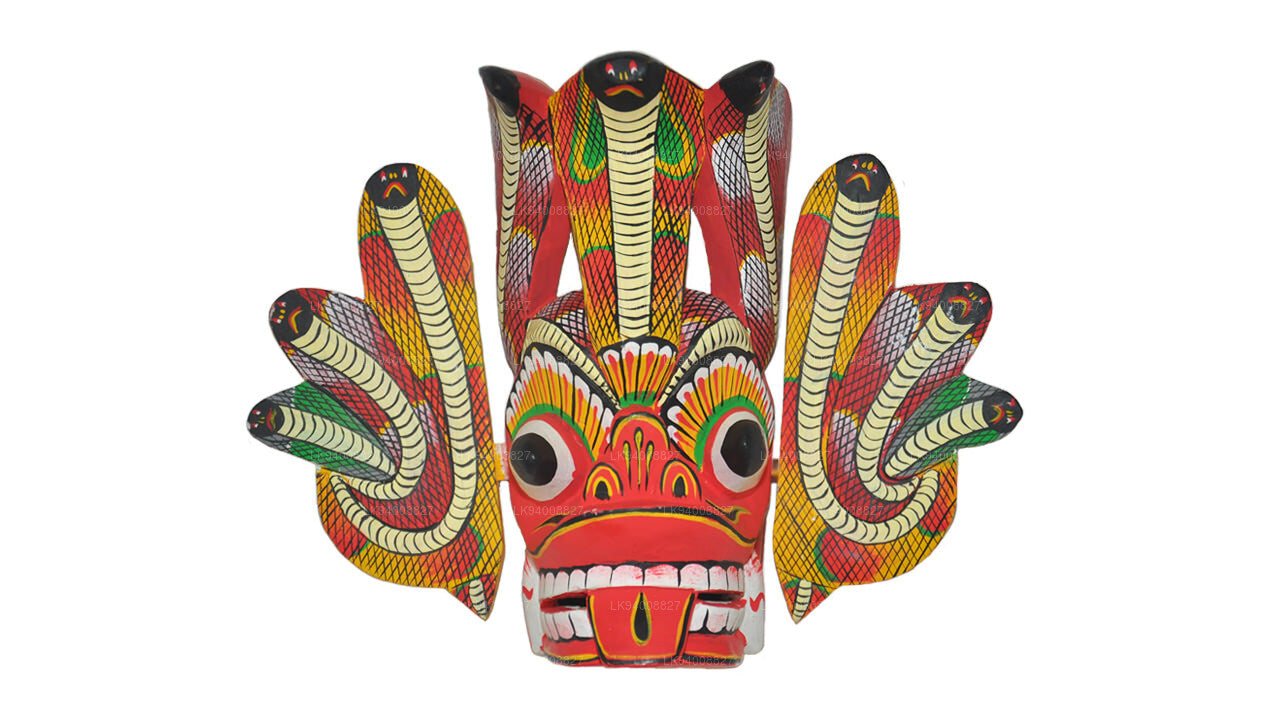
- Naga Raksha — the serpent demon, one of the most elaborately decorated masks, featuring multiple cobra heads and vividly painted scales.
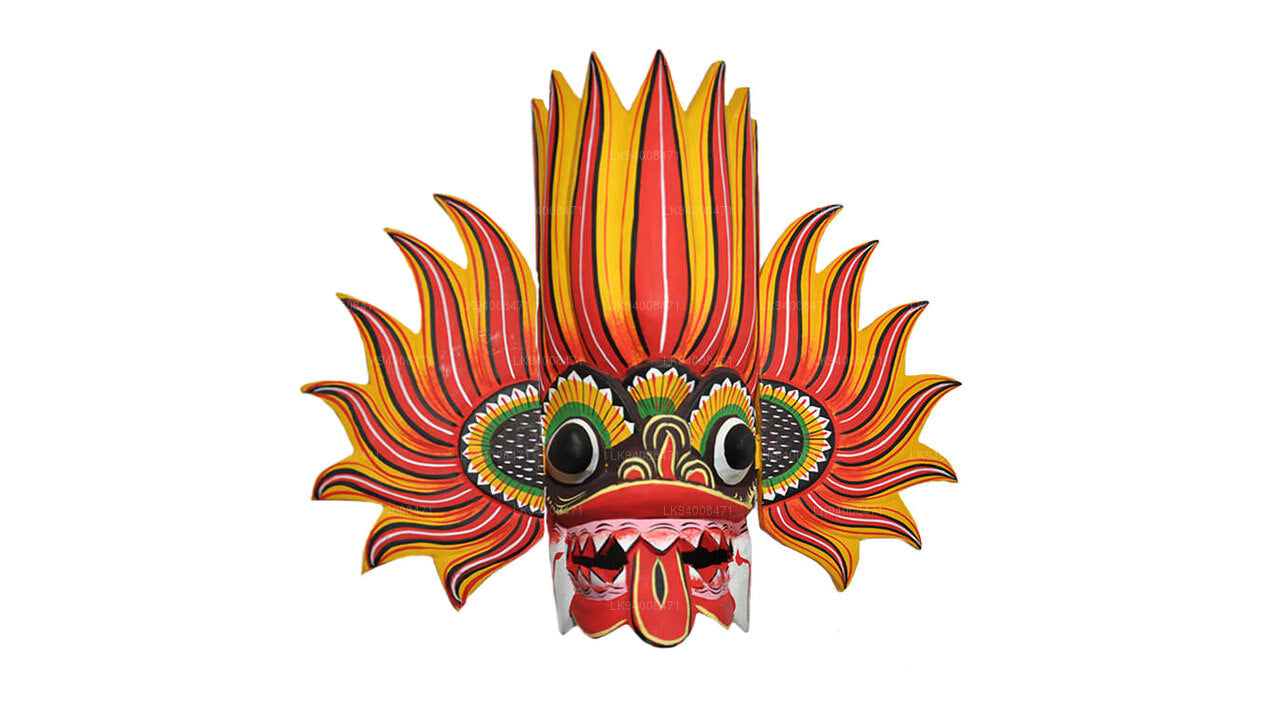
- Ginni Raksha (Ginidal) — the fire demon, identifiable by flame motifs and a particularly wild expression.
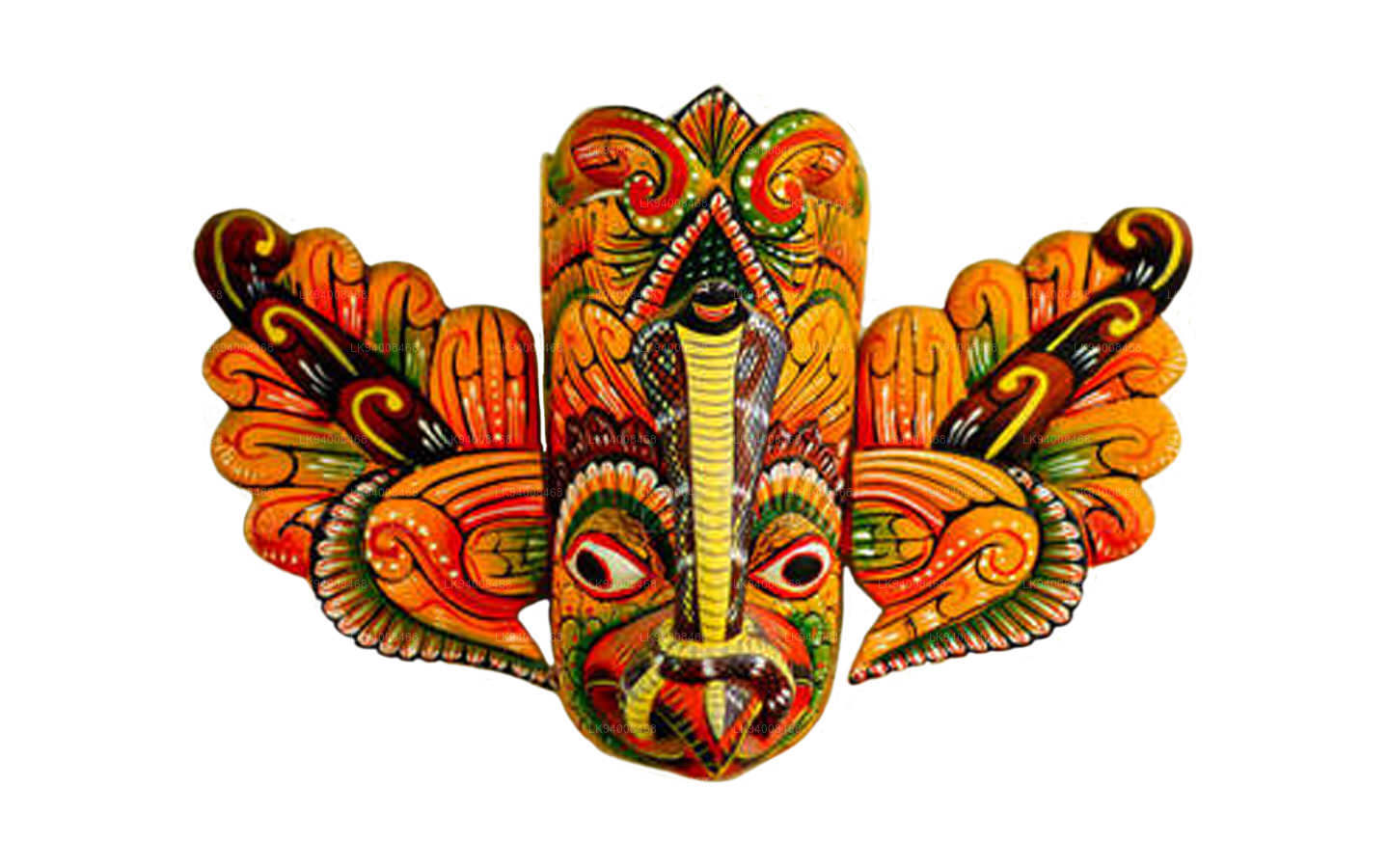
- Gurulu Raksha — representing the Garuda bird, a natural enemy of serpents, often depicted mid-conflict with a serpent.
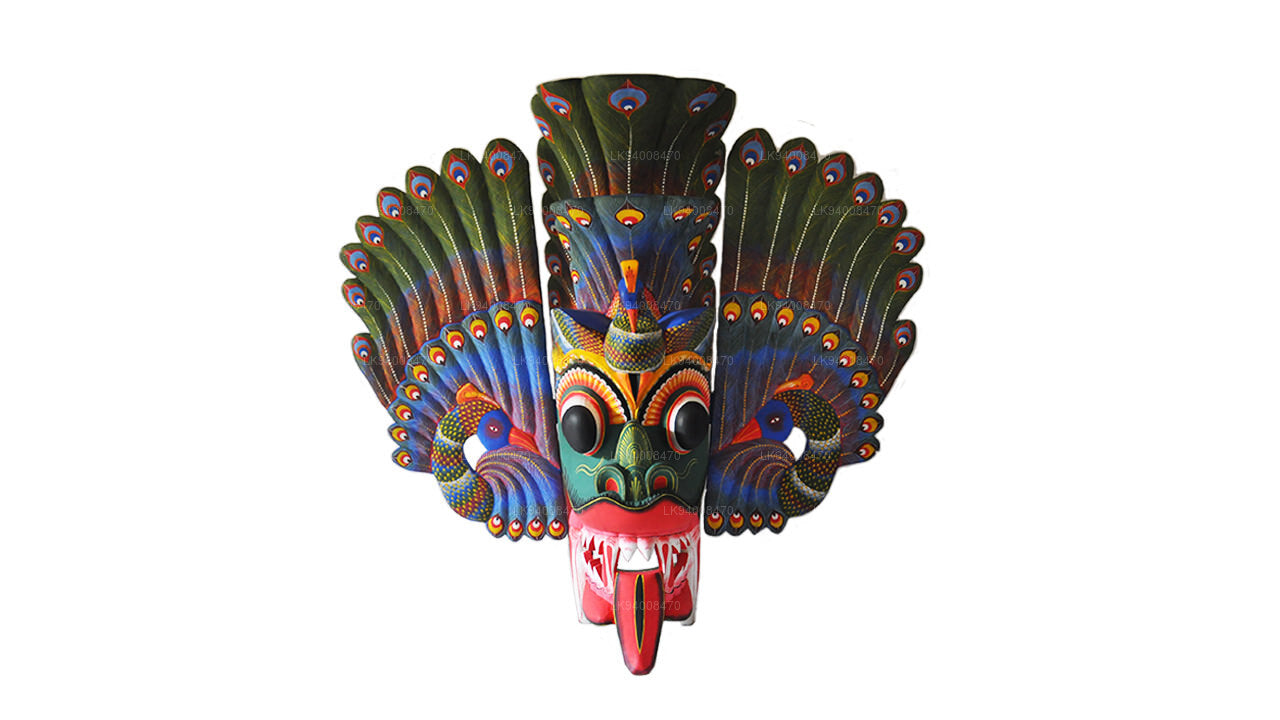
- Mayura Raksha — the peacock demon, notable for its more ornate and relatively composed appearance compared to its counterparts.
- Gara Raksha — considered one of the older forms, linked to disease and its banishment, and used historically in rituals intended to ward off illness.
- Rathnakuta Raksha — a richly decorated mask associated with supernatural guardianship.
What unites all Raksha masks visually is a set of shared features: bulging or protruding eyes, a wide grimacing mouth often fitted with fangs, a projecting tongue, and coiling cobra motifs at the crown and sides. The overall effect is deliberately overwhelming — a visual shout rather than a whisper.
How are Raksha masks made?
Traditional mask-making is a skilled craft passed through generations of artisan families, primarily in the Ambalangoda area. The process begins with selecting and drying kaduru wood, which is lightweight, easy to carve, and resistant to warping. Carvers work by hand using chisels and gouges, shaping the broad planes of the face before adding the intricate details — the serpent hoods, the furrowed brow, the layered teeth.
Once carving is complete, the mask is sanded smooth and primed before being painted. Historically, natural pigments were used; today most workshop pieces use synthetic paints that allow for the vivid reds, yellows, greens, and blacks that have become part of the mask's signature aesthetic. Decorative lacquer is applied as a final coat to protect and deepen the colours.
The Esala Perahera Festival in Kandy is the most famous example of Sri Lanka's living ceremonial traditions, but the Kolam performances where Raksha masks appear are more intimate village events — typically held in the open air, at night, before a community audience.
What is the cultural significance of Raksha masks today?
Raksha masks occupy a layered role in contemporary Sri Lanka. They remain active ritual objects: performances still take place in southern villages, and families may hang a mask in the home as an apotropaic charm — a ward against malign influence, in keeping with the masks' original purpose.
At the same time, they have become one of the country's most exported craft products. Miniature versions, fridge magnets, and decorative wall pieces are sold across the island's craft markets and souvenir shops, making Raksha masks one of the most widely recognised symbols of Sri Lankan artisanship among international visitors.
The craft is also taught as part of Sri Lanka's intangible cultural heritage programmes, and organisations have worked to document and preserve the precise visual vocabulary of each demon type so that the tradition does not drift into generic decoration.
Where can visitors see or buy authentic Raksha masks in Sri Lanka?
Ambalangoda, on the southwestern coast between Colombo and Galle, is the primary destination for anyone interested in the craft at a serious level. The Ariyapala Mask Museum and adjoining workshop allow visitors to watch carvers at work and purchase masks directly from the artisans, with pieces ranging from small decorative items to large, performance-grade masks.
Craft shops along the Galle Road in Ambalangoda, as well as the government-run Laksala outlets in Colombo and other cities, stock a reliable selection. When buying, look for kaduru wood construction, hand-painted (rather than printed or cast-resin) surfaces, and the slight irregularities that distinguish a hand-carved piece from a mass-produced replica.
For those taking a Kandy city tour, the town's craft shops also carry good examples of Raksha mask work, particularly the Mayura and Naga forms.
Can I paint my own Raksha mask as a hands-on experience?
Painting a blank kaduru mask is a popular activity for visitors seeking a direct engagement with the craft. Several workshops in Ambalangoda offer this experience, and pre-carved, unfinished masks are widely available for purchase. The activity suits all ages and provides a meaningful, participatory understanding of the colour choices and symbolism involved — it is considerably more instructive than simply purchasing a finished piece.
Lakpura offers unfinished Raksha masks for painting as a take-home activity, allowing visitors to bring the craft to their own table at their own pace.
How do Raksha masks differ from Kolam and Sanni masks?
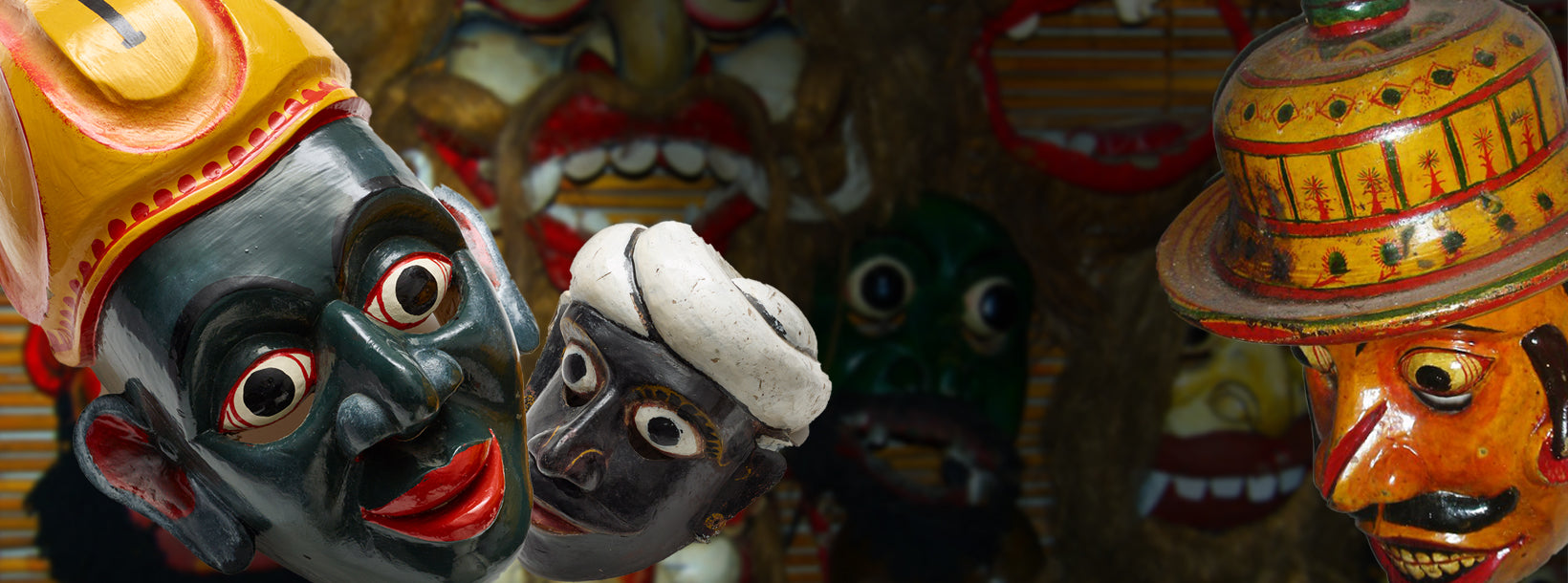
Sri Lankan mask traditions actually encompass three distinct categories, often confused with one another. Kolam masks depict human characters — royalty, soldiers, village figures — and are used in the storytelling portions of Kolam drama. Sanni masks are used in healing rituals and represent the 18 demons of disease, each associated with a specific ailment; they tend to be more varied in expression and include some comic figures. Raksha masks are the most overtly fearsome of the three, reserved for the protective, demon-invoking finale of Kolam. The three categories are visually and functionally distinct, though all three are produced by the same artisan communities and are all, broadly, part of the low-country masked performance tradition.