Waterfall abseiling sits at the intersection of technical skill and raw natural scenery, and Sri Lanka offers both in generous measure. While the island is better known for its ancient temples and tea-covered hills, a growing number of travellers arrive specifically for its adventure credentials — and abseiling down a jungle waterfall is one of the most memorable ways to experience the landscape from a completely different angle.
Where can you go abseiling in Sri Lanka?
Two locations stand out as the main centres for waterfall abseiling: Kitulgala in the Sabaragamuwa foothills and the highlands around Ella in Uva Province. Each offers a distinct setting and difficulty range, making it possible to match the experience to your comfort level.
- Kitulgala — Situated on the Kelani River, Kitulgala is Sri Lanka's most established adventure hub. The surrounding rainforest, part of the Makandawa Rainforest ecosystem, hides several waterfalls that are rigged for abseiling year-round by experienced local operators. The descents vary in height, and most providers cater to first-timers as well as experienced abseilers.
- Ella — The hill-country village of Ella offers abseiling alongside waterfalls that cascade through tea estates and misty forest. The cooler temperatures and dramatic ridgeline scenery make this a different experience from the humid jungle setting of Kitulgala.
What is waterfall abseiling like for beginners?
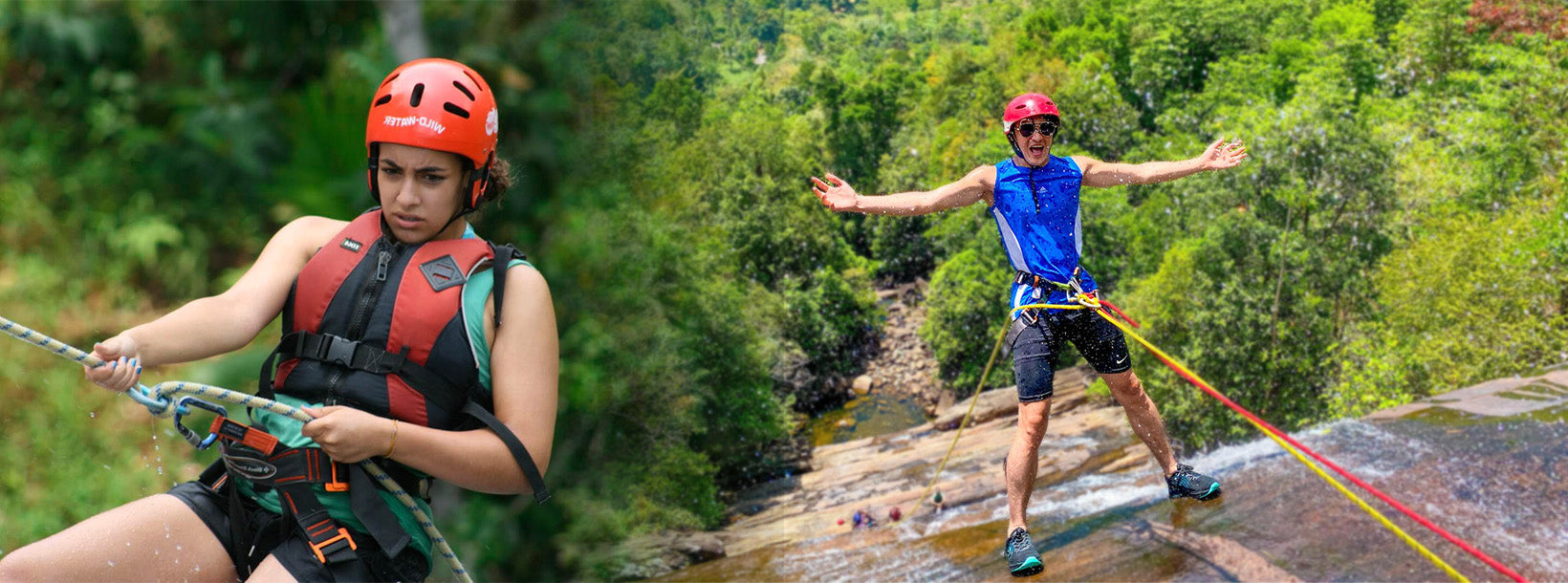
Waterfall abseiling — also called rappelling — involves descending a rock face or cliff using a rope and harness system while water flows around or directly over you. Most Sri Lankan operators use modern equipment and provide a safety briefing and practice on a shorter drop before the main descent. No prior climbing experience is required, though a reasonable level of fitness and comfort with heights is helpful. Groups are typically small, and guides remain on the rock face alongside participants throughout the activity.
The sensation of walking backward down a wet rock face with the sound of falling water amplified around you is unlike most other adventure activities — it demands focus, which is precisely what makes it so absorbing.
What other adventure activities can you combine with abseiling in Kitulgala?
Kitulgala's reputation as an adventure centre means abseiling rarely stands alone as a day's activity. The Kelani River is one of Sri Lanka's best white-water rafting routes, with a stretch of Class III–IV rapids that draws rafting groups throughout the year. Beyond the river, Kitulgala operators also arrange rock climbing, caving in the local cave systems, jungle trekking, and kayaking.
For travellers spending more than a day in the area, Martin's Simple Lodge is a well-regarded base that has long been associated with adventure activities in the Kelani Valley. The rainforest surrounding the lodge is itself worth exploring for its birdlife and endemic flora.
When is the best time to go abseiling in Sri Lanka?
Waterfall abseiling is possible throughout the year in Sri Lanka, but the volume and vigour of the waterfalls — and therefore the intensity of the experience — varies with the monsoons. The southwest monsoon (roughly May to September) brings heavier rainfall to Kitulgala, swelling the falls and increasing flow. The dry season between December and April tends to see lower water levels but calmer conditions overall.
Ella, on the opposite side of the central massif, experiences peak rainfall during the northeast monsoon (October to January). The shoulder months of February–April and September–October typically offer a practical balance of accessible trails and active waterfalls in the highlands.
Always confirm current conditions with your operator before travel, as waterfall levels and access can change after heavy rain.
How do you get to Kitulgala from Colombo?
Kitulgala lies roughly 95 km east of Colombo along the A7 highway. By private vehicle the journey takes around two to two-and-a-half hours depending on traffic. There is a train service from Colombo to Avissawella, with Kitulgala reachable by bus from there, though most adventure travellers prefer a private transfer for convenience. From Kandy, the drive south along the B39 road takes approximately 1.5 hours.
For Ella-based abseiling, Ella is well connected to Colombo and Kandy by the famous hill-country railway line — one of the most scenic train journeys in South Asia — as well as by road via the A16 and A23.
What should you wear and bring for abseiling?
- Clothing you do not mind getting wet — quick-dry synthetic fabrics work well
- Closed-toe shoes with grip (operators generally advise against sandals or bare feet)
- A change of dry clothes for after the activity
- Sunscreen applied before you arrive at the site
- A waterproof bag or dry bag if you are carrying a camera or phone
- Any personal medication, particularly if you are sensitive to insect activity in rainforest environments
Helmets and harnesses are provided by reputable operators. Jewellery and loose accessories are best left at your accommodation.
Is abseiling in Sri Lanka safe?
When booked through an established operator, waterfall abseiling in Sri Lanka carries a safety record comparable to similar activities elsewhere in Asia. Reputable providers use certified equipment, conduct pre-activity safety briefings, and station trained guides at multiple points on the descent. As with any adventure activity, risk cannot be reduced to zero, and participants with certain medical conditions — including heart problems, severe vertigo, or recent injuries — should consult a doctor before taking part and disclose relevant conditions to the operator at the time of booking.
Choosing an operator with a transparent safety record and proper equipment is the single most important step you can take as a traveller. Lakpura works only with vetted local partners for adventure bookings.