Lakpura
Lakpura®

Aasmi (ආස්මි)

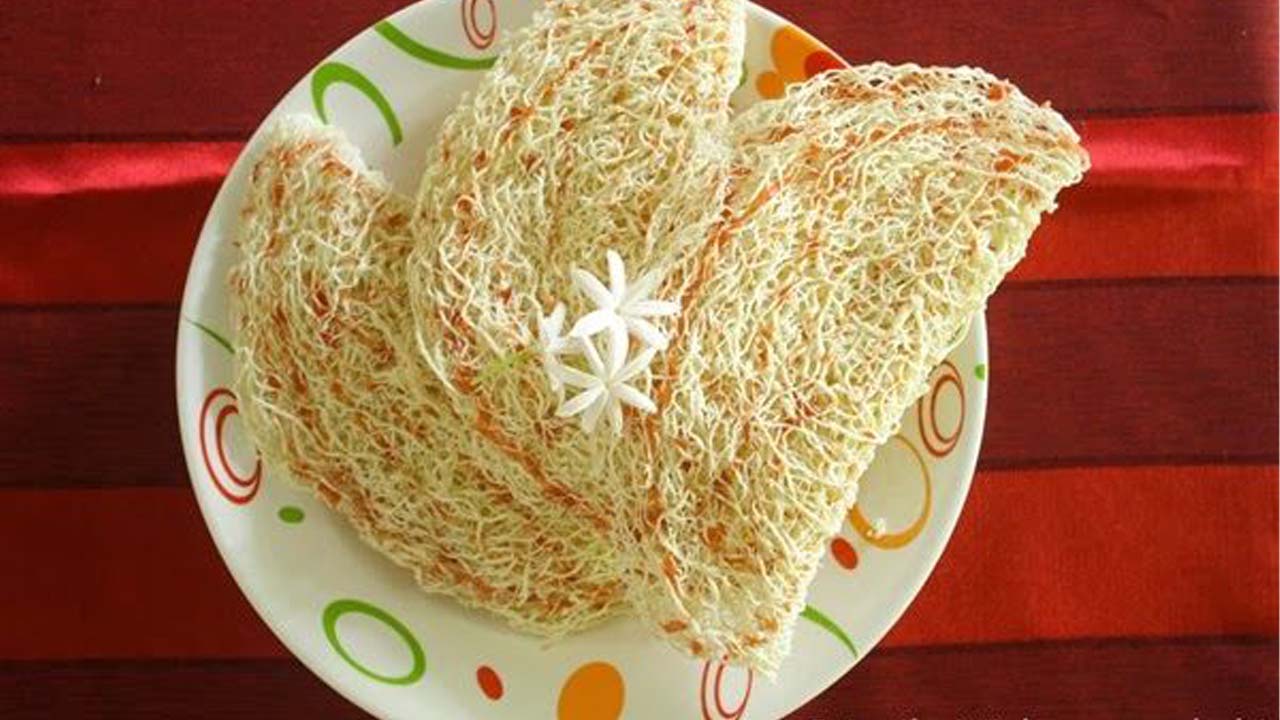
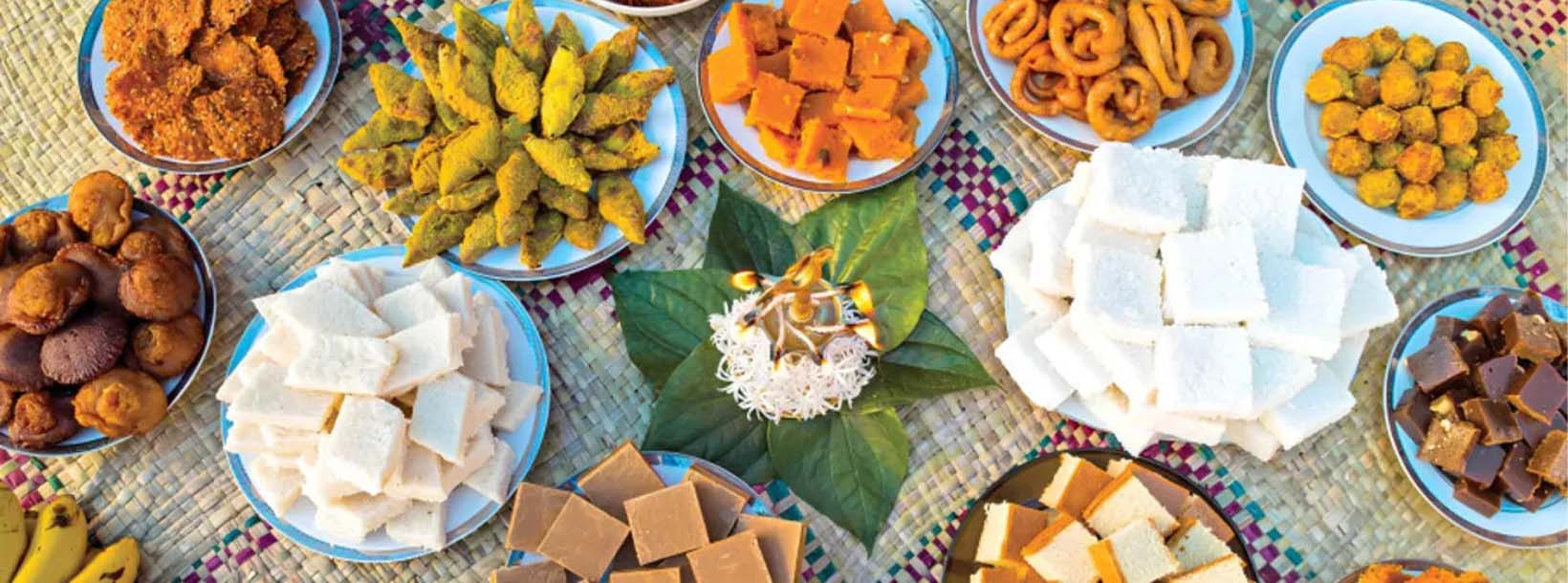
Aasmi (ආස්මි) is one of Sri Lanka's most distinctive festive sweets — a lacy, deep-fried confection made from rice flour and coconut milk, finished with a coloured sugar glaze. It appears on trays at Sinhala and Tamil New Year celebrations, weddings, and birthdays, and is considered an essential part of the traditional Sri Lankan sweet spread alongside snacks like kokis.

What makes Aasmi different from other Sri Lankan sweets?

Most Sri Lankan festive sweets are either milk-based or flour-based, but Aasmi sits in a category of its own. Its defining characteristic is the use of davul kurundu (cinnamon leaf) juice, which gives the batter a mildly mucilaginous quality — the slight slipperiness is essential for forming the snack's signature open, net-like texture when it hits the hot oil. Okra juice is a widely used substitute that achieves a similar effect.

The snack is also notable for its two-stage frying process. After the first fry, the pieces are set aside for several days before being fried again. This rest period allows the interior to dry out, so the second fry produces a noticeably lighter, crisper result than a single fry could achieve.

What are the traditional ingredients in Aasmi?

  • Rice flour — the structural base of the batter, sifted fine to avoid lumps
  • Coconut milk — binds the dough and gives richness; Sri Lanka's coconut palm remains central to the island's culinary identity
  • Davul kurundu (cinnamon leaf) juice — provides the slippery consistency needed to shape the snack; okra juice is the common alternative
  • Salt — a small amount balances the sweetness of the finished glaze
  • Coconut oil — the traditional frying medium, adding a subtle flavour

For the topping, a thick sugar syrup is prepared with a few drops of food colouring — typically red or green — and poured over the fried pieces to form a decorative, slightly crystallised glaze.

How is Aasmi made? Step-by-step method

The process is straightforward but requires patience, particularly because of the resting stage between the two fries.

  1. Prepare the batter. Sieve 500 g of rice flour through a very fine sieve into a mixing bowl. Gradually work in approximately half a cup of coconut milk to form a stiff dough. Season with salt.
  2. Add the binding agent. Grind cinnamon leaves (or prepare okra) and extract the juice. Stir this into the dough in small amounts until the mixture becomes slightly slippery and cohesive. Loosen with a little more coconut milk until the batter holds its shape but flows off the fingers.
  3. Shape and fry (first fry). Heat coconut oil in a deep pan. Arch your fingers, dip them into the batter, and allow it to drip into the oil in thin streams, moving your hand to create a loose lattice or spiral. Fry until just set — not yet golden. Fold each piece in half and remove from the oil.
  4. Rest. Place the partially fried pieces on a rack or tray and leave them uncovered for two to three days. This drying stage is non-negotiable for the final texture.
  5. Second fry. Return the rested pieces to hot oil and fry until light and crisp. The colour will deepen slightly and the texture will become airy.
  6. Glaze. Dissolve 50 g of sugar in approximately 20 ml of water and cook to a thick syrup. Add one or two drops of food colouring. Drizzle the syrup over the fried Aasmi and allow it to set before serving.

When and where is Aasmi traditionally served?

Aasmi is closely associated with Aluth Avurudda — the Sinhala New Year celebrated in April — and its Tamil equivalent, Puthandu. On these occasions, families prepare elaborate trays of traditional sweets and kavum (oil cakes), and Aasmi is expected alongside them. The snack also appears at weddings and milestone birthday celebrations, where it forms part of the ritual sweet platter offered to guests.

Outside of home kitchens, Aasmi is sold at local bakeries and market stalls in the weeks leading up to the New Year. In tourist-facing craft markets, it is sometimes offered as a tasting item alongside other traditional snacks.

Is Aasmi similar to any other regional sweets?

The technique of dripping batter through the fingers into hot oil has parallels across South and Southeast Asia — Indian jhangri and Thai foi thong use comparable methods, though the batters and flavours differ considerably. What distinguishes Aasmi is the use of cinnamon or okra juice as a binding agent, and the two-stage frying approach, both of which are specific to the Sri Lankan tradition.

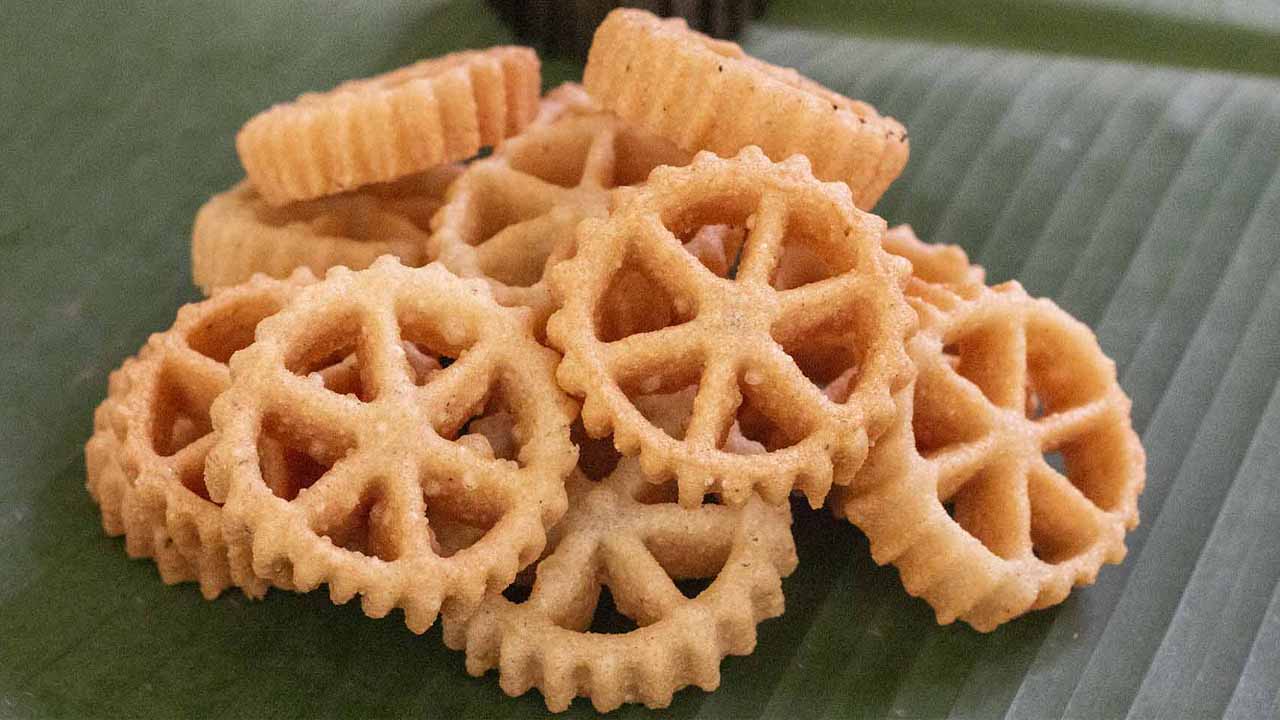
Within Sri Lanka, Aasmi is most closely related to kokis — another deep-fried, coconut-milk-based festive snack — though kokis uses a mould rather than the hand-drip technique and does not undergo a resting period.

Can I make Aasmi at home?

Yes, with practice. The most common difficulties are getting the batter to the right consistency and mastering the hand-drip technique over hot oil. A batter that is too thin will not hold its lacy shape; too thick and it will not flow off the fingers. The cinnamon-leaf or okra juice is the variable that most affects consistency, so it is worth adding it gradually and testing a small amount in the oil before committing to the full batch. If cinnamon leaves are unavailable, fresh or lightly blanched okra is a reliable substitute that is easier to source internationally.

Ask Lakpura® Agent