Sri Lanka's street food culture is one of the most rewarding ways to understand the island. From the rhythmic clatter of a kottu griddle at midnight to a paper cone of curried chickpeas at a village market, the food sold from roadside stalls, bakery counters, and hand-pushed carts tells the story of a cuisine shaped by trade winds, colonial history, and deep-rooted agricultural traditions. This guide covers what to eat, where to find it, and what to expect at each type of outlet.
What is Sri Lankan street food?
The term covers four broad categories: meals (substantial, rice- or roti-based dishes sold from small eateries), short eats (savory pastries and filled rolls sold from bakery counters), sweet buns (soft, sweetened breads often enjoyed with a glass of tea), and snacks (quick bites available at markets, beaches, and temple entrances). Many items overlap these categories — a fish bun can be breakfast, a snack, or a light lunch depending on the time of day and the vendor.
Street food is sold throughout the country, but the highest concentration and greatest variety is found in Colombo, Kandy, Galle, and Negombo. Smaller towns and villages tend to specialize in two or three local staples rather than the full range.
What are the most popular Sri Lankan street food dishes?
Kottu
Kottu is arguably the most recognizable street food in Sri Lanka. A cook chops strips of roti (godamba roti) on a flat iron griddle alongside vegetables, egg, and a choice of chicken, beef, mutton, or seafood, then mixes in curry gravy. The result is a hot, filling, intensely flavored dish. The rhythmic metal-on-metal chopping sound signals a kottu stall from a distance. It is eaten at any hour, though late evenings are peak time at most stalls.
Hoppers (Appa)
Hoppers are fermented rice flour and coconut milk pancakes cooked in a small wok-shaped pan. The edges turn crispy while the center stays soft and slightly spongy. Plain hoppers are eaten with lunu miris (a chili and onion relish) or a thin coconut milk curry. Egg hoppers, which include a whole egg cracked into the center before the batter sets, are among the most popular breakfast items across the island. String hoppers — delicate steamed noodle discs made from rice flour — are a lighter variation, typically eaten for breakfast or dinner with dhal curry or coconut sambol.
Coconut Roti (Pol Roti)
Pol roti is a thick flatbread made from flour and freshly grated coconut, sometimes with green chilies and onion worked into the dough. It is cooked on a dry griddle until charred in patches and served with sambol, dhal, or a fried egg. The coconut palm is central to Sri Lankan cooking at every level, and pol roti is perhaps its most direct expression in street food.
Roast Paan
Roast paan is a crusty, oval-shaped loaf baked in wood-fired clay ovens. The wood smoke gives the bread a distinct flavor that oven-baked bread cannot replicate. It is sold from the oven door, typically in the early morning, and eaten with butter, seeni sambol, or curry. The bread goes stale quickly, which is why fresh roast paan from a roadside bakery tastes markedly different from what you find in a supermarket.
Short Eats
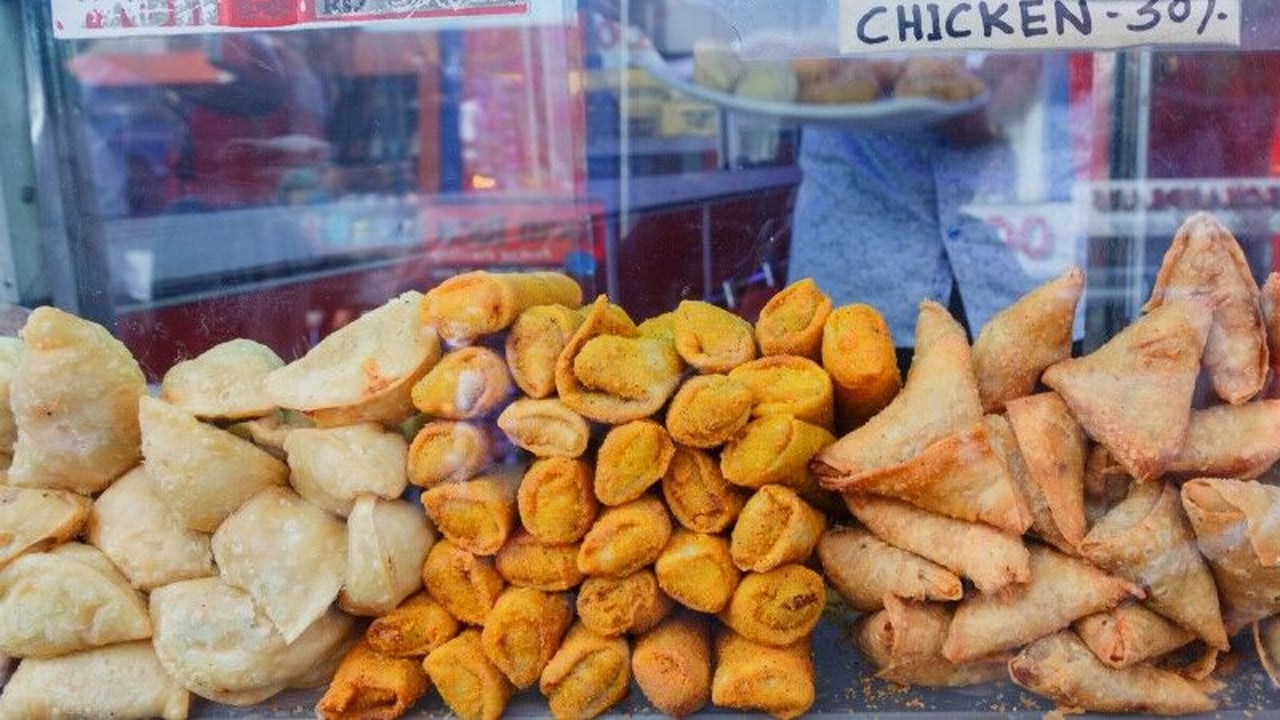
Short eats are the Sri Lankan equivalent of a snack counter — glass cases at bakeries and tea shops filled with items like:
- Patties — flaky pastry parcels filled with spiced potato, fish, or meat
- Chinese rolls — a breaded, fried cylinder filled with spiced vegetables or meat, with a soft inner layer
- Fish buns (maalu paan) — soft bread rolls filled with spiced tuna, baked golden
- Seeni sambol buns — sweet-savory buns stuffed with caramelized onion relish
- Coconut buns — sweetened buns with a grated coconut filling
Short eats are priced individually and consumed with a cup of Ceylon black tea. They are the default midmorning or afternoon snack for most Sri Lankans.
Isso Wade (Prawn Fritters)
Isso wade are lentil fritters topped with a whole prawn, fried until crispy. They are particularly popular along the coast and at beachside stalls. The fritter base is mildly spiced, and vendors usually drizzle on a chili sauce before handing one over. They are eaten immediately, while still hot.
Kadala (Chickpeas)
Chickpeas appear in two common street forms: curried with coconut milk and spices (a heavier, wetter preparation sold in small cups), and deep-fried into kadala wada fritters. Both are sold at bus stands, markets, and outside schools and temples. They are cheap, filling, and reliably satisfying.
Kola Kenda (Green Porridge)
Kola kenda is a rice-based herbal porridge blended with green leaves — most often gotu kola or moringa — and finished with coconut milk. It has a mild, earthy flavor and a vivid green color. Considered a health food in traditional Sri Lankan practice, it is sold from early morning until the pot runs out, typically from small stalls near temples or at weekly markets. It is eaten for breakfast, usually followed by a jaggery sweetmeat to balance the bitterness of the greens.
Achcharu
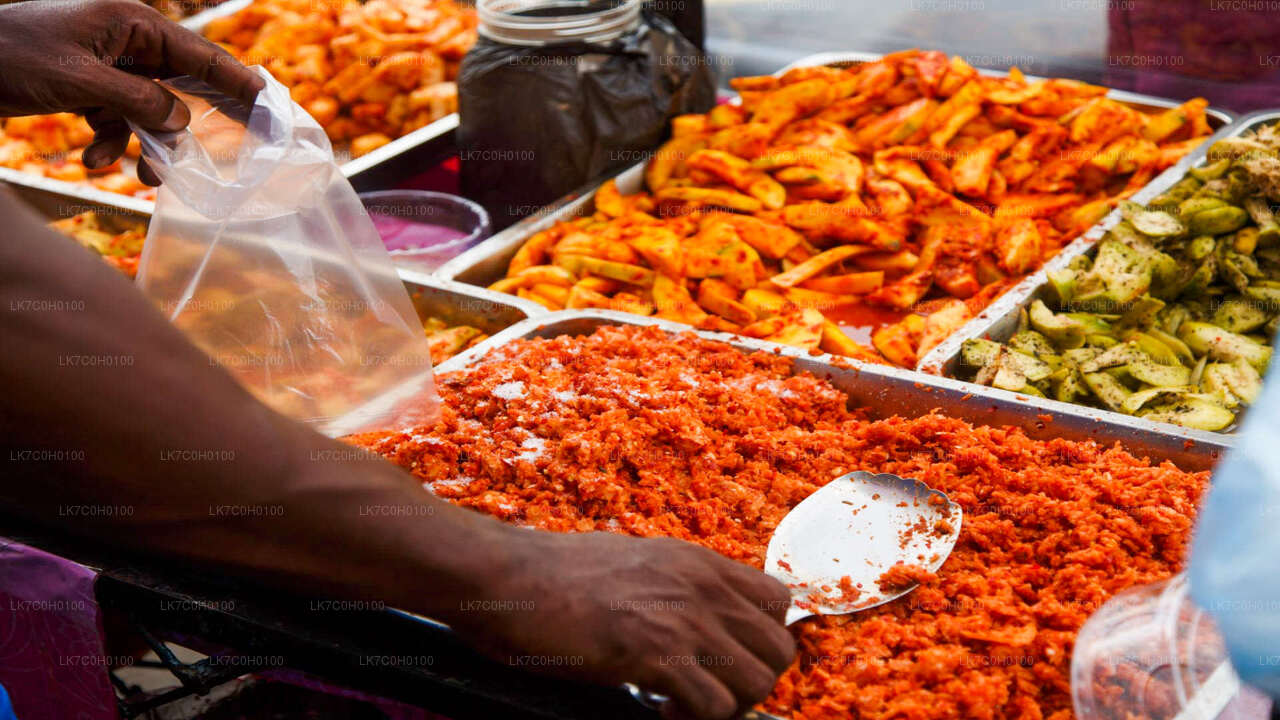
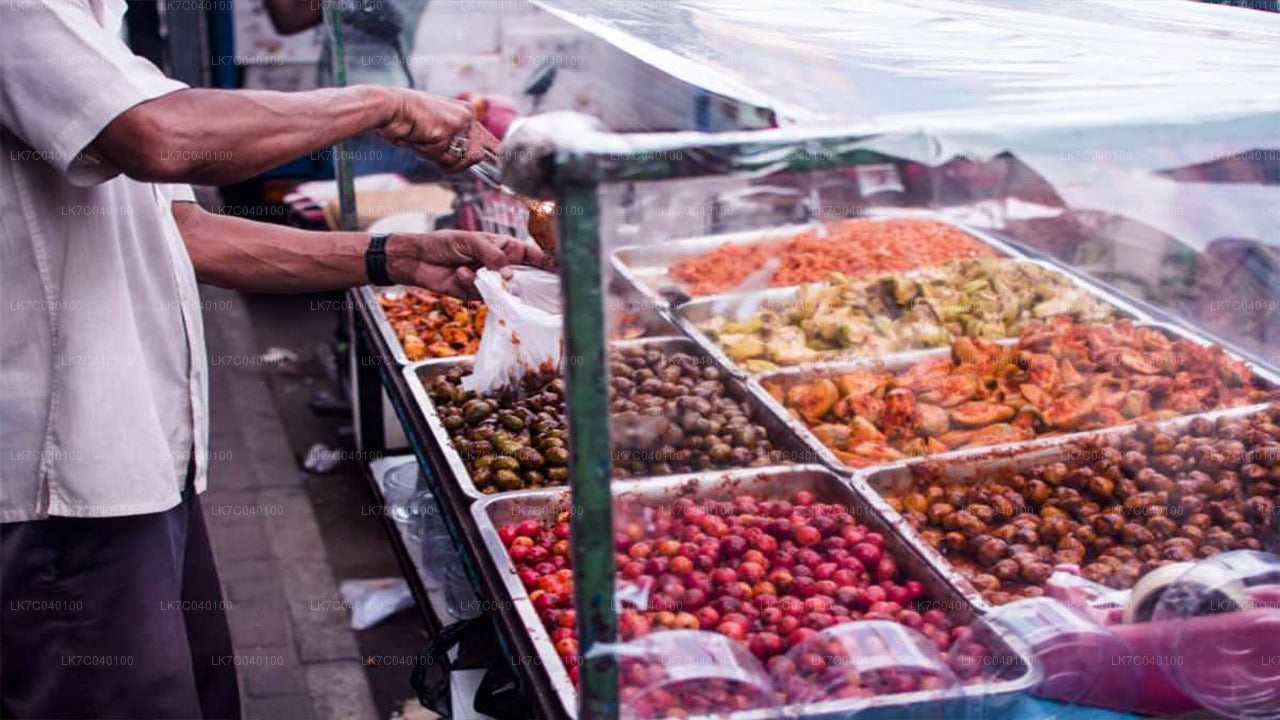
Achcharu is a Sri Lankan pickle typically made from raw green mango, pineapple, or other firm fruit, seasoned aggressively with chili, salt, and sometimes vinegar. It is sold in small bags or cups from roadside vendors, particularly near schools and markets. The sourness and heat make it an acquired taste for visitors, but it is enormously popular locally.
Kokis
A Dutch-influenced deep-fried crisp made from rice flour and coconut milk, kokis are pressed through a patterned mold into hot oil to produce an intricate, lacy shape. They are associated with the Sinhala and Tamil New Year season but are sold year-round by specialist vendors. The texture is somewhere between a cracker and a fritter.
Where do you find street food in Sri Lanka?
Street food in Sri Lanka is not confined to a single type of location. Knowing where to look makes the difference between stumbling on something memorable and missing it entirely.
- Roadside eateries (kadé) — small open-fronted shops serving rice and curry, kottu, and hoppers. Often identified by a chalk or printed board listing the day's options.
- Bakeries — found on virtually every main street in every town. Short eats, sweet buns, and roast paan are their staples.
- Choon paan vendors — tuk-tuks or bicycles fitted with glass cases, circulating through residential neighborhoods in the early morning and late afternoon with sweet buns and short eats.
- Market stalls — weekly pola (open-air markets) in towns and villages bring together food vendors alongside produce sellers. These are some of the best places to try regional specialties.
- Beachside stalls — particularly along the southwestern and southern coasts, vendors sell isso wade, achcharu, and coconut-based snacks near the water.
For a structured introduction, a guided walk through Colombo's Fort and Pettah districts covers most of these outlet types within a few hours. The Colombo city tour offered by Lakpura can be combined with a dedicated food walk for visitors who want context alongside the eating.
When is the best time to eat Sri Lankan street food?
Most street food items have a natural time of day. Hoppers, string hoppers, pol roti, and kola kenda are morning foods — the stalls that sell them often close by mid-morning once the day's batch is finished. Short eats are available from mid-morning through the afternoon. Kottu, rice and curry, and fried snacks are sold across a longer window, typically from noon until well past midnight in cities. Roast paan is baked overnight and sold from first light.
The Esala Perahera season in Kandy brings a concentration of temporary food stalls around the Kandy lake area, making it one of the most rewarding times to eat on the street in that city.
Is Sri Lankan street food safe to eat?
The majority of Sri Lankan street food is cooked fresh to order at high heat, which significantly reduces food-safety risk. Items to approach with more care include pre-cooked short eats that have been sitting under glass for several hours, and raw preparations like achcharu at stalls with low turnover. A useful rule: busy stalls with high turnover are almost always safer than quiet ones, because the food does not sit around. Drinking water from street vendors is not recommended — bottled water or Ceylon green tea or Ceylon tea from a reputable stall is the safer choice.
How does Sri Lankan street food differ by region?
The south and west coasts favor coconut-heavy preparations and seafood snacks. The hill country around Ella and the central highlands tends toward vegetable-based short eats and warming porridges. The north and east of the island have a Tamil-influenced street food tradition with stronger emphasis on murukku (fried lentil spirals), vadai (lentil fritters), and rice-based snacks. In Colombo and Kandy, the full range of island cuisines is represented within a few blocks of each other.