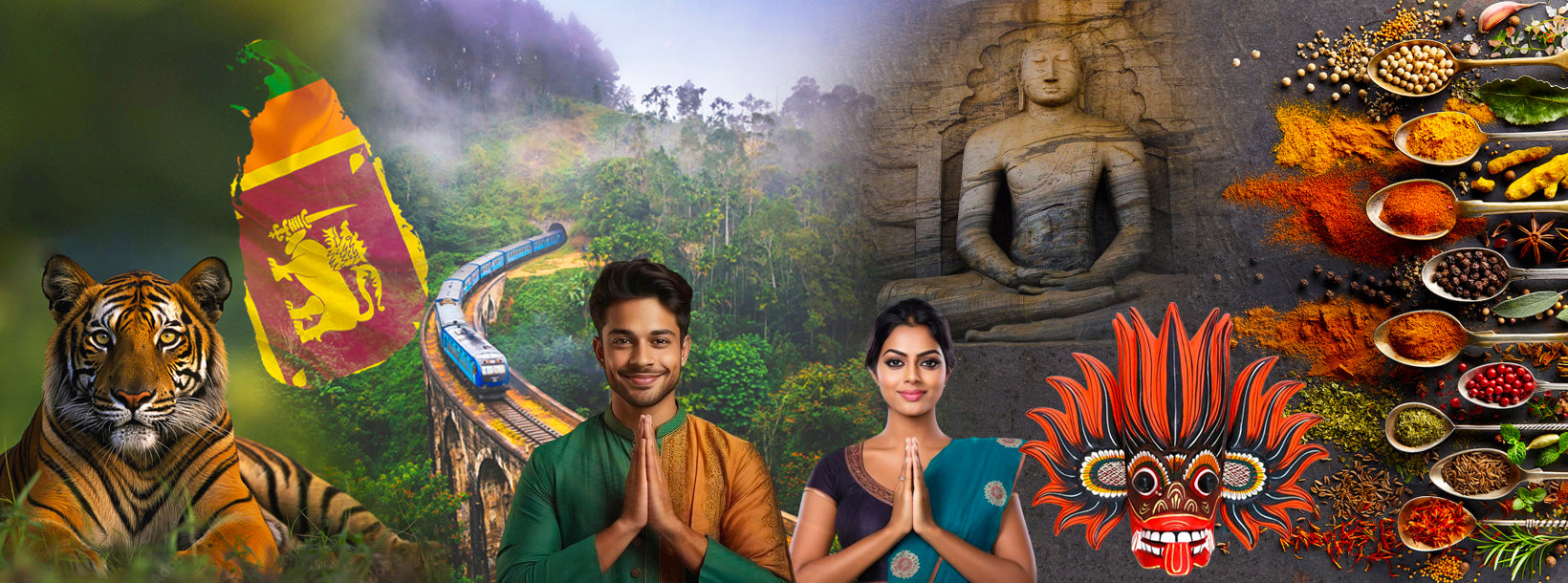
Sri Lanka is an island shaped by water. More than 103 rivers cross its landscapes, hundreds of waterfalls thread through its highlands, and the Indian Ocean wraps every coastline. That geography has given rise to an exceptionally diverse aquatic ecosystem — one where endemic freshwater species thrive alongside marine giants that rank among the largest animals on earth.
What freshwater fish species are found in Sri Lanka?
Around 107 species of freshwater fish have been recorded in Sri Lanka. The majority inhabit marshes, rivers, and perennial streams rather than open lakes. A notable group is the Carplet family, with 39 endemic species largely confined to the permanent streams of the wet zone — making them among the most geographically restricted fish fauna anywhere in South Asia.
A curious exception to the island's native fish story is the brown trout. British colonial administrators introduced it to the cold, clear streams of the central highlands during the 19th century. Today, the streams flowing through Horton Plains National Park remain one of the few places in tropical Asia where trout can still be caught.
How many amphibian species are endemic to Sri Lanka?
Sri Lanka's amphibian fauna is disproportionately rich for an island of its size. Of approximately 54 recorded amphibian species, around 33 are found nowhere else on the planet. Ongoing taxonomic research continues to document new species, and some scientists suggest Sri Lanka may eventually hold one of the highest ratios of endemic amphibian fauna in the world relative to land area.
One of the most distinctive is Nannophrys ceylonensis, commonly called the Sri Lanka rock frog or Ceylon streamlined frog. This endemic genus — comprising three species — lives on water-slicked rock ledges in the wet zone, making it highly sensitive to changes in stream flow and forest cover. The Sinharaja Forest Reserve and surrounding wet-zone habitats are among the best places to observe endemic amphibians in their natural environment.
What reptiles and crocodiles live in Sri Lanka's waterways?
Sri Lanka's rivers and lagoons support two crocodile species: the mugger (marsh) crocodile and the saltwater crocodile, though the saltwater species is now extremely rare on the island. Mugger crocodiles are regularly sighted in several protected wetlands and river systems. The Madu Ganga estuary and its network of mangrove channels is one of the more accessible places to observe them alongside monitor lizards and water birds.
For travellers specifically interested in crocodile sightings, a guided river excursion is the safest and most productive option — knowledgeable local guides know where resident animals rest and can read water conditions effectively.
Where can you see sea turtles in Sri Lanka?
Five of the world's eight marine turtle species visit Sri Lanka's coastline: the green turtle, leatherback, loggerhead, hawksbill, and olive ridley. They nest primarily on soft-sand beaches along the south-western and south-eastern coasts, typically between November and April. Nesting activity peaks in the late evening and continues through the night, so dusk-to-dawn beach visits with a guide offer the best chance of a sighting.
Several community-run hatcheries along the southern coast collect eggs from vulnerable nests, incubate them safely, and release hatchlings into the sea. The Kosgoda Sea Turtle Conservation Project and the Hikkaduwa Turtle Hatchery are two well-established programmes where visitors can learn about conservation efforts and, at certain times of year, observe hatchling releases.
Where and when can you see whales and dolphins in Sri Lanka?
Sri Lanka sits in one of the world's most productive cetacean corridors. Blue whales — the largest animals ever to have lived — pass close to the island's southern tip on their annual migration, making Sri Lanka one of a handful of places globally where blue whale sightings are relatively reliable. Sperm whales, Bryde's whales, and several dolphin species are also regularly encountered.
Key departure points for whale-watching excursions include Mirissa and Kirinda on the southern coast, as well as Kalpitiya in the north-west for spinner dolphin encounters. Sites around Weligama, Batticaloa, Negombo, and Chilaw also report sightings, typically at distances of 20–30 nautical miles offshore. The peak season for blue whale sightings off the south coast runs roughly from December through April, while the north-west coast around Kalpitiya is more productive between May and October as the monsoons shift.
Sightings are never guaranteed — these are wild animals in open ocean — but the frequency of encounters in season is high by global standards.
What marine life can snorkellers and divers see?
Coastal reef systems around Sri Lanka support a wide variety of marine life. Pigeon Island off Nilaveli on the north-east coast is one of the island's most visited snorkelling destinations, known for blacktip reef sharks, sea turtles, and healthy hard coral formations. The south-west coast around Hikkaduwa and Unawatuna offers accessible reef diving with parrotfish, moray eels, and seasonal whale shark encounters.
Wreck diving is also well established around the island: several colonial-era and wartime wrecks sit in diveable depths, particularly near Colombo and along the south coast. Visibility and sea conditions vary considerably by season — the south-west is generally best between November and April, while the north-east coast is most accessible from May to September.
What is the Madu River, and what aquatic life does it support?
The Madu Ganga, a designated Ramsar wetland site near Balapitiya, is one of Sri Lanka's most ecologically important estuarine systems. Its network of mangrove islands supports over 300 plant species, numerous fish, crocodiles, water monitor lizards, and a wide range of wading and migratory birds. A Madu River Safari by small boat is the standard way to explore the estuary, threading through mangrove corridors and stopping at a cinnamon island or a small Buddhist temple along the route.
Is deep-sea fishing available in Sri Lanka?
Yes. Sri Lanka's offshore waters hold yellowfin tuna, dorado (mahi-mahi), barracuda, and sailfish among other pelagic species. Deep sea fishing charters depart from several coastal towns throughout the year, though the best grounds shift with the monsoon seasons. The south and west coasts are most productive from October through April; the east coast fishing season typically runs from May onward.
How does Sri Lanka protect its aquatic biodiversity?
A combination of protected areas, community hatchery programmes, and internationally recognised wetland designations covers much of Sri Lanka's most sensitive aquatic habitat. The Madu Ganga and Bundala are listed Ramsar sites. Marine protected areas around Pigeon Island and Bar Reef restrict fishing and anchoring. Several national parks with significant river and lagoon systems — including Udawalawe National Park and Wilpattu National Park — protect both terrestrial and freshwater species within their boundaries.
Turtle conservation programmes, though small in scale, have contributed to gradual recovery of nesting populations on monitored beaches. Awareness among coastal communities has grown considerably over the past two decades, driven in part by ecotourism income that gives local families a direct economic stake in protecting nesting sites.
