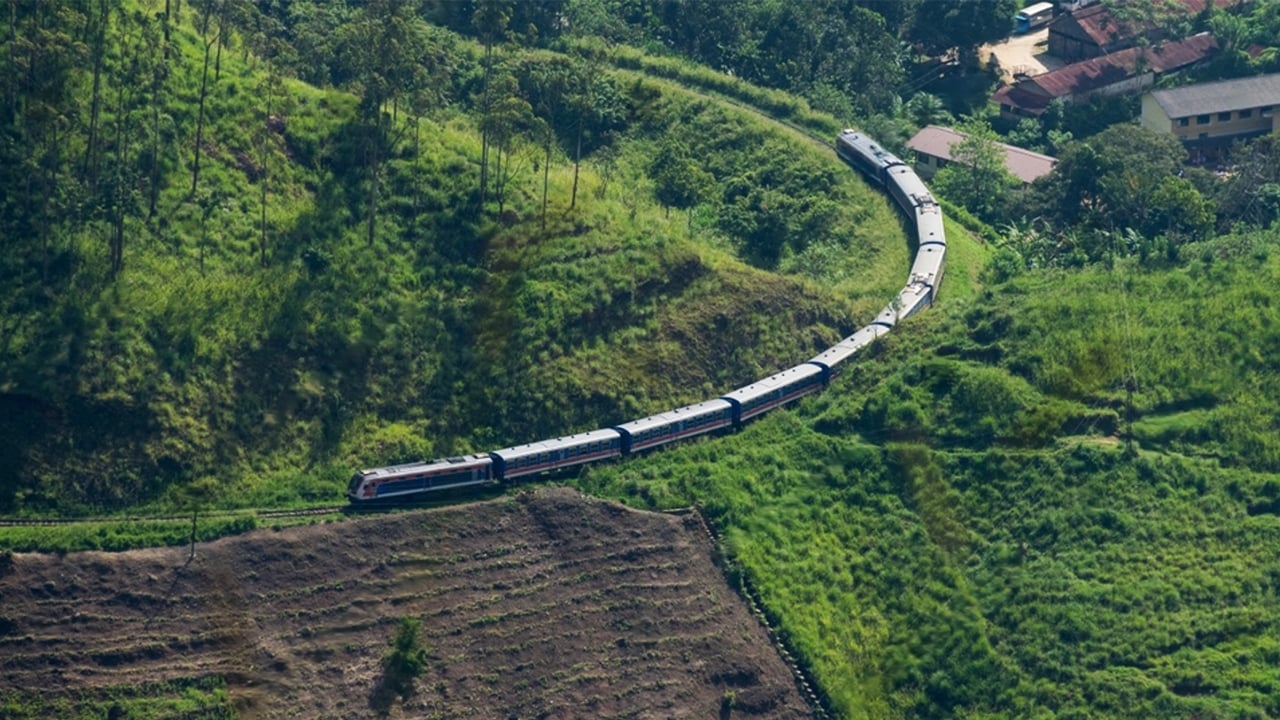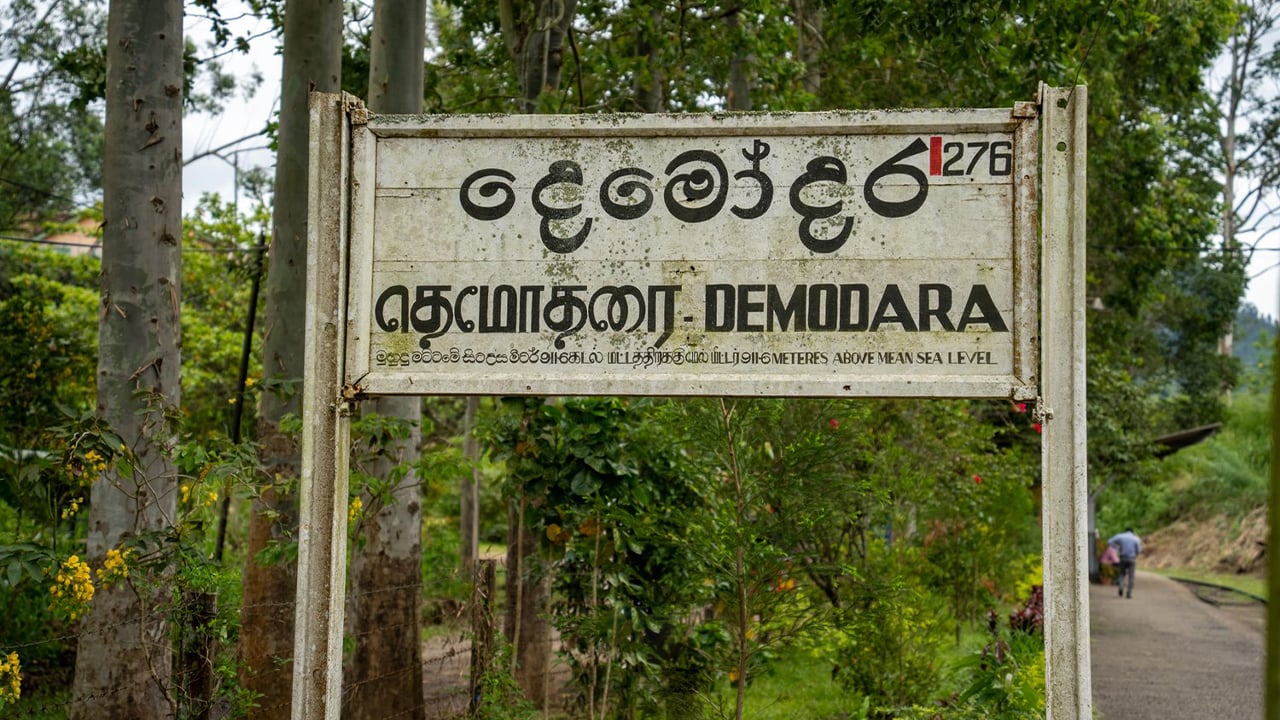
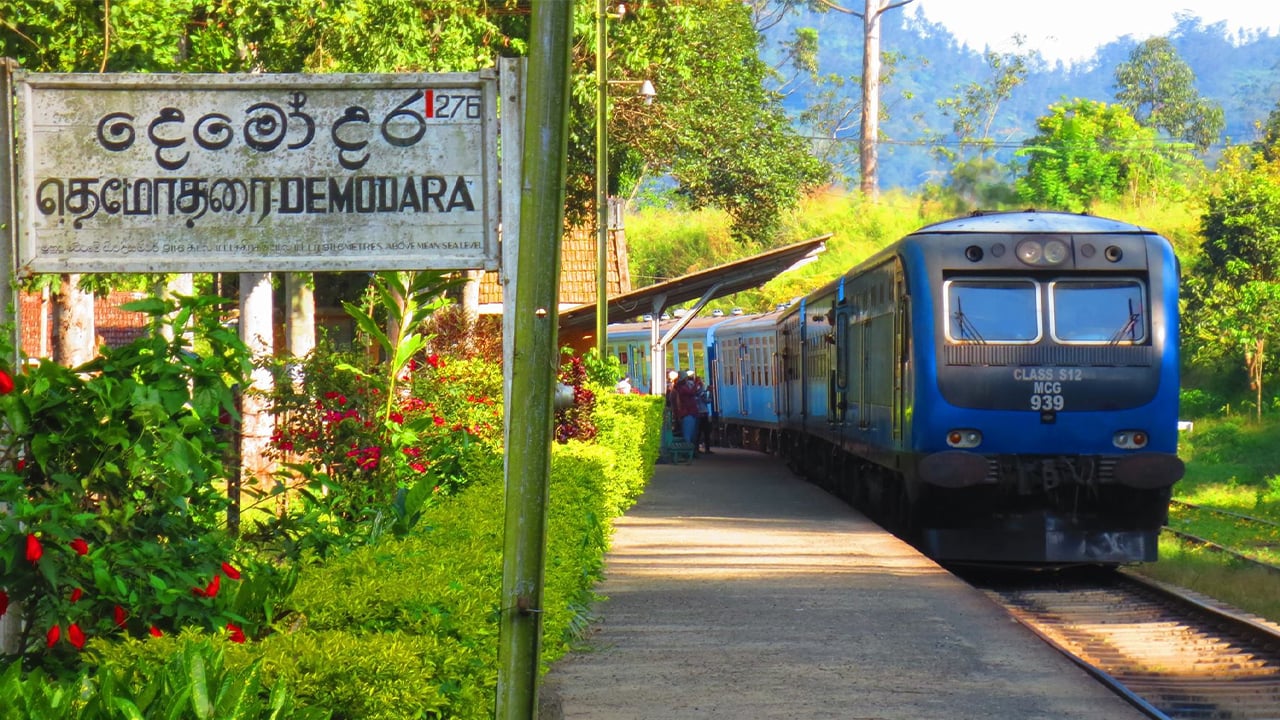
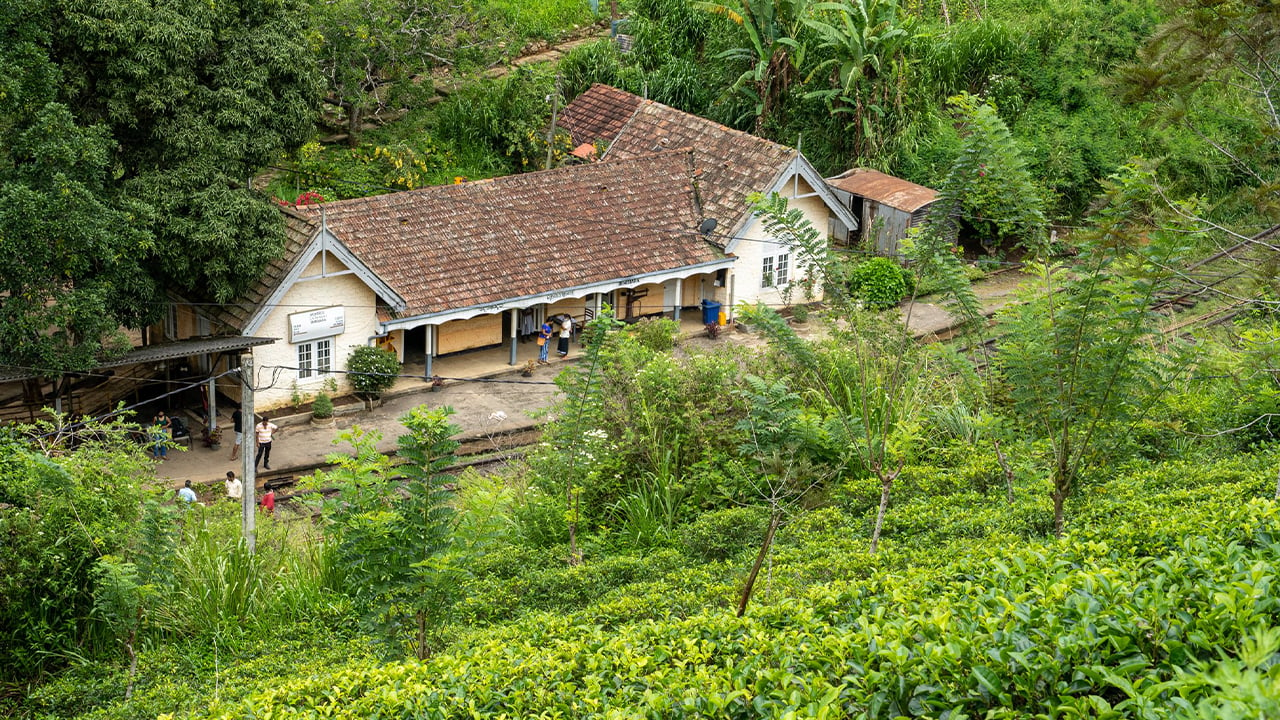

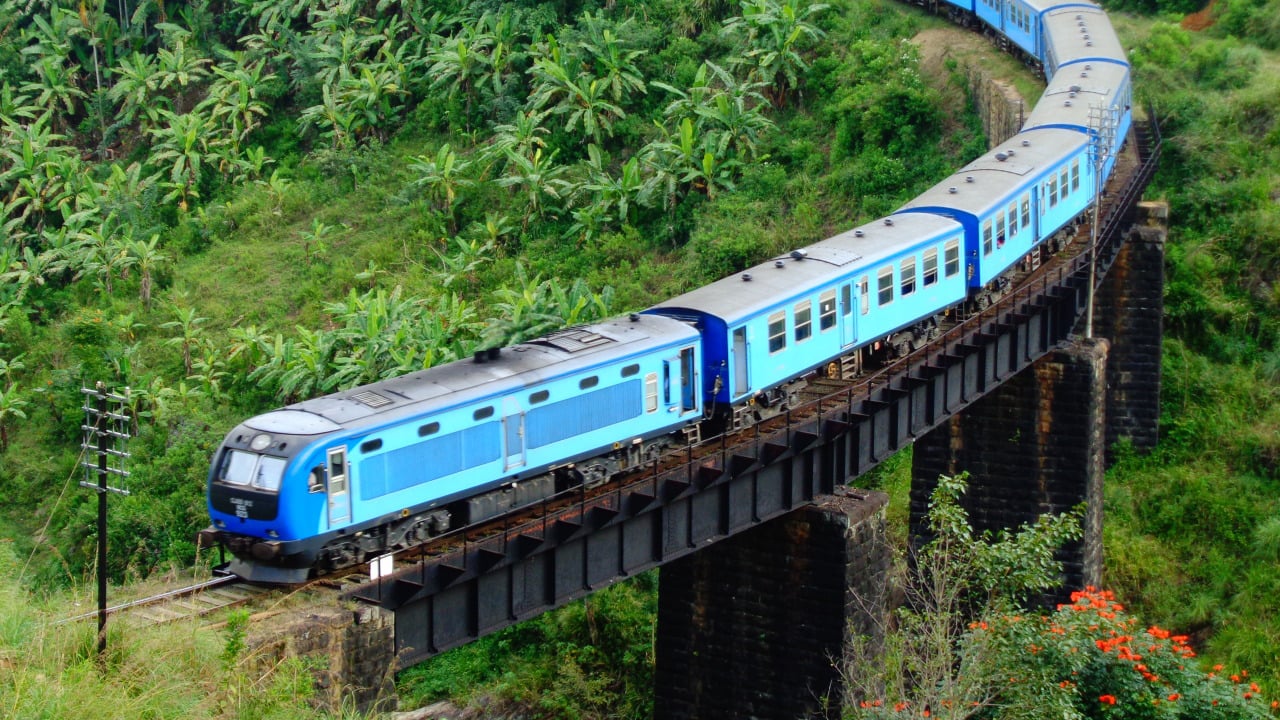
Demodara Railway Station sits quietly in the highlands of Sri Lanka's Badulla District, yet it holds one of the most extraordinary engineering stories on the island's rail network. Positioned along the Colombo–Badulla main line — widely regarded as one of the most scenic rail journeys in Asia — the station is best known as the site of the Demodara Loop, a gravity-defying solution to the severe gradients of the central hills. Visitors who arrive expecting a routine rural station are almost always surprised by what they find.
What is the Demodara Loop and why is it so remarkable?
The Demodara Loop is a spiral tunnel cut into the hillside that allows a train to gain altitude without requiring a gradient steep enough to defeat a steam or diesel locomotive. Built in the early 20th century during the British colonial era, the loop works like a corkscrew: a train enters a tunnel, curves through roughly 360 degrees underground, and re-emerges on a ledge that sits several metres above the tunnel entrance below. Passengers on an open carriage door can, at certain moments, look down and see the same tunnel mouth the train passed through just minutes earlier — a genuinely disorienting effect.
The gradient problem the loop was designed to solve is dramatic: the line drops from Ella to Demodara across a short horizontal distance, descending around 90 metres in elevation. Without the loop, this section would be unnavigable by conventional rail. The engineering solution — essentially buying altitude through circular travel — is comparable to a handful of similar loops found in Switzerland and India, but remains rare and technically impressive by any standard.
The nearby Ella area provides useful context: the famous Nine Arch Bridge is just a short distance up the line, making this stretch of track a concentrated showcase of colonial-era railway craftsmanship.
What can you see at and around Demodara Station?
The station building itself is modest and functional, retaining much of its original character. Wooden eaves, hand-painted signage, and a narrow platform overlooking terraced slopes give it the feel of a working piece of living history rather than a heritage attraction managed for tourists. Freight and passenger services both pass through, so the station remains genuinely operational.
- The loop viewpoint: A short walk from the station leads to a vantage point where you can observe the tunnel entrance and exit simultaneously. This is the photograph most visitors come for.
- Surrounding tea country: The hillsides around Demodara are planted with Ceylon tea, and the patchwork of green bushes against red laterite soil provides a characteristic highland backdrop.
- Hiking trails: Informal paths connect Demodara to nearby viewpoints and the Demodara River valley. The terrain is hilly but manageable for reasonably fit walkers.
- Birdwatching: The dense secondary forest and tea-estate shade trees attract a range of hill-zone birds, including endemics that are scarce at lower elevations.
How do I get to Demodara from Colombo or Ella?
The most atmospheric way to reach Demodara is by train. The Colombo–Badulla intercity and express services stop at Demodara, and the journey from Colombo Fort takes typically around eight to ten hours, passing through Kandy, Nanu Oya (for Nuwara Eliya), and Ella before arriving at Demodara. From Ella station, Demodara is only one stop — roughly fifteen to twenty-five minutes by train.
By road, Demodara is accessible via the A16 highway. Ella town is around 4–5 km away, making a tuk-tuk or private car a practical option if you want to visit the station without committing to a long rail journey. Many travellers combine Demodara with a broader hill-country itinerary that includes Horton Plains National Park to the west.
| Route | Approximate journey time | Notes |
|---|---|---|
| Colombo Fort → Demodara (train) | ~9 hours | Book in advance; observation carriages sell out quickly |
| Ella → Demodara (train) | ~15–25 minutes | One stop; frequent services |
| Ella → Demodara (road) | ~15 minutes | Tuk-tuk or car via A16 |
| Badulla → Demodara (train) | ~33–46 minutes | Useful if staying in Badulla town |
When is the best time to visit Demodara?
The hill country of the Badulla District lies in a transitional climatic zone that receives rainfall from both monsoon systems. The driest and clearest period for this part of Sri Lanka is generally from January through early April and again from July through September. During these windows, morning light on the tea slopes is particularly clear, and the risk of low cloud obscuring the loop viewpoint is lower.
Visiting during the southwest monsoon (May–July) or the northeast monsoon (October–December) does not make the area inaccessible, but persistent mist and rain are common and can reduce visibility at the loop viewpoint significantly. Early mornings almost always offer better light and calmer conditions than afternoons, regardless of season.
What is the historical significance of the Colombo–Badulla line?
The Colombo–Badulla railway was constructed primarily to serve the tea and rubber estates that transformed Sri Lanka's hill country economy in the late 19th and early 20th centuries. The line reaches its highest point at around 1,900 metres above sea level near Pattipola, making it one of the highest rail lines in Asia. Engineering challenges along the route — steep gradients, unstable hillsides, and the need to cross deep river valleys — required inventive solutions at multiple points, of which the Demodara Loop is the most celebrated.
The line was built under British colonial administration and opened in stages between the 1860s and the early 1920s. Its construction involved enormous logistical effort and left a legacy of tunnels, viaducts, and bridges that still carry daily passenger traffic more than a century later. The railway played a direct role in opening the highlands to commercial agriculture and eventually to tourism, a function it continues to serve today.
What practical tips should I know before visiting?
- Train tickets: Reserve observation-carriage seats well in advance, particularly during holiday periods and between December and March when tourist numbers are highest. Sri Lanka Railways has an online booking portal, and Lakpura can arrange reservations as part of a broader tour package.
- Platform access: Demodara is an operational station — stay aware of approaching trains when walking on or near the tracks, especially around the loop area.
- Photography: The loop viewpoint is best captured in the morning before midday haze builds. A wide-angle lens is useful for capturing both the upper and lower tunnel openings in a single frame.
- Facilities: The station and its immediate surroundings have limited facilities. Carry water and any snacks you may need; Ella town, a short distance away, has a much wider range of cafes and shops.
- Combine with Ella: Most visitors pair Demodara with at least a half-day in Ella, which offers accommodation, hiking, and the Nine Arch Bridge. The two sites are close enough to visit comfortably in a single day.
Demodara railway station timetable
12 trains call at Demodara on a typical day.
Main Line · 277.7 km from Colombo Fort · Uva Province
Station telephone: 055-2294171
| Departs | Towards | Train | Runs |
|---|---|---|---|
| 06:20 am | Colombo Fort | Udarata Menike | Daily |
| 06:54 am | Badulla | Night Mail | Daily |
| 09:06 am | Colombo Fort | Daily | |
| 09:59 am | Colombo Fort | Ella Odyssey | Sunday Only |
| 10:56 am | Colombo Fort | Podi Menike | Daily |
| 11:47 am | Kandy | Daily | |
| 01:43 pm | Badulla | Daily | |
| 03:25 pm | Badulla | Ella Odyssey | Saturday Only |
| 03:54 pm | Badulla | Denuwara Menike | Daily |
| 05:15 pm | Badulla | Podi Menike | Daily |
| 06:45 pm | Colombo Fort | Night Mail | Daily |
| 06:48 pm | Badulla | Udarata Menike | Daily |
Timetable mirrored from published Sri Lanka Railways schedules, last checked 2026-09-28. Times can change without notice — confirm with the railway before travelling. See the whole network on the Sri Lanka railway station list.
Nearby places
10 places within about 25 km, nearest first.
- Nil Diya Pokunaunder 1 km
- Kurulangala Rock Artunder 1 km
- Rawana Ella Cave1 km
- Ravana Cave1 km
- Ella City1 km
- Ravana Falls1 km
- Ella Gap1 km
- Newburgh Green Tea Factory1 km
- Heel Oya City3 km
- Bomburu Ella Waterfall6 km
Related reading
6 pages on closely related subjects.