


Sri Lanka's coastline stretches for roughly 1,340 kilometres, and for centuries its lighthouses have guided vessels safely past treacherous reefs, shallow shoals, and busy harbour approaches. Today, according to the Amateur Radio Lighthouse Society (ARLHS), there are 25 lighthouses on the island, of which 14 remain operationally active. Most fall under the jurisdiction of the Sri Lanka Ports Authority, while a handful are managed by the Sri Lanka Navy. For travellers, these structures offer a compelling mix of maritime history, colonial architecture, and dramatic coastal scenery — many are accessible as day excursions from popular beach resorts or as stops on a longer island circuit.
What are Sri Lanka's four international lighthouses?
Four Sri Lankan lighthouses are classified as internationally significant aids to navigation, serving vessels on major Indian Ocean shipping lanes rather than just local coastal traffic.
- Dondra Head Lighthouse — Standing at Sri Lanka's southernmost tip near Matara, this is the tallest lighthouse on the island and one of the most visited. Built by the British in 1890, the white granite tower rises around 49 metres and offers sweeping views of the open Indian Ocean.
- Barberyn (Beruwala) Lighthouse — Situated on a small rocky islet off the Beruwala coast, this lighthouse dates to the mid-19th century and can be reached by short boat ride. It is one of the oldest working lighthouses in Sri Lanka.
- Great Basses Reef Lighthouse — Built on an exposed granite rock roughly 10 kilometres off the southeast coast, this is one of the most isolated structures in Sri Lanka. Access is extremely difficult and generally limited to scuba divers exploring the reef.
- Little Basses Reef Lighthouse — A near neighbour of Great Basses, this offshore tower guards a second dangerous reef system in the Southern Province. Like Great Basses, it is rarely visited by tourists due to its remote location.
Which lighthouses in Sri Lanka can tourists visit?
Access policies vary by lighthouse, and conditions can change. As a general guide, several are relatively straightforward to visit as part of a day trip or a longer coastal drive.
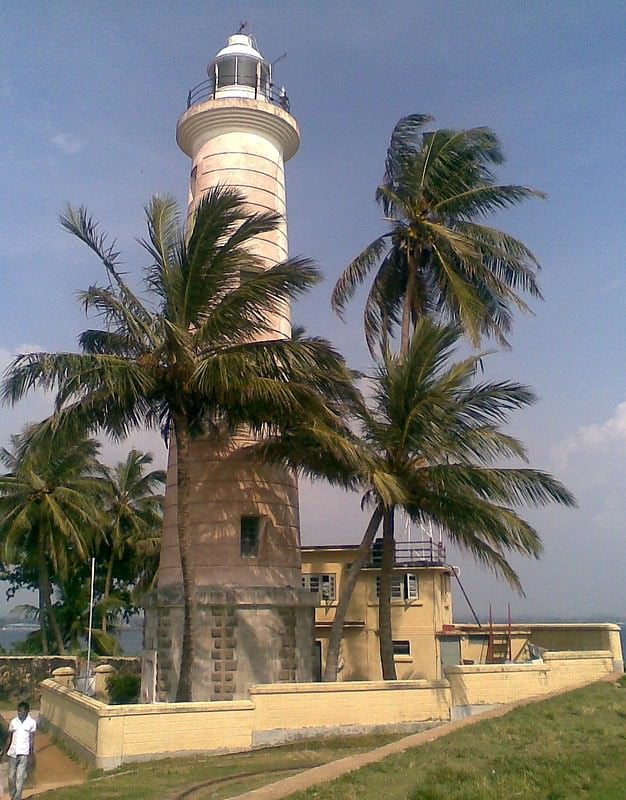
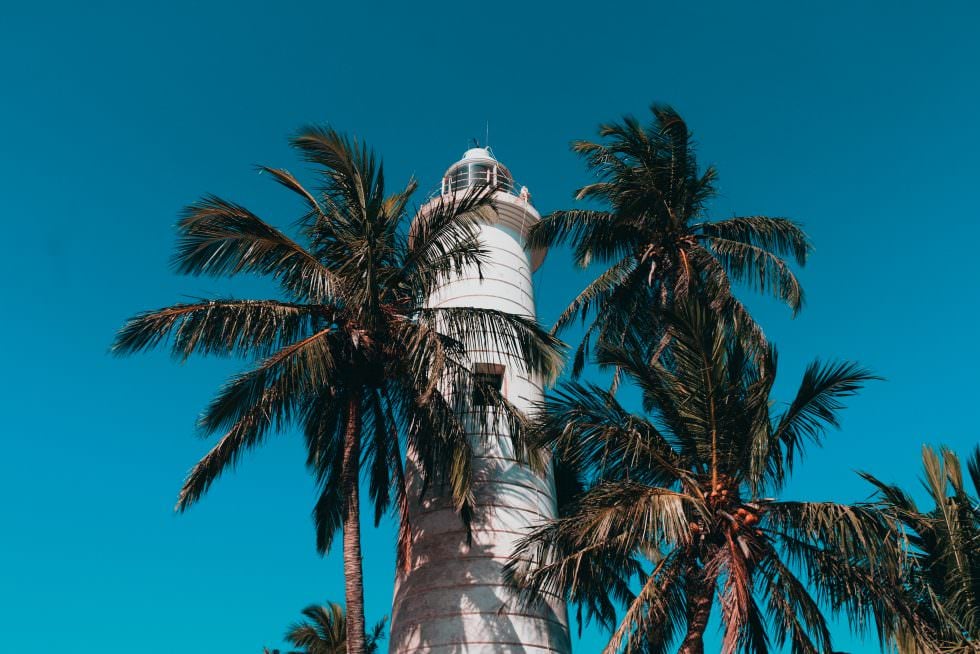
- Galle Lighthouse — Located inside the historic Galle Fort UNESCO World Heritage Site, this is arguably the most accessible lighthouse in the country. The 18th-century original was replaced in 1939 by the current structure. Combine it with a Galle city tour to make the most of your visit.
- Dondra Head Lighthouse — Open to visitors on certain days; climbing the internal staircase rewards you with panoramic views. It sits close to the southernmost point of Sri Lanka near the town of Dondra.
- Barberyn Lighthouse, Beruwala — A boat from Beruwala harbour takes you across to the islet. The trip itself is pleasant and the lighthouse keeper has historically welcomed interested visitors.
- Colombo Lighthouse (Old and New) — Both structures are within or near Colombo's busy port area. The old lighthouse, now decommissioned, can be seen during a Colombo city tour.
- Chapel Hill Lighthouse, Trincomalee — Set on the headland above Trincomalee's natural harbour, this lighthouse shares the hill with Fort Frederick and the Koneswaram Temple, making it part of a rewarding half-day excursion.
Where is the Dondra Head Lighthouse and why is it significant?
Dondra Head Lighthouse stands at the southernmost point of Sri Lanka, on a rocky promontory near Dondra in the Matara District of the Southern Province. Built in 1890 under British colonial administration, it is the tallest lighthouse in Sri Lanka and one of the tallest in South Asia. The tower is constructed from Scottish granite shipped to the island during the construction period. Its light is visible at sea for approximately 27 nautical miles, making it a critical marker for vessels rounding the southern tip of the island on routes between East and West. The surrounding headland is a pleasant spot to watch sunset over the Indian Ocean, and the nearby Dondra temple complex adds cultural interest.
A complete list of Sri Lanka's lighthouses
The table below lists all known lighthouses on the island with their locations for reference.
| Lighthouse | Location | Notes |
|---|---|---|
| Barberyn (Beruwala) Lighthouse | Beruwala, Western Province | International; accessible by boat |
| Batticaloa Lighthouse | Batticaloa, Eastern Province | Active |
| Chapel Hill Lighthouse | Trincomalee, Eastern Province | Near Fort Frederick |
| Colombo Lighthouse (New) | Colombo, Western Province | Active; port area |
| Colombo Island Breakwater North End Lighthouse | Colombo, Western Province | Port structure |
| Colombo Island Breakwater South End Lighthouse | Colombo, Western Province | Port structure |
| Dondra Head Lighthouse | Dondra, Southern Province | International; tallest on island |
| Foul Point Lighthouse | Trincomalee, Eastern Province | Active |
| Galle Lighthouse | Galle Fort, Southern Province | Inside UNESCO World Heritage site |
| Great Basses Reef Lighthouse | Southern Province (offshore) | International; extremely remote |
| Hambantota Lighthouse | Hambantota, Southern Province | Active |
| Jaffna Channel Lighthouse | Jaffna, Northern Province | Active |
| Kankesanthurai Lighthouse | Kankesanthurai, Northern Province | Active |
| Kovilan Point Lighthouse | Karainagar, Northern Province | Island location |
| Little Basses Reef Lighthouse | Southern Province (offshore) | International; remote |
| Mannar Island New Lighthouse | Talaimannar, Northern Province | Active |
| Mannar Island Old Lighthouse | Talaimannar, Northern Province | Decommissioned |
| Mullaitivu Lighthouse | Mullaitivu, Northern Province | Active |
| Old Colombo Lighthouse | Colombo, Western Province | Decommissioned; heritage structure |
| Oluvil Lighthouse | Oluvil, Eastern Province | Active |
| Point Pedro Lighthouse | Point Pedro, Northern Province | Northernmost lighthouse |
| Pungudutivu Lighthouse | Pungudutivu Island, Northern Province | Island access required |
| Round Island Lighthouse | Trincomalee area, Eastern Province | Active |
| Sangamankanda Point Lighthouse | Eastern Province | Active |
How do I reach Sri Lanka's main lighthouses from Colombo?
Distances and travel times from Colombo vary considerably across the island.
- Galle Lighthouse: Around 2–2.5 hours by road via the Southern Expressway. Galle Fort can be explored on foot once you arrive.
- Dondra Head Lighthouse: Roughly 3.5–4 hours from Colombo, continuing south past Galle and Matara along the coast road.
- Barberyn Lighthouse, Beruwala: Approximately 1.5 hours from Colombo. Arrange a local boat from Beruwala harbour to cross to the islet.
- Chapel Hill Lighthouse, Trincomalee: Around 5–6 hours by road from Colombo, or shorter if travelling from the Cultural Triangle region.
- Point Pedro Lighthouse: Near the northern tip of the Jaffna Peninsula, around 8–9 hours from Colombo by road, or more practically reached from Jaffna town (roughly 35 km).
For those combining lighthouse visits with broader coastal sightseeing, a private car with a knowledgeable driver offers the most flexibility. A deep-sea fishing trip off the south or east coast can also bring you close to offshore lighthouse towers that are otherwise inaccessible by land.
What is the history of lighthouses in Sri Lanka?
Sri Lanka's lighthouse network is largely a legacy of British colonial maritime administration. As the island's harbours — particularly Colombo, Galle, and Trincomalee — grew in importance for Indian Ocean trade from the 18th century onward, safe navigation became a commercial and strategic priority. Many of the permanent stone towers were erected in the second half of the 19th century, replacing earlier lanterns or fires maintained on headlands. The Galle Lighthouse location, for instance, has reportedly been used as a navigational aid since at least the Dutch colonial period. The Great Basses and Little Basses reef lighthouses, built on exposed rock formations far from shore, represent particular feats of Victorian engineering and were completed in the 1870s. After independence in 1948, the Sri Lanka Ports Authority assumed responsibility for most operational lights, with the Sri Lanka Navy managing others in strategic northern and eastern locations.
Are lighthouses in Sri Lanka open to the public?
There is no single national policy governing public access to Sri Lankan lighthouses. Some, like the Galle Lighthouse within the fort walls, are effectively always accessible to pedestrians in the surrounding area. Others, such as Dondra Head, have periods when the interior can be entered and the tower climbed. Offshore lighthouses at Great Basses and Little Basses reefs are staffed by lighthouse keepers and are not open to tourists in any regular sense. For those in the north — including Kankesanthurai and Point Pedro — access has improved in recent years following the end of the civil conflict, though it is advisable to check current conditions locally before travelling to remote northern or eastern sites. The Pigeon Island marine sanctuary near Nilaveli on the east coast makes a natural companion visit for anyone exploring the Trincomalee-area lighthouses.