Lakpura
Lakpura®

Hansa Puttuwa

The Hansa Puttuwa — also spelled Hansa Puthuwa — is one of Sri Lanka's most enduring decorative emblems. Rendered in wood, stone, fabric, and lacquer across centuries of artisanship, the swan motif carries layers of religious meaning, philosophical resonance, and aesthetic refinement that make it far more than a simple ornament. Understanding it offers a window into the values that have shaped Sri Lankan visual culture from the ancient kingdoms to the present day.

What does Hansa Puttuwa mean?

The phrase combines two Sinhala terms. Hansa derives from the Sanskrit haṃsa, the mythological swan or goose that appears throughout Indian and Sri Lankan religious literature. Puttuwa (or puthuwa) translates roughly as "mark" or "emblem." Together the compound denotes a "swan mark" — a recognised symbol rather than a naturalistic depiction of a bird.

In classical South Asian thought, the haṃsa is no ordinary waterfowl. Ancient texts praise its supposed ability to separate milk from water when both are mixed — a metaphor for the discriminating wisdom that distinguishes truth from illusion. This intellectual quality elevated the swan to a symbol of enlightenment and discernment, values that sit comfortably in both Buddhist and Hindu cosmologies.

What are the religious and cultural roots of the swan symbol?

In Hindu tradition, the haṃsa is the vehicle of Brahma, the creator deity, and is closely associated with Saraswati, the goddess of learning, music, and the arts. The bird's white plumage became a shorthand for purity, and its graceful movement across water — untouched by the element it glides through — a metaphor for spiritual non-attachment.

Sri Lankan Buddhism absorbed the symbol early. The Jataka tales, a body of stories recounting the previous lives of the Buddha, include several narratives centred on swans. The Hansa Jataka features a golden swan (suvaṇṇa-haṃsa) whose wisdom and self-sacrifice serve as moral exemplars. Such stories kept the bird's symbolic currency alive long after purely Hindu religious references had receded in predominantly Buddhist Sri Lanka.

The Esala Perahera Festival in Kandy, which brings together Buddhist and Hindu traditions in a single ceremonial procession, offers a living example of how South Asian iconography — including bird and animal motifs — continues to blend across religious boundaries in Sri Lankan public life.

Where does the Hansa Puttuwa appear in Sri Lankan art and architecture?

The motif shows up across a wide range of media and historical periods:

  • Stone friezes: Ancient sites preserve carved swan friezes on the bases of dagobas (stupas), moonstone steps, and guard-stone panels. The ruins at Polonnaruwa contain some of the finest surviving examples, where rows of geese march in procession around the lower sections of shrine platforms.
  • Textiles and weaving: Traditional handloom weavers incorporate the Hansa Puttuwa into sarees, temple hangings, and ceremonial cloths. The motif typically appears as a stylised, repeat pattern rather than a literal bird portrait.
  • Wood carving: Temple doorways, ceiling panels, and royal furniture from the Kandyan period frequently feature swan medallions alongside lotus and lion motifs. The layering of these symbols was deliberate — each reinforcing ideas of purity, power, and wisdom.
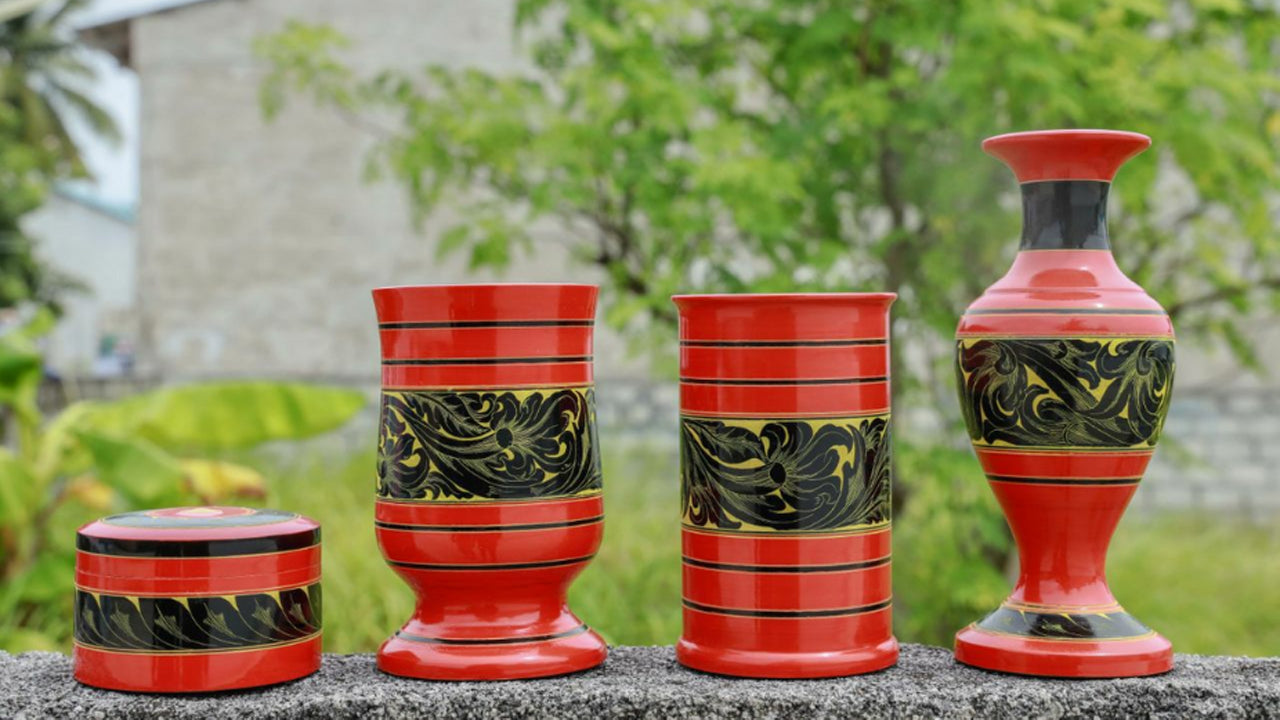
  • Lacquerwork and metalwork: Artisans producing traditional lacquer ware (ratan work) and ceremonial objects have long used the swan as a border or centrepiece design, often worked in contrasting colours to maximise visual impact.
  • Architectural mouldings: Colonial-era buildings in Colombo and Galle sometimes retained or borrowed classical Sinhala decorative vocabulary, and the swan appears in plaster mouldings and ironwork from that hybrid period as well.

How does the motif differ from a naturalistic swan depiction?

Craftsmen working within the Hansa Puttuwa tradition rarely aim for zoological accuracy. The conventional form shows a bird with a long, arched neck, a rounded body, wings folded or slightly raised, and feet suggested by simple strokes. The emphasis falls on silhouette and symmetry rather than feather detail. This stylisation allows the motif to function as a pattern element — repeatable, scalable, and instantly recognisable — while retaining its symbolic charge.

The golden variant, the Ran Hansa, enjoys particular prestige. Gold in Sinhala Buddhist aesthetics amplifies the underlying qualities of the symbol — wisdom and purity become luminous, almost cosmic in scale. Gilt swan finials on temple rooftops and golden thread work on ceremonial textiles both draw on this tradition.

How is the Hansa Puttuwa used in contemporary Sri Lankan craft and design?

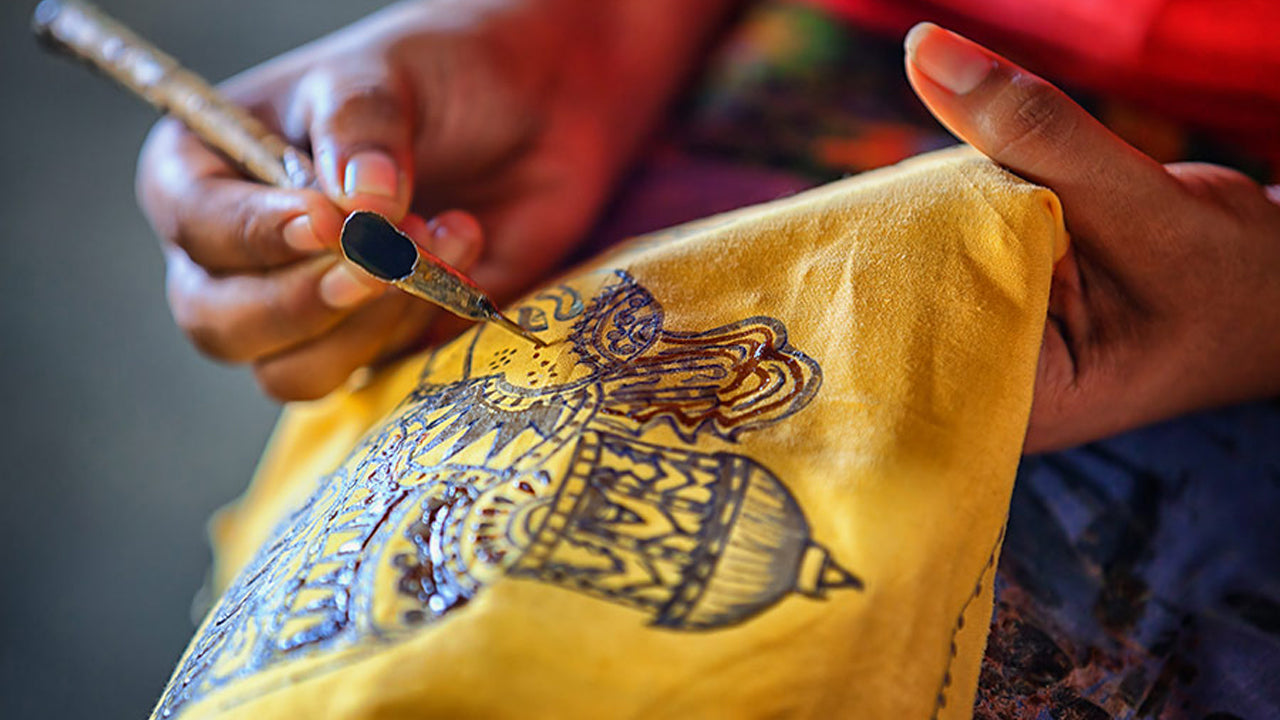
The motif has moved fluidly from sacred contexts into everyday design without losing its cultural legibility. Contemporary batik artists, jewellers, and graphic designers regularly incorporate swan emblems into their work, aware that the image carries an immediate cultural signal to Sri Lankan audiences.

Institutional use is also widespread. The swan has appeared on seals, crests, and publishing imprints associated with learning and the arts — echoing the ancient link between the bird and intellectual virtue. Several Sri Lankan schools and cultural organisations have adopted the Hansa as part of their visual identity for precisely this reason.

Traditional craft villages — including those near Sigiriya Village — continue to produce carved and woven pieces featuring the motif, keeping the artisanal tradition alive for both domestic and international markets.

What makes the Hansa Puttuwa significant for visitors to Sri Lanka?

For travellers with an interest in South Asian art history, the Hansa Puttuwa serves as a useful interpretive key. Recognising the swan motif when it appears in a temple frieze, a museum textile, or a craft-market carving connects the object to a tradition spanning more than two millennia and stretching from the Indus Valley to Java. It is a reminder that Sri Lankan visual culture has always been in conversation with a wider world, absorbing influences while developing its own distinctive vocabulary.

Spotting the motif is straightforward once you know what to look for. Museum collections in Colombo, the ruins at Polonnaruwa and Anuradhapura, working temples throughout the island, and artisan workshops in the hill country all offer opportunities to see the Hansa Puttuwa in context. A guide familiar with Sinhala iconography can significantly deepen the experience by explaining how individual compositions relate to the broader symbolic programme of a building or object.

Are there literary works associated with the Hansa motif in Sri Lanka?

The swan's role in Sinhala literature is substantial. The Hansa Sandeshaya — "Message of the Swan" — is among the most celebrated examples of the sandesa (message-poem) genre in classical Sinhala literature. In these poems, a bird is sent as a messenger between a devotee and a deity, describing the landscapes and sacred sites of Sri Lanka along its route. The Hansa Sandeshaya uses the swan's mythological prestige to lend gravity and beauty to the journey it describes, and the text remains a significant source for understanding medieval Sri Lankan geography and religious culture.

Several editions and scholarly commentaries on the Hansa Sandeshaya are available through Lakpura's book collection for readers wishing to explore the literary dimension of the motif in greater depth.

Shop this range with Lakpura

Packed in Sri Lanka and shipped worldwide, direct from the source.

Ask Lakpura® Agent