Lakpura
Lakpura®

Cardamom Grades

Sri Lanka has been cultivating cardamom (Elettaria cardamomum) in its hill-country forests for centuries, and today the island's crop is recognised internationally for its clean, camphor-bright aroma. To protect that reputation, the Sri Lanka Standards Institution (SLSI) classifies all export-grade cardamom under SLS 166:7980, a five-tier grading system that sets binding limits on colour, the percentage of split or open pods, and bulk density measured in grams per litre. Understanding these grades matters whether you are sourcing cardamom wholesale, buying for a home pantry, or simply curious about what distinguishes a premium pod from a lesser one.

What are the five official grades of Ceylon cardamom?

The SLS 166:7980 standard defines the following grades, ranked broadly from highest to lowest quality:

Grade Colour Max. Splits (%) Min. Bulk Density (g/litre)
Lanka Green Green 2 370
Lanka Light Green – 1 Slightly light green 5 340
Lanka Light Green – 2 Light green 6 320
Lanka Bleached Pale buff 8 300
Lanka Non Specified Off colour Non specified 360

Each metric tells a specific story. Colour reflects how carefully the pods were harvested and dried — deep green indicates minimal oxidation. The split percentage captures post-harvest handling quality: cracked or open pods lose volatile oils faster, reducing flavour potency. Bulk density is a proxy for how well-filled and mature the seeds are inside each pod.

What does "Lanka Green" mean and why is it considered the top grade?

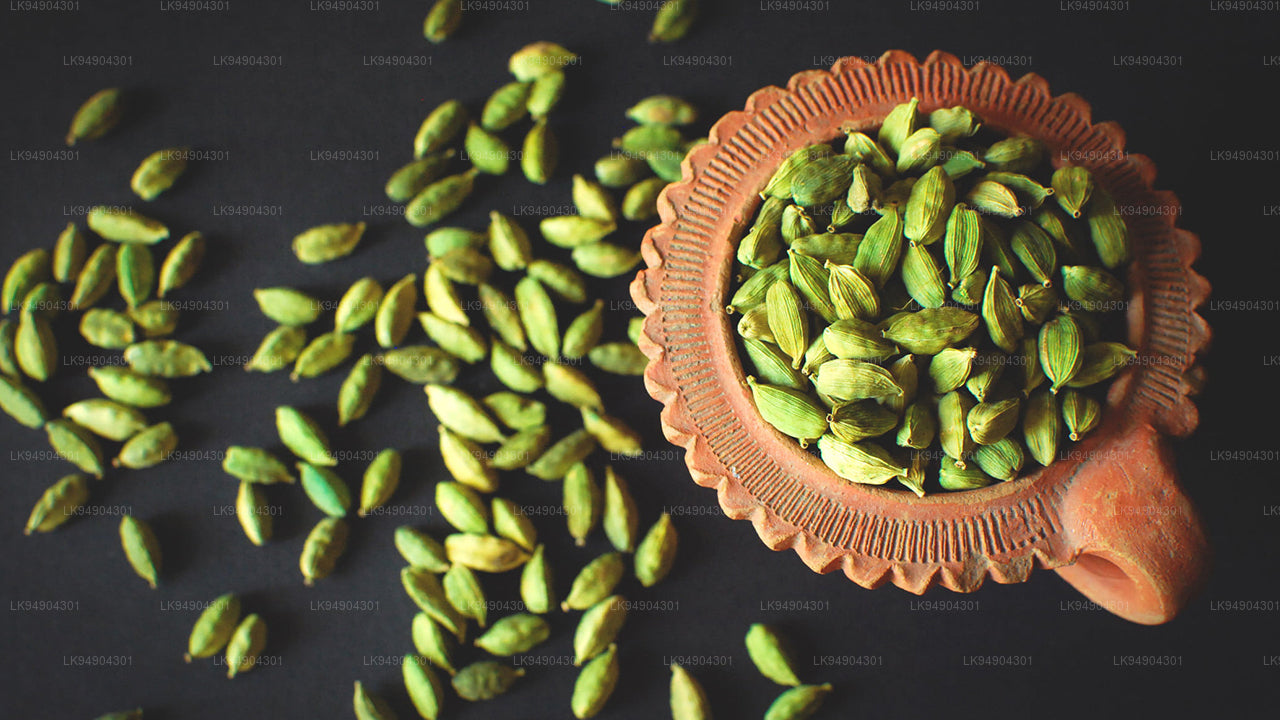
Lanka Green is the benchmark grade for Ceylon cardamom. Pods must display a uniform green colour, contain no more than 2% splits, and achieve a minimum bulk density of 370 g/litre. These requirements together confirm that the pods were harvested at peak maturity, dried carefully — typically using low-temperature mechanical driers in the Kandy and Matale districts — and handled without excessive breakage during processing. For spice buyers, Lanka Green pods carry the highest concentration of the essential oils (primarily 1,8-cineole and terpinyl acetate) responsible for cardamom's characteristic flavour.

This grade commands a premium on international markets and is the variety most sought after by specialty food importers in the Middle East, Europe, and Japan. Ceylon black pepper follows a similarly rigorous grading framework under SLSI standards, reflecting Sri Lanka's broader commitment to traceable spice quality.

How do Lanka Light Green grades differ from each other?

Lanka Light Green – 1 and Lanka Light Green – 2 represent a middle tier where the pods show slightly reduced colour saturation, suggesting a marginally longer or warmer drying process. The practical difference between the two sub-grades lies in the split tolerance (5% versus 6%) and bulk density floor (340 versus 320 g/litre). Both grades are fully usable in culinary and beverage applications; they are common in blended spice mixes, flavoured teas, and food-manufacturing contexts where colour uniformity is less critical than in retail retail presentation.

What is Lanka Bleached cardamom used for?

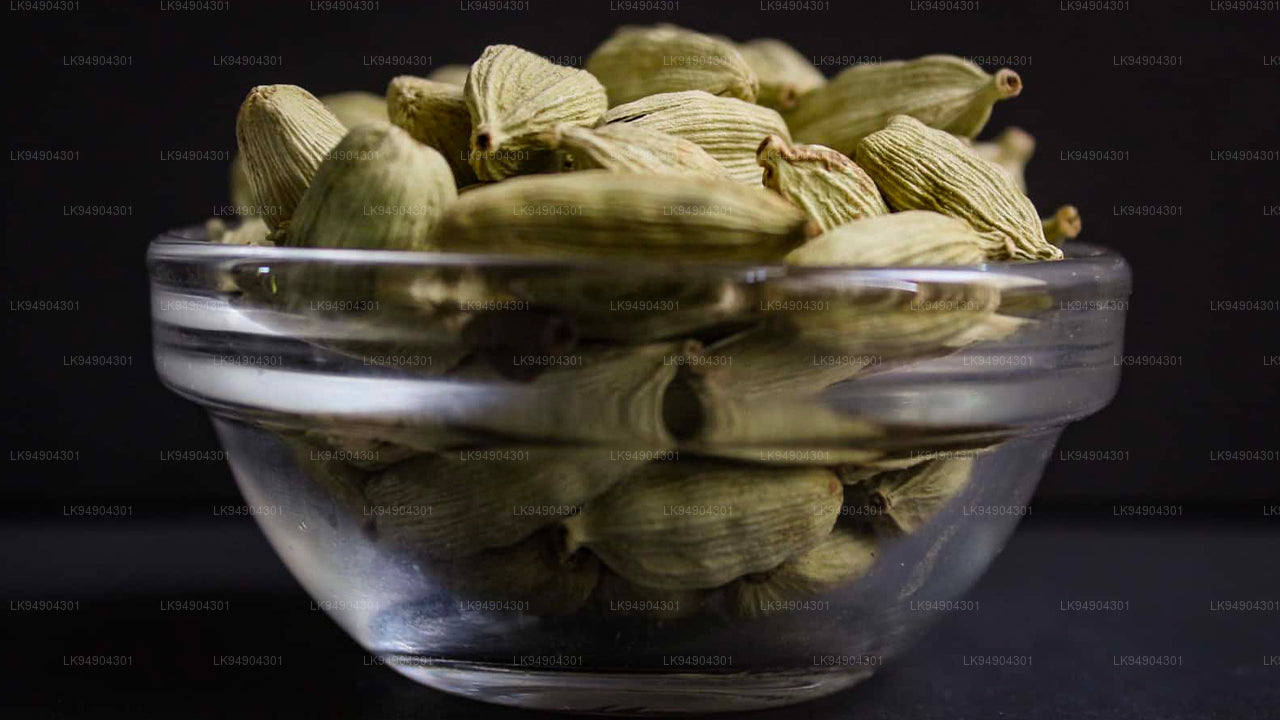
Lanka Bleached pods have a pale buff appearance resulting from a deliberate bleaching or prolonged sun-drying process. The standard permits up to 8% splits and sets a minimum density of 300 g/litre. Bleached cardamom was traditionally preferred in some Middle Eastern markets where the pale colour was considered aesthetically appealing in rice dishes and sweets. Today, demand for bleached grades has softened globally as consumers increasingly prefer naturally dried green pods, but the grade remains part of the official SLSI classification.

What is Lanka Non Specified grade?

Lanka Non Specified is a catch-all category for pods that do not meet the colour requirements of the four named grades — the classification lists them simply as "off colour." Interestingly, no split percentage maximum is imposed, yet the standard does set a minimum bulk density of 360 g/litre, which is higher than both light-green sub-grades. This suggests the pods may be physically dense and seed-full but visually inconsistent, making them suitable for processing into ground cardamom or cardamom extracts where appearance is irrelevant.

Where is cardamom grown in Sri Lanka?

The primary cardamom-growing regions are the wet, mid-elevation forests of Kandy, Matale, Kegalle, and Nuwara Eliya districts, where annual rainfall exceeds 2,000 mm and shade from taller canopy trees mimics the plant's native forest-floor habitat. The Sinharaja Forest Reserve biosphere marks the southern edge of this ecological zone; cardamom gardens often sit in adjacent buffer areas. Smallholder farmers typically intercrop cardamom under rubber, coffee, or mixed-fruit canopies, making it both an agroforestry staple and a valuable secondary income crop.

Harvest generally runs from August through February, with pods picked by hand when three-quarters ripe to preserve oil content. Sri Lanka produces a relatively modest volume compared to Guatemala and India, but the island's terroir and careful post-harvest handling earn it a distinct niche in the premium-spice trade.

How is cardamom graded after harvest?

Once harvested, pods are cleaned, dried, and sorted — typically by size graders and colour-sorting machines in processing facilities near the growing districts. Graders assess:

  • Colour uniformity — checked visually and, in modern facilities, by optical sorters calibrated to SLSI colour parameters.
  • Split count — a sample is drawn and split or open pods are counted as a percentage of total weight.
  • Bulk density — a measured volume of pods is weighed; denser pods indicate fuller seeds and higher oil yield.
  • Moisture content — not specified in the five-grade framework above but governed by separate SLSI moisture limits to prevent mould during storage.
  • Foreign matter — stems, leaves, and other debris must fall below prescribed thresholds in all grades.

Certified exporters must provide a Certificate of Conformity from the SLSI before shipment, and many buyers additionally request independent third-party analysis for essential-oil content.

How does Ceylon cardamom compare to Guatemalan or Indian varieties?

Guatemala is the world's largest cardamom producer by volume, and its pods tend to be slightly larger with a milder, more eucalyptus-forward flavour profile. Indian Mysore or Malabar cardamom, grown in Kerala and Karnataka, is botanically identical to Ceylon cardamom (Elettaria cardamomum var. minuscula) and produces aromatic profiles that are closely comparable. Ceylon cardamom is often described as having a particularly clean, bright character — a quality attributed to the island's high-rainfall growing conditions and relatively cool drying temperatures. Sri Lanka does not produce the larger "black" or "hill" cardamom (Amomum subulatum), which is a distinct species used primarily in savory South Asian cooking.

For buyers focused on traceability and certifiable quality standards, the SLS 166:7980 grading framework offers a transparent benchmark that many importing markets recognise. Complementary Sri Lankan spices such as cloves (Syzygium aromaticum) follow analogous SLSI standards, reinforcing Sri Lanka's reputation as a source of consistently graded tropical spices.

What forms of Ceylon cardamom are available to buy?

Retail and wholesale buyers can source Ceylon cardamom in several forms, each suited to different applications:

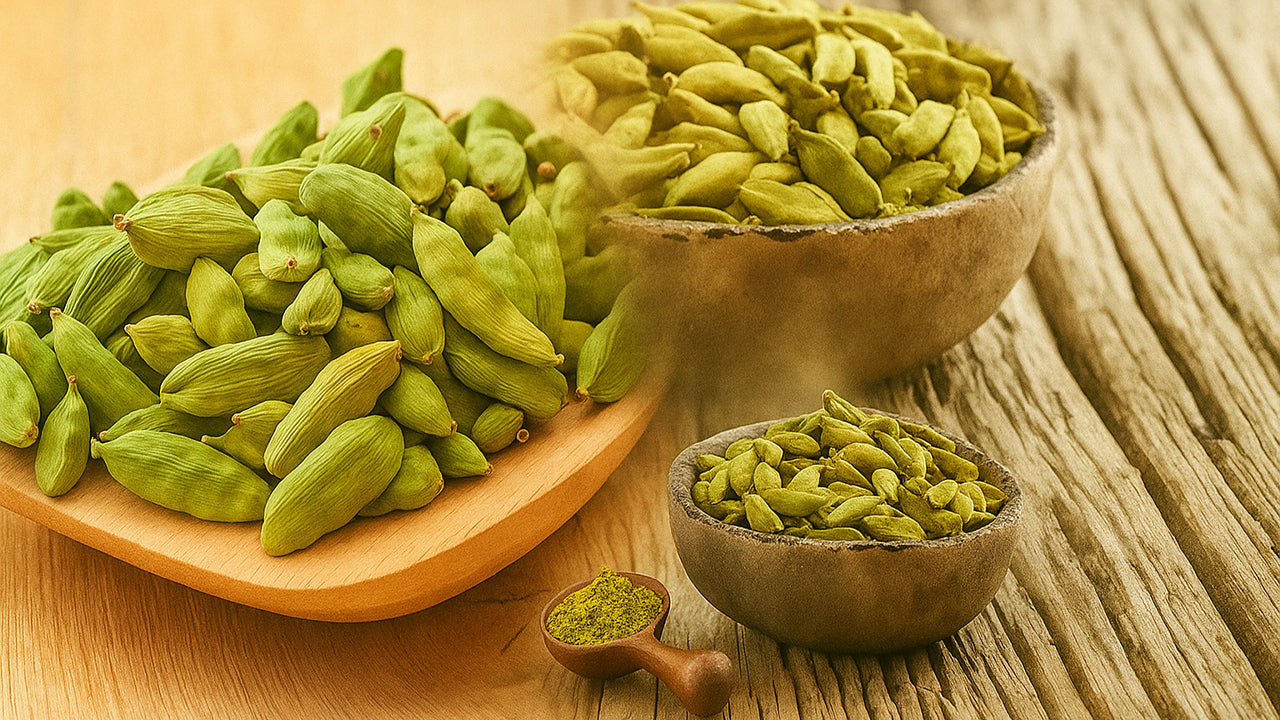
  • Whole pods — the most common retail form, preserving oils longest; used in biryanis, curries, and spiced teas.
  • Decorticated seeds (cardamom seeds) — husks removed, seeds sold loose; convenient for grinding or flavouring beverages.
  • Ground cardamom — rapid flavour loss after grinding means freshness dating is critical; typically produced from lower grades.
  • Cardamom husk — the outer shell separated from the seeds, used in flavouring teas and certain traditional remedies; lower aroma intensity than seeds.
  • Cardamom oil and oleoresin — industrial extracts used in food manufacturing and fragrances.

When purchasing whole pods, looking for the Lanka Green or Lanka Light Green – 1 grade classification on the label is the most reliable guide to flavour quality. Pods should feel firm, not hollow, and emit a distinct camphor-like fragrance when pressed lightly.

Book this experience with Lakpura

Curated by our local team. Direct booking, instant confirmation.

Ask Lakpura® Agent