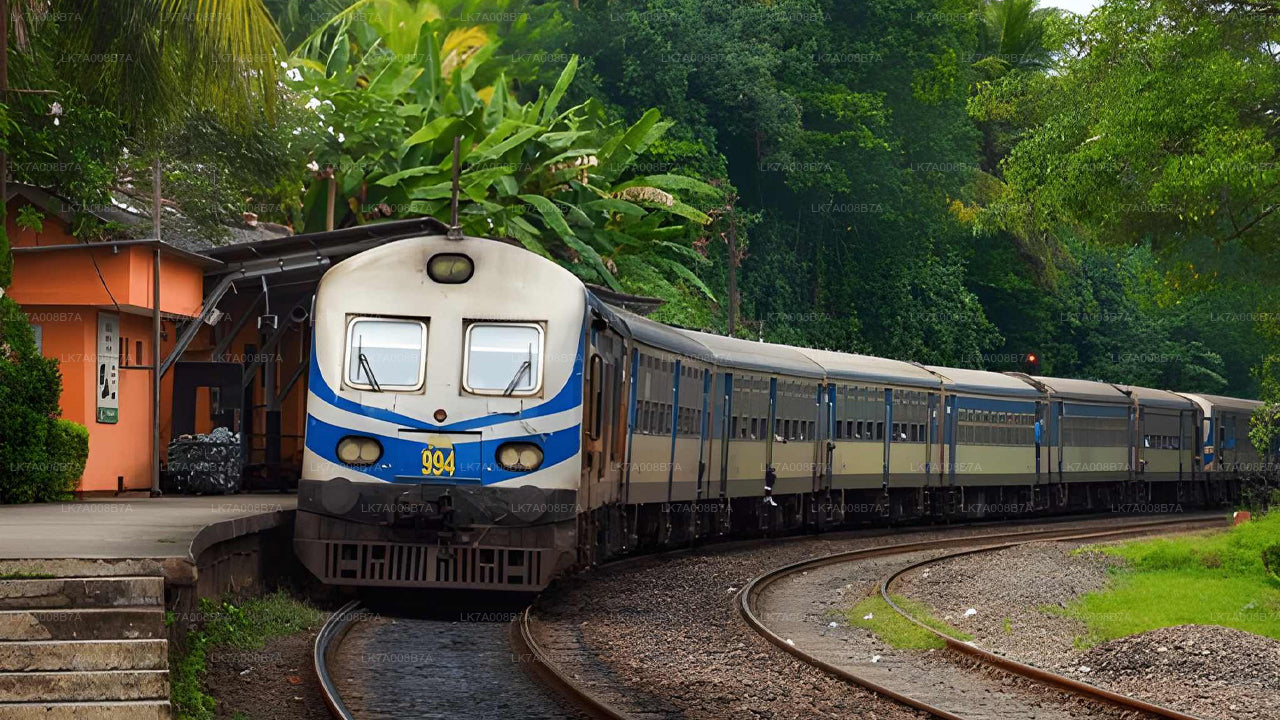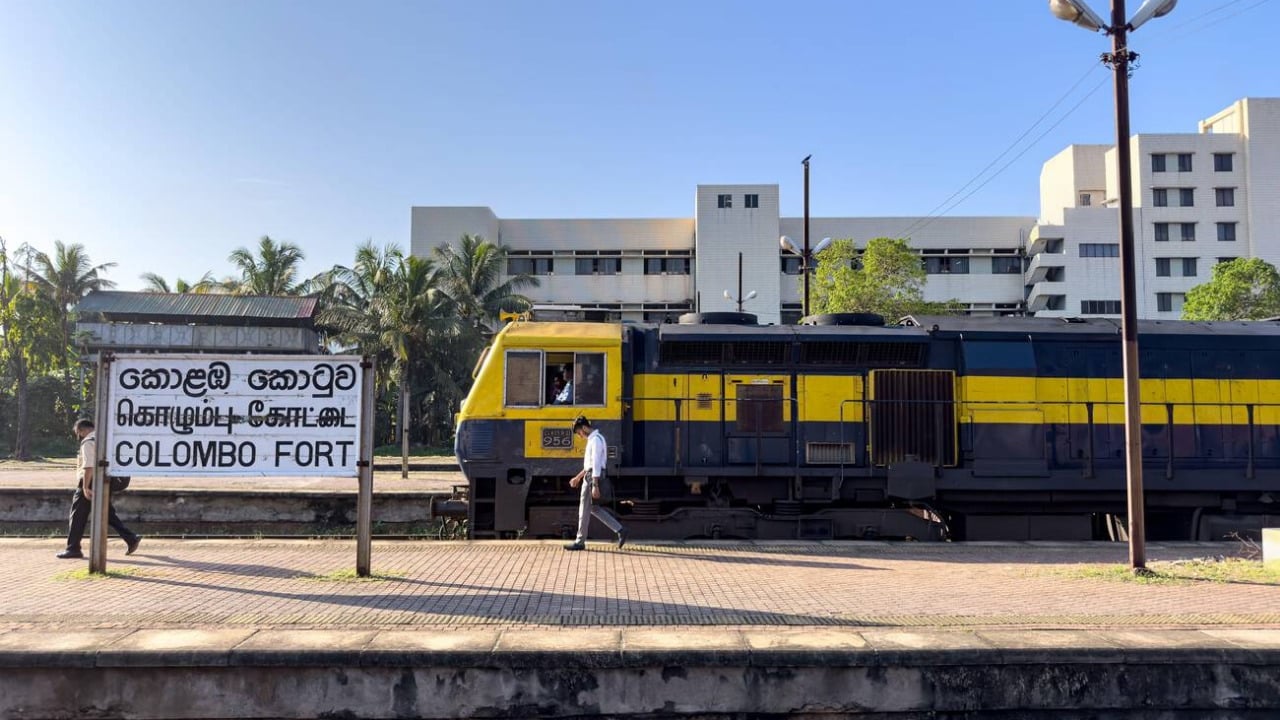
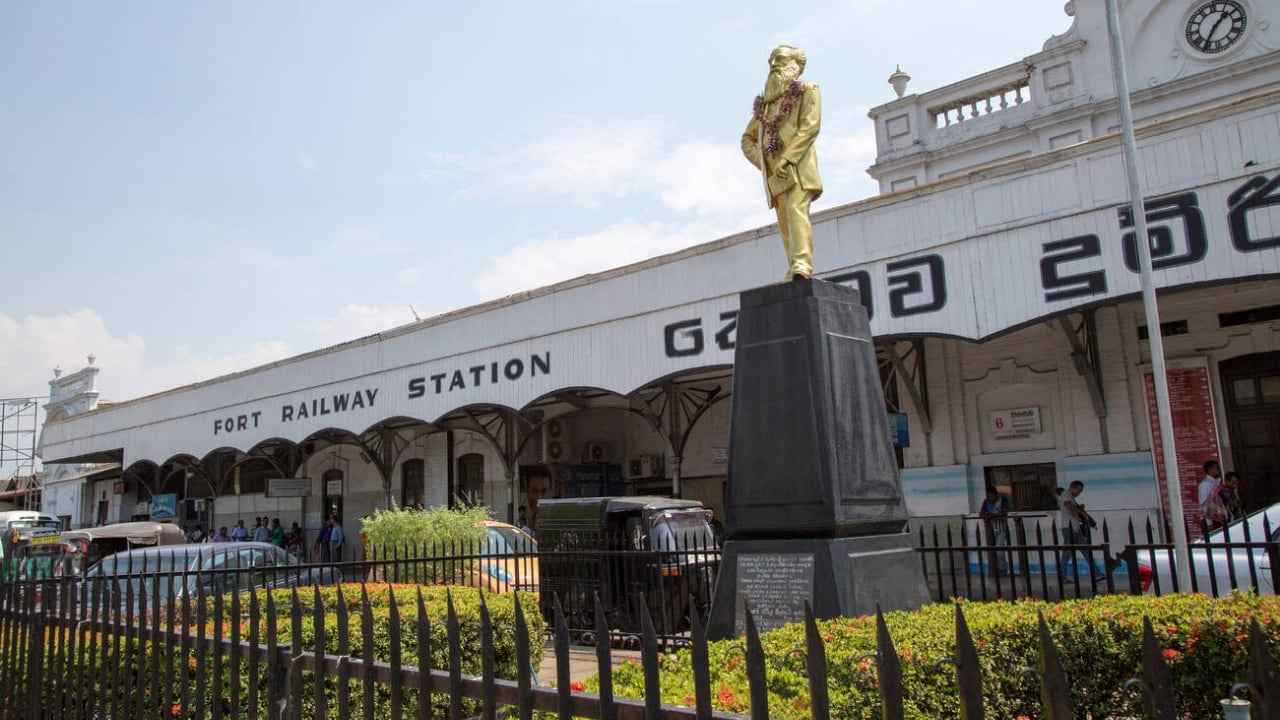

Colombo Fort Railway Station is the nerve centre of Sri Lanka's national rail network. Opened in 1917 on the site of an earlier colonial-era stop, it remains the country's largest and busiest station — a place where century-old iron girders coexist with the daily rush of hundreds of thousands of commuters, day-trippers, and long-distance travellers.
What is the history of Colombo Fort Railway Station?
Sri Lanka's railway story begins more than 150 years ago, when the British colonial administration laid the island's first tracks. The original Central Terminus stood near Maradana; that site has since been repurposed as the Sri Lanka Railway Museum, which is still worth a short visit for rail enthusiasts.
In 1877 the Coastal Railway Line was inaugurated, and a modest station at Fort — located slightly west of today's building — became its terminal. The Central Terminus was decommissioned in 1906, and a larger station at Maradana took over, but that facility was quickly overwhelmed by a rapidly expanding network. The tangle of converging rail lines around Maradana left little room for growth, so engineers turned their attention to the Fort site.
Construction of the current station began in the early 1910s. The project was substantial: a multi-platform terminal designed to handle the full weight of the island's rail operations. It was completed in 1917, and the entire mainland operation transferred here. More than a century later, the building still performs that same role.
What does the station look like today?
The exterior retains its colonial silhouette — a low, sprawling facade with a slightly weathered charm that sets it apart from modern transit hubs. Step inside and the atmosphere shifts: the roof is held up by original black steel girders, the booking counters still feature traditional wooden booths, and the platforms carry both vintage locomotives and the newer rolling stock that now shares the same tracks.
Over the past decade, practical facilities — waiting rooms, bathrooms, cafeterias — have been renovated to bring them up to a more comfortable standard. Staircases and railings have been replaced in concrete and stainless steel where rot had taken hold of older timber. These changes are measured enough that the station's character remains largely intact.
The platforms are active around the clock. Intercity expresses to Ella and the hill country depart alongside slow regional trains, overnight services, and suburban commuter runs. The sheer variety of trains — and the people travelling on them — makes Fort Station one of the more absorbing places in Colombo simply to sit and watch.
Which train routes depart from Colombo Fort?
Fort Station is the starting point for most of Sri Lanka's major long-distance lines:
- Main Line — north through Kandy and into the hill country, serving Nanu Oya (for Nuwara Eliya), Haputale, and Badulla.
- Coastal Line (Southern) — south along the coast through Kalutara, Hikkaduwa, Galle, and Matara.
- Northern Line — north toward Kurunegala, Anuradhapura, and Jaffna.
- Puttalam Line — northwest toward Chilaw and Puttalam.
- Kelani Valley Line — commuter services east toward Avissawella (this line departs from the adjacent Maradana station but connects through Fort).
The scenic hill-country route — particularly the stretch from Kandy onward through mist-covered tea country — is considered one of the finest train journeys in South Asia. Tickets for the Colombo departures on this route sell out weeks ahead of time during peak season.
How do I get to Colombo Fort Station?
The station sits in the Fort district of central Colombo, within walking distance of the Colombo Lotus Tower and the old commercial quarter. It shares the immediate area with the Central Bus Stand, making it one of the most connected transit nodes on the island.
- By taxi or rideshare: the most convenient option from hotels in Colombo 03 or Colombo 07. Apps such as PickMe and Uber serve the route reliably.
- By tuk-tuk: practical for short hops within the Fort and Pettah areas.
- On foot: from most Colombo Fort hotels, the station is reachable in under ten minutes.
When should I book train tickets from Colombo Fort?
Seat availability tightens considerably during Sri Lanka's peak travel periods — the year-end holiday season (December to early January), the Sinhalese and Tamil New Year period in April, and school holidays. On the popular hill-country and coastal routes, reserved seats and first-class observation car berths can sell out more than a month in advance.
Sri Lanka Railways offers online booking through its official portal. Reservations open 30 days before the departure date for most intercity services. If you are planning a journey to Kandy, Ella, or the south coast as part of a holiday itinerary, build in enough lead time — or ask your travel manager to handle reservations as part of your overall programme.
What practical things should I know before arriving?
| Detail | Notes |
|---|---|
| Booking windows | Reservations open 30 days before departure for most expresses |
| Ticket classes | First, Second, and Third class on most routes; observation cars on select hill-country services |
| Luggage | No formal weight limit for carry-on luggage, but platforms and carriages get crowded — travel light |
| Facilities | Renovated waiting rooms and cafeterias on-site; bathrooms are functional but basic — carry personal hygiene essentials |
| Departure boards | Displayed in Sinhala, Tamil, and English |
| Left luggage | A cloak room operates at the station — confirm hours on arrival |
Is it worth visiting the station even if I am not taking a train?
For visitors interested in Sri Lanka's colonial infrastructure, Fort Station has genuine architectural and historical merit. The booking hall and platform canopies give a tangible sense of how the island's railway was built to last. The Colombo Lotus Tower, visible from the station approach road, adds a striking visual contrast between the Victorian-era terminal and the city's contemporary skyline.
The area around the station — Pettah in particular — is one of Colombo's most characterful neighbourhoods, with street markets, old Dutch-era streets, and a density of mosques, temples, and churches rarely found in a single urban block anywhere else in South Asia. Combining a station visit with a broader Colombo city tour is an efficient way to take in both the transit history and the surrounding urban fabric.
Colombo Fort railway station timetable
359 trains call at Colombo Fort on a typical day.
Coast Line · 0.0 km from Colombo Fort · Western Province
Station telephone: 94112436900
| Departs | Towards | Train | Runs |
|---|---|---|---|
| 03:00 am | Veyangoda · starts here | Daily | |
| 03:20 am | Polgahawela · starts here | Daily | |
| 03:30 am | terminates here · from Trincomalee | Night Mail | Daily |
| 04:00 am | terminates here · from Kankesanthurai | Night Mail | Daily |
| 04:00 am | Nooranagar · starts here | Daily | |
| 04:35 am | Rambukkana · starts here | Daily | |
| 04:35 am | Wadduwa | Daily | |
| 04:53 am | terminates here · from Batticaloa | Night Mail | Daily |
| 05:00 am | Negombo · starts here | Weekdays and Saturday Only | |
| 05:09 am | terminates here · from Aluthgama | Daily | |
| 05:11 am | Panadura | Weekdays Only | |
| 05:12 am | Ambeypussa · starts here | Daily | |
| 05:24 am | terminates here · from Badulla | Night Mail | Daily |
| 05:26 am | terminates here · from Kankesanthurai | Sunday Only | |
| 05:30 am | Badulla · starts here | Ella Odyssey | Saturday Only |
| 05:35 am | Chilaw | Daily | |
| 05:44 am | Kalutara South | Daily | |
| 05:45 am | terminates here · from Polgahawela | Intercity | Daily |
| 05:55 am | Badulla · starts here | Denuwara Menike | Daily |
| 05:57 am | Panadura | Weekdays and Saturday Only | |
| 06:01 am | terminates here · from Rambukkana | Sunday Only | |
| 06:05 am | Batticaloa · starts here | Udaya Devi | Daily |
| 06:10 am | Beliaththa | Saturday and Sunday Only | |
| 06:16 am | terminates here · from Aluthgama | Weekdays and Saturday Only | |
| 06:16 am | Gampaha · starts here | Weekdays and Saturday Only | |
| 06:25 am | terminates here · from Veyangoda | Daily | |
| 06:30 am | Kandy · starts here | Intercity | Saturday and Sunday Only |
| 06:33 am | Maradana | Sunday Only | |
| 06:33 am | Panadura | Weekdays and Saturday Only | |
| 06:34 am | terminates here · from Rambukkana | Weekdays Only | |
| 06:34 am | terminates here · from Polgahawela | Saturday and Sunday Only | |
| 06:35 am | Kankesanthurai | Yal Devi | Daily |
| 06:41 am | terminates here · from Kosgama | Daily | |
| 06:44 am | Maradana | Night Mail | Weekdays Only |
| 06:45 am | Ragama · starts here | Weekdays and Saturday Only | |
| 06:50 am | Beliaththa | Daily | |
| 06:57 am | terminates here · from Mirigama | Sunday Only | |
| 07:00 am | Kandy · starts here | Daily | |
| 07:02 am | terminates here · from Wataraka | Weekdays Only | |
| 07:02 am | Gampaha · starts here | Weekdays Only | |
| 07:02 am | Moratuwa | Weekdays Only | |
| 07:05 am | terminates here · from Chilaw | Saturday Only | |
| 07:05 am | Panadura | Saturday and Sunday Only | |
| 07:05 am | Panadura | Weekdays Only | |
| 07:05 am | Rambukkana · starts here | Daily | |
| 07:08 am | terminates here · from Wadduwa | Daily | |
| 07:10 am | Negombo · starts here | Weekdays Only | |
| 07:12 am | terminates here · from Kandy | Daily | |
| 07:13 am | Maradana | Weekdays Only | |
| 07:14 am | Ragama · starts here | Weekdays Only | |
| 07:15 am | terminates here · from Avissawella | Daily | |
| 07:20 am | terminates here · from Rambukkana | Sunday Only | |
| 07:21 am | Maradana | Saturday and Sunday Only | |
| 07:26 am | Maradana | Weekdays Only | |
| 07:26 am | Moratuwa | Saturday Only | |
| 07:29 am | Maradana | Daily | |
| 07:30 am | terminates here · from Chilaw | Weekdays Only | |
| 07:30 am | terminates here · from Polgahawela | Saturday and Sunday Only | |
| 07:33 am | terminates here · from Polgahawela | Weekdays Only | |
| 07:35 am | Mirigama · starts here | Weekdays Only | |
| 07:37 am | terminates here · from Homagama | Weekdays and Saturday Only | |
| 07:37 am | Maradana | Saturday and Sunday Only | |
| 07:38 am | Ratmalana | Weekdays Only | |
| 07:39 am | Maradana | Weekdays Only | |
| 07:40 am | Puttalam · starts here | Daily | |
| 07:41 am | Panadura | Muthu Kumari | Weekdays Only |
| 07:46 am | terminates here · from Maho | Saturday and Sunday Only | |
| 07:46 am | Moratuwa | Weekdays and Saturday Only | |
| 07:47 am | terminates here · from Rambukkana | Weekdays and Saturday Only | |
| 07:48 am | terminates here · from Avissawella | Daily | |
| 07:53 am | Maradana | Weekdays and Saturday Only | |
| 07:55 am | Panadura | Weekdays and Saturday Only | |
| 07:56 am | terminates here · from Ragama | Weekdays and Saturday Only | |
| 08:00 am | terminates here · from Rambukkana | Sunday Only | |
| 08:00 am | Rambukkana · starts here | Daily | |
| 08:01 am | terminates here · from Mirigama | Weekdays and Saturday Only | |
| 08:02 am | Negombo · starts here | Weekdays Only | |
| 08:03 am | Maradana | Samudra Devi | Weekdays and Saturday Only |
| 08:05 am | terminates here · from Kalutara South | Weekdays Only | |
| 08:05 am | Maradana | Samudra Devi | Sunday Only |
| 08:07 am | terminates here · from Negombo | Weekdays and Saturday Only | |
| 08:07 am | terminates here · from Kandy | Weekdays Only | |
| 08:07 am | Moratuwa | Weekdays Only | |
| 08:09 am | terminates here · from Polgahawela | Saturday and Sunday Only | |
| 08:10 am | terminates here · from Kandy | Sunday Only | |
| 08:10 am | terminates here · from Kandy | Saturday and Sunday Only | |
| 08:12 am | terminates here · from Waga | Daily | |
| 08:12 am | Maradana | Sagarika | Weekdays Only |
| 08:17 am | terminates here · from Maho | Weekdays and Saturday Only | |
| 08:18 am | Mount Lavinia | Weekdays and Saturday Only | |
| 08:19 am | Maradana | Weekdays and Saturday Only | |
| 08:23 am | terminates here · from Gampaha | Weekdays Only | |
| 08:28 am | terminates here · from Kosgama | Weekdays and Saturday Only | |
| 08:28 am | terminates here · from Ragama | Weekdays Only | |
| 08:28 am | terminates here · from Gampaha | Saturday Only | |
| 08:30 am | Badulla · starts here | Podi Menike | Daily |
| 08:30 am | terminates here · from Polgahawela | Weekdays and Saturday Only | |
| 08:31 am | Maradana | Weekdays Only | |
| 08:33 am | terminates here · from Polgahawela | Sunday Only | |
| 08:35 am | Matara · starts here | Daily | |
| 08:35 am | Mirigama · starts here | Weekdays Only | |
| 08:36 am | Maradana | Saturday Only | |
| 08:38 am | Mount Lavinia | Sunday Only | |
| 08:39 am | Maradana | Sunday Only | |
| 08:40 am | Maradana | Weekdays and Saturday Only | |
| 08:44 am | terminates here · from Kalutara South | Weekdays Only | |
| 08:45 am | terminates here · from Batticaloa | Pulathisi | Daily |
| 08:45 am | terminates here · from Gampaha | Weekdays Only | |
| 08:45 am | Kalutara South | Daily | |
| 08:50 am | terminates here · from Peradeniya | Intercity | Daily |
| 08:50 am | terminates here · from Kalutara South | Saturday Only | |
| 08:55 am | Kurunegala · starts here | Daily | |
| 08:55 am | Rambukkana · starts here | Daily | |
| 08:56 am | Maradana | Weekdays Only | |
| 09:01 am | Maradana | Weekdays Only | |
| 09:02 am | terminates here · from Chilaw | Daily | |
| 09:02 am | Maradana | Saturday Only | |
| 09:07 am | terminates here · from Avissawella | Daily | |
| 09:10 am | terminates here · from Ambeypussa | Daily | |
| 09:18 am | terminates here · from Homagama | Weekdays Only | |
| 09:18 am | Maradana | Ruhunu Kumari | Daily |
| 09:20 am | Anuradhapura · starts here | Intercity | Saturday Only |
| 09:27 am | Maradana | Daily | |
| 09:30 am | Mirigama · starts here | Weekdays Only | |
| 09:35 am | Chilaw · starts here | Daily | |
| 09:39 am | Maradana | Weekdays and Saturday Only | |
| 09:40 am | Kalutara South | Daily | |
| 09:42 am | Maradana | Galu Kumari | Daily |
| 09:45 am | Badulla · starts here | Udarata Menike | Daily |
| 09:45 am | terminates here · from Kandy | Daily | |
| 09:51 am | terminates here · from Rambukkana | Daily | |
| 09:59 am | Maradana | Weekdays Only | |
| 10:04 am | Maradana | Weekdays Only | |
| 10:10 am | Rambukkana · starts here | Daily | |
| 10:12 am | Maradana | Daily | |
| 10:15 am | Maradana | Weekdays and Saturday Only | |
| 10:20 am | terminates here · from Vavuniya | Daily | |
| 10:30 am | Beliaththa · starts here | Daily | |
| 10:31 am | terminates here · from Mirigama | Weekdays Only | |
| 10:35 am | Kandy · starts here | Saturday and Sunday Only | |
| 10:35 am | Matale · starts here | Weekdays Only | |
| 10:40 am | Maradana | Daily | |
| 10:50 am | terminates here · from Negombo | Weekdays Only | |
| 11:02 am | terminates here · from Polgahawela | Daily | |
| 11:15 am | Aluthgama | Daily | |
| 11:15 am | terminates here · from Matale | Saturday Only | |
| 11:15 am | Rambukkana · starts here | Daily | |
| 11:42 am | terminates here · from Mirigama | Daily | |
| 11:46 am | terminates here · from Chilaw | Daily | |
| 11:50 am | Kankesanthurai · starts here | Uttara Devi | Daily |
| 11:52 am | terminates here · from Mirigama | Weekdays Only | |
| 11:55 am | Nooranagar · starts here | Weekdays Only | |
| 12:02 pm | Maradana | Daily | |
| 12:05 pm | Veyangoda · starts here | Daily | |
| 12:10 pm | Kalutara South | Weekdays Only | |
| 12:21 pm | terminates here · from Rambukkana | Daily | |
| 12:35 pm | terminates here · from Galle | Weekdays and Saturday Only | |
| 12:35 pm | Kalutara South | Saturday and Sunday Only | |
| 12:40 pm | Nanuoya · starts here | Daily | |
| 12:42 pm | terminates here · from Beliaththa | Daily | |
| 12:50 pm | Polgahawela · starts here | Sunday Only | |
| 12:50 pm | Polgahawela · starts here | Weekdays and Saturday Only | |
| 01:05 pm | terminates here · from Kankesanthurai | Uttara Devi | Daily |
| 01:10 pm | Madampe · starts here | Daily | |
| 01:15 pm | Vavuniya · starts here | Daily | |
| 01:20 pm | Rambukkana · starts here | Sunday Only | |
| 01:25 pm | Rambukkana · starts here | Saturday Only | |
| 01:25 pm | Rambukkana · starts here | Weekdays Only | |
| 01:30 pm | terminates here · from Rambukkana | Daily | |
| 01:35 pm | Panadura | Weekdays Only | |
| 01:40 pm | Rambukkana · starts here | Weekdays and Saturday Only | |
| 01:45 pm | Ambeypussa · starts here | Weekdays Only | |
| 01:55 pm | Padukka · starts here | Weekdays and Saturday Only | |
| 01:55 pm | Veyangoda · starts here | Weekdays and Saturday Only | |
| 02:02 pm | terminates here · from Nooranagar | Saturday and Sunday Only | |
| 02:05 pm | terminates here · from Nanuoya | Daily | |
| 02:06 pm | Aluthgama | Daily | |
| 02:10 pm | Maradana | Daily | |
| 02:16 pm | Panadura | Daily | |
| 02:20 pm | Polgahawela · starts here | Daily | |
| 02:24 pm | terminates here · from Nooranagar | Weekdays Only | |
| 02:30 pm | Gampaha · starts here | Daily | |
| 02:35 pm | Chilaw · starts here | Daily | |
| 02:38 pm | terminates here · from Veyangoda | Daily | |
| 02:40 pm | Beliaththa | Galu Kumari | Daily |
| 02:50 pm | Polgahawela · starts here | Daily | |
| 02:57 pm | Maradana | Weekdays Only | |
| 03:05 pm | Batticaloa · starts here | Pulathisi | Daily |
| 03:11 pm | terminates here · from Kurunegala | Daily | |
| 03:11 pm | terminates here · from Rambukkana | Daily | |
| 03:15 pm | terminates here · from Batticaloa | Udaya Devi | Daily |
| 03:16 pm | Mount Lavinia | Weekdays Only | |
| 03:20 pm | Veyangoda · starts here | Weekdays Only | |
| 03:21 pm | terminates here · from Chilaw | Daily | |
| 03:23 pm | Maradana | Saturday and Sunday Only | |
| 03:35 pm | Kandy · starts here | Intercity | Daily |
| 03:37 pm | Maradana | Weekdays Only | |
| 03:38 pm | terminates here · from Avissawella | Daily | |
| 03:40 pm | Chilaw · starts here | Saturday and Sunday Only | |
| 03:41 pm | Maradana | Saturday and Sunday Only | |
| 03:45 pm | Polgahawela · starts here | ||
| 03:45 pm | Polgahawela · starts here | ||
| 03:47 pm | terminates here · from Badulla | Udarata Menike | Daily |
| 03:50 pm | Matara | Ruhunu Kumari | Daily |
| 03:51 pm | Maradana | Weekdays Only | |
| 03:55 pm | Moratuwa | Weekdays Only | |
| 03:56 pm | terminates here · from Rambukkana | Daily | |
| 04:00 pm | Maradana | Sunday Only | |
| 04:02 pm | Panadura | Weekdays Only | |
| 04:10 pm | Ragama · starts here | Weekdays Only | |
| 04:15 pm | Avissawella · starts here | Weekdays and Sunday Only | |
| 04:16 pm | Kalutara South | Weekdays Only | |
| 04:20 pm | Kalutara South | Weekdays Only | |
| 04:23 pm | terminates here · from Veyangoda | Weekdays and Saturday Only | |
| 04:25 pm | Avissawella · starts here | Saturday Only | |
| 04:25 pm | Mirigama · starts here | Weekdays Only | |
| 04:30 pm | Beliaththa · starts here | Sunday Only | |
| 04:30 pm | Chilaw · starts here | Sunday Only | |
| 04:30 pm | Chilaw · starts here | Weekdays Only | |
| 04:30 pm | Panadura | Weekdays and Saturday Only | |
| 04:35 pm | Kandy · starts here | Weekdays Only | |
| 04:35 pm | Kandy · starts here | Saturday and Sunday Only | |
| 04:37 pm | terminates here · from Mount Lavinia | Weekdays Only | |
| 04:40 pm | Avissawella · starts here | Weekdays and Sunday Only | |
| 04:40 pm | Polgahawela · starts here | Saturday Only | |
| 04:42 pm | Polgahawela · starts here | Weekdays Only | |
| 04:44 pm | terminates here · from Rambukkana | Weekdays and Saturday Only | |
| 04:45 pm | Chilaw · starts here | Weekdays Only | |
| 04:45 pm | Hikkaduwa | Sunday Only | |
| 04:45 pm | Kurunegala · starts here | Weekdays Only | |
| 04:46 pm | Beliaththa | Sagarika | Weekdays Only |
| 04:50 pm | Aluthgama | Saturday and Sunday Only | |
| 04:50 pm | Aluthgama | Weekdays Only | |
| 04:50 pm | Polgahawela · starts here | Sunday Only | |
| 04:50 pm | Rambukkana · starts here | Saturday Only | |
| 04:50 pm | Rambukkana · starts here | Weekdays Only | |
| 04:50 pm | Rambukkana · starts here | ||
| 04:55 pm | Negombo · starts here | Daily | |
| 05:00 pm | Hikkaduwa | ||
| 05:00 pm | Ragama · starts here | Weekdays Only | |
| 05:08 pm | terminates here · from Panadura | Daily | |
| 05:10 pm | Kalutara South | Weekdays Only | |
| 05:10 pm | Kandy · starts here | Daily | |
| 05:11 pm | terminates here · from Matara | Daily | |
| 05:14 pm | terminates here · from Wataraka | Saturday Only | |
| 05:15 pm | Kalutara South | Weekdays and Saturday Only | |
| 05:15 pm | Kosgama · starts here | Weekdays and Sunday Only | |
| 05:18 pm | terminates here · from Moratuwa | Weekdays Only | |
| 05:18 pm | Puttalam · starts here | Weekdays Only | |
| 05:18 pm | Puttalam · starts here | Saturday Only | |
| 05:18 pm | Puttalam · starts here | Sunday Only | |
| 05:20 pm | Ganewatte · starts here | Weekdays Only | |
| 05:20 pm | Kurunegala · starts here | Sunday Only | |
| 05:20 pm | Polgahawela · starts here | ||
| 05:20 pm | Polgahawela · starts here | ||
| 05:20 pm | Polgahawela · starts here | Saturday and Sunday Only | |
| 05:24 pm | terminates here · from Wataraka | Weekdays Only | |
| 05:25 pm | Galle | Samudra Devi | Saturday and Sunday Only |
| 05:26 pm | terminates here · from Polgahawela | Saturday and Sunday Only | |
| 05:30 pm | Avissawella · starts here | Daily | |
| 05:30 pm | Galle | Samudra Devi | Weekdays Only |
| 05:30 pm | Negombo · starts here | Weekdays and Saturday Only | |
| 05:31 pm | terminates here · from Polgahawela | Weekdays Only | |
| 05:35 pm | Kandy · starts here | Intercity | |
| 05:35 pm | Veyangoda · starts here | Weekdays Only | |
| 05:36 pm | Aluthgama | Weekdays Only | |
| 05:36 pm | terminates here · from Peradeniya | Intercity | Daily |
| 05:40 pm | Polgahawela · starts here | Weekdays Only | |
| 05:40 pm | Polgahawela · starts here | Saturday and Sunday Only | |
| 05:45 pm | Kandy · starts here | Daily | |
| 05:49 pm | terminates here · from Panadura | Weekdays Only | |
| 05:50 pm | Padukka · starts here | Weekdays Only | |
| 05:51 pm | Galle | Saturday Only | |
| 05:51 pm | Galle | Weekdays and Sunday Only | |
| 05:55 pm | Polgahawela · starts here | Weekdays Only | |
| 05:58 pm | terminates here · from Ragama | Weekdays Only | |
| 05:58 pm | Panadura | Daily | |
| 06:00 pm | Maho · starts here | Weekdays Only | |
| 06:01 pm | terminates here · from Panadura | Daily | |
| 06:02 pm | Mount Lavinia · starts here | Daily | |
| 06:05 pm | Chilaw · starts here | Saturday and Sunday Only | |
| 06:05 pm | Chilaw · starts here | Weekdays Only | |
| 06:10 pm | Homagama · starts here | Weekdays and Sunday Only | |
| 06:13 pm | Maradana | Daily | |
| 06:15 pm | Ganewatte · starts here | Saturday and Sunday Only | |
| 06:15 pm | Veyangoda · starts here | Weekdays Only | |
| 06:17 pm | Beliaththa | Weekdays Only | |
| 06:20 pm | Aluthgama | Daily | |
| 06:26 pm | terminates here · from Aluthgama | Saturday and Sunday Only | |
| 06:28 pm | terminates here · from Madampe | Daily | |
| 06:29 pm | terminates here · from Panadura | Weekdays and Saturday Only | |
| 06:30 pm | Kosgama · starts here | Daily | |
| 06:33 pm | terminates here · from Aluthgama | Weekdays Only | |
| 06:35 pm | Aluthgama | Daily | |
| 06:35 pm | Mount Lavinia | Yal Devi | Daily |
| 06:35 pm | Rambukkana · starts here | Sunday Only | |
| 06:35 pm | Rambukkana · starts here | Weekdays and Saturday Only | |
| 06:36 pm | terminates here · from Kalutara South | Weekdays Only | |
| 06:41 pm | terminates here · from Kandy | Weekdays Only | |
| 06:42 pm | terminates here · from Kandy | Saturday and Sunday Only | |
| 06:45 pm | terminates here · from Puttalam | Weekdays Only | |
| 06:45 pm | Polgahawela · starts here | Weekdays and Saturday Only | |
| 06:47 pm | terminates here · from Veyangoda | Weekdays Only | |
| 06:52 pm | terminates here · from Kalutara South | Weekdays Only | |
| 06:53 pm | Maradana | Saturday and Sunday Only | |
| 06:56 pm | terminates here · from Rambukkana | Daily | |
| 06:57 pm | terminates here · from Badulla | Daily | |
| 07:00 pm | Batticaloa · starts here | Night Mail | Daily |
| 07:02 pm | terminates here · from Polgahawela | Weekdays Only | |
| 07:05 pm | Chilaw · starts here | Weekdays Only | |
| 07:05 pm | Polgahawela · starts here | Sunday Only | |
| 07:15 pm | Kalutara South · starts here | Weekdays Only | |
| 07:15 pm | Padukka · starts here | Weekdays Only | |
| 07:20 pm | Ambeypussa · starts here | Weekdays and Saturday Only | |
| 07:20 pm | terminates here · from Badulla | Ella Odyssey | Sunday Only |
| 07:22 pm | terminates here · from Mirigama | Daily | |
| 07:23 pm | Maradana | Weekdays Only | |
| 07:25 pm | Badulla · starts here | Daily | |
| 07:30 pm | Galle | Night Mail | Daily |
| 07:31 pm | terminates here · from Veyangoda | Weekdays Only | |
| 07:40 pm | terminates here · from Kandy | Intercity | Saturday and Sunday Only |
| 07:50 pm | Panadura | Saturday Only | |
| 07:50 pm | Rambukkana · starts here | Daily | |
| 07:55 pm | terminates here · from Negombo | Daily | |
| 07:59 pm | Maradana | Weekdays and Saturday Only | |
| 08:00 pm | Avissawella · starts here | Daily | |
| 08:00 pm | Kankesanthurai · starts here | Daily | |
| 08:07 pm | Mount Lavinia | Daily | |
| 08:09 pm | terminates here · from Chilaw | Sunday Only | |
| 08:11 pm | terminates here · from Chilaw | Weekdays Only | |
| 08:11 pm | terminates here · from Chilaw | Saturday Only | |
| 08:16 pm | terminates here · from Badulla | Podi Menike | Daily |
| 08:20 pm | Chilaw · starts here | Daily | |
| 08:21 pm | terminates here · from Polgahawela | Weekdays Only | |
| 08:30 pm | Badulla · starts here | Night Mail | Daily |
| 08:35 pm | terminates here · from Negombo | Weekdays and Saturday Only | |
| 08:40 pm | Kalutara South | Sunday Only | |
| 08:40 pm | Payagala South | Weekdays Only | |
| 08:45 pm | Polgahawela · starts here | Daily | |
| 08:54 pm | terminates here · from Polgahawela | Saturday and Sunday Only | |
| 09:07 pm | terminates here · from Veyangoda | Weekdays Only | |
| 09:14 pm | terminates here · from Anuradhapura | Sunday Only | |
| 09:22 pm | terminates here · from Nooranagar | Weekdays Only | |
| 09:30 pm | Trincomalee · starts here | Night Mail | Daily |
| 09:35 pm | Aluthgama | Daily | |
| 09:44 pm | Maradana | Saturday Only | |
| 09:45 pm | Mirigama · starts here | Daily | |
| 10:00 pm | terminates here · from Polgahawela | Weekdays Only | |
| 10:03 pm | terminates here · from Rambukkana | Weekdays and Saturday Only | |
| 10:05 pm | terminates here · from Puttalam | Saturday Only | |
| 10:05 pm | terminates here · from Puttalam | Sunday Only | |
| 10:07 pm | terminates here · from Polgahawela | Saturday and Sunday Only | |
| 10:25 pm | terminates here · from Mount Lavinia | ||
| 10:30 pm | Kankesanthurai · starts here | ||
| 10:33 pm | terminates here · from Ambeypussa | Weekdays and Saturday Only | |
| 11:00 pm | Rambukkana · starts here | Daily | |
| 11:17 pm | terminates here · from Polgahawela | Weekdays and Saturday Only | |
| 11:17 pm | Maradana | Weekdays Only | |
| 11:25 pm | terminates here · from Polgahawela | Sunday Only |
Timetable mirrored from published Sri Lanka Railways schedules, last checked 2026-09-21. Times can change without notice — confirm with the railway before travelling. See the whole network on the Sri Lanka railway station list.
Nearby places
8 places within about 25 km, nearest first.
- Grand Mosque of Colombounder 1 km
- The Lake House, Colombounder 1 km
- Dutch Period Museumunder 1 km
- Pettah Marketunder 1 km
- Old Town Hall, Colombounder 1 km
- St Anthony's Churchunder 1 km
- Pettah Bazaarunder 1 km
- Pettah Floating Marketunder 1 km
Related reading
1 pages on closely related subjects.