
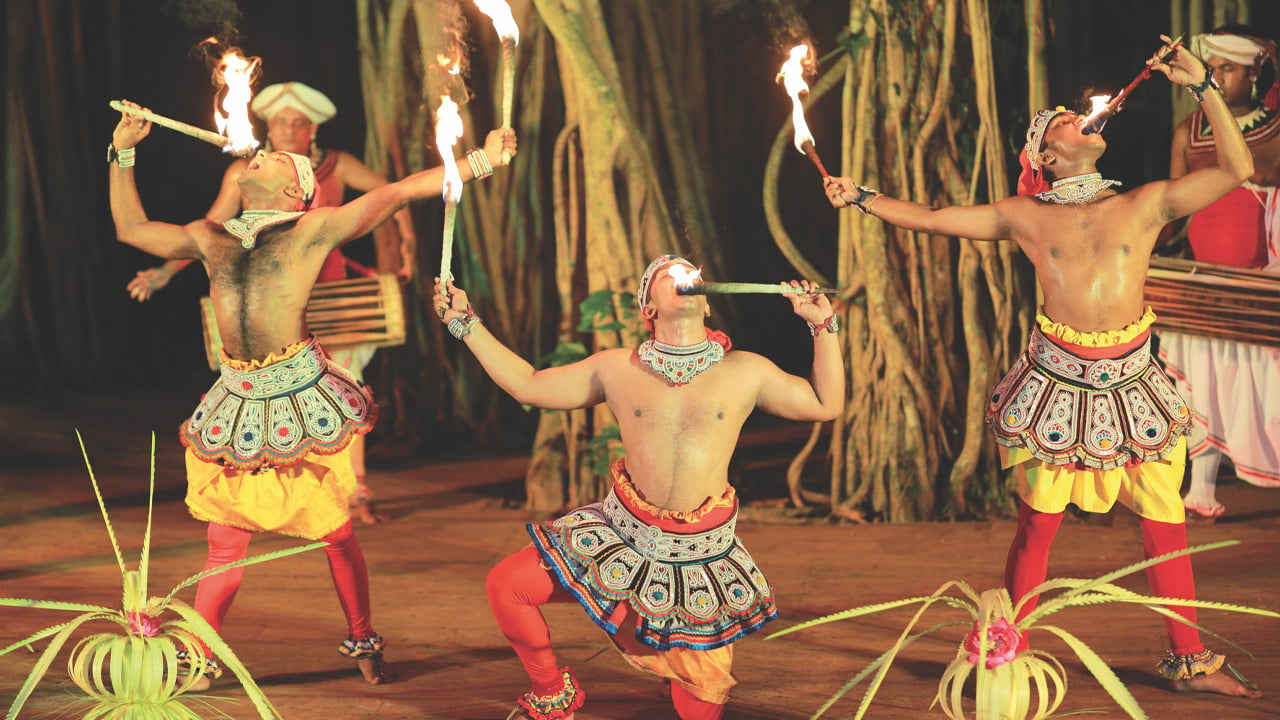
Sri Lanka's dance traditions stretch back more than two millennia, born not from performance stages but from human anxiety about nature and the divine. Early communities danced to ward off disease, disaster and malevolent spirits — a purpose that still echoes in the ritual dances performed today. Over centuries, regional court cultures, South Indian artistic influences, and local folk traditions shaped three distinct classical forms, each with its own music, costume and symbolic vocabulary.
What are the three main dance forms of Sri Lanka?
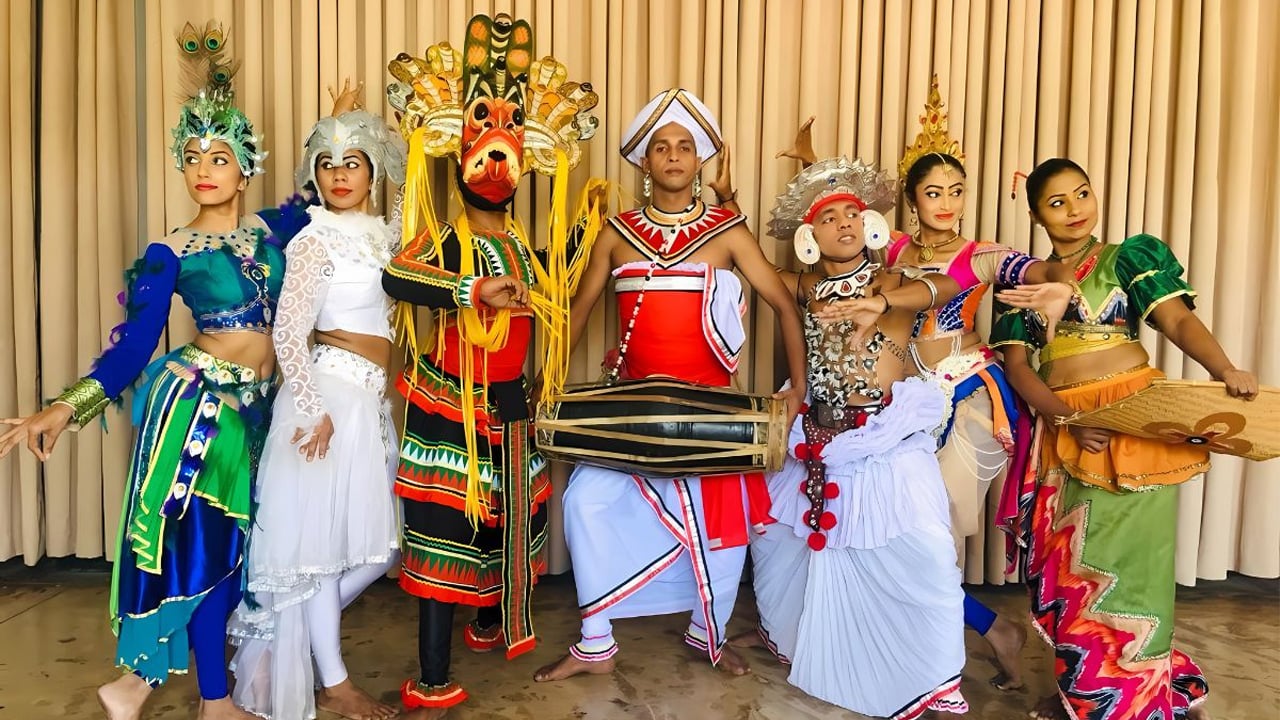
Scholars and cultural institutions recognise three principal classical dance traditions: Kandyan Dance (Uda Rata Natum), Sabaragamuwa Dance (Sabaragamu Natum) and Low Country Dance (Pahatha Rata Natum). While they share deep ritual roots, they differ considerably in movement vocabulary, musical accompaniment and geographic origin. Together they represent one of the most coherent ensembles of classical performing arts in South Asia.
What is Kandyan Dance and why is it Sri Lanka's national dance?
Kandyan Dance developed under the patronage of the Kandyan kings and today is recognised as the national dance of Sri Lanka. Its movement repertoire draws heavily on nature — imitations of the elephant, the peacock and other animals appear repeatedly — and on episodes from the Ramayana epic and the deeds of legendary kings. The form is believed to have evolved from an ancient exorcism ritual called the Kohomba Kankariya, which Indian shamans originally performed to heal a Kandyan king of a mysterious illness.
The primary percussion instrument is the Geta Beraya, a double-headed drum used exclusively in Kandyan Dance. A small pair of cymbals called the Thalampota helps dancers maintain rhythm. The dance form includes a series of compositions known as Vannams, each of which has accompanying lyrics celebrating the virtues of the animal or character being depicted.
Male Kandyan dancers wear a distinctive skirt-like lower garment while their bare chests are adorned with elaborate silver regalia — necklaces, chains and a breastplate. Spectacular crescent-shaped headgear and silver bangles worn on the wrists and ankles complete the costume. Female dancers wear a more draped costume derived from classical court dress. The Esala Perahera Festival in Kandy remains the grandest public showcase of this tradition every year.
What is Sabaragamuwa Dance?
Sabaragamuwa Dance originates in the Ratnapura district of the Sabaragamuwa Province and is closely connected to the worship of God Saman, a deity deeply venerated by communities in that region. Its ritual function overlaps with the Kohomba Kankariya tradition, and some historians regard it as a direct antecedent of Kandyan Dance rather than a fully separate lineage — though the two forms are now classified and taught independently.
The defining costume element is the Ves costume, worn by the lead performer. It incorporates a tall metallic headdress that elongates the dancer's silhouette, a chest covering made from a decorative beaded net rather than solid fabric, and anklets that produce a rhythmic metallic rattle with each step. The overall effect is theatrical and imposing. Sabaragamuwa choreography tends toward slower, more ceremonial movements compared with the athletic dynamism of the Kandyan form.
What is Low Country Dance and what role do masks play?
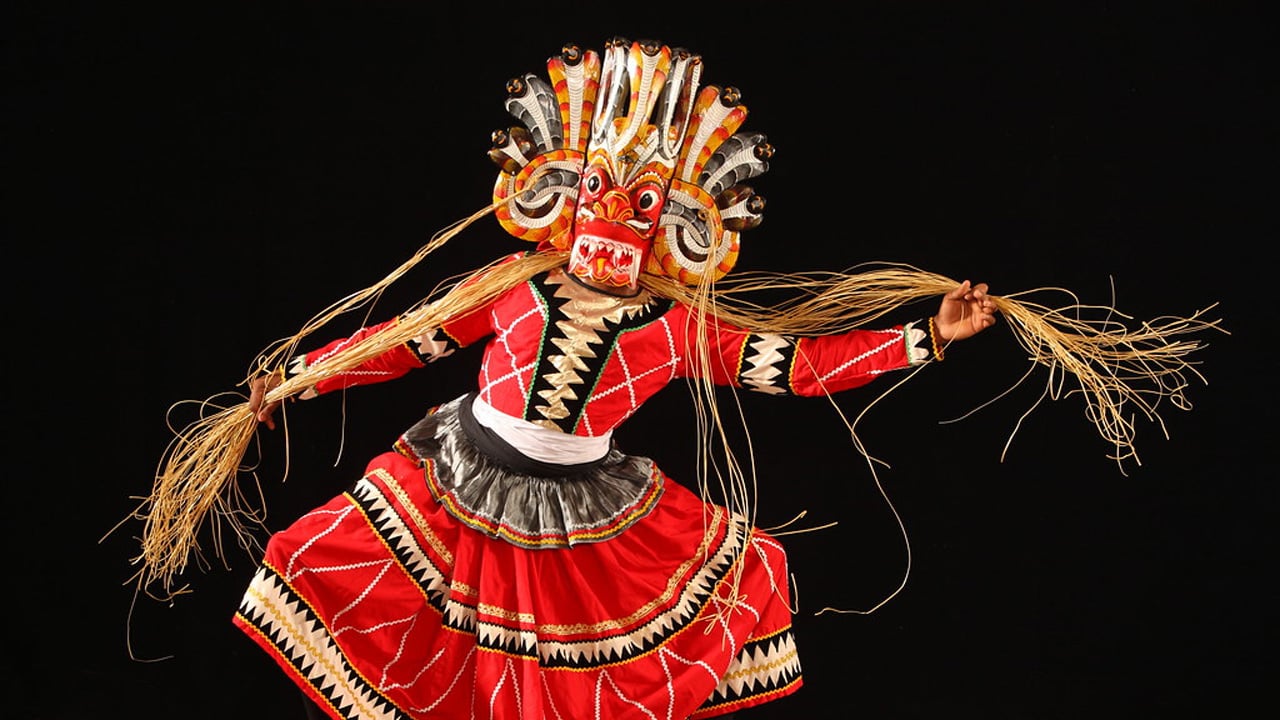
Low Country Dance (Pahatha Rata Natum) is the most overtly ritualistic of the three traditions and has historically been performed along the western and southern coastal plains. Its primary purpose is to appease evil spirits held responsible for illness, and some ceremonies within this tradition are still recognised as a form of community healing practice.
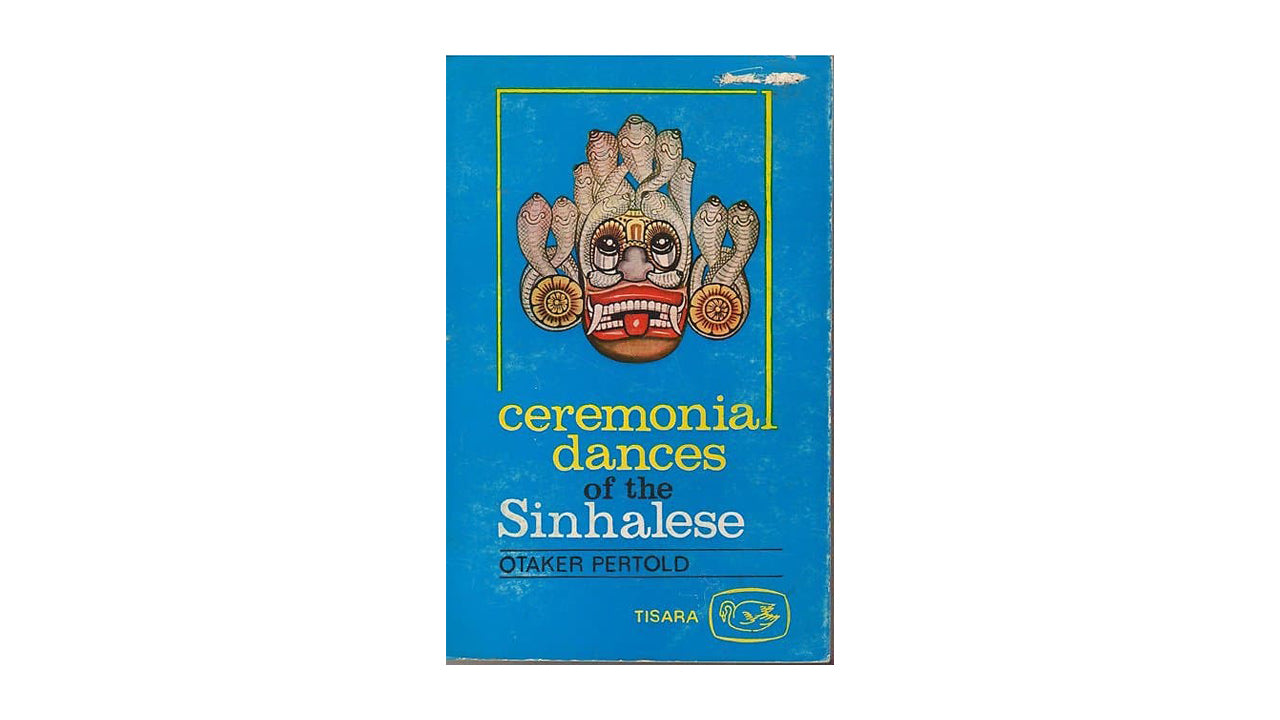
The defining feature of Low Country performance is the mask. Dancers wear hand-carved painted masks representing a wide cast of characters — demons, birds, reptiles and hybrid creatures — each with a specific symbolic role in the narrative being enacted. One of the most recognisable sequences depicts the Gurula, a mythical bird, killing a cobra, performed to drive away malevolent forces. Sri Lanka's mask-carving craft, concentrated around Ambalangoda on the southern coast, evolved directly in response to the demand for Low Country dance masks and is now a celebrated folk art in its own right.
How did South Indian influence shape Sri Lankan dance?
The earliest recorded dance practices in Sri Lanka date to around the 4th century B.C., when ritual movement was primarily apotropaic — designed to repel natural calamities and supernatural harm. A significant shift came after the decline of the Polonnaruwa kingdom in the 13th–15th centuries, when South Indian political and cultural influence intensified on the island. Elements of South Indian classical and folk dance were absorbed into existing Sri Lankan traditions, enriching their gestural vocabulary and musical frameworks while being gradually adapted to local religious contexts and aesthetic sensibilities.
Where can travellers see traditional Sri Lankan dance performances?
Cultural dance performances are staged nightly in Kandy, the spiritual home of the Kandyan tradition. Several dedicated cultural centres near the Kandy city centre run condensed one-hour shows that introduce all three dance forms alongside fire-walking and other ritual arts — a practical option for travellers with limited time. More immersive encounters are available through village-level ceremonies, particularly in Sabaragamuwa and the Low Country coastal belt, where performances retain their ritual context rather than being staged for tourism.
For a deeper understanding of the choreographic principles underpinning the Kandyan form, several institutions in Kandy offer short workshops where visitors can try the basic postures and hand gestures under the guidance of trained practitioners.
What is the costume of a Kandyan dancer made from?
Traditional Kandyan dancer costumes are crafted primarily from silver-plated metal ornaments mounted on fabric or leather bases, combined with white or ivory cloth for the skirt garment. The breastplate, necklaces and headgear are typically worked silver or silver-alloy, and the complete Ves costume — the full ceremonial regalia — can take years of specialist craft to assemble. Costume elements are often heirloom pieces passed down within dance families or maintained by temples.
How has Sri Lankan dance been documented and preserved?
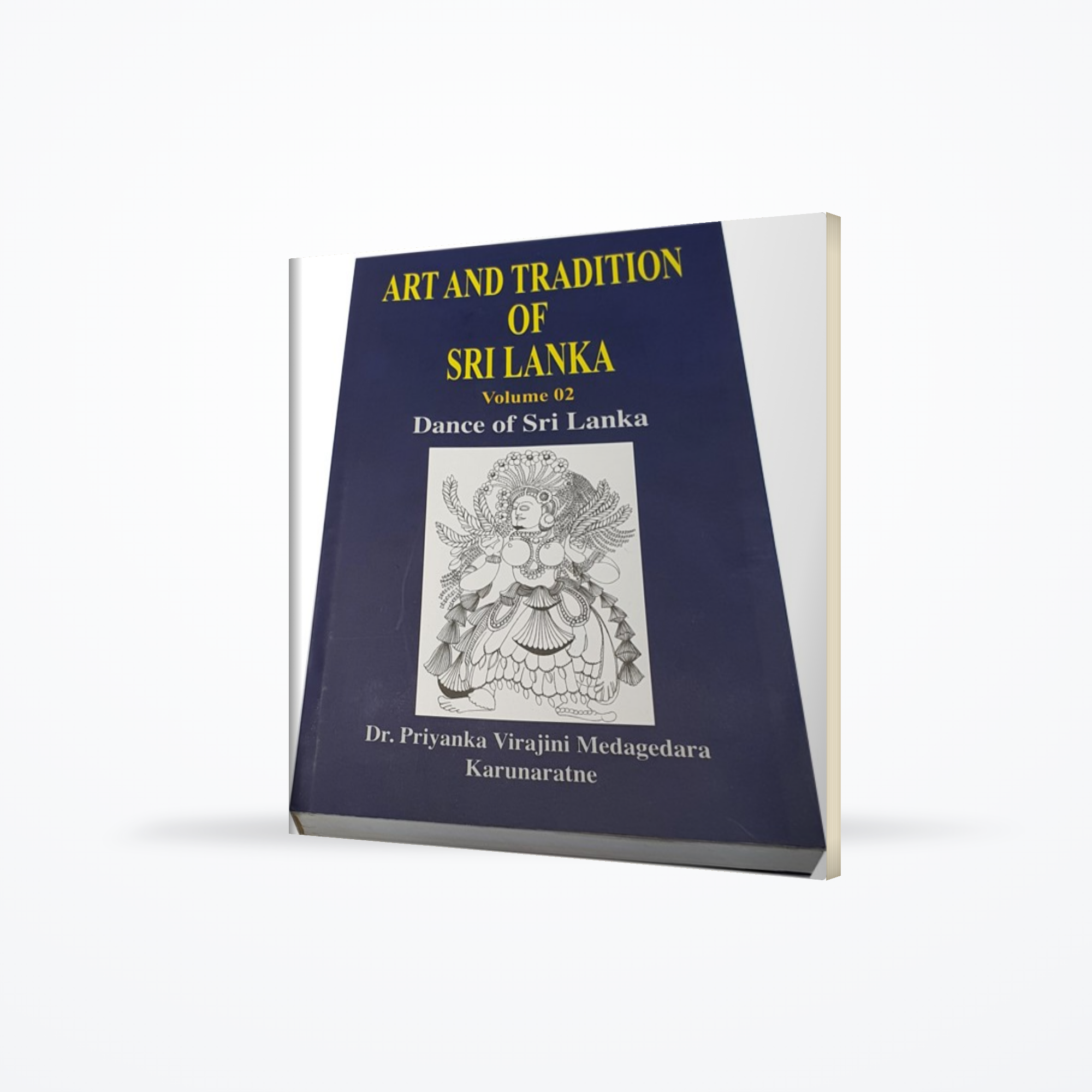
Formal notation and academic documentation of Sri Lankan dance accelerated during the 20th century, with several institutions in Colombo and Kandy now offering certificate and degree programmes. Government bodies, cultural ministries and private foundations have funded archival video documentation of village-level ceremonies that might otherwise disappear. A number of scholarly publications have catalogued the Vannams of the Kandyan tradition, the mask taxonomy of Low Country performance, and the ritual texts associated with Sabaragamuwa ceremonies — making Sri Lankan dance one of the better-documented classical performance traditions in the Indian Ocean region.
Related reading
5 pages on closely related subjects.