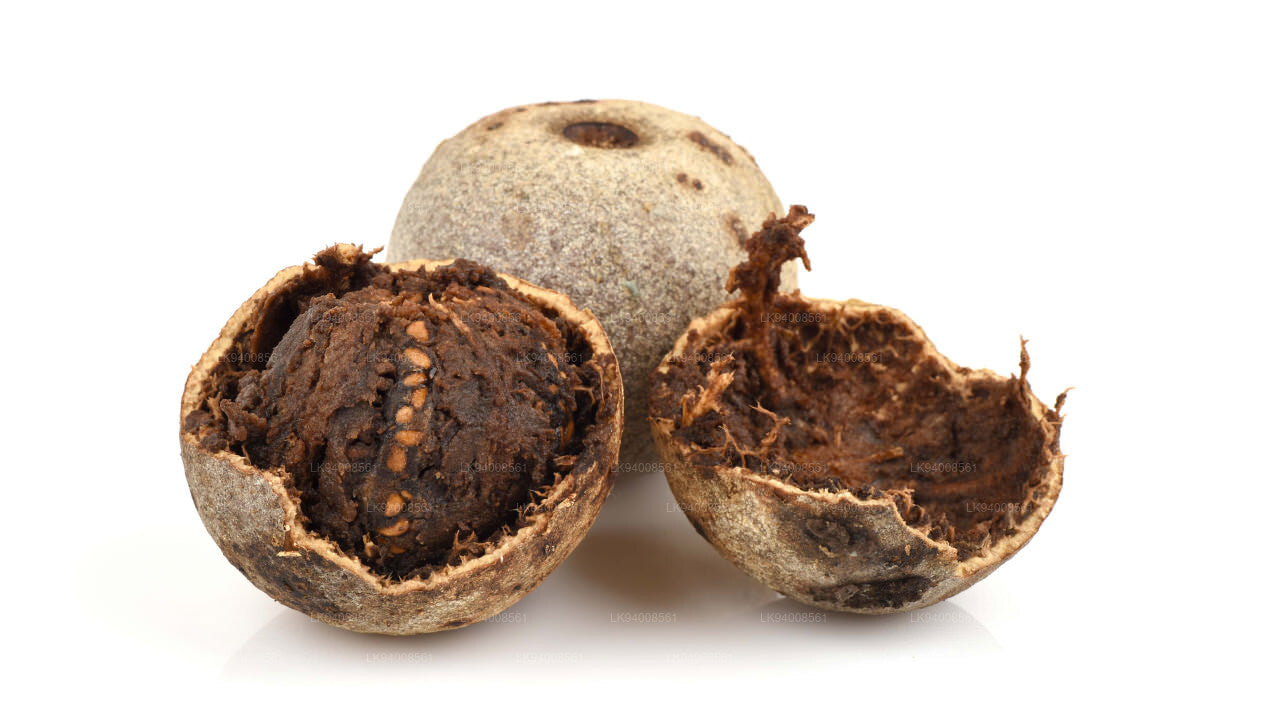
Dialium ovoideum, known locally as Gal Siyambala (ගල් සියඹලා) and sometimes called the Oval Velvet Tamarind, is one of Sri Lanka's lesser-celebrated but ecologically important native trees. Found across the island's lowland tropical forests and drier woodland patches, it occupies a quiet but meaningful place in local botany, traditional medicine, and village food culture. For visitors interested in Sri Lanka's natural heritage beyond its famous tea estates and wildlife parks, this tree offers a genuine window into the island's indigenous plant knowledge.
What does the Gal Siyambala tree look like?
The tree is a medium-to-large evergreen with a relatively dense canopy. Its leaves are compound, arranged alternately on the branch, and carry a characteristic glossy sheen that makes them easy to distinguish from surrounding vegetation. The bark is typically dark and somewhat rough in texture on mature specimens.
Flowers are small and yellowish, appearing in clustered panicles, and are most abundant during the wetter months of the year. The fruit — the part most familiar to rural communities — is small and oval, encased in a thin, velvety dark shell reminiscent of the common tamarind (Tamarindus indica) in shape and tartness, though considerably smaller. Inside, a thin layer of dry, tangy pulp surrounds the seed.
Where does Gal Siyambala grow in Sri Lanka?
The species is distributed across Sri Lanka's tropical and subtropical zones, with a preference for humid lowland forests and the edges of dry-zone woodland. It is not a highland tree — you are unlikely to encounter it at the altitudes associated with tea country or cloud forest. Instead, look for it in the intermediate and low country, particularly in forested corridors that still hold intact canopy.
Protected areas such as Sinharaja Forest Reserve — Sri Lanka's UNESCO-listed lowland rainforest — harbour the kind of diverse native flora in which Dialium ovoideum typically grows alongside dozens of other endemic species. Rural forested areas in the North Western and Sabaragamuwa provinces are also known habitats. The tree is rarely cultivated commercially, so encounters are generally serendipitous, found on forest walks or along rural tracks rather than in formal gardens.
How is the fruit used in Sri Lankan cuisine?
The pulp of the Gal Siyambala fruit is distinctly sour, and this tartness has made it a useful souring agent in traditional cooking, much as tamarind is used across South and Southeast Asian cuisines. Rural communities use the dried or fresh pulp to add acidity to chutneys, sambols, and curries when tamarind or lime are not available.
The fruit is also eaten out of hand by children in village settings, much like a wild snack — the combination of sourness and faint sweetness in the pulp is considered pleasant by those familiar with it. Harvesting is largely opportunistic: families collect fallen or ripe fruits from trees growing on or near their land during the fruiting season.
What is the role of Gal Siyambala in traditional medicine?
In Sri Lanka's Ayurvedic and traditional herbal medicine systems, Dialium ovoideum has been used for generations, though formal clinical research on the species remains limited. Practitioners have traditionally ascribed digestive properties to the fruit and bark, suggesting uses in managing indigestion and stomach complaints. The tannin-rich bark has also found use in folk remedies.
It is worth noting that traditional use does not automatically confirm clinical efficacy, and anyone seeking plant-based remedies should consult a qualified Ayurvedic practitioner. Sri Lanka has a rich indigenous medical tradition, and plants like Gal Siyambala form part of a broader pharmacopoeia that has been passed down through generations of village healers and documented Ayurvedic texts.
What wildlife does the Gal Siyambala tree support?
Like many native fruiting trees, Dialium ovoideum contributes to local food webs. The small fruits attract birds and small mammals, which in turn help disperse seeds and maintain the tree's presence across forest patches. In intact forest ecosystems — such as those found within Sri Lanka's national parks and reserves — native trees of this type form part of the structural and nutritional fabric that supports larger fauna.
This ecological role makes the conservation of native tree species like Gal Siyambala relevant not just for botany but for broader wildlife habitat quality. Forests where such trees persist tend to support greater bird diversity and small mammal populations than those where native species have been displaced by monocultures or invasive plants.
When is the best time to see Gal Siyambala fruiting and flowering?
Flowering typically coincides with wetter periods, when the tree produces its small yellowish blooms in greatest abundance. Fruiting follows the flowering season, meaning the best window to observe ripe fruit on the tree — or find it collected at local markets or rural homesteads — is generally during or shortly after the island's main wet-season rainfall patterns. In the wet zone, this broadly corresponds to the southwest monsoon months; in drier regions, fruiting patterns may shift to align with the northeast monsoon.
Is Gal Siyambala available as a plant for home growing?
Interest in cultivating native Sri Lankan species has grown among home gardeners and those interested in traditional food plants. Young Dialium ovoideum plants can occasionally be sourced through specialist nurseries. Lakpura offers the Gal Siyambala fruit plant for those who want to grow this species — a practical way to engage with Sri Lanka's botanical heritage at home or in a garden setting.
How does Gal Siyambala compare to common tamarind?
| Feature | Gal Siyambala (Dialium ovoideum) | Common Tamarind (Tamarindus indica) |
|---|---|---|
| Fruit size | Small, oval, grape-sized | Larger, pod-shaped |
| Pulp texture | Dry, thin layer around seed | Thick, sticky paste |
| Flavour | Tart, mildly sweet | Sharply sour, sweet |
| Commercial cultivation | Rare, mostly wild-harvested | Widely cultivated |
| Habitat | Tropical forest, intermediate zone | Dry zone, cultivated gardens |
Why does preserving native species like Gal Siyambala matter?
Sri Lanka's native tree flora faces ongoing pressure from habitat loss, agricultural expansion, and the spread of invasive species. Trees like Dialium ovoideum, which evolved alongside the island's other endemic plants and animals, play roles that introduced species cannot easily replicate. Maintaining forest patches where these trees can grow and fruit contributes to the resilience of entire ecosystems.
For travellers visiting Sri Lanka's natural areas, an awareness of native species adds depth to the experience. Walking through a forest where local guides can point out trees used in traditional medicine or cuisine connects visitors to a living cultural and ecological heritage — one that goes well beyond the headline attractions.