Arcade Independence Square


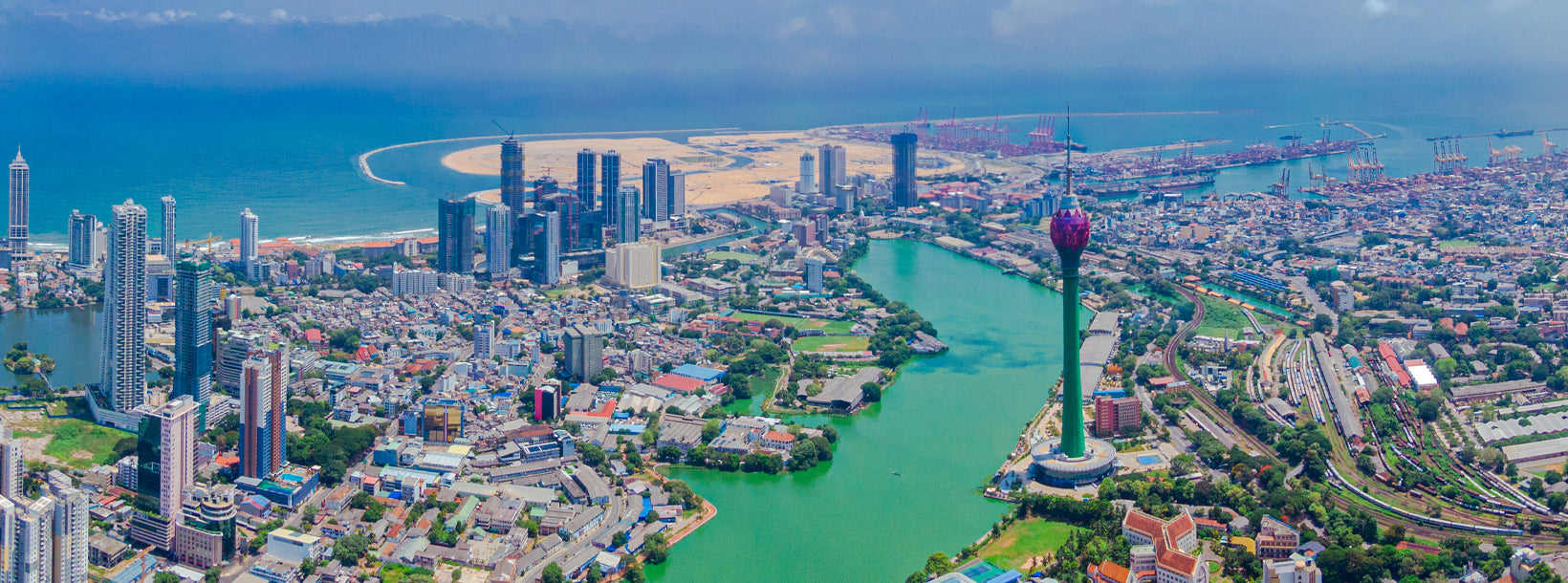
The Arcade Independence Square is a high-end shopping complex housed in a group of renovated colonial era buildings in Colombo. It’s portrays a truly exemplary story of emergence from the depths of despair into a new life of hope and joy.
The History of the Square
The Arcade Independence Square started its life as a Mental Asylum in the late 19th century. In 1875, Sir William Gregory, who was the Governor at the time, decided to build a new aylum to replace the existing facility at Borella. This decision was based on the learned recommendations of the Principal Civil Medical Officer, Dr. W R Kynsey; who realized that the stresses of the repeated invasions and colonization of Sri Lanka had resulted in mental instability amongst some of the populace.
Another reason for his recommendation, may also have been that the Medical Officer or one of his subordinates wished to conduct barbaric experiments that were quite common mental asylums during that era. Back in Britain, it would have been frowned upon; causing a loss of reputation for the doctor, or even imprisonment. But in Ceylon, as a conquered country, none would dare voice any protests.
In any case, the construction did not commence until 1879 due to conflicts over the location and design, as the new Governor, Sir James Longdon decided to interfere with the plans. The building was completed in 1889 at a cost of Rs 450,000 (a vast amount equivalent to several millions of US dollars today); and was named the Cinnamon Gardens Asylum. The locals called it the Jawatta Lunatic Asylum. The building consisted of an main block that had the entrance, two vast patient wings (accommodating 400 patients) connected to the main block and a boundary wall. The Imperial governance accused the designers of wasting money; but Governor Longdon defended the cost of the facility. As per his statement, "The asylum is a series of one-story buildings of the plainest type. The walls are brick plastered. Because of the climate plastering is found requisite for the preservation of buildings. There is no expensive ornamentation, or indeed any ornament at all, unless a short ungraceful and inexpensive tower over the entrance designed for the clock can be called an ornament. The enclosing walls are of ordinary kabook, such as is universally used for garden walls in Colombo.” Of course, while his description was true for the most part; what wasn’t true was the value of the materials used, which were of the finest materials by local standards, and the beauty of the design, which shone with elegance even though no overt ornamentation was visible. He also failed to mention that the main block contained two stories.
Shortly after construction, the asylum received a huge influx of patients; many of whose families wished them to stay there especially because it was the ‘British Hospital’. The rooms and halls overflowed; though like any other asylum, the place was quite depressing despite its grandeur. The Asylum suffered from overcrowding within years of completion; housing over 500 patients. In 1917 a new lar