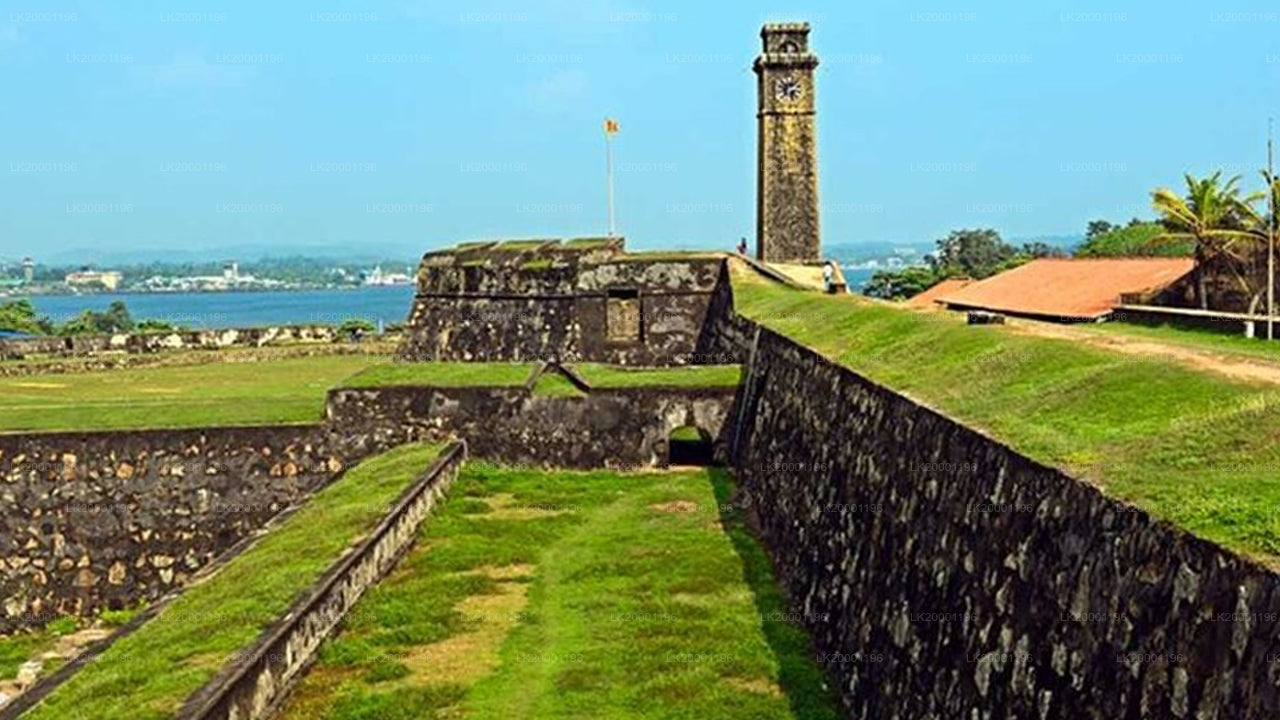
The main entrance to Galle Fort stands as one of the most photographed and historically layered gateways in South Asia. Carved into the northern rampart wall, it faces the modern city of Galle and has welcomed traders, colonial officials, and travellers for centuries. For anyone visiting Sri Lanka's southern coast, passing through this archway is not merely a formality — it is a step into a living UNESCO World Heritage Site where Dutch, Portuguese, and British influences have left their mark on every street corner.
What is the history behind the Galle Fort entrance?
Portuguese sailors first established a fortified position at Galle in the late 16th century, using the natural promontory to control the spice trade routes running along the Indian Ocean. When the Dutch East India Company — the Vereenigde Oost-Indische Compagnie, or VOC — captured the fort in 1640, they undertook a comprehensive reconstruction, strengthening the ramparts and redesigning the main gateway. It is this Dutch-era entrance that visitors see today.
Above the main archway, a stone tablet bears the VOC monogram alongside a carved lion and cock, symbols of Dutch authority. Flanking the gateway is a smaller secondary arch, added during the British period after 1796, which carries the British coat of arms. The two inscriptions, side by side, compress more than two centuries of colonial history into a single wall. The fort as a whole was inscribed on the UNESCO World Heritage List in 1988 in recognition of its outstanding example of European urban planning in South and Southeast Asia.
What can you see at and around the entrance?
Immediately inside the gateway, Church Street runs straight ahead, giving a clean sightline toward the Groote Kerk (Dutch Reformed Church), one of the oldest Protestant churches in Asia. To the left, Flag Rock and the lighthouse anchor the far tip of the promontory; to the right, the ramparts curve around toward the lighthouse gate, offering an elevated walk above the ocean.
- VOC archway and inscriptions — the gateway itself, best photographed in the early morning before crowds arrive.
- Clock tower — a short walk from the entrance, added by the British and still in use.
- Rampart walk — the full circuit of the ramparts is roughly 3 km and takes around one hour at a relaxed pace.
- Dutch Reformed Church (Groote Kerk) — interior includes original Dutch-period floor tombstones and a carved pulpit.
- Galle National Museum — housed in a former Dutch warehouse, it holds exhibits on the fort's archaeology and colonial history.
- All Saints Anglican Church — a reminder of the British period, set within a compact garden.
- Galle Lighthouse — the oldest functioning lighthouse in Sri Lanka, operational since 1938 in its current form.
Beyond formal heritage sites, the streets inside the fort are lined with boutique guesthouses, independent bookshops, jewellery studios, and cafes occupying buildings that retain their original Dutch or British facades. The Galle City Tour arranged by Lakpura covers both the fort interior and surrounding Galle city landmarks in a single half-day.
When is the best time to visit the Galle Fort entrance?
The fort is open year-round and there is no gate-closing time for the public areas. However, timing makes a significant difference to the experience. Early morning — between 6:30 and 8:30 am — is when the light falls cleanly on the archway, street vendors are setting up rather than crowding the lanes, and the ramparts are nearly empty. Sunset draws a crowd to the western ramparts near Flag Rock, which is worth experiencing at least once but requires patience.
Weather-wise, the southern coast's main dry season runs roughly from November through April, when skies are clear and humidity is lower. The southwest monsoon arrives in May and persists through September, bringing heavy afternoon showers. The fort remains accessible during the monsoon, and some visitors prefer the quieter atmosphere, but walking the exposed ramparts in rain is uncomfortable.
How do I get to the Galle Fort entrance from Colombo?
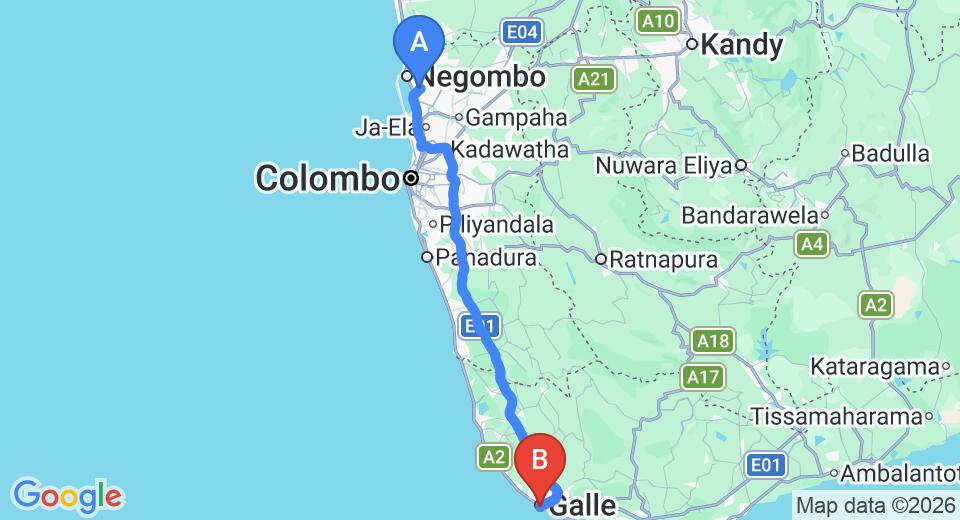
Galle is approximately 120 km south of Colombo along the Southern Expressway (E01). By private car or transfer, the journey takes around 90 minutes in normal traffic — considerably less than the older coastal highway, which remains an atmospheric alternative but can take twice as long. The Colombo–Matara intercity express train is a popular option; it stops at Galle Railway Station, which is a short three-wheeled tuk-tuk ride from the fort's northern entrance. Journey times on the train vary but typically range from two to two and a half hours.
For travellers flying into Bandaranaike International Airport in Colombo, a direct private transfer to Galle Fort avoids the need to navigate Colombo's city traffic entirely.
Is there an entrance fee for Galle Fort?
Entering the fort itself — walking through the main archway and exploring the streets and ramparts — is free of charge. Certain specific sites inside the fort, including the Galle National Museum and the Dutch Period Museum, charge separate admission fees. If you plan to visit multiple museum areas within the fort, a combined museum entrance ticket may offer better value than buying individually at each site.
What should I know before visiting?
The fort is a living neighbourhood as well as a heritage site — residents go about their daily routines alongside tourists, so visitors are expected to be respectful of private property. A few practical points worth noting:
- The streets inside are narrow and largely one-way for vehicles; walking is both more practical and more rewarding.
- Bring sun protection — the rampart walk is fully exposed, with little shade.
- Comfortable flat shoes are advisable; some rampart sections and cobbled lanes are uneven underfoot.
- There is no strict dress code for the secular areas of the fort, but modest dress is appropriate when entering any place of worship inside.
- ATMs and currency exchange are available near the main entrance and inside the fort.
- Several cafes near the ramparts serve food and cold drinks throughout the day.
What experiences can I combine with a Galle Fort visit?
The southern coastal belt offers several worthwhile additions to a Galle Fort day. The Madu River Safari on the Madu Ganga mangrove estuary is roughly 15 km north of Galle and makes a natural morning pairing before arriving at the fort for the afternoon. Further along the coast, the Koggala Sea Turtle Conservation Project operates a small research and hatchery site that is open to visitors year-round. For travellers continuing inland after Galle, the road northeast leads toward the Sinharaja Forest Reserve, one of Sri Lanka's last intact lowland rainforests and a separate UNESCO World Heritage Site.