
Giritale is a quiet village in Sri Lanka's North Central Province, set within the Polonnaruwa District on the edge of a vast ancient reservoir. It sits in a landscape shaped as much by early hydraulic engineering as by the dry-zone ecology that surrounds it — scrub forest, paddy fields, and the unhurried rhythms of a rural community that has occupied this stretch of land for well over a millennium. For travellers looking for somewhere calm between the cultural sites of the region, Giritale rewards those who slow down.
What is the history behind Giritale?
The centrepiece of Giritale is the Giritale Wewa, a large tank attributed to King Agbo II and constructed around the 6th century CE. Like much of the ancient irrigation network across Sri Lanka's dry zone, this reservoir was not merely a water source — it was the engine of an agricultural economy, redistributing seasonal rainfall into year-round cultivation of rice. The tank remains in active use today, a quiet testament to engineering that has outlasted the kingdoms that built it.
Nearby, the remains of a rock fortress offer a vantage point over the surrounding countryside. The site is modest compared to the theatrics of larger ancient strongholds elsewhere in the region, but it carries the same layered sense of occupation — stone worked by hand, positioned to see and be seen across a flat horizon of paddy and jungle.
How does Giritale relate to Polonnaruwa?
Giritale sits just a short drive from Polonnaruwa, the medieval capital of Sri Lanka and a designated UNESCO World Heritage Site. This proximity makes Giritale an attractive place to stay for visitors exploring the ruins — the royal palace complex, the Gal Vihara rock temple, the Rankoth Vehera stupa, and the broader archaeological park are all within easy reach. Many travellers find that basing themselves in Giritale gives them a quieter and more verdant setting than the town centre of Polonnaruwa itself, while still allowing full-day access to the ruins.
What wildlife can I see around Giritale?
The Giritale Wewa is a reliable birding location. The tank's margins draw a mix of resident and migratory waterbirds — painted storks, open-billed storks, purple herons, and various kingfisher species are regularly recorded. The scrub forest fringing the reservoir shelters grey langurs, monitor lizards, and occasionally elephants moving through on seasonal routes between protected areas. Early morning and late afternoon are the most productive times for wildlife observation, particularly along the bund of the reservoir.
The dry-zone forest around Giritale is also home to species characteristic of this habitat: Sri Lanka junglefowl, crested hawk-eagle, and Indian roller are among the birds a patient observer is likely to encounter. The combination of wetland, agricultural land, and remnant dry forest creates a patchwork that supports notable biodiversity within a compact area.
What cultural experiences does Giritale offer?
The villages immediately surrounding the reservoir maintain traditional livelihoods — paddy farming, small-scale fishing in the tank, and cottage crafts including pottery and woven goods. Visitors who make time for unstructured exploration of the area are likely to encounter working farms and the ordinary texture of Sri Lankan rural life in the dry zone. This kind of interaction is not packaged or performed; it emerges from the simple fact that Giritale is a living community, not a heritage set-piece.
Buddhist practice is deeply woven into daily life here, as it is across the North Central Province. Small temples and dagobas punctuate the landscape, and the sound of temple bells at dusk is a reliable feature of evenings near the reservoir.
When is the best time to visit Giritale?
The dry season between May and September generally offers the most reliable weather for visiting Giritale and the surrounding archaeological sites. Temperatures are warm throughout the year — the dry zone is consistently hot — but humidity is lower during this period and rain less frequent. The inter-monsoon months of October and November bring heavier rain but also lush vegetation and excellent birdwatching conditions as migratory species arrive.
| Season | Conditions | Best For |
|---|---|---|
| May – September | Dry, warm, low humidity | Archaeology, general sightseeing |
| October – November | Inter-monsoon, occasional rain | Birdwatching, green landscapes |
| December – April | Dry, slightly cooler mornings | Comfortable travel, fewer crowds |
How do I get to Giritale from Colombo?
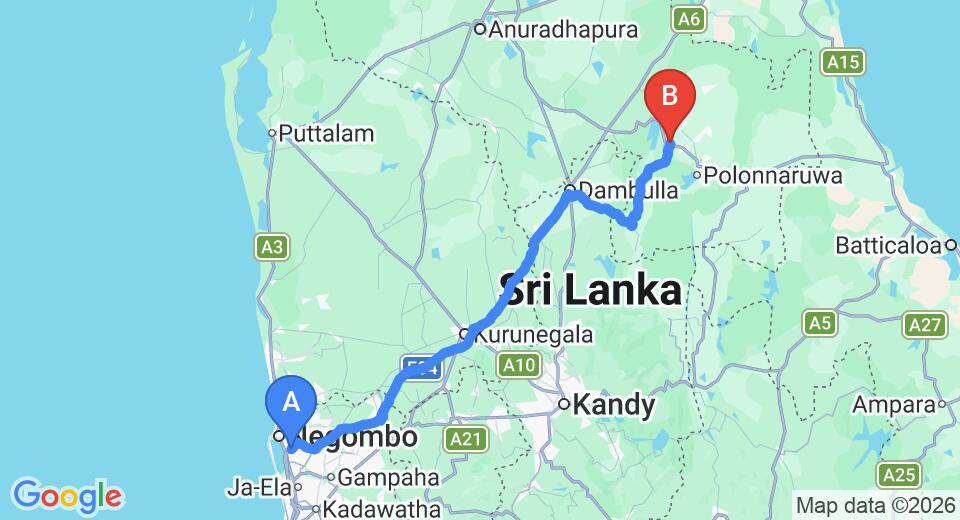
Giritale lies roughly 215 km northeast of Colombo, accessible via the A6 highway through Kurunegala and Dambulla. By private vehicle the drive typically takes around four to five hours depending on traffic. There is no direct express train to Giritale; travellers using public transport generally reach Polonnaruwa by train and then arrange local transport for the final stretch. A private transfer is the most practical option for those arriving from Colombo Bandaranaike International Airport with luggage.
Where should I stay in Giritale?
Accommodation in Giritale ranges from lakeside hotels with reservoir views to smaller guesthouses offering a more personal atmosphere. The village is small enough that most properties are within a few minutes of the tank bund, and wildlife can often be observed directly from hotel grounds. Booking in advance is advisable during peak season, particularly around December through February when the North Central Province sees a sustained flow of visitors.