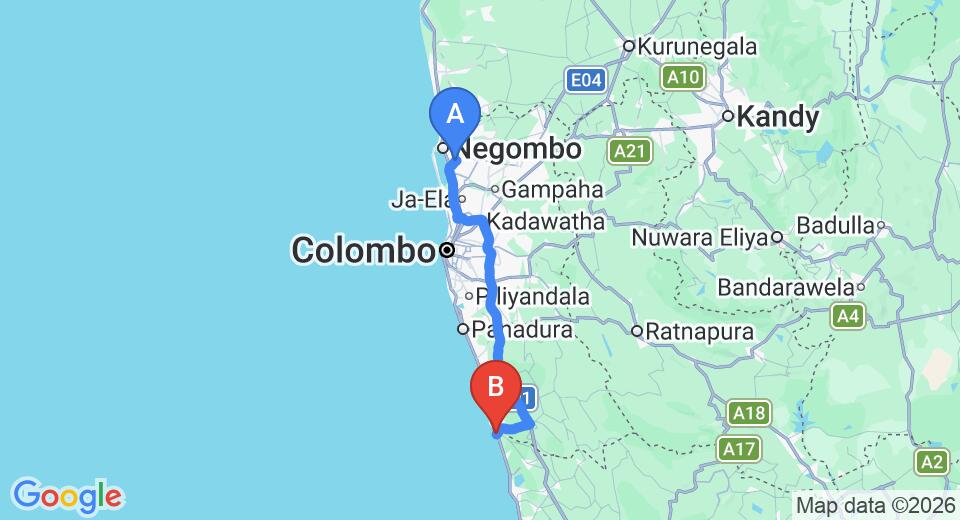
Bentota sits roughly 65 km south of Colombo on Sri Lanka's southwestern coast, where the Bentota River meets the Indian Ocean. The result is a beach destination unusually well-rounded for its size: calm open-ocean swimming on one side, a sheltered lagoon ideal for water sports on the other, and a river corridor that draws wildlife and boats in equal measure. It draws honeymooners, water-sports enthusiasts, and travellers looking for a quieter alternative to Colombo's city pace — often all at the same time.
What is Bentota Beach like?
The main beach stretches for several kilometres along a peninsula, with pale golden sand that slopes gently into shallow, generally calm water between November and April. The seafloor is sandy rather than rocky close to shore, which makes it comfortable for swimming. A narrow strip of land separates the ocean from the Bentota Lagoon, and the contrast between the two — open surf versus mirror-flat backwater — is part of what makes the location appealing.
The beach itself is wide enough that it rarely feels crowded even during peak season. Rows of casuarina trees provide natural shade at the top of the beach, and most of the larger hotels have private beach access. Vendors and water-sports operators are largely concentrated at the lagoon end, so the southern stretch tends to be quieter.
What water sports are available at Bentota?
The Bentota Lagoon is the hub for organised water sports on this part of the coast. The calm, enclosed water suits beginners and experienced riders alike, and operators typically offer:
- Jet skiing
- Water skiing and wakeboarding
- Windsurfing and kitesurfing
- Banana boating and tube rides
- Stand-up paddleboarding
The open ocean north of the river mouth adds deep-sea fishing to the list for those who want to venture further offshore. Snorkelling is possible around scattered rocky outcrops near the beach, though visibility and reef quality vary by season and conditions — it is not as reliable as dedicated reef sites further south.
What is a Bentota River safari like?
The Bentota Ganga runs inland from the lagoon through a network of mangrove channels, small islands, and paddy-bordered banks. A river safari typically lasts between one and two hours and covers sections where crocodile watching is common — monitor lizards, kingfishers, herons, and purple-faced langur monkeys are also regularly sighted. Boats range from basic motorised craft to slightly more comfortable covered vessels; most operators depart from the lagoon jetties near the main road bridge.
The Bentota River is distinct from, though ecologically similar to, the nearby Madu Ganga wetland system. Travellers who want a longer or more biodiverse waterway experience sometimes combine both on the same trip south from Colombo.
Are there turtle conservation projects near Bentota?
Several sea turtle hatcheries operate along the coast between Bentota and Kosgoda, a short drive north. They protect nests of loggerhead, green, leatherback, hawksbill, and olive ridley turtles — all five species nest on this stretch of beach. Visitors can inspect the protected hatchery pens, learn about incubation periods and threats facing each species, and, during the right season, observe hatchlings being released into the sea after dark. The Kosgoda Sea Turtle Conservation Project is one of the longest-running operations in the country and a worthwhile stop for anyone with an interest in marine conservation.
What cultural and heritage sites are close to Bentota?
Bentota is not solely a beach destination. Within a short drive, two gardens linked to the Bawa family offer a distinctly Sri Lankan take on landscape design:
- Brief Garden — Created by Bevis Bawa over several decades, this informal garden is filled with tropical planting, sculpture, and architectural fragments. It is personal and idiosyncratic in character, quite different from a manicured botanical garden.
- Lunuganga Estate — The former country retreat of architect Geoffrey Bawa, widely considered the father of tropical modernism. The estate sits on a low hill above a lake and demonstrates Bawa's approach to weaving interior and landscape together. Tours run regularly; advance booking is advisable.
Galle, with its Portuguese-built Dutch Fort and colonial streetscape, is around 40 km to the south and easily reached for a half-day excursion. A Galle city tour pairs naturally with a Bentota beach stay.
Where are Bentota's best resorts and spas?
The area has a concentration of large beach hotels that have operated since the 1970s alongside newer boutique properties. Most of the established resorts offer Ayurvedic spa programmes — consultations with a resident physician, herbal oil treatments, and multi-day panchakarma programmes — which attract European guests specifically seeking wellness rather than just beach time. Properties range from international five-star brands to family-run guesthouses in the village behind the beach.
The majority of hotels are clustered along the peninsula road or set back slightly among garden plots. Those on the ocean side have direct beach access; those on the lagoon side offer calmer water and easier access to water-sports operators.
When is the best time to visit Bentota Beach?
The primary season runs from November through April, when the southwest monsoon has passed and the coast benefits from dry, sunny weather with calm seas. Sea temperatures remain warm year-round, typically between 27 °C and 30 °C. This period is ideal for swimming, water sports, and river excursions.
From May to October the southwest monsoon brings heavier rain and rougher surf to this coast. The beach is still accessible and the river safari remains possible, but water sports on the open ocean are limited and swimming conditions are less predictable. Some hotels offer reduced rates during this period, which can make it attractive for travellers comfortable with occasional rain.
| Period | Weather | Swimming | Water Sports |
|---|---|---|---|
| November – April | Dry, sunny | Excellent | Full range available |
| May – October | Monsoon, intermittent rain | Use caution | Lagoon activities only |
How do I get to Bentota from Colombo?
Bentota is approximately 65 km south of Colombo, making it reachable in around 90 minutes to two hours by road depending on traffic. The Southern Expressway (E01) reduces the drive time significantly compared to the old coastal road. Trains on the Colombo–Matara line stop at Bentota station, which sits on the river bridge and is one of the more scenic rail arrivals in the country. The journey from Colombo Fort takes around two hours on an intercity express. Hiring a private driver through a local operator gives the most flexibility, particularly if you plan to visit Brief Garden or Lunuganga en route.
What else is near Bentota worth visiting?
The fishing village of Beruwala, just north of Bentota, has one of the oldest Arab mosques in Sri Lanka and a colourful fish market at the harbour. Further up the coast, the Hikkaduwa Turtle Hatchery and the reef at Hikkaduwa town are popular extensions of a southern coastal itinerary. Inland from Bentota, the road passes rubber and cinnamon estates before climbing toward the hill country — Bentota is thus a practical first or last stop on a circuit that continues to Galle, the south coast, and eventually up to the highlands.