Balana sits quietly beside the Colombo–Kandy railway line, about midway between Kadugannawa and Kandy, yet it carries a weight of history that far exceeds its modest size. Once the outer defensive perimeter of the Kandyan Kingdom, the area is anchored by two compelling attractions: a rock fortress that held colonial armies at bay for generations, and a mountain range that hikers now climb for panoramic views of the Central Province. Together they make Balana a rewarding half-day detour for anyone travelling the hill-country corridor.
What is the history of Balana Fort?
Balana Fort was purpose-built by the Kingdom of Kandy to guard the narrow pass at Kadugannawa — the most practical overland route from the western lowlands into the highland capital. Positioned between the Kadugannawa Pass and the Alagalla Range, the fort exploited the natural topography so effectively that a small garrison could slow or repel a much larger invading force. Portuguese, Dutch, and British armies all encountered this corridor at various points, and the fort's strategic value was recognised by each in turn.
Today the site is managed by the Archaeological Department of Sri Lanka and is classified as a protected historical monument. The remains are modest compared with the grand coastal forts of Galle or Jaffna, but the setting — rocky outcrops overlooking forested ravines — conveys exactly why the Kandyan commanders chose this ground. Visitors interested in the broader story of Kandyan resistance can find helpful background at the Kandy Tourist Information Center before making the drive out.
What can visitors see at the Balana Fort site today?
The visible remains include sections of the original rampart walls and rock-cut features that formed part of the defensive structure. Because the fortress exploited existing rock faces rather than relying entirely on constructed masonry, much of what survives blends into the landscape. Walking the perimeter gives a clear sense of the commanding sightlines the garrison would have held over any approaching force from the west.
There is no formal visitor centre on site, so arriving with a knowledgeable guide adds considerable context. The surrounding area is lightly forested, and the short approach from the road passes through scenery typical of the Kandy foothills — rubber, tea, and mixed jungle on steep slopes.
How do I get to Balana from Kandy or Colombo?
Balana lies roughly 15 km west of Kandy along the A1 highway, close to the well-known Kadugannawa viewpoint. From Kandy, the drive takes around 30–40 minutes depending on traffic. From Colombo, Balana is approximately 110 km and around 2.5–3 hours by road via the A1, passing through Kegalle. The Colombo–Kandy railway also stops at Balana station, making a train journey followed by a short walk a practical option for independent travellers.
If you prefer a private transfer with a driver who knows the road, Lakpura's taxis and private drivers can arrange a combined Balana–Kadugannawa excursion as part of a broader Kandy itinerary.
What is the Alagalla Mountain Range and can I hike it?
The Alagalla Range straddles the boundary between the Central and Sabaragamuwa Provinces, rising steeply from the surrounding foothills. The range served as a natural defensive barrier for Kandyan rulers for roughly five centuries — its ridgelines were simply too rugged for a conventional army to cross quickly, which is why Balana Fort at its base was so important.
Today Alagalla is best known as an adventure hiking destination. The ascent is moderately challenging: the trail climbs through dense jungle before opening onto rocky upper slopes with wide views over the hill country. Most hikers allow around 4–5 hours for the round trip, starting early to avoid afternoon cloud. No technical equipment is required, but sturdy footwear and sufficient water are essential. The adventure tours section of Lakpura's site lists guided options that include Alagalla and similar hill-country trails.
Is a cycling tour from Kandy to Balana possible?
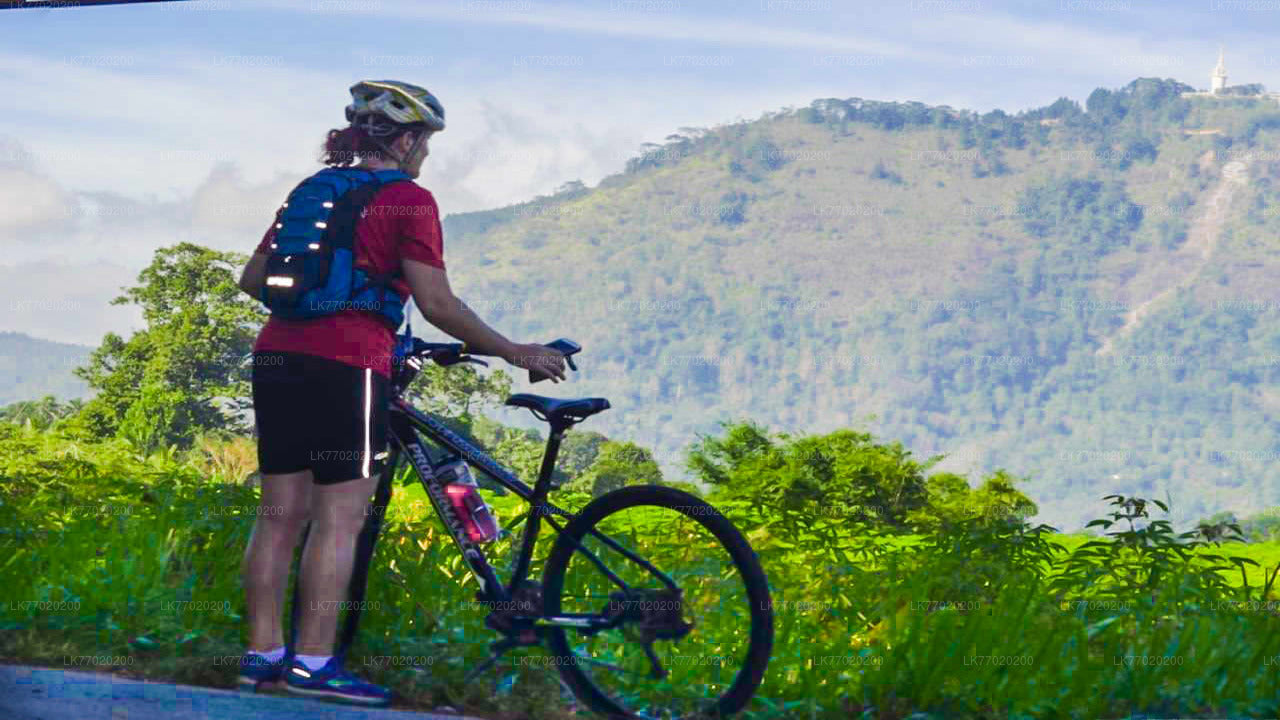
A guided cycling tour that takes in the Balana battlefield area is one of the more unusual ways to experience this stretch of the Kandy foothills. The route follows roads that wind through tea estates and paddy fields, with the historical context of the Kandyan defensive line adding a narrative thread to what would otherwise be a purely scenic ride. The descent from Kadugannawa towards Balana is particularly rewarding on two wheels. Lakpura offers a dedicated Balana Battlefield Cycling Tour departing from Kandy — a good choice for travellers who want active sightseeing rather than a purely passive visit.
What else is worth seeing near Balana?
Kadugannawa Pass itself is just a few kilometres away and includes the famous Dawson's Tower — a navigational landmark built in the early 19th century — and sweeping views westward over the lowlands. Kandy city, with the Esala Perahera Festival held there annually in July or August, is the obvious base for an overnight stay. A Kandy city tour pairs naturally with a morning excursion to Balana, allowing visitors to cover the Kandyan heritage sites and the fort in a single day.
For those with more time, the Makandawa Rainforest near Kithulgala is roughly an hour south of Balana and offers white-water rafting and canopy walks in a very different landscape. The Sinharaja Forest Reserve, Sri Lanka's primary lowland rainforest and a UNESCO World Heritage Site, can also be reached within a few hours for travellers heading south after Kandy.
When is the best time to visit Balana?
The Kandy foothills receive rainfall in two monsoon phases, so the most reliably dry periods are generally January to March and July to September. Hikes up Alagalla are best attempted during these drier windows, when visibility from the upper ridges is clearest and the trails are less slippery. The fort itself can be visited year-round — it is an outdoor site and brief rain showers rarely prevent exploration, though the approach path can become muddy after heavy rainfall.
Temperatures at Balana are warm year-round given its elevation of around 500–600 m, with mornings typically cooler and more comfortable for walking. Arriving before 8 a.m. for a hike is advisable both for temperature and for the quality of light over the valleys below.