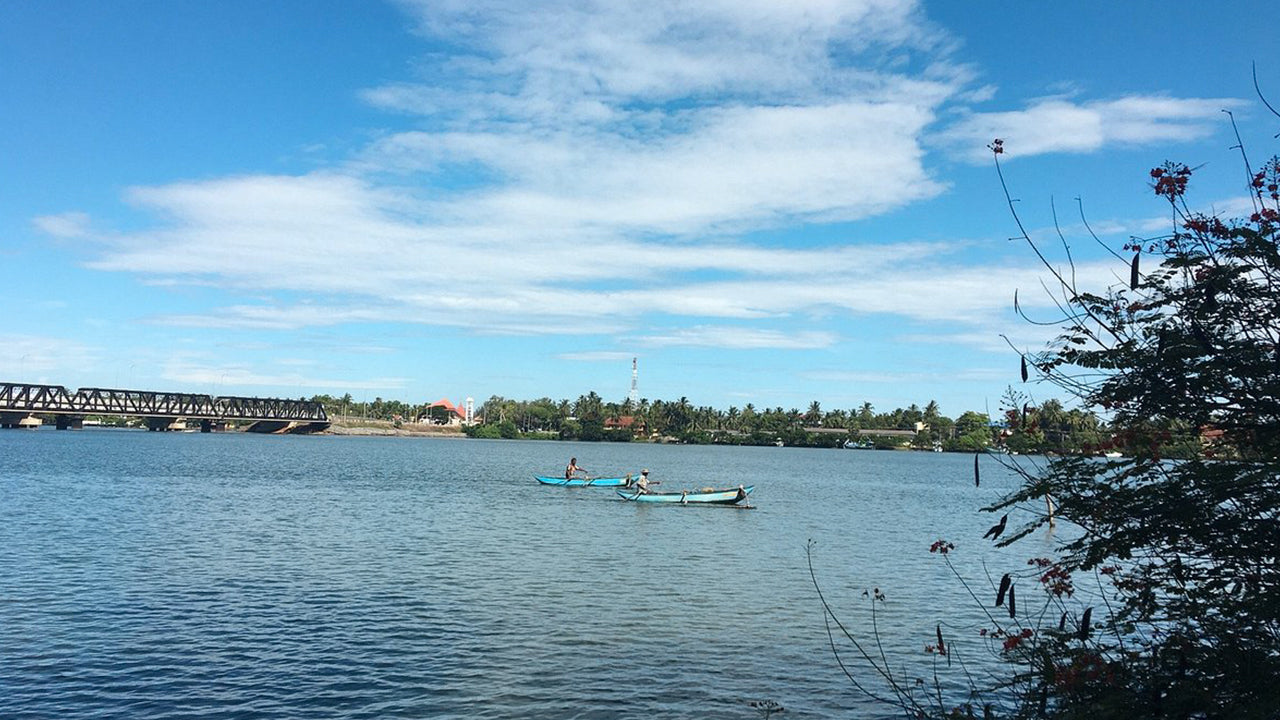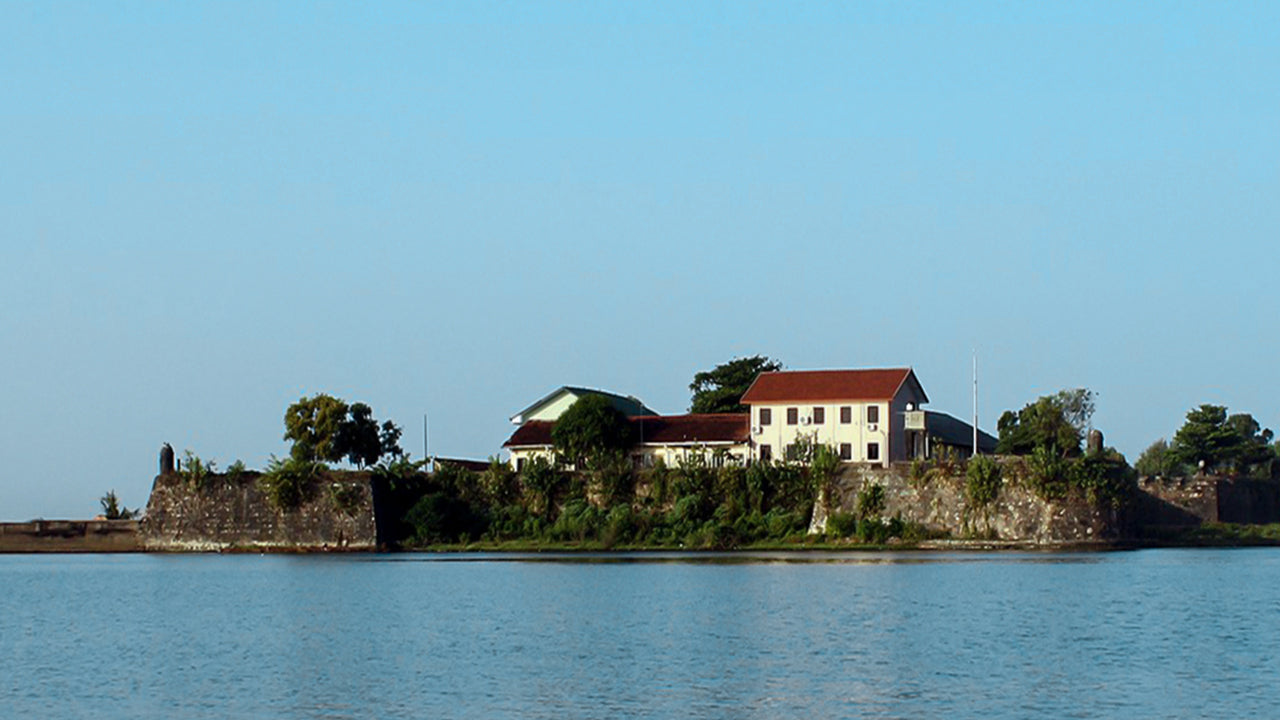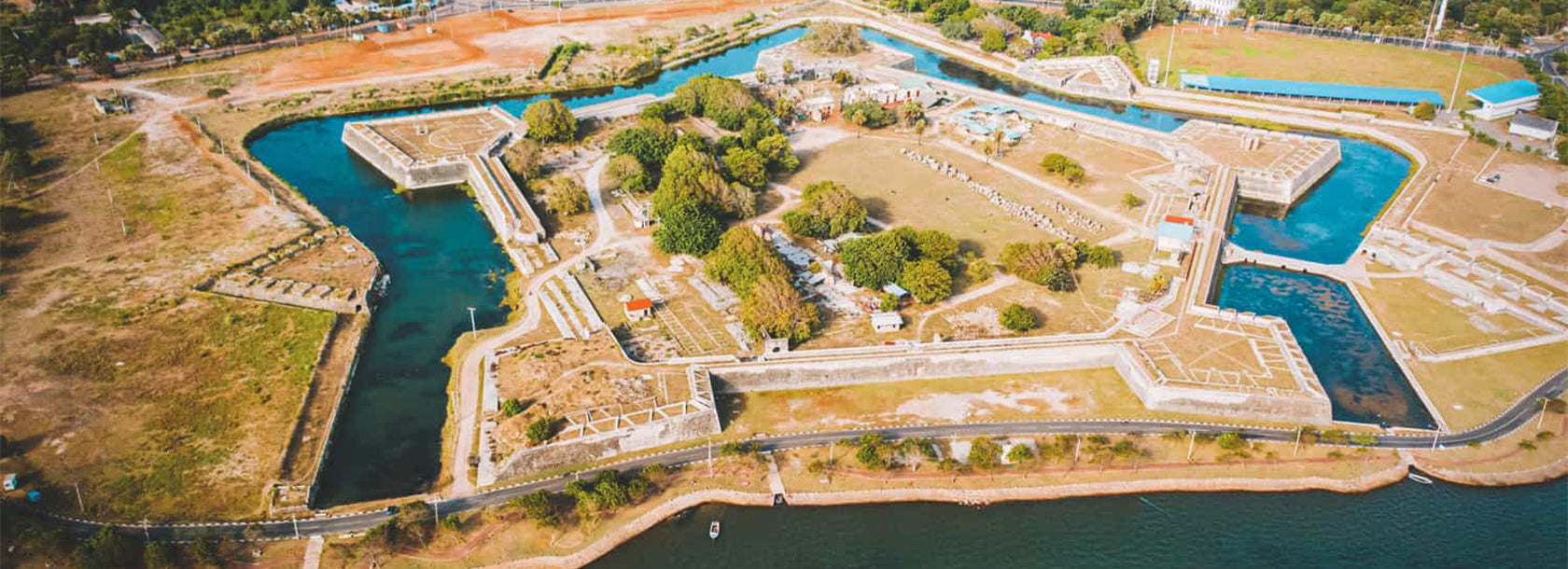
Standing on a small island where brackish lagoon water meets the outer banks of Batticaloa, the Dutch Fort is one of eastern Sri Lanka's most historically layered sites. Built originally by the Portuguese in 1628 as a trading and administrative base, the fort changed hands between three European colonial powers over roughly two centuries — and still carries the physical and cultural marks of each era. For visitors making their way along the east coast, it offers a rare window into colonial-era Sri Lanka that is less visited and less polished than the more famous fort at Galle.
What is the history of Batticaloa Dutch Fort?
The Portuguese established the first fortified structure on this site in 1628, drawn to Batticaloa's lagoon system as a natural harbour and to the region's trade in spices — particularly the Ceylon black pepper and cinnamon cultivated in the surrounding areas. The Dutch had been present in Sri Lanka from as early as 1602, seeking a share of the same lucrative spice trade, but it was a political invitation that triggered their move on Batticaloa. King Rajasinghe II of Kandy, eager to drive out the Portuguese, urged Dutch intervention, and in 1638 the Dutch East India Company (VOC) seized the fort and established firm control over the eastern region.
Under Dutch administration, the fort was reinforced in stone. Bordered on two sides by a moat and on the remaining sides by the lagoon itself, it was a naturally defensible position. The Dutch held the fort for close to two centuries before British forces arrived in the late 18th century and absorbed the Dutch fortifications into their own colonial administration — a pattern repeated at several sites across the island.
The site's history extends far deeper than the colonial period. Archaeological evidence points to significant activity dating to the 1st century BC, including a Buddhist stupa and remains associated with the ancient Ruhuna Kingdom. This layering of pre-colonial religious heritage beneath later European military architecture is what makes Batticaloa Fort genuinely unusual among Sri Lanka's colonial-era monuments.
What can you see at Batticaloa Dutch Fort today?
The fort's outer walls and bastions remain largely intact, though the structure has suffered from a combination of sea erosion, insufficient conservation funding, and the damage caused by the 2004 Indian Ocean tsunami. Visitors can walk the perimeter and observe the stonework up close, noting the characteristic Dutch construction style — thick walls, angular bastions designed to deflect cannon fire — that also appears at the Dutch Fort in Negombo and other VOC-era fortifications across the island.
Within the fort compound, a government administrative building has occupied the central area for much of the post-independence period, which has limited full public access. However, the grounds surrounding the structure offer clear views across the Batticaloa Lagoon, and the moat — though partially silted — remains a visible feature. The remnants of the Buddhist stupa associated with the Ruhuna Kingdom can also be found in the vicinity, underscoring the religious significance of the site that predates European contact by more than a millennium.
- Outer stone walls and corner bastions from the Dutch colonial period
- Moat system on the landward sides of the fort island
- Views across Batticaloa Lagoon, known for its unusual bioluminescence at night
- Remnant religious structures associated with early Buddhist settlement
- Proximity to the Batticaloa town centre, accessible on foot or by tuk-tuk
What challenges has the fort faced in recent decades?
Batticaloa Fort has faced a harder road to conservation than comparable sites in southern Sri Lanka. The 2004 tsunami caused structural damage to sections of the fortification and disrupted the surrounding community. Before that, the decades-long ethnic conflict that affected much of northern and eastern Sri Lanka severely restricted access to the area, halted organised conservation work, and effectively removed Batticaloa from mainstream tourism itineraries for a generation.
Sea erosion continues to threaten sections of the lagoon-facing walls, and encroaching development in the town has placed additional pressure on the fort's outer perimeter. Funding for restoration has historically been limited, and the site has not received the same level of international heritage attention as, for example, the Galle Fort — a UNESCO World Heritage Site — despite its comparable historical complexity.
Community-led proposals to open the fort more fully for cultural and heritage tourism have gained some traction in recent years. Such plans have the potential to support local livelihoods, encourage conservation investment, and reestablish the fort as both a religious and historical landmark for the people of Batticaloa and visitors from across the island.
How do I get to Batticaloa from Colombo?
Batticaloa lies on Sri Lanka's east coast, roughly 310 kilometres from Colombo by road. The drive via the A5 highway through the hill country takes around six to seven hours depending on conditions, making it a logical stop on an east-coast itinerary that might also include Pasikuda beach or Arugam Bay. A domestic flight between Ratmalana Airport in Colombo and Batticaloa Airport reduces travel time significantly and is available through operators including Lakpura. Intercity bus and train services also connect Colombo to Batticaloa, with the train journey offering a scenic route through the central highlands.
| Route | Approximate Duration | Notes |
|---|---|---|
| Colombo to Batticaloa by road | 6–7 hours | Via A5 highway; private transfer recommended |
| Colombo to Batticaloa by train | 8–9 hours | Scenic highland route; advance booking advised |
| Ratmalana to Batticaloa by domestic flight | Around 1 hour | Subject to schedule; quickest option |
When is the best time to visit Batticaloa?
The east coast of Sri Lanka operates on a different seasonal rhythm to the south and west. The dry season on the east coast typically runs from April through to September, making these months the most reliable for travel to Batticaloa. The northeast monsoon brings rain between October and January, which can make road travel more difficult and reduce visibility on the lagoon. If your itinerary allows flexibility, April to August offers the most settled conditions for exploring the fort and the surrounding area.
What else is worth seeing near Batticaloa?
Batticaloa's lagoon is a destination in its own right. The town is widely associated with the phenomenon of singing fish — a seasonal, low-frequency sound audible from the water at night, attributed variously to molluscs or fish, and still not fully explained by science. Pasikuda beach, around 35 kilometres north of Batticaloa, offers calm shallow water suitable for swimming and is one of the east coast's most accessible resort areas. Pigeon Island, further north near Nilaveli, is a short boat ride from Trincomalee and draws snorkellers to its coral reef. For those extending their journey inland, the ancient city of Polonnaruwa — one of Sri Lanka's greatest archaeological sites — is reachable in roughly two to three hours from Batticaloa.