Lakpura
Lakpura®

Traditional Kitchen Utensils

Long before electric blenders and non-stick pans arrived in Sri Lankan kitchens, a set of hand-crafted tools shaped the island's cuisine. Many of these utensils are still in daily use, particularly in rural households, and their influence on flavour and texture is real — not merely nostalgic. Understanding them gives you a deeper appreciation of Sri Lankan food and the traditions that produced it.

What is the miris gala, and why do cooks still prefer it?

The miris gala is a two-piece grinding stone that has been central to Sri Lankan cooking for centuries. It consists of a large, flat base stone and a smaller cylindrical hand stone used with a rolling motion to crush ingredients against the surface. Cooks use it to grind fresh chillies, ginger, turmeric, and mixed spice pastes.

A blender can reduce the same ingredients to liquid in seconds, but the stone produces a coarser, drier paste with a noticeably different texture and depth of flavour. The friction and pressure of stone against stone break down cell walls differently from a rotating blade, releasing oils in a way that affects both aroma and taste. Many experienced Sri Lankan cooks insist on the miris gala for certain curry bases, and the difference is perceptible in the final dish.

How are the wangediya and mol gaha used in Sri Lankan cooking?

The wangediya (mortar) and mol gaha (pestle) serve a related but distinct purpose from the grinding stone. The mortar is a deep, chalice-shaped vessel — traditionally carved from hard wood or stone — while the pestle is a rounded club used to pound rather than roll. This action is ideal for crushing whole spices such as cumin, coriander, cardamom, and Ceylon black pepper, as well as aromatics like garlic and ginger.

Pounding releases volatile oils more gently than grinding, which suits spices that should retain some texture rather than becoming a smooth paste. The mortar and pestle remains a standard fixture in Sri Lankan kitchens, and even cooks who own modern appliances often reach for it when quantities are small or when precision of texture matters.

What makes coconut shell spoons special?

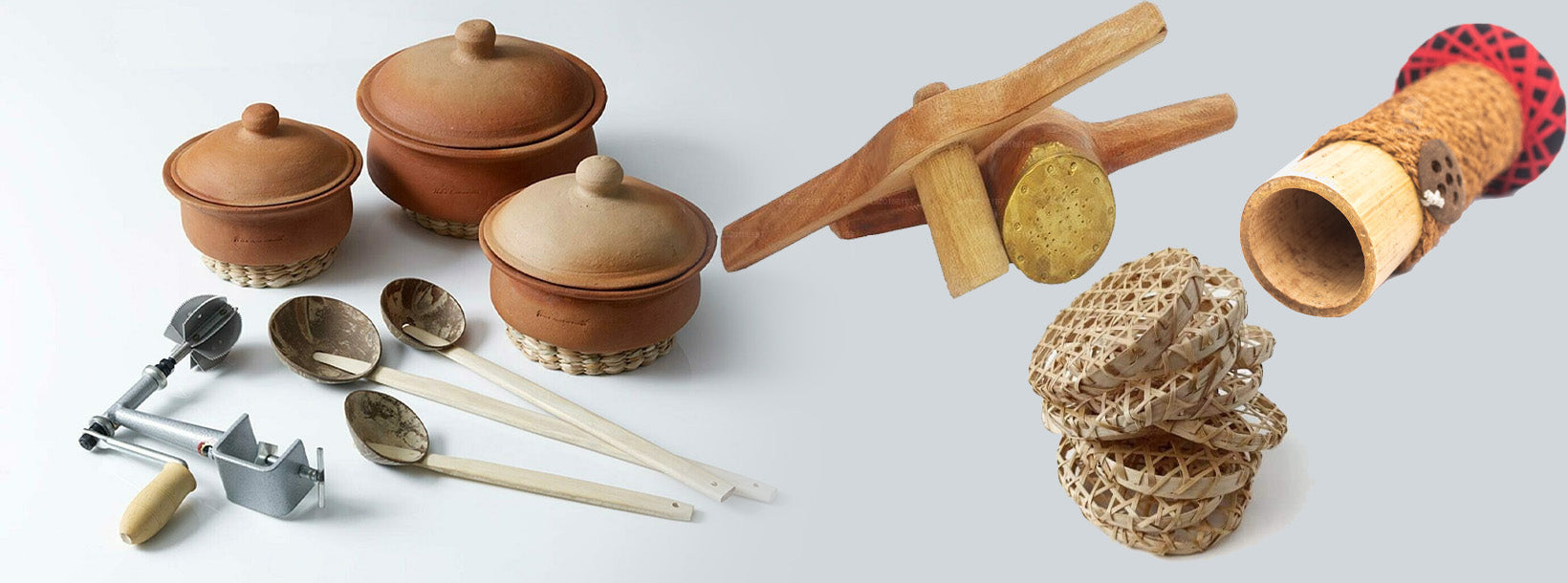
Handmade from the shell of the coconut palm, these spoons are carved in a range of sizes to suit everything from stirring large pots of curry to serving individual portions. The shell's natural curvature creates a deep bowl that holds liquid well, and its low thermal conductivity means the handle stays cool even when the bowl is submerged in a simmering curry.

Plastic and metal spoons are widely available and far cheaper, but coconut shell spoons neither react with acidic ingredients nor impart any taste of their own. They also last for years when kept dry between uses. Small producers still make them by hand in villages across the island.

How does the hiramanaya (coconut scraper) work?

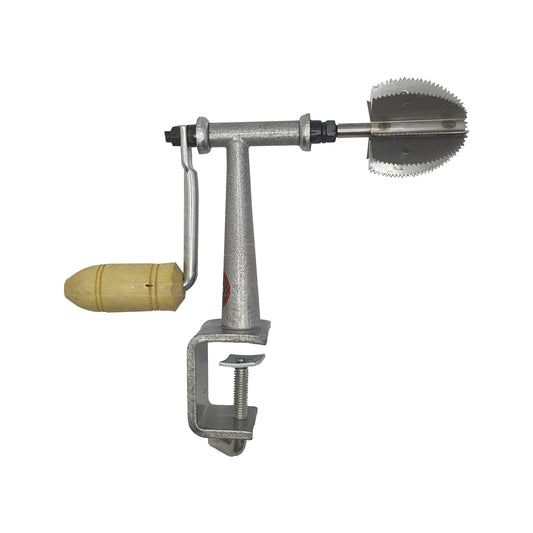
Grated coconut and fresh coconut milk are foundational ingredients in Sri Lankan cooking — used in curries, sambols, sweets, and rice dishes. The traditional tool for producing both is the hiramanaya, a wooden seat fitted with a serrated metal disc at one end. The cook sits on the bench and holds half a coconut against the spinning or stationary disc, scraping out the flesh in fine, dry shreds.

The resulting grated coconut can be used directly or squeezed through a cloth with water to extract coconut milk. Electric scrapers and pre-grated coconut are now common in cities, but the hiramanaya extracts flesh more thoroughly and with greater control over texture. Many Sri Lankan households still keep one, and it is a common sight at rural markets.

Why do clay pots produce better curries?

Clay pots — known locally as walang — have been used in Sri Lankan cooking long enough to be considered inseparable from certain dishes. The porous walls of an unglazed clay pot absorb moisture and release it slowly during cooking, creating a subtly humid environment inside the pot that keeps food from drying out. The material also retains heat evenly and cools slowly, which suits long-simmered curries.

Beyond heat management, food cooked in clay develops a distinctive earthiness that metal pots cannot replicate. The alkaline nature of clay also slightly reduces the acidity of tamarind-based and coconut-based sauces. Clay pots can go directly onto an open flame, which makes them practical as well as traditional, and they move straight from the fire to the table for serving.

  • Unglazed pots should be seasoned with oil before first use and dried thoroughly after washing.
  • Avoid sudden changes in temperature — letting the pot warm gradually over low heat prevents cracking.
  • Clay pots are particularly associated with fish curries, dhal, and slow-cooked meat dishes.

What is an indiyappam wangediya, and how does it work?

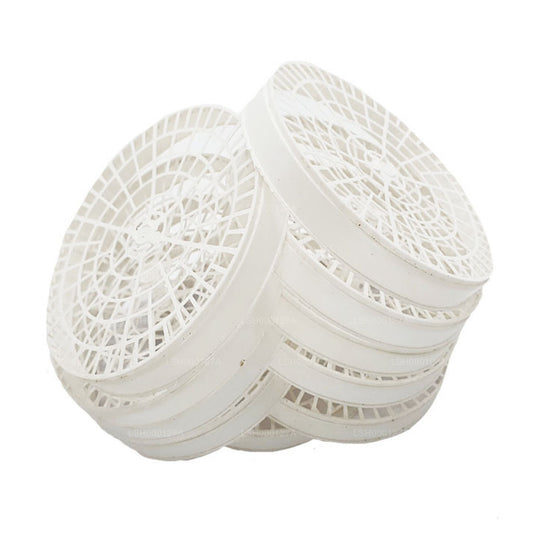
String hoppers (indiyappam) are delicate rice noodle rounds eaten at breakfast with coconut milk and curry. They are made using a string hopper press — a cylindrical metal tube fitted with a disc pierced with fine holes. The cook fills the tube with a soft rice flour dough, then presses a plunger through it, extruding thin strands of dough in a circular motion onto a small woven mat. The filled mats are then stacked in a steamer.

The press is the only practical way to produce the characteristic fine-strand texture. Hand-pressing the dough through the disc requires some technique — the pressure must be even, and the circular movement consistent — but the tool itself is simple, inexpensive, and found in most Sri Lankan homes that prepare string hoppers regularly.

What is pittu bamboo and what does it do?

Pittu is a cylindrical steamed dish made from a crumbled mixture of rice flour and grated coconut. In the traditional method, the mixture is packed loosely into a section of bamboo and placed upright over a pot of boiling water. Steam passes through the bamboo, cooking the pittu gently from the outside in.

Aluminium pittu moulds have largely replaced bamboo in urban kitchens, and they are easier to clean and more durable. However, bamboo is a natural insulator that distributes steam evenly, and cooks who have used both often note that bamboo-steamed pittu has a slightly lighter, more even texture. Some argue the bamboo also contributes a faint woody fragrance to the finished dish, though this is subtle.

What are the guruletthuwa and kala gediya?

Before refrigeration and piped water were widely available, keeping drinking water cool was a practical challenge in a tropical climate. The guruletthuwa — a rounded, wide-mouthed earthenware pitcher — solved this through the natural physics of evaporative cooling. Fired clay is porous enough that a small amount of stored water migrates to the outer surface and evaporates, drawing heat from the water inside and keeping it several degrees cooler than the surrounding air.

Water was typically fetched from a well or river using the kala gediya, a taller, narrower earthenware pot designed for carrying. The kala gediya would be brought home and emptied into the guruletthuwa for overnight storage. By morning the water was noticeably cooler, and the clay also imparted a clean, mineral taste that many Sri Lankans associate with refreshment in a way that plastic containers simply do not.

Both vessels are still made by potters in several parts of the country, and the guruletthuwa in particular has seen renewed interest as households rediscover its practical cooling effect without electricity.

Where can traditional Sri Lankan utensils be found today?

Most traditional utensils are sold at weekly pola markets held in towns across the island, as well as at craft shops near major heritage sites. Clay pots are particularly associated with pottery villages in the North Central Province, some of which have been producing the same forms for generations. The utensils described here represent continuity with a culinary tradition that predates written recipes — and using them, even occasionally, changes how food tastes and how cooking feels.

Book this experience with Lakpura

Curated by our local team. Direct booking, instant confirmation.

Ask Lakpura® Agent