Few objects in Sri Lanka carry as much cultural weight as the drum. Across millennia, the beat of a drum has marked the arrival of a king, opened a temple ceremony, driven dancers into ritual, and signalled the rhythm of the harvest. The island's drumming traditions are not a relic of the past — they remain a living, practised craft, sustained by communities of skilled artisans who have passed their knowledge from one generation to the next with virtually no interruption.
How old is Sri Lanka's drumming tradition?
The Mahavamsa, Sri Lanka's ancient chronicle written in Pali, records musical performances taking place in the island from early in the Common Era. By the medieval period, royal courts maintained specially appointed officials to oversee the performing arts, including music, dance, and song. Court records make specific reference to performers who played drums and trumpets — known as tamboru purampettukara — both in glorification of the king and on ceremonial occasions.
The classical five-fold instrumental ensemble, the panchaturya bhanda, grouped instruments into percussion, cymbals, flutes, and wind and brass. Drums anchored this ensemble then, as they anchor Sri Lankan ceremonial music today. Music was treated as a serious discipline; codes and principles governed its study and performance, giving the craft both artistic and scholarly standing.
What role do drums play in Sri Lankan culture?
Drums have historically served multiple, overlapping functions in Sri Lankan life. On the battlefield, they were used to communicate commands and instil courage. In religious contexts, drumbeats were believed to confer auspiciousness and solemnity — a belief that continues to shape how Buddhist and Hindu ceremonies open and close across the island today. At harvest festivals, the drum marked the rhythm of communal labour and celebration.
Perhaps the most persistent association is between drums and dance. Each of Sri Lanka's major dance traditions is paired with its own drum type: the instrument shapes the dancer's movement, and the dancer shapes the drummer's phrasing. This interplay is most visible during the Esala Perahera Festival in Kandy, one of the largest and oldest pageants in Asia, where drummers and dancers perform together in procession over ten nights.
What are the main types of drums used in Sri Lanka?
Sri Lanka's drum vocabulary is wide, and each instrument carries its own geography, occasion, and technique:
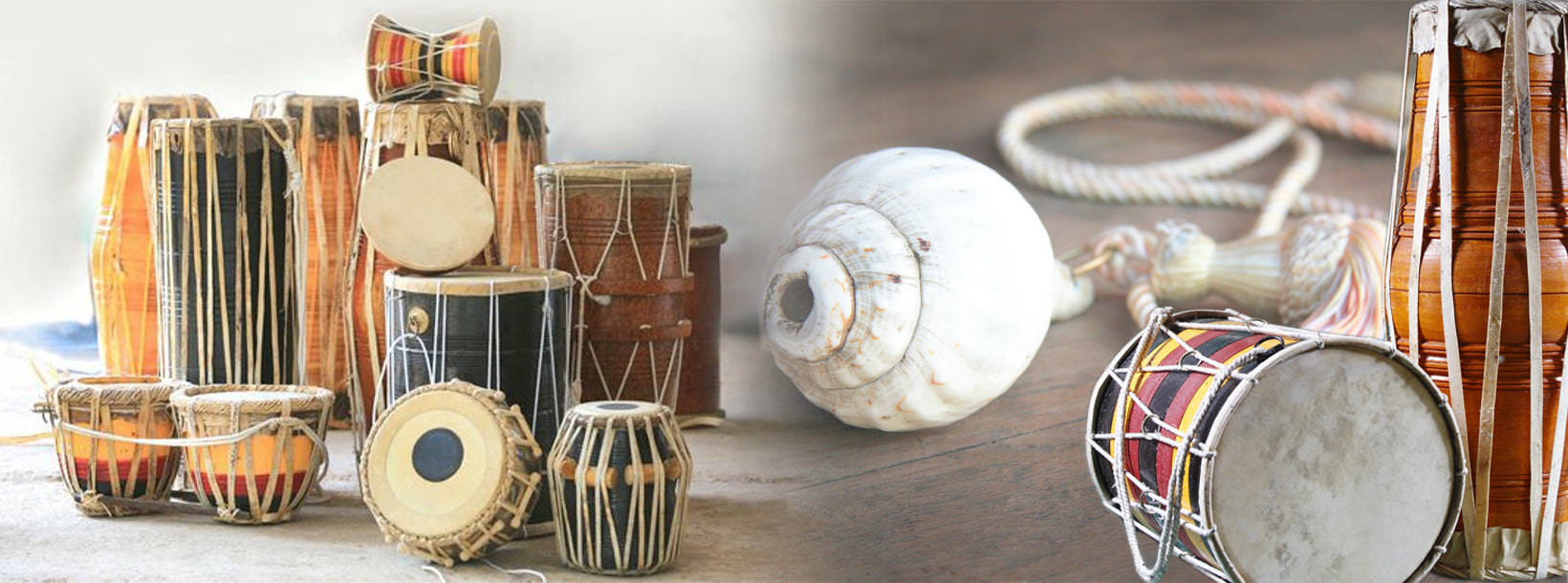
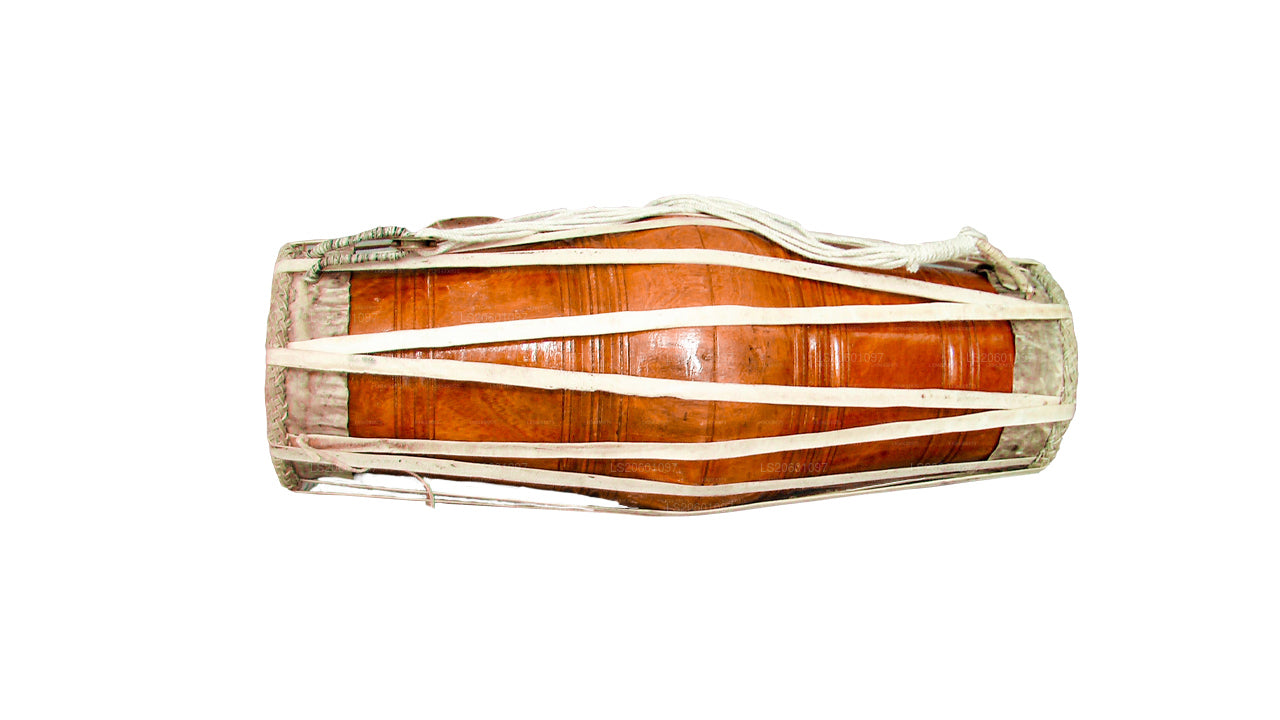
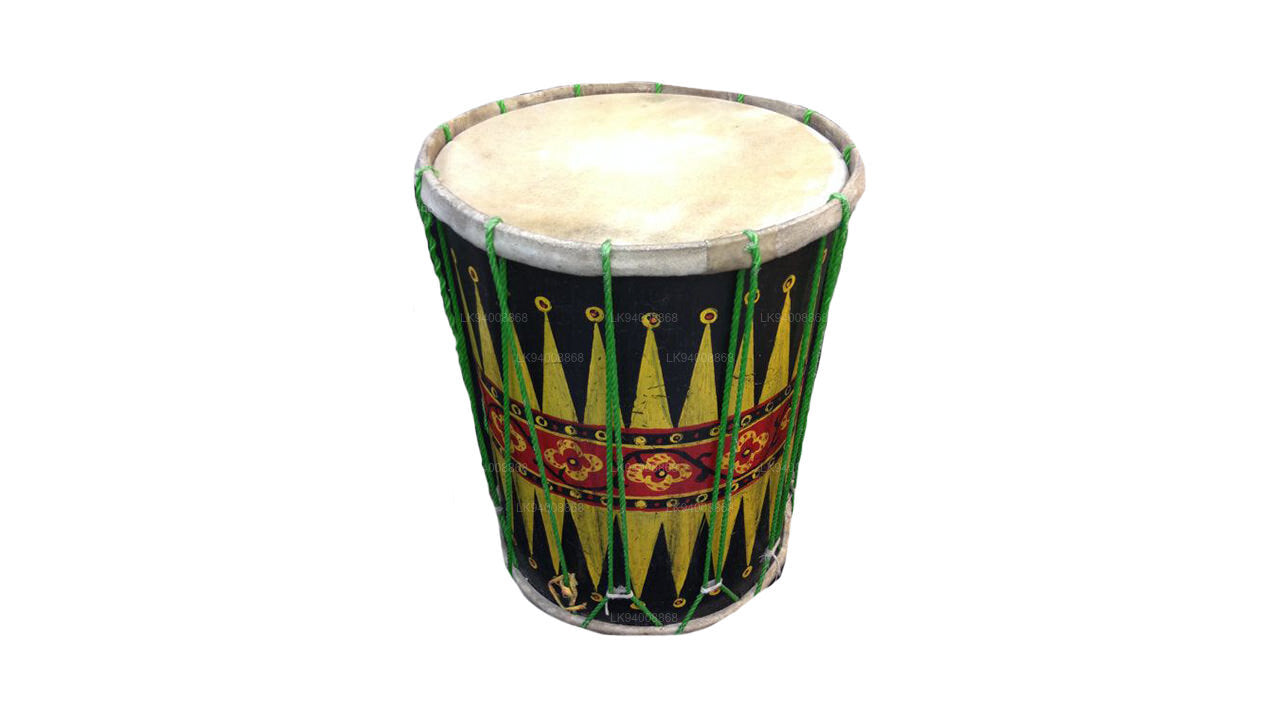
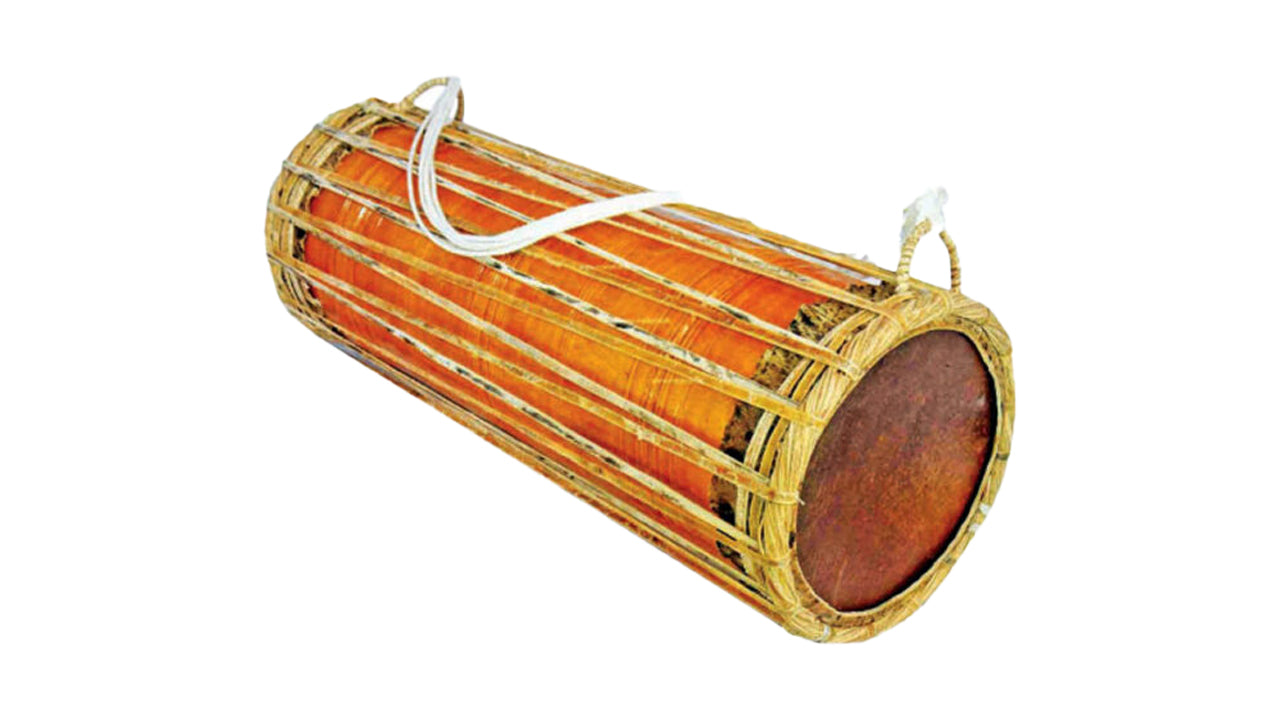
- Geta beraya (magul beraya): The emblematic drum of Kandyan culture. Double-headed, barrel-shaped, and typically played slung around the neck, the geta beraya is the heartbeat of Kandyan dance performances and temple processions.
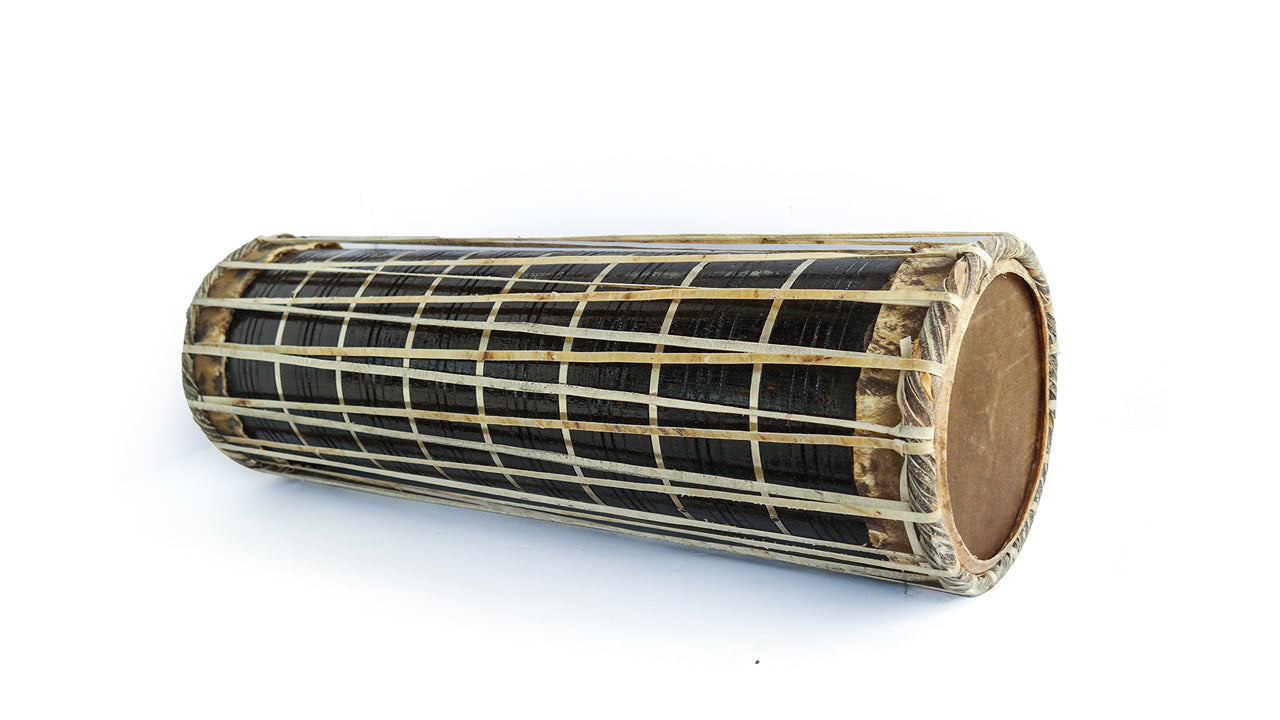
- Davula: Associated with the Sabaragamuwa province, the davula is played alongside the horanava trumpet as part of the hevisi ensemble performed at Buddhist functions.
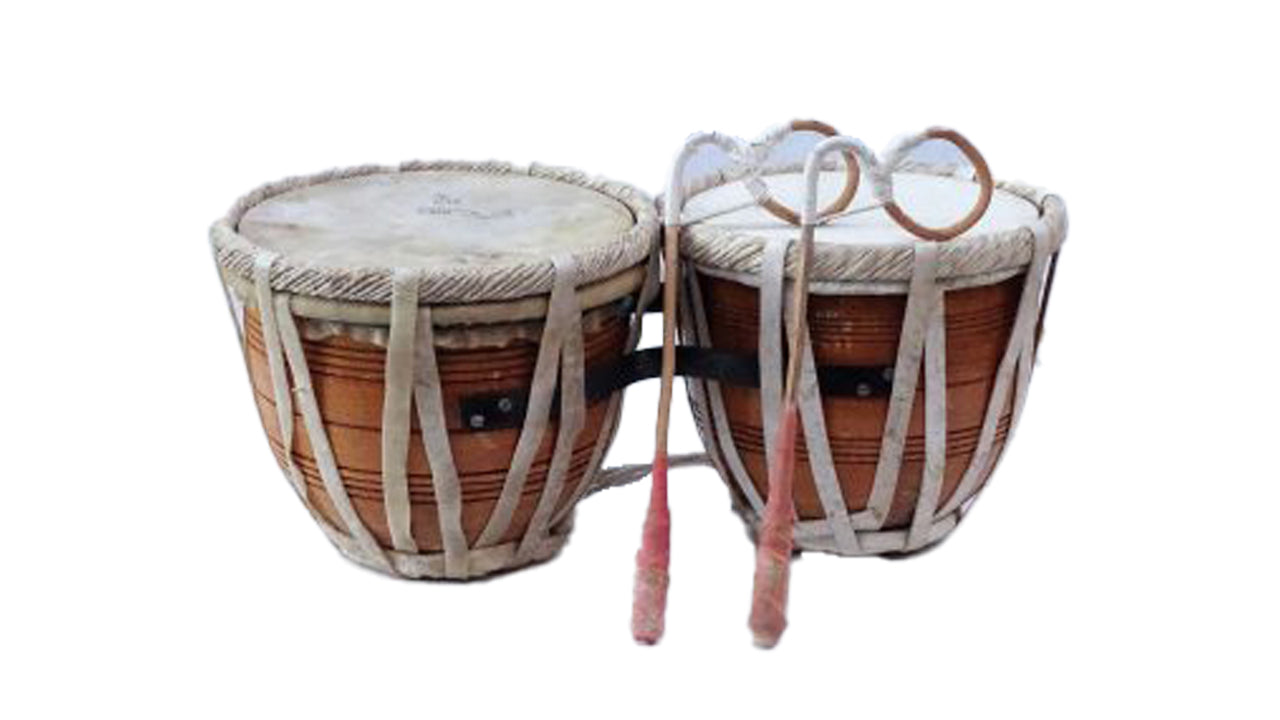
- Tammattama: A pair of kettledrums played together, also part of the hevisi ensemble. The combination of davula, tammattama, and horanava forms a recognisable sound world at temple rituals across the island's interior.
- Ruhunu beraya (yak beraya): The southern coastal counterpart to the Kandyan geta beraya. Also known as the yak beraya, this drum is particularly associated with exorcising rituals (thovil), where it drives the long, dramatic ceremonies used to dispel illness and misfortune.
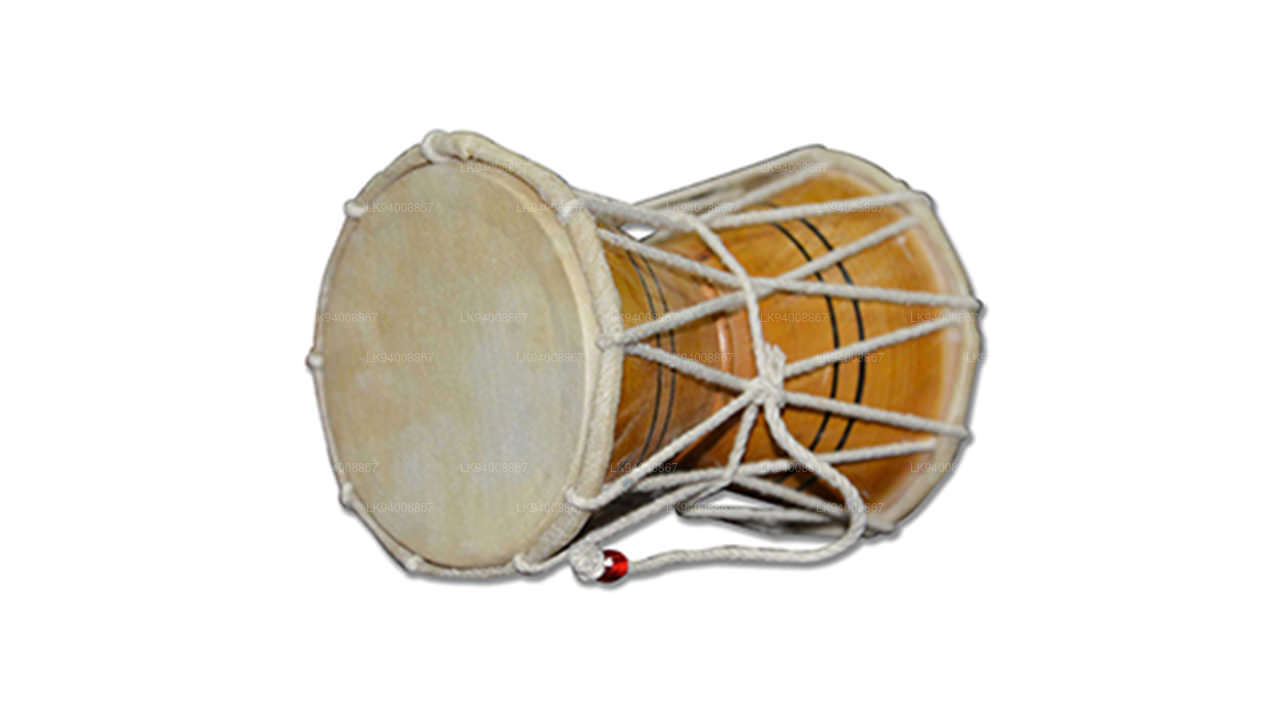
- Udekki: An hourglass-shaped drum, smaller and more delicate than the others. Dancers in the Esala Perahera hold the udekki and play it while moving, making it one of the few Sri Lankan drums that is both a musical and a performative prop. Its form closely resembles the north Indian damaru.
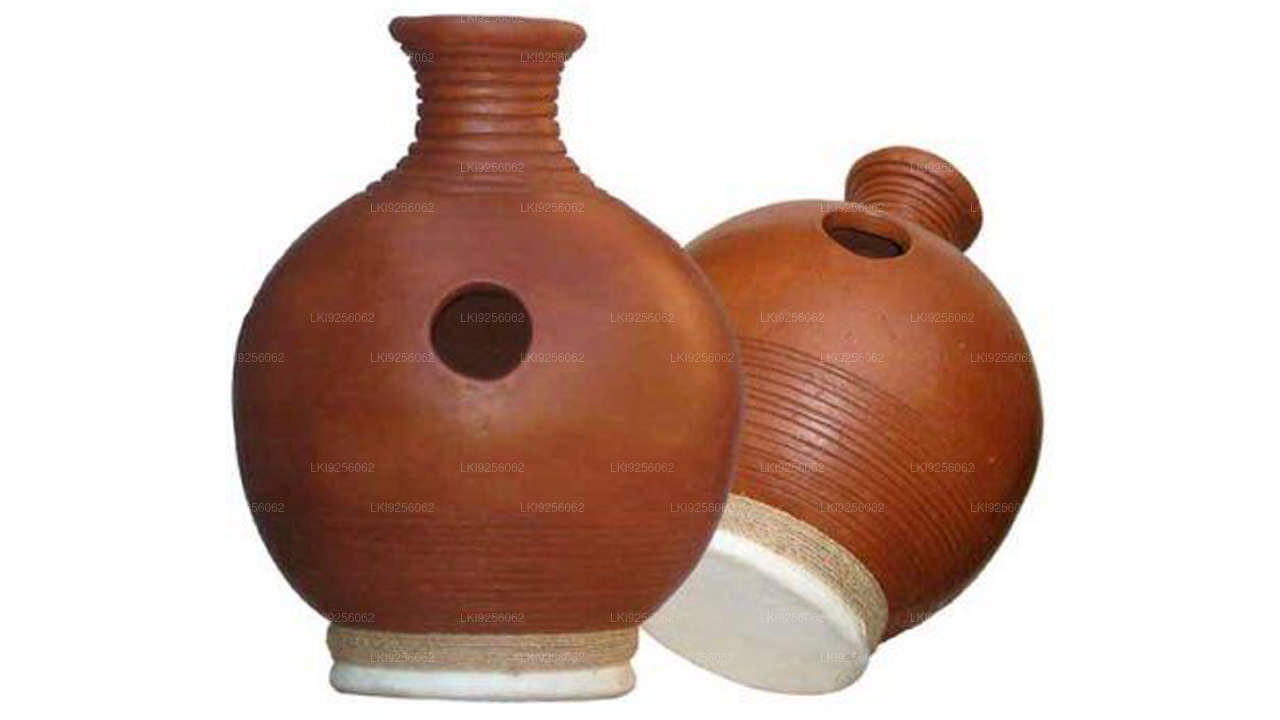
- Bummadiya: A pot drum fashioned from clay and covered with iguana skin. Played at harvest festivals, it shares clear kinship with the Dravidian pot drum tradition of South India, reflecting centuries of cultural exchange across the Palk Strait.
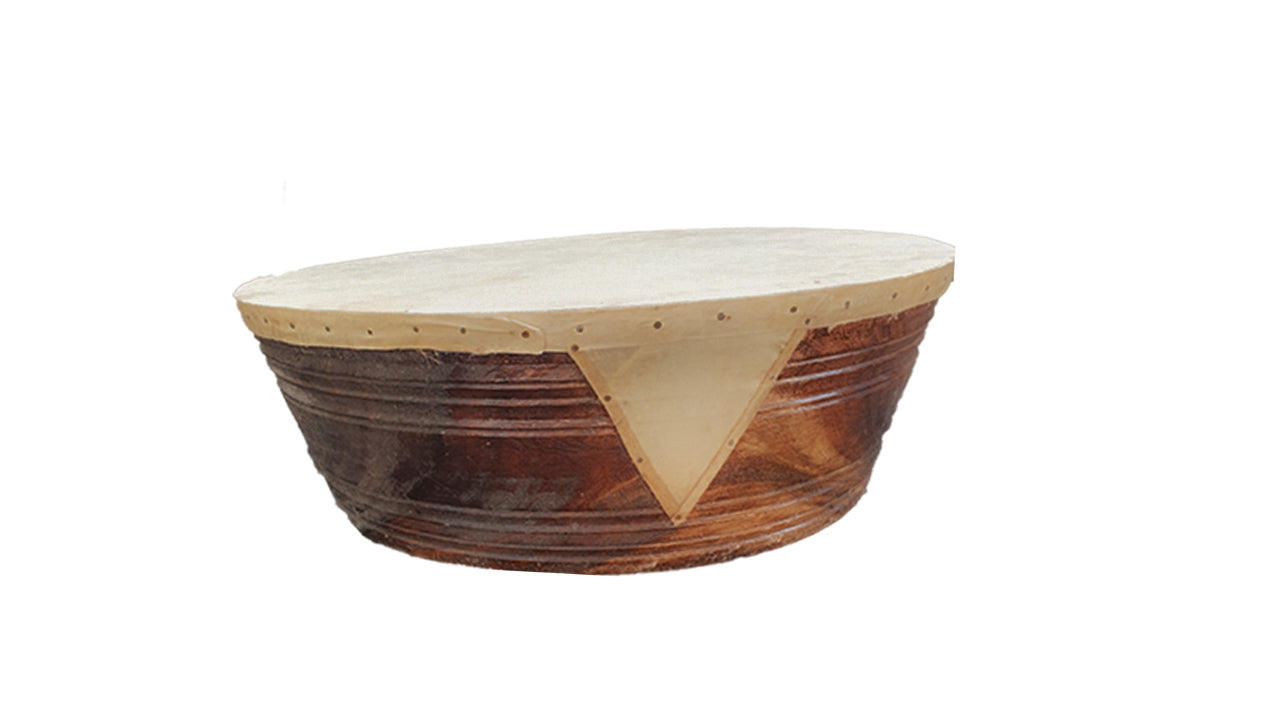
- Rabana: A flat, frame drum similar to a tambourine, played in groups by village performers, often women. The form parallels the Malaysian rabana, pointing to older maritime trade connections across the Indian Ocean world.
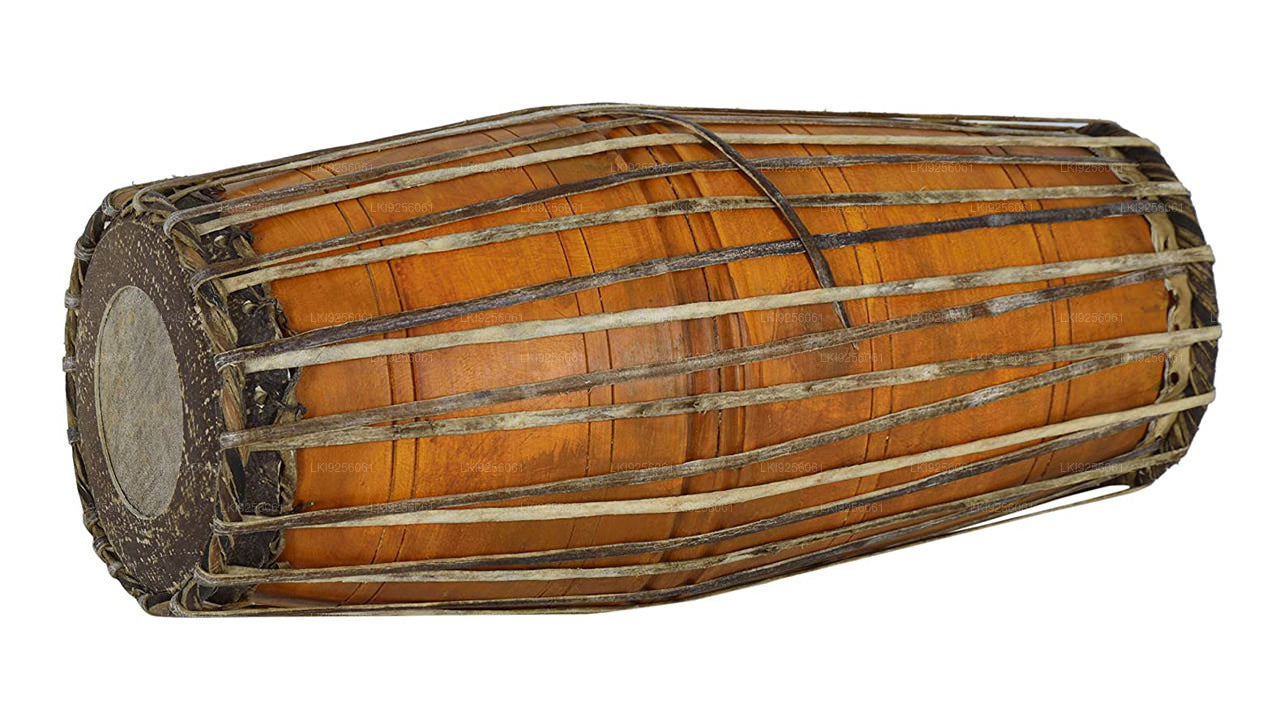
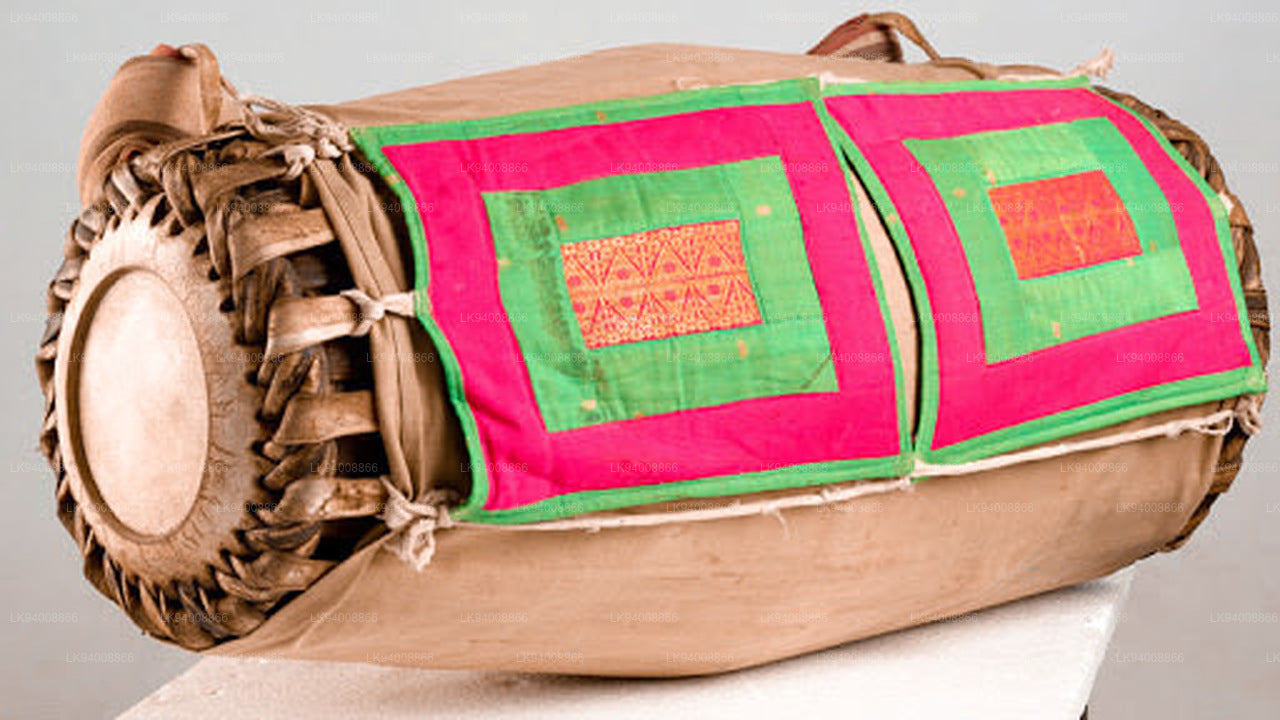
- Maddala: Likely of south Indian origin, the maddala provides the rhythmic foundation for nadagam — the folk theatre tradition performed by both rural troupes and urban theatre companies.
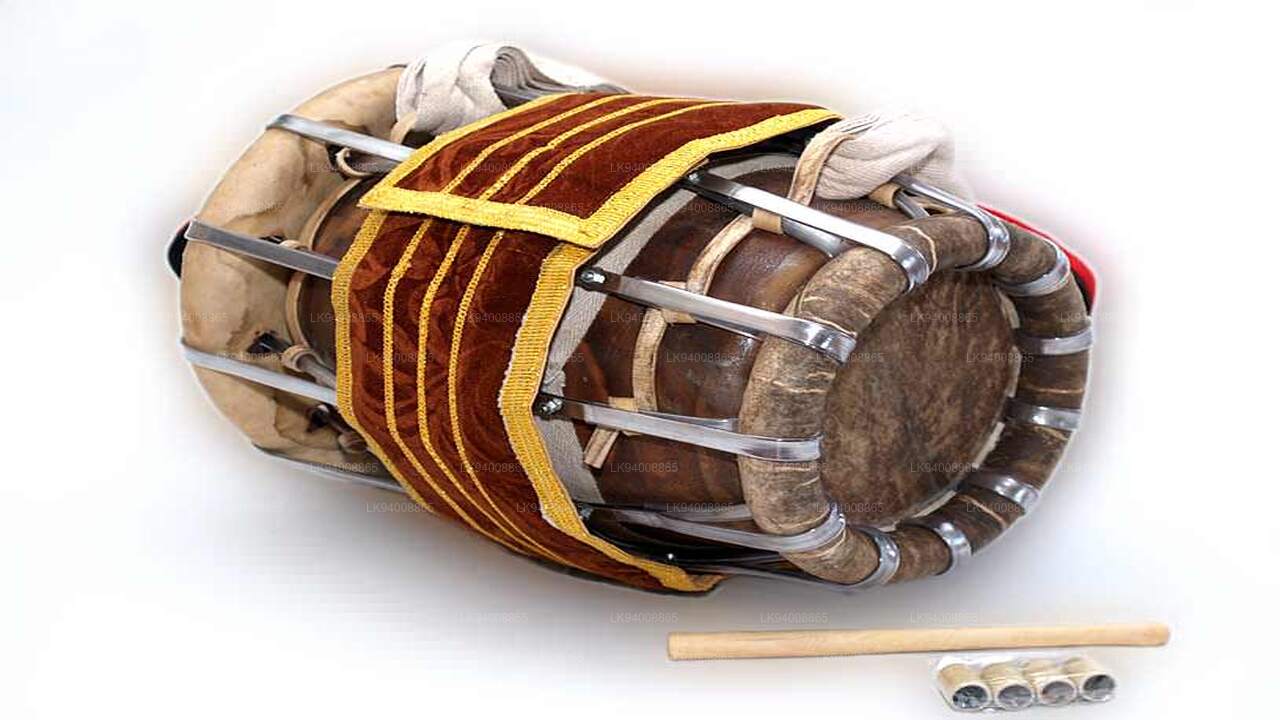
- Mrdanga: Indian in origin and well-integrated into local musical life, the mrdanga is used in performances of Bharatanatyam, the classical south Indian dance form that has long had a dedicated following in Sri Lanka.
What is striking about this list is how openly it acknowledges foreign influence. Sri Lankan drum culture did not develop in isolation — it absorbed instruments and techniques from India, Southeast Asia, and beyond, then adapted them into something distinctly local. The borrowed forms have, over generations, become as Sri Lankan as the indigenous ones.
How are traditional Sri Lankan drums made?
Drum-making is a skilled craft that demands both technical precision and sensory judgement. The drum body — typically a carved wooden shell — must resonate correctly, and the skins stretched across each head must be tensioned to produce the right timbre. Getting both elements right requires years of training; the knowledge is transmitted within families and communities, not through formal institutions.
The choice of wood is fundamental. Drum-makers in Sri Lanka work with several species selected for their acoustic and structural properties:
- Jak (Artocarpus heterophyllus): Widely used for drum shells; its dense grain produces a warm, full resonance.
- Kitul (Caryota urens): A palm wood prized for its hardness and durability. Kitul is also tapped for its sweet sap — a tradition documented on our kitul tapping page.
- Mara (Albizia moluccana): A large, fast-growing timber with good acoustic qualities.
- Coconut (Cocos nucifera): The hard outer shell of the coconut palm is used in smaller drum constructions; the wood offers brightness of tone.
- Suriya (Thespesia populnea): Used occasionally; valued for its fine grain and workability.
Animal skins — traditionally from cattle, deer, or iguana — are soaked, scraped, and dried before being applied to the drum head. The tension is adjusted using lacing or tuning paste, a mixture that differs between regions and between drum types. Even the climate of the workshop matters: Sri Lanka's humidity affects how skins cure and how wood behaves, and experienced craftspeople factor this into every stage of the process.
The instruments intended for professional drummers playing hevisi music — the davula, tammattama, and kettle drums — require the most exacting standards, since they must hold pitch and tone across long outdoor ceremonies in variable conditions.
Where is traditional drum-making practised today?
Drum-making communities are concentrated in the Central Province around Kandy, in the Sabaragamuwa Province, and in parts of the Southern Province. Kandy, as the historic seat of the last Sinhalese kingdom and the home of Kandyan dance, naturally became a centre for the craft. Visitors staying in or passing through Kandy can observe drum-making workshops and, during the Esala Perahera season, hear the full range of Sri Lankan drums performed at their most ceremonial.
The Kandy Tourist Information Center can direct visitors to craft demonstrations and cultural performances where drumming is central.
How does drumming connect to Sri Lanka's dance traditions?
Sri Lanka's three main dance schools — Kandyan (Udarata), Low Country (Pahatharata), and Sabaragamuwa — each have their own drum. The geta beraya is inseparable from Kandyan dance; the ruhunu beraya drives Low Country exorcism rituals; the davula anchors the Sabaragamuwa repertoire. A drummer is not simply an accompanist — in many traditions, the drummer leads the performance, and dancers orient their steps to the drum's phrasing.
The udekki holds a particularly distinctive place: dancers carry and play it simultaneously, making it an instrument of expression as much as rhythm. This dual role — visual object and sound-maker — is characteristic of how Sri Lankan performance art often refuses the separation between music and movement.