Lakpura
Lakpura®

Kudumbigala Monastery

Kudumbigala Monastery is one of Sri Lanka's most remote and archaeologically significant Buddhist heritage sites. Nestled within the Kudumbigala Sanctuary in the Ampara District of the Eastern Province, this ancient monastic complex dates to around 246 BC — the reign of King Devanampiyatissa, the monarch who formally received Buddhism into Sri Lanka. Rediscovered after centuries of near-total obscurity, Kudumbigala now stands as a compelling destination for travellers drawn to early Theravada Buddhism, forest hermitages, and the quiet authority of places that history has largely left alone.

What is the history of Kudumbigala Monastery?

Archaeological evidence places the founding of Kudumbigala in the 3rd century BC, during the same era that saw the construction of great monuments at Polonnaruwa and across the ancient cities of the north-central plains. The site takes its name from the surrounding sanctuary and is set across a dramatic landscape of exposed rock boulders and dense tropical jungle — a classic setting for an aranya, or forest hermitage, of the early Sangha.

A rock inscription found inside the cave known as Maha Sudharshana Lena records that the cave was constructed and offered to the Arhats by Nandimitra, one of the legendary Ten Giant Warriors who served under King Dutugemunu. This inscription places Kudumbigala within the heroic narrative of ancient Sri Lankan kingship, linking it to one of the most celebrated periods in the island's Buddhist history.

Archaeologists working the site have documented more than 200 rock caves, each bearing traces of early monastic occupation — drip-ledge cuttings above cave entrances, inscriptions in Brahmi script, and structural remains that confirm sustained habitation over several centuries. The site remained largely unknown to the wider world for an extended period before its modern rediscovery, a fact that has helped preserve its raw, unrestored character.

What makes Kudumbigala architecturally unique?

Among Kudumbigala's most distinctive features is its stupa. The cylindrically shaped dagoba located within the complex is, as far as current scholarship confirms, the only structure of its particular form in Sri Lanka. Most Sri Lankan stupas follow a hemispherical or bell-shaped profile derived from Indian prototypes; the cylindrical form at Kudumbigala represents either a rare local variation or a very early experimental form, and it continues to attract the interest of architectural historians and Buddhist scholars.

The natural topography of the site is itself part of its character. Large granite boulders form the walls and ceilings of caves that monks shaped into livable cells, adding carved drip-ledges to divert rainwater, smoothed floors, and, in some cases, inscribed dedications. The effect is a monastic settlement that feels organically grown from the landscape rather than imposed upon it — a quality that marks the finest of Sri Lanka's early stupa and cave traditions.

Where is Kudumbigala located and how do I get there?

The monastery lies within the Kudumbigala Sanctuary in the Ampara District, Eastern Province. The nearest settlement of any size is Panama, a coastal village that also serves as a gateway to the wider Kumana–Yala coastal ecosystem. The road access from Colombo or from the Southern Highway typically involves travelling through Monaragala and then east toward Panama — a journey of several hours that crosses progressively wilder terrain.

Because the site sits inside a protected sanctuary and the surrounding roads are rough, a private vehicle with a knowledgeable driver is strongly recommended. Public transport connections to this part of the east are limited, and the final approach to the monastery may require a short walk across uneven ground. Early morning visits are advisable: the rock surfaces heat significantly in mid-morning sun, and wildlife — including elephants — is most active in cooler hours.

What can I see and do at Kudumbigala Monastery?

A visit to Kudumbigala rewards patience and a willingness to explore. Key features include:

  • The rock caves: Over 200 documented cave cells, many still bearing Brahmi inscriptions. Some are accessible on a self-guided walk; others require scrambling over boulders.
  • The cylindrical stupa: The monastery's most singular monument — small in scale but architecturally unique in the Sri Lankan canon.
  • Maha Sudharshana Lena: The principal cave, notable for the rock inscription referencing the warrior Nandimitra. The inscription is an important primary historical document.
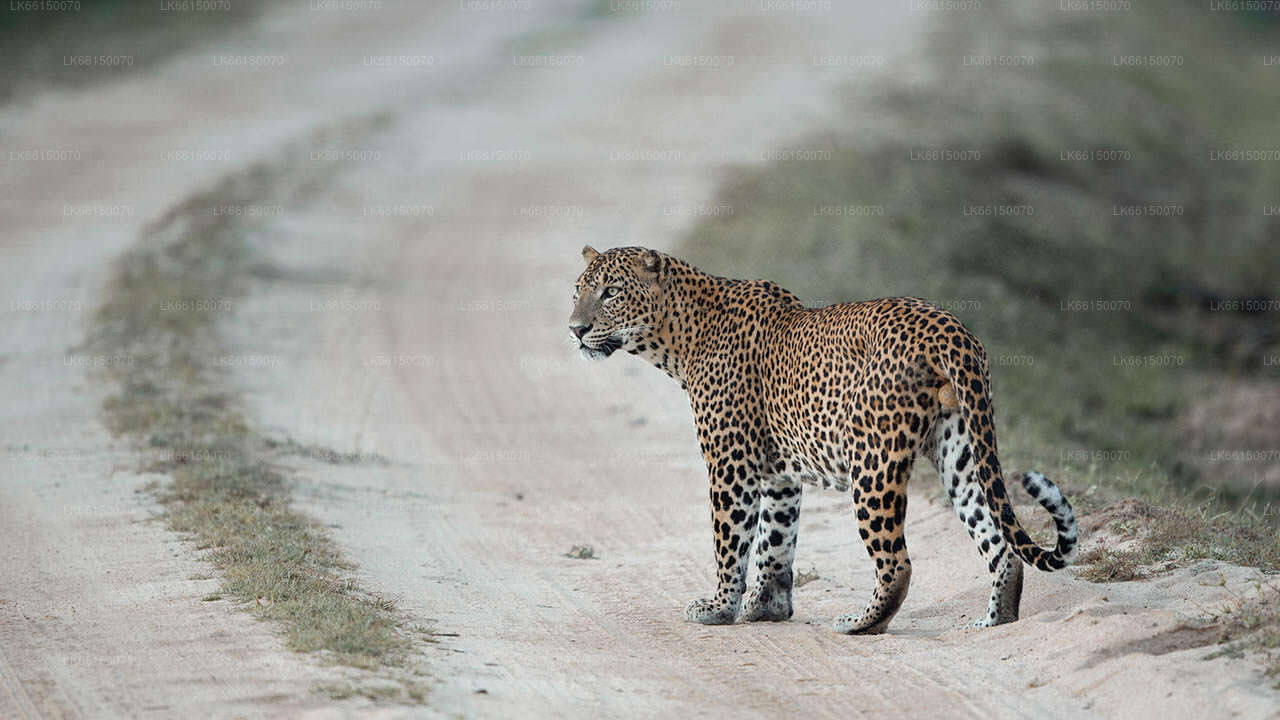
  • Forest and wildlife: The surrounding sanctuary supports a range of fauna typical of the dry-zone east, including elephants, peacocks, and various raptors. The thick jungle creates a dramatic backdrop and ensures that the site feels genuinely isolated.
  • Summit views: The rocky outcrops above the cave level offer long views across the coastal plain toward the Kumana lagoon system and the Indian Ocean — particularly striking at dawn.

Is Kudumbigala Monastery still an active religious site?

The monastery's recent history has been shaped by the conflict that affected much of Sri Lanka's Eastern Province during the civil war years. The complex was abandoned in the 1990s following violence in the surrounding area and remained without permanent resident monks for an extended period. In the years since the end of the conflict, the site has been gradually reoccupied by forest-dwelling monks, and it functions once again as a meditation hermitage in the traditional aranya style.

Visitors should behave accordingly: dress modestly (shoulders and knees covered), speak quietly, and ask before entering any occupied cave or shrine space. Photography of monks or religious rituals should not be undertaken without consent. The site is not a managed tourist attraction with admission booths or guided tours — it is a living, if remote, place of worship and practice.

When is the best time to visit Kudumbigala?

The Eastern Province receives its main rainfall between October and January from the northeast monsoon. The driest and most comfortable period for visiting the east coast generally runs from April through September, when skies are clearer and roads more reliably passable. During wetter months, the jungle tracks leading to the monastery can become difficult, and flash flooding is possible in low-lying sections.

Combining Kudumbigala with a visit to Pigeon Island or the wider Kumana National Park area makes practical sense given the distances involved — the Eastern Province repays a dedicated multi-day itinerary rather than a rushed day trip from the south or west coast.

How does Kudumbigala compare with other ancient cave monasteries in Sri Lanka?

Sri Lanka has a remarkable tradition of rock-cave monasteries stretching back to the 3rd century BC, when the arrival of Buddhism prompted royal patronage of cave hermitages across the island. Sites such as Dambulla and Ritigala are better known and more visited; Kudumbigala occupies a different niche — less restored, less touristed, and arguably more atmospheric for precisely those reasons.

Its location in the Eastern Province also means it carries the particular character of the dry-zone littoral landscape: open scrub forest, lagoons, large rock formations, and a quality of light that differs noticeably from the lush highlands or the crowded Cultural Triangle. For travellers who have already seen the headline sites and want something that feels genuinely discovered, Kudumbigala is one of the more rewarding options the island offers.

Book this experience with Lakpura

Curated by our local team. Direct booking, instant confirmation.

Ask Lakpura® Agent