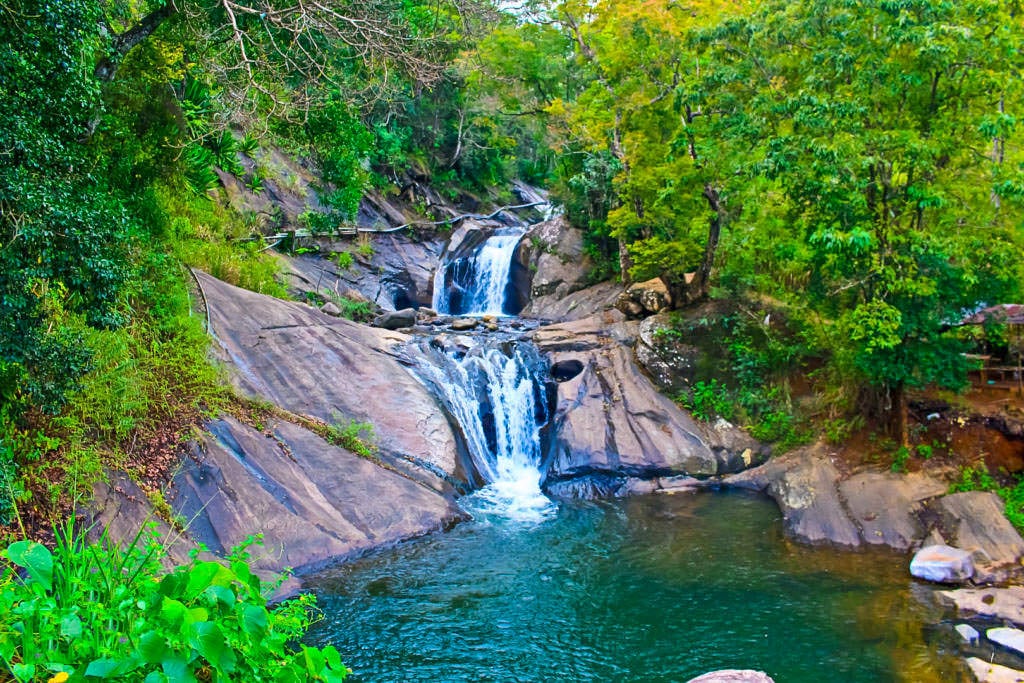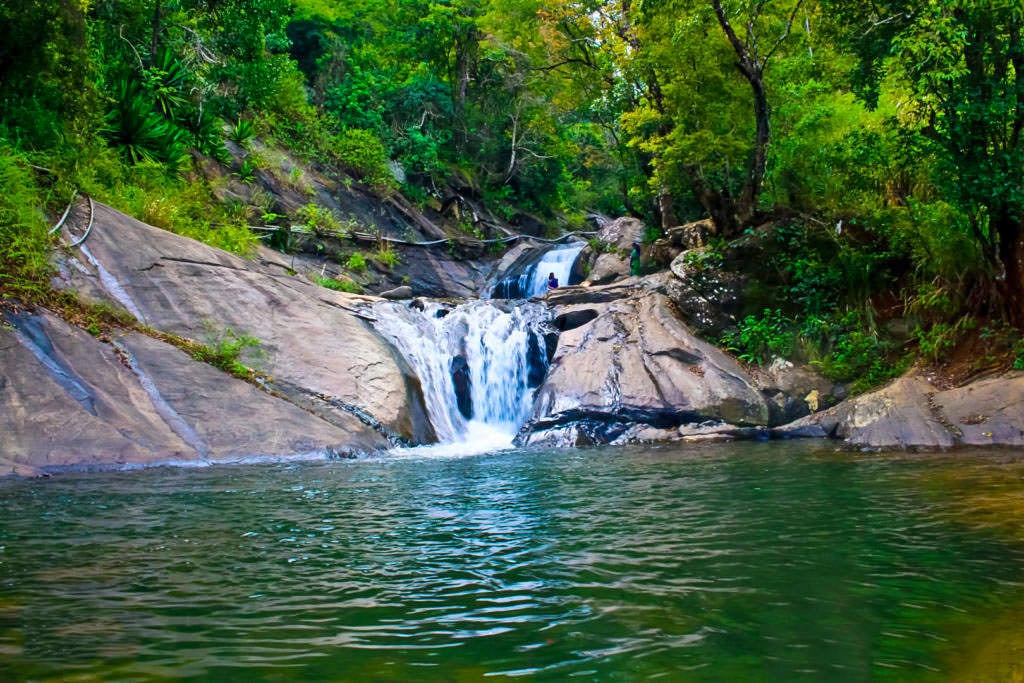

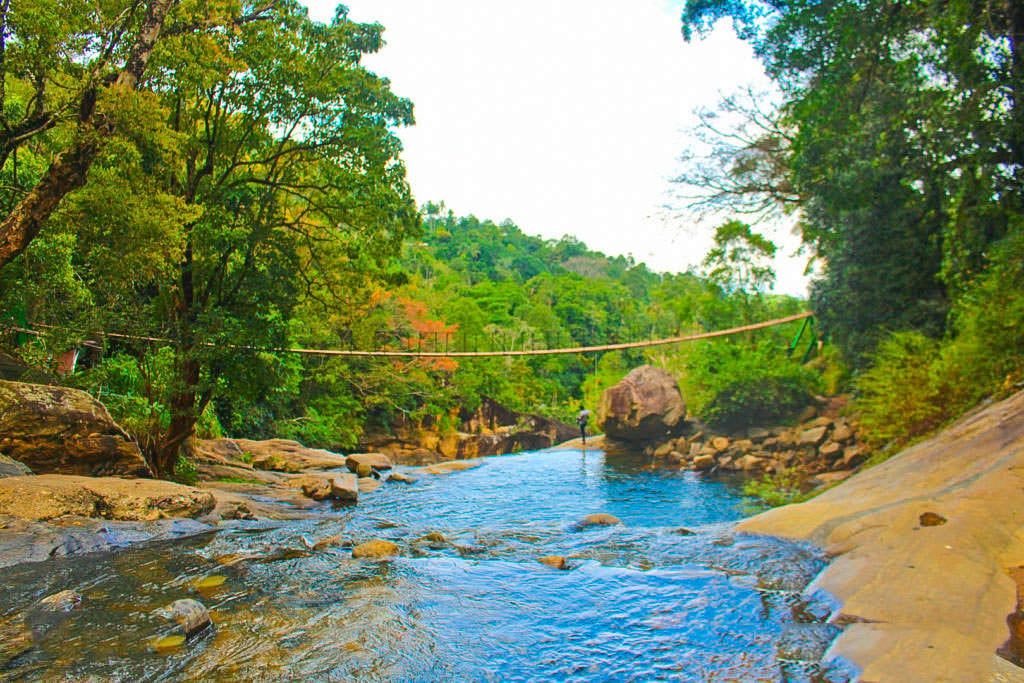
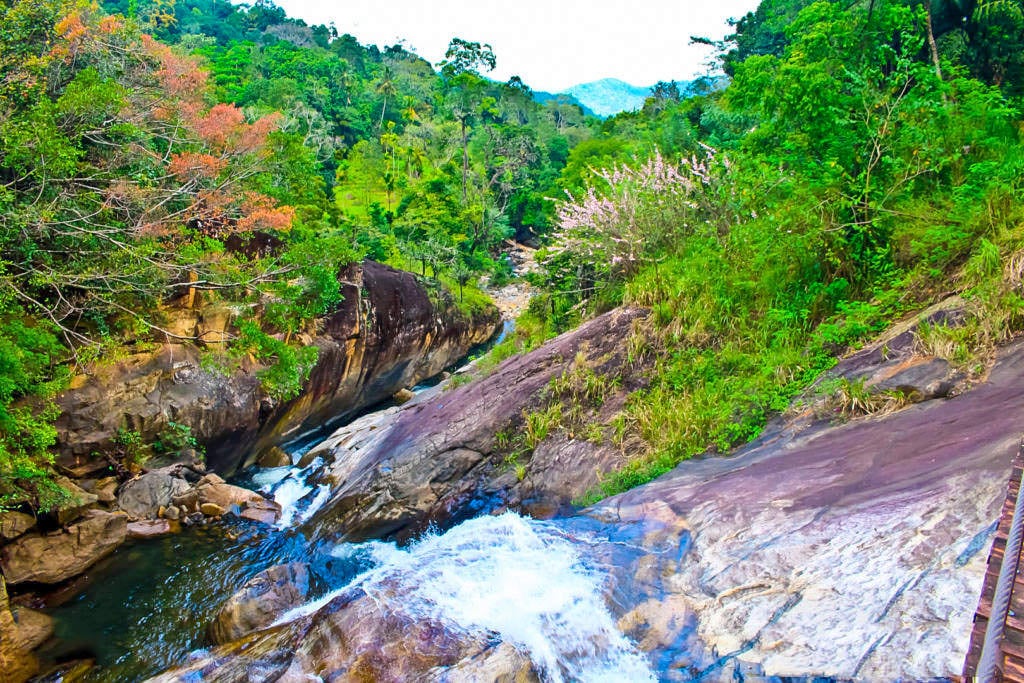

Tucked into the foothills of the Knuckles mountain range, Bambarakiri Ella Falls is one of Matale District's quieter rewards. The fall drops roughly 10 metres in three distinct tiers, landing in a natural rock pool that is safe for bathing when water levels are low. A century-old suspension bridge arches over the gorge nearby, adding a sense of time and place that more famous waterfalls in Sri Lanka rarely offer.
Where exactly is Bambarakiri Ella Falls?
The falls sit about 16 km from Matale town along the Matale–Pallegama–Hasalaka mountain road. Rattota town is the nearest settlement — the waterfall is roughly 5 km uphill from there, and the track to the falls begins around 200 m from a clearly marked bend in the road. The Knuckles Conservation Forest frames the entire valley, so the approach through paddy terraces and spice gardens feels like a journey in itself.
Visitors travelling from Kandy can reach Rattota in under an hour by road, making the falls a practical half-day excursion. A Kandy city tour pairs well with a morning drive to Bambarakiri Ella on the same day, as both are within comfortable reach of the central highlands.
What does the waterfall look like?
The cascade splits into three clearly defined sections as it descends the rock face, each ledge slowing the water slightly before it rushes forward again. The volume changes with the seasons — during the inter-monsoon months the fall roars with considerable force, while in drier spells it softens into a photogenic curtain of white water. The surrounding canopy stays green year-round thanks to the Knuckles micro-climate, which means the setting rarely looks dull regardless of when you visit.
An old suspension bridge — weathered timber and steel cable — spans the stream just downstream, giving a natural vantage point from which to photograph all three tiers at once. Early mornings are particularly rewarding: various butterfly species and endemic birds move through the clearing in the first two hours after dawn.
Is the rock pool safe for swimming?
The basin at the foot of the falls is deep enough for a comfortable dip and the rocks are fairly stable underfoot during dry weather, typically from late January through April and again in July and August. During the southwest monsoon (May to July) and the northeast monsoon (October to January) the pool can surge rapidly after upstream rain — conditions that are difficult to predict from the base. Exercise caution and check local weather before swimming. Children should not enter the pool without adult supervision at any time of year.
Is there a trail to the top of the falls?
A steep, largely unmarked path climbs approximately 5 km from the base to the top of the waterfall. The gradient is sharp, the surface slippery when wet, and sections require careful footing on exposed rock. Allow two to three hours for the ascent and descent combined, and do not attempt it alone. Those who reach the summit are rewarded with a panoramic view across the Knuckles ridge and a clear natural pool fed by the stream above the cascade — quieter and cooler than the lower basin.
- Wear trail shoes with grip, not sandals
- Carry at least one litre of water per person
- Start before 8 am to finish before the midday heat
- Inform someone of your plans before beginning the climb
- Avoid the trail entirely after heavy rain
What wildlife can you expect at Bambarakiri Ella?
The Knuckles range is a UNESCO-designated biosphere reserve and supports a high density of endemic species. Around the falls you can reasonably expect to see several species of dragonfly over the pool, groups of endemic purple-faced langur monkeys in the canopy, and a range of forest birds including the Sri Lanka green pigeon and the Layard's parakeet. Butterflies — including the blue oakleaf and the common birdwing — congregate near the mist on bright mornings. The Makandawa Rainforest to the south shares a similar ecology and makes a logical companion visit for wildlife-focused travellers.
How do I get to Bambarakiri Ella Falls?
The most straightforward option is a private vehicle from Kandy or Matale town. From Matale, follow the road towards Rattota, continue through the town for about 1 km, and look for the falls signage at the bend. Public buses run between Kandy and Matale regularly, and local three-wheelers from Matale or Rattota can take you to the trailhead. The road narrows considerably beyond Rattota and a standard car handles it without difficulty in dry conditions.
| Starting point | Approximate distance | Approximate drive time |
|---|---|---|
| Matale town | 16 km | 30–40 minutes |
| Kandy city centre | Around 40 km | 60–75 minutes |
| Dambulla | Around 45 km | 70–90 minutes |
What else is worth seeing in the Rattota area?
The broader Matale District rewards those who slow down. Spice gardens between Matale and Rattota offer demonstrations of cinnamon, clove, and pepper cultivation — a tradition rooted deep in the region's colonial trade history. The Knuckles Conservation Area itself has several other trails and viewpoints accessible from the same road. Further south, the Hakgedi Ella Waterfall is another less-visited cascade worth including on a Matale day trip.
Accommodation is available in Matale and Kandy. Most visitors treat Bambarakiri Ella as a day excursion rather than an overnight destination, though guesthouses in Rattota occasionally accept walk-in guests.
Tips before you visit
- There are no ticket booths or formal entry fees at the time of writing — the falls are freely accessible
- Facilities at the site are minimal; carry food, water, and any first aid supplies you might need
- Mobile signal is intermittent along the upper road — download offline maps before you leave
- Rubbish bins are absent; pack out whatever you bring in
- The suspension bridge is for viewing, not heavy loads — cross carefully and one at a time