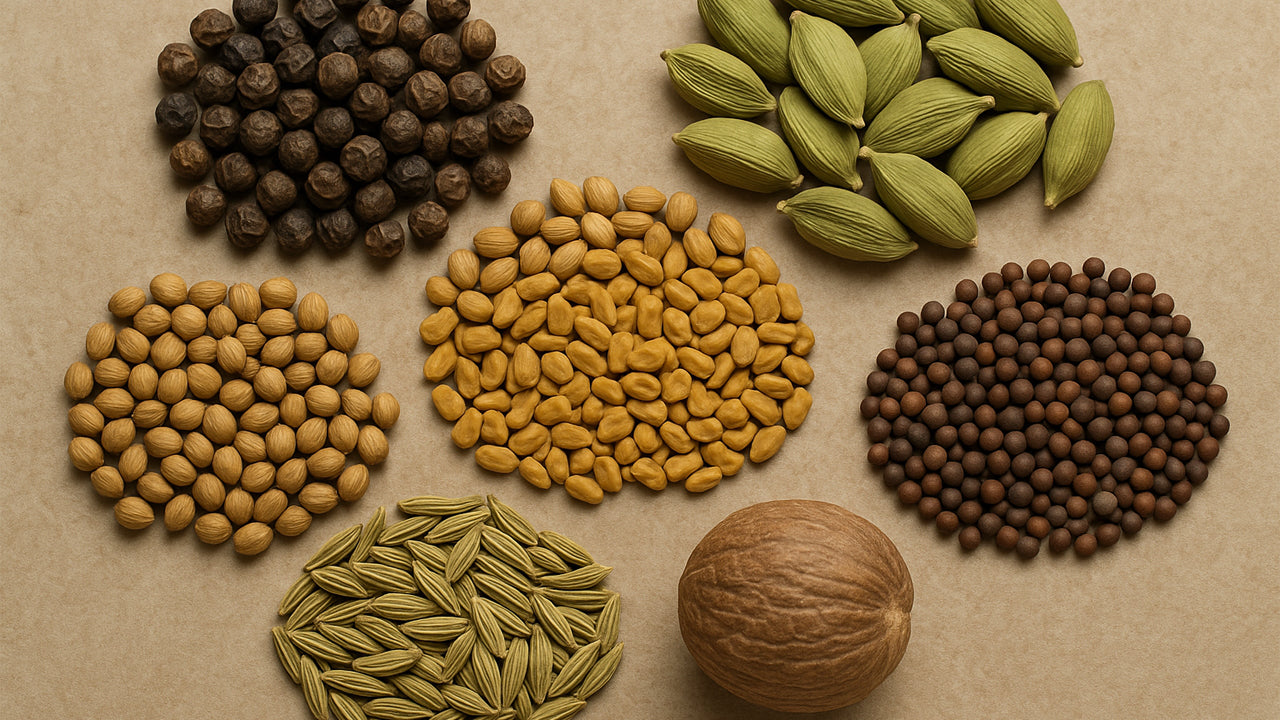
Lang voordat het woord "export" bestond, verplaatste Sri Lanka al kruiden over de oceanen. Griekse en Romeinse kooplieden voeren naar het eiland – destijds bekend als Taprobane – om te handelen in kaneel, peper en kardemom. Arabische navigators maakten er een vast punt op de route tussen de Rode Zee en Zuidoost-Azië. Toen de Portugezen in de vroege zestiende eeuw arriveerden, was het de specerijenhandel, en niet goud, die het eiland de moeite waard maakte om voor te vechten. Die geschiedenis leeft nog steeds voort in de tuinen, keukens en markten van een land waar specerijen geen nieuwigheid zijn – ze zijn simpelweg onderdeel van hoe voedsel wordt gemaakt.
Waarom werd Sri Lanka het centrum van de specerijenhandel?
Geografie speelde de doorslaggevende rol. Sri Lanka ligt aan de zuidpunt van het Indisch subcontinent, pal op alle historische zeevaartroutes die het Midden-Oosten, Europa en Oost-Azië met elkaar verbonden. Oude handelsroutekaarten tonen aan dat bijna al het verkeer door of nabij het eiland passeerde.
Het klimaat versterkte het voordeel. Sri Lanka's compacte landmassa herbergt een ongewone reeks microklimaten — de koele, mistige hooglanden van Kandy en Nuwara Eliya, de warme en vochtige laaglandbossen van het zuidwesten, en het droge, zonovergoten noorden en oosten. Elke zone is geschikt voor verschillende gewassen. Kaneel groeit bijvoorbeeld het best in de zandige kuststrook rond Negombo en Kurunegala. Peper en kruidnagel gedijen in de hooglanden van de natte zone. Kardemom geeft de voorkeur aan schaduw op grote hoogte. Geen ander eiland van vergelijkbare grootte biedt deze variëteit onder één vlag.
Het resultaat is dat Sri Lanka – en blijft – een van de belangrijkste bronnen ter wereld is van hoogwaardige, natuurlijk geteelde specerijen. Ceylon Echte Kaneel (Cinnamomum verum) is zo verschillend van de cassia-variant die elders wordt verkocht, dat het zijn eigen botanische classificatie heeft en wettelijk beschermd is onder geografische indicatieregels.
Welke specerijen worden er in Sri Lanka verbouwd?
De lijst is langer dan de meeste bezoekers verwachten. Hieronder staan de specerijen die het meest geassocieerd worden met het eiland, samen met het deel van de plant dat gebruikt wordt en een opmerking over waar ze doorgaans worden verbouwd.
| Kruiden | Gebruikt plantdeel | Hoofdteeltgebieden |
|---|---|---|
| Kaneel | Binnenbast (schors) | Westelijke en Noordwestelijke provincies |
| Zwarte & Witte Peper | Bessen (gedroogd) | Kandy, Matale, Kegalle |
| Kardemom | Zaden peulen | Knuckles Range, Uva hooglanden |
| Kruidnagel | Gedroogde bloemknoppen | Zuidelijke en Sabaragamuwa provincies |
| Nootmuskaat & Mace | Zaad en zaadbedekking | Zuidelijke laaglanden |
| Kurkuma | Rhizoom (gedroogd, gemalen) | Matale, Kurunegala |
| Gember | Rhizoom (vers of gedroogd) | Kandy district en heuvelland |
| Vanille | Gekookte zaden | Zuidelijk nat gebied |
| Venkel | Zaden | Droge zone, tuinen eilandwijd |
| Goraka (Gamboge) | Gedroogde vruchtschil | Natte zone, Sabaragamuwa |
Goraka (Garcinia cambogia) komt voornamelijk voor in Sri Lanka en aan de Malabarkust en is essentieel in authentieke Sri Lankaanse viscurry's – de zure, rokerige smaak kan niet gemakkelijk worden vervangen door tamarinde of limoen. Rampe (pandanblad) en karrieblad (Murraya koenigii) vallen technisch gezien in de categorie aromatische kruiden, maar Sri Lankaanse koks behandelen ze als een essentieel kruidmiddel in plaats van als garnering.
Hoe gebruiken Sri Lankaanse koks kruiden anders?
De Sri Lankese keuken brengt kruiden in een volgorde aan, in plaats van ze allemaal meteen te mengen. Een typische curry begint met het temperen van hele zaden — mosterd, komijn, fenegriek — in hete olie of kokosolie. Dit proces, lokaal bekend als thalana, geeft vetoplosbare smaakstoffen vrij die watergebaseerd koken niet kan ontsluiten. Gemalen kruiden worden op een later stadium toegevoegd, en rauwe groene kruiden als laatste.
Een paar principes die ervaren koks toepassen:
- Warmte ontsluit vetoplosbare aroma's. Het bakken van hele specerijen in olie voordat je andere ingrediënten toevoegt, is de meest effectieve techniek om diepte van smaak op te bouwen.
- Minder kan meer betekenen. Het verwijderen van een overheersende specerij uit een mengsel — of het verminderen van de hoeveelheid ervan — versterkt vaak de smaken van de overgebleven specerijen.
- Vers is beter dan gedroogd, indien beschikbaar. Versgemalen kaneel of peper bevat veel meer vluchtige oliën dan voorgemalen poeder dat maandenlang in de verpakking heeft gezeten.
- Combinatielimieten zijn belangrijk. De meeste traditionele Sri Lankaanse kruidenmengsels gebruiken tussen de vijf en twaalf kruiden. Mengsels met veel meer dan twintig ingrediënten verbeteren het resultaat zelden en kunnen bittere, vage smaakprofielen creëren.
- Bewaring bepaalt de kwaliteit. Hele specerijen die in luchtdichte containers worden bewaard, uit de buurt van warmte en licht, behouden hun potentie aanzienlijk langer dan gemalen specerijen. Maal alleen wat je nodig hebt.
Sri Lankaanse currypoeder is er in twee hoofdvarianten: raw currypoeder (licht geroosterd of ongeroosterd) dat gebruikt wordt voor milde, op kokosmelk gebaseerde curry’s, en roasted currypoeder (diep geroosterd) dat gebruikt wordt voor donkere, intense vlees- en viscurry’s. Het gebruik van het verkeerde type voor het gerecht is een veelgemaakte en gemakkelijk te vermijden fout.
Wat is de historische betekenis van kaneel in Sri Lanka?
Van alle specerijen op het eiland heeft kaneel het grootste historische gewicht. De Romeinen gebruikten het bij religieuze riten en beschouwden het als vele malen waardevoller dan zilver in gewicht. Middeleeuwse Europese apothekers schreven het voor aandoeningen die varieerden van spijsverteringsstoornissen tot luchtweginfecties. Sri Lanka – als Ceylon – was eeuwenlang de belangrijkste bron van echte kaneel ter wereld.
De Portugese Kroon nam in het begin van de jaren 1500 de controle over de kustgebieden waar kaneel werd verbouwd en handhaafde een monopolie totdat de Vereenigde Oost-Indische Compagnie (VOC) hen in de mid-zeventiende eeuw verdreef. De Britten erfden de handel toen ze Ceylon in 1796 innamen. De kunst van het schillen van kaneel – die werd beoefend door een erfelijke kaste van specialisten genaamd chalias – werd zo nauwlettend bewaakt dat de kennis generaties lang nauwelijks buiten het eiland verspreidde. Vandaag de dag produceert Sri Lanka nog steeds Cinnamomum verum, dat door voedingswetenschappers en koks wereldwijd wordt erkend als superieur aan goedkopere kassia-substituten, zowel in smaakcomplexiteit als in laag coumarinegehalte.
Waar kun je specerijenteelt in Sri Lanka zien?
Het district Matale, ongeveer 25 km ten noorden van Kandy, is de meest toegankelijke specerijenteeltregio voor bezoekers met een standaardreisroute. Hier groeien specerijtuinen peperranken, kardemom, kaneel, nootmuskaat en kruidnagel op korte loopafstand van elkaar – wat een geconcentreerde indruk geeft van de landbouwdiversiteit van het eiland. Deskundige gidsen demonstreren oogst- en verwerkingstechnieken en leggen de traditionele medicinale toepassingen van elke plant uit, waarvan er vele overlappen met de Ayurvedische praktijk.
Voor een meer onderdompelende ervaring vertaalt een begeleide kooksessie met lokaal geproduceerde kruiden botanische kennis rechtstreeks in praktische keukenvaardigheden. Lakpura organiseert gestructureerde bezoeken aan werkende kruidentuinen in Matale, inclusief een praktische kookcomponent – een praktische manier om Sri Lankese technieken mee naar huis te nemen.
Welke gezondheidsvoordelen worden aan Sri Lankese specerijen toegeschreven?
De traditionele Ayurvedische geneeskunde, die al meer dan tweeduizend jaar in Sri Lanka wordt beoefend, gebruikt kruiden als een van de belangrijkste therapeutische hulpmiddelen. De moderne voedingswetenschap heeft biologische activiteit in verschillende van de belangrijkste kruiden van het eiland bevestigd, hoewel het klinische bewijs in sterkte varieert.
- Kaneel — bestudeerd vanwege de mogelijke rol bij het ondersteunen van een gezonde bloedsuikerstofwisseling; bevat cinnamaldehyde en verschillende polyfenolen met antioxiderende eigenschappen.
- Kurkuma — curcumine, de actieve verbinding, is een van de meest onderzochte natuurlijke ontstekingsremmers, hoewel de biologische beschikbaarheid aanzienlijk verbetert wanneer het met zwarte peper wordt geconsumeerd.
- Zwarte peper — piperine, dat peper zijn scherpte geeft, is gedocumenteerd als een versterker van de opname van andere voedingsstoffen en bioactieve stoffen die er tegelijkertijd mee worden ingenomen.
- Gember — veel gebruikt in Sri Lankse huisremedies tegen misselijkheid, spijsverteringsproblemen en milde luchtwegklachten; ondersteund door een redelijk aantal klinische aanwijzingen voor verlichting van misselijkheid.
- Kruidnagel — behoort tot de specerijen met de hoogste antioxidantwaarden per drooggewicht; traditioneel gebruikt in de Sri Lankese en Ayurvedische praktijk voor de mondgezondheid en als pijnstiller.
- Fenegriek — zaden bevatten oplosbare vezels en stoffen die in verband worden gebracht met cholesterolverlaging en eetlustregulatie in de Ayurveda.
Deze eigenschappen zijn redenen om royaal te koken met kruiden – niet om medisch advies te vervangen door keukenremedies. Het traditionele Sri Lankaanse dieet, rijk aan kruiden bij elke maaltijd, wordt door voedingsdeskundigen beschouwd als een van de meer natuurlijk ontstekingsremmende voedingspatronen in Azië.
Hoe koop en bewaar je Sri Lankese kruiden?
Wanneer u kruiden koopt om mee naar huis te nemen, zijn hele kruiden beter bestand tegen transport dan poeders en behouden ze hun smaak veel langer. Kaneelstokjes, hele peperkorrels en gedroogde kruidnagels die van een betrouwbare bron komen, behouden hun kracht een jaar of langer in een luchtdichte verpakking. Gemalen poeders zijn handig, maar beginnen binnen enkele weken na het malen vluchtige stoffen te verliezen.
Zoek naar specerijen met herkomstvermelding – "Ceylon Kaneel" of "Sri Lanka" op de verpakking is een betekenisvol kwaliteitskenmerk, niet alleen marketing. Vacuumverpakking of verpakking met stikstofvervanging verlengt de houdbaarheid. Vermijd specerijen die in heldere plastic zakken worden verkocht en blootstaan aan winkelverlichting, wat kleur- en smaakstoffen aantast.
Verder lezen
4 pagina's over nauw verwante onderwerpen.