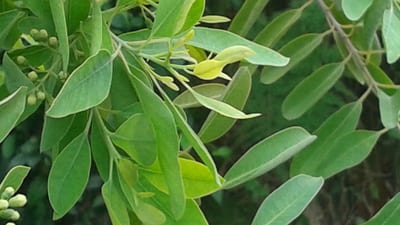
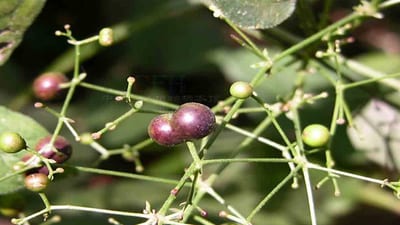
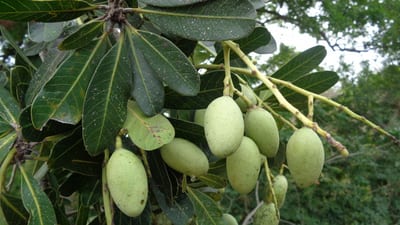
Coscinium fenestratum, known locally in Sri Lanka as Weniwelgeta and sometimes called yellow vine in English, is a woody flowering climber with a history stretching back millennia in traditional healing systems across South and Southeast Asia. Today it stands as one of the more threatened medicinal plants in the region, caught between growing pharmaceutical demand and rapid habitat loss.
What is Weniwelgeta and where does it grow?
Belonging to the family Menispermaceae and the genus Coscinium, this plant is native to a broad arc of tropical territory running from India through Sri Lanka, Cambodia, Vietnam, and into Indonesia. It thrives only in tropical climates — specifically in mixed and dense evergreen forests with fertile, moisture-retentive soil. In Sri Lanka, it is most likely to be found in the island's wet-zone rainforests, including areas adjacent to reserves such as the Sinharaja Forest Reserve.
The plant is a vigorous climber, sending woody stems upward through forest canopy. Its stem cross-section reveals a vivid yellow interior caused by high concentrations of berberine, an alkaloid that also gives turmeric its characteristic colour — hence one of the plant's common English names, tree turmeric.
What are the common names for Coscinium fenestratum?
The plant is recorded under a wide range of names across the languages of its range:
- Weniwelgeta / Weniwel — Sinhala (Sri Lanka)
- Tree turmeric / False calumba / Colombo weed — English
- Daru Haridra — Sanskrit
- Mara Manjal — Tamil and Malayalam
- Haem herb — Thai
- Voer Romiet — Khmer (Cambodia)
The diversity of names reflects how widely the plant has been incorporated into regional healing traditions over centuries.
What is Weniwelgeta used for in traditional medicine?
The medicinal use of Coscinium fenestratum is documented across multiple traditional systems, including Ayurveda, Unani, and Siddha medicine in India, Sinhala traditional medicine in Sri Lanka, the Kru Khmer healing traditions of Cambodia, and Thuoc Nam (traditional Vietnamese medicine). In each of these systems, different parts of the plant — primarily the stem and roots — are prepared as decoctions or powders.
Recorded therapeutic applications include:
- Management of fevers and infections
- Blood sugar regulation in diabetic conditions
- Treatment of digestive complaints, including conditions likened to modern celiac disease
- Wound healing and skin conditions
- Snake bite remedies in folk practice
- Liver and gallbladder support
The primary active compound responsible for many of these effects is berberine, a well-researched alkaloid that has attracted significant interest in contemporary pharmacological studies. Related Ayurvedic formulations such as Kaishore Guggulu draw on a similar tradition of using plant-derived compounds for anti-inflammatory and detoxifying purposes.
Why is Coscinium fenestratum critically endangered?
The combination of rising demand and shrinking habitat has placed Coscinium fenestratum under serious pressure throughout its range. Several factors contribute:
- Over-harvesting: The plant is almost exclusively collected from wild populations. Because the stem and root are harvested — often destructively — individual plants may not survive collection.
- Habitat loss: Deforestation for agriculture and urban expansion across South and Southeast Asia has fragmented the dense evergreen forests the plant depends on.
- Slow regeneration: As a climber dependent on mature forest structure, Weniwelgeta does not establish easily in degraded or secondary forest.
- Trade pressure: Industrialisation and the global growth of herbal supplement markets have significantly increased commercial extraction.
The plant is now listed as rare and critically endangered across many parts of its natural range. Conservation programmes in Sri Lanka and India have begun exploring cultivation as a means of reducing pressure on wild stocks, though large-scale domestication remains limited.
How does Weniwelgeta fit into Sri Lanka's broader botanical heritage?
Sri Lanka has an exceptionally rich tradition of plant-based medicine, rooted in Sinhala indigenous knowledge systems that predate recorded history. Weniwelgeta occupies a respected position within this tradition alongside other well-known medicinal and aromatic plants. Ceylon black pepper, for instance, has been traded from this island for over two thousand years and shares a similar role as both culinary and therapeutic plant.
The island's wet-zone forests, biodiversity hotspots recognised by the IUCN, provide habitat for hundreds of endemic and near-endemic plant species. Conserving these ecosystems is therefore inseparable from preserving plants like Coscinium fenestratum. Visitors interested in Sri Lanka's medicinal plant heritage will find context in the country's living Ayurvedic traditions, village herb gardens, and botanical institutions.
Can Weniwelgeta be found in Sri Lankan herbal products?
Stem bark preparations of Coscinium fenestratum appear in certain traditional Sinhala medicine formulations and are sometimes available from specialised Ayurvedic pharmacies in Sri Lanka. However, given its critically endangered status, any commercially sold product should ideally source material from cultivated rather than wild-harvested stock. Travellers interested in authentic Ayurvedic experiences in Sri Lanka are advised to seek reputable practitioners and enquire about sourcing practices. The Yogaraja Guggulu tradition offers a window into how classical Ayurvedic formulations integrate plant compounds like those found in Weniwelgeta.
What efforts are being made to conserve Coscinium fenestratum?
Conservation of this species involves both in-situ protection of forest habitats and ex-situ cultivation research. In Sri Lanka, the Department of Ayurveda and various university research programmes have documented the plant's distribution and begun small-scale cultivation trials. Internationally, the species appears in assessments by organisations tracking threatened medicinal plants in Asia. Greater awareness among consumers of herbal products — asking whether ingredients are sustainably sourced — remains one of the most effective individual-level contributions to conservation.