Pull over at almost any roadside stall in Sri Lanka and you will find a vendor slicing the crown off a bright orange fruit with a single machete stroke. What spills out — cool, faintly sweet, lightly electrolytic — is king coconut water, one of the island's most recognisable refreshments. Known locally as Thæmbili (තැඹිලි), the king coconut is botanically classified as Cocos nucifera var. aurantiaca and is considered native to Sri Lanka, though related forms are found in parts of India and Indonesia.
What makes the king coconut different from a regular coconut?
The king coconut is shorter in stature than the common coconut palm and typically produces fruit with a vivid orange or golden-yellow husk rather than the familiar green or brown shell. Its liquid endosperm — the water inside — contains lower sugar levels than regular coconut water and is notably rich in potassium (K⁺), B and C vitamins, reducing sugars, and amino acids. The flesh of a young king coconut is thinner and softer than that of a mature common coconut, and is usually consumed along with the water rather than dried for copra.
These characteristics make Thæmbili a genuinely distinct agricultural and culinary product, not simply a colour variant of the everyday coconut. The Cocos nucifera species as a whole encompasses a wide range of forms, but the aurantiaca variety has properties that set it apart in both nutritional profile and traditional use.
What varieties of king coconut grow in Sri Lanka?
The most widely encountered variety is the Red Dwarf, locally called Kaha Thæmbili or Gon Thæmbili. It is the orange-husked fruit sold at virtually every junction across the island. A second recognised variety, Ran Thæmbili, is smaller and produces bunches of around forty nuts — more prolific but less commonly seen in markets.
Sri Lanka's National Coconut Research Institute (NCRI) classifies coconut broadly into 15 morphological forms grouped under three botanical varieties: Typica (tall), Nana (dwarf), and Aurantiaca (king). Recent germplasm exploration in the Southern Province identified several new morphotypes that researchers are working to include in the formal taxonomic classification. This ongoing research reflects how much genetic diversity still exists in the island's coconut groves.
- Kaha Thæmbili (Red Dwarf) — the dominant commercial variety; bright orange husk, moderate water volume.
- Ran Thæmbili — smaller fruit, higher nut count per bunch, slightly sweeter water.
- Regional morphotypes — forms identified in the Southern Province and subject to ongoing NCRI classification.
Where do king coconuts grow in Sri Lanka?
King coconut palms grow wild and cultivated across much of the island's wet and intermediate zones, thriving in the warm, humid lowlands. They are especially common in the coastal belt from Negombo southward, in the Gampaha and Kurunegala districts, and along the island's southwestern interior. Unlike common coconut, king coconut is less frequently planted in large commercial estates and more often found in home gardens and smallholdings. Related varieties also grow in parts of Kerala, India, where they are known locally as Chomana Thenga (red coconut).
What are the nutritional benefits of king coconut water?
King coconut water is isotonic, meaning its mineral balance resembles that of human blood plasma. This makes it effective for rehydration, particularly in Sri Lanka's tropical climate. Key nutrients include:
- Potassium — the dominant mineral, supporting muscle and nerve function.
- B vitamins and vitamin C — present in moderate amounts in fresh, unprocessed water.
- Amino acids — including arginine, which supports circulation.
- Reducing sugars — providing quick energy without the spike associated with refined sugar drinks.
- Low fat, low calorie — making it suitable as an everyday beverage.
The water is best consumed directly from the fruit within minutes of opening, as exposure to air and heat degrades some of its heat-sensitive vitamins and alters the flavour.
How is king coconut used in Ayurvedic medicine?
Thæmbili has a well-documented role in Sri Lankan Ayurveda (Desiya Chikitsa). Practitioners regard it as cooling (seetha) in character and prescribe it to settle digestive complaints, reduce fever, and support kidney function. One of the most traditional preparations involves stirring Aralu powder (dried Myrobalans, Terminalia chebula) into fresh king coconut water — a simple remedy still recommended for constipation and detoxification. King coconut water is also used as a vehicle for administering certain herbal formulations, since its electrolyte content is thought to enhance absorption.
Ayurvedic physicians across the island continue to recommend Thæmbili as a safe oral rehydration fluid for children recovering from gastroenteritis, and as a complement to treatments for urinary tract infections. Its role in traditional medicine predates the colonial period and remains embedded in everyday health practice.
What king coconut products are available from Sri Lanka?
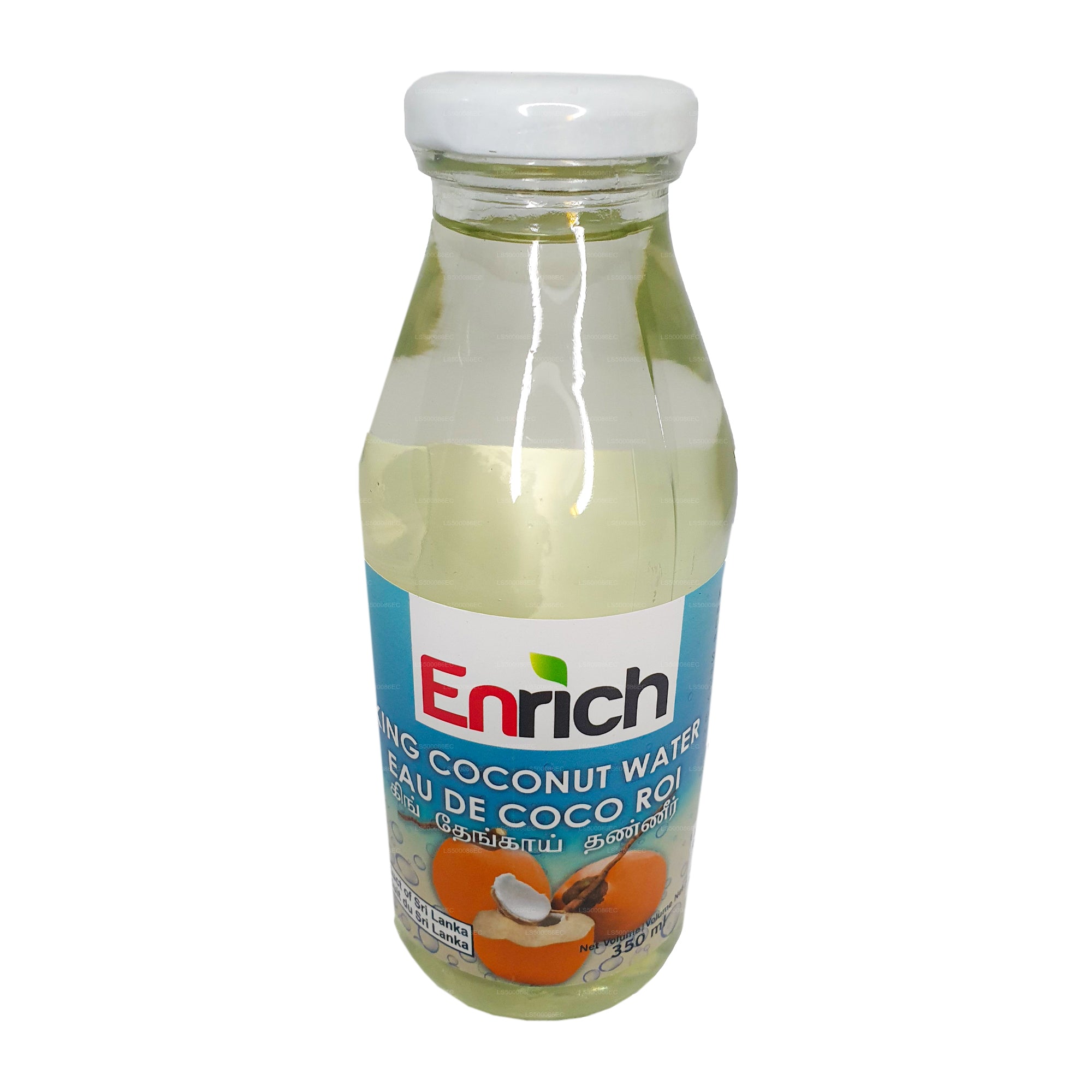
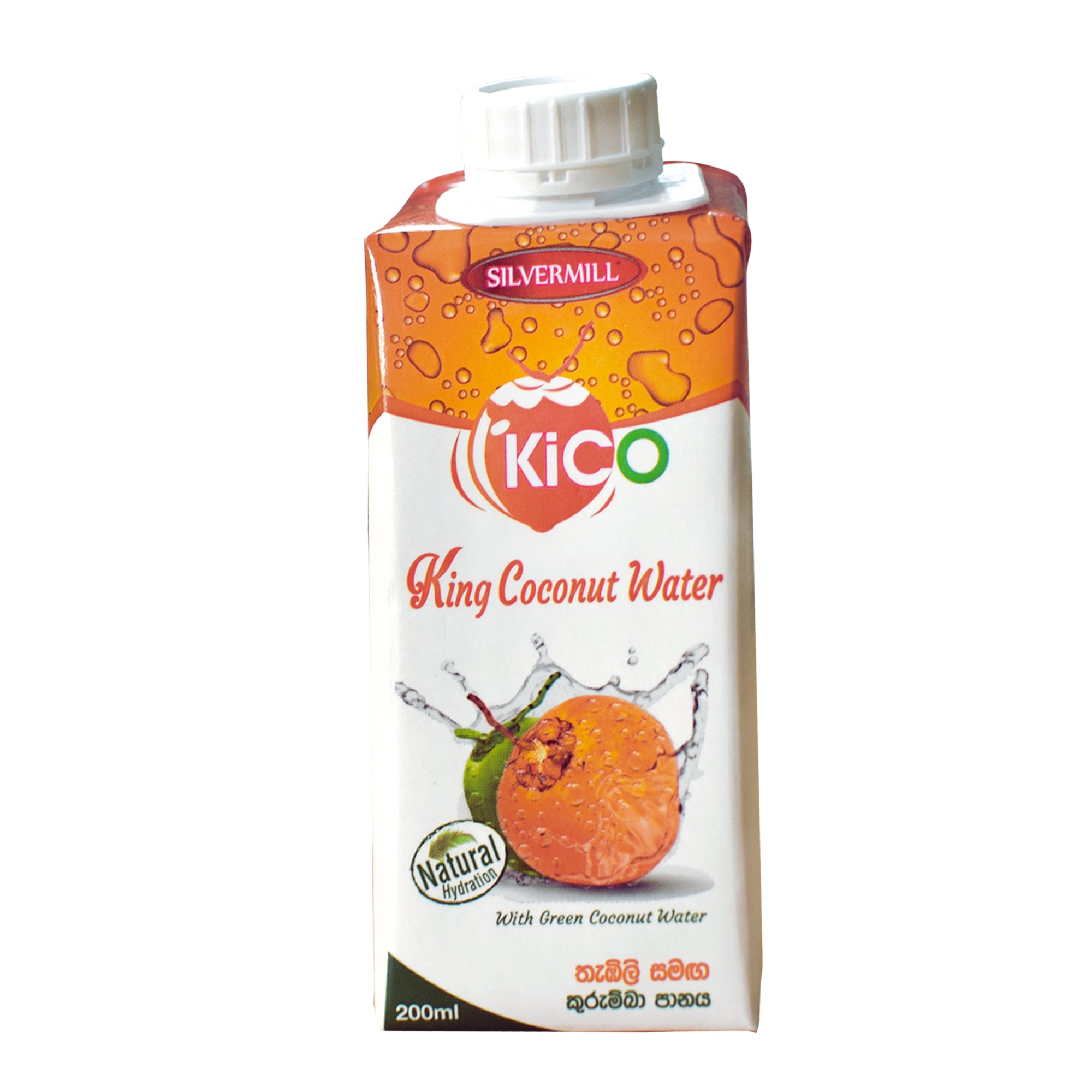
Beyond the fresh fruit, Sri Lanka exports a growing range of processed king coconut products. Packaged king coconut water — in Tetra Pak cartons, bottles, and cans — is the most significant export category, with brands targeting health-conscious consumers in Europe, North America, and Asia. The water is typically cold-pressed or pasteurised to extend shelf life while retaining the electrolyte profile.
King coconut oil, extracted from the flesh, is gaining international attention as a premium variant of virgin coconut oil. It is used in cooking, cosmetics, and hair care. Other commercially available products include king coconut-infused treacle, dried king coconut flakes, and beauty formulations incorporating the husk fibre.
Traditional Sri Lankan cooking also uses king coconut in less obvious ways — the soft flesh scraped from a young nut appears in desserts, and the water is occasionally used as a cooking liquid for rice and curries in home kitchens.
How does Sri Lanka's coconut research support king coconut cultivation?
The National Coconut Research Institute, based in Lunuwila, conducts breeding, agronomy, and germplasm conservation research for all coconut varieties including king coconut. Its work encompasses disease resistance, yield improvement, and the documentation of wild morphotypes — the latter particularly relevant as climate change shifts ideal growing zones. Germplasm collected from the Southern Province has expanded the NCRI's reference collection and may lead to the formal recognition of new aurantiaca sub-varieties. This institutional infrastructure makes Sri Lanka one of the few countries with a dedicated national programme for king coconut improvement.
Is king coconut water the same as regular coconut water?
They come from the same species but are not identical products. King coconut water is generally considered to have a milder, less sweet flavour, a slightly different amino acid profile, and a distinctly orange-husked appearance that makes it easy to identify at markets. Regular green coconut water tends to be available from a wider range of cultivars and is more often used in commercial large-scale processing. Many nutritionists and Ayurvedic practitioners regard Thæmbili water as superior for therapeutic use, though the scientific literature comparing the two in controlled studies remains limited.
For travellers moving through Sri Lanka, stopping for a fresh Thæmbili is one of those unscripted moments that need no planning — the fruit is sold chilled at roadside stalls, beaches, temple entrances, and city junctions from Colombo to Ella. It costs very little, tastes better than most bottled alternatives, and is as authentically Sri Lankan as the island itself.