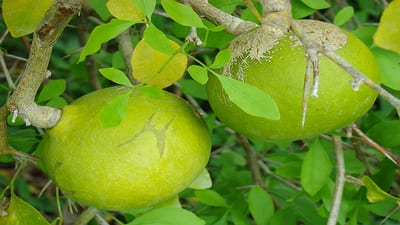
Tamarindus indica — known in Sri Lanka as Siyambala — is one of the most versatile tropical trees in the world. A fixture in home gardens, roadside landscapes, and ancient temple grounds across the island, the tamarind tree offers far more than shade. Its tart, sticky pulp has shaped Sri Lankan cooking for centuries, while traditional Ayurvedic practitioners have long valued its bark, leaves, and seeds for their therapeutic properties.
What is Tamarindus indica?
Tamarindus indica is a slow-growing, long-lived hardwood tree in the legume family (Fabaceae). Although it originated in tropical Africa, it spread to South Asia thousands of years ago and is now deeply embedded in the ecology and culture of Sri Lanka, India, and Southeast Asia. The tree can reach considerable heights and is recognised by its feathery, compound leaves and distinctive bean-like pods that hang in clusters.
Inside each pod, seeds are encased in a fibrous, sticky pulp. Young pods contain green, sharply sour pulp; as they ripen, the pulp darkens to a reddish-brown and develops a sweet-sour complexity that is unmistakable in regional cuisines. In some parts of South Asia the fruit is informally called the "date of India," a nod to its date-like texture when fully mature.
Where does tamarind grow in Sri Lanka?
Tamarind thrives in Sri Lanka's dry and intermediate zones, where rainfall is moderate and the soil is well-drained. You will find large specimens in the North Central Province — particularly around the ancient city of Polonnaruwa, where some trees are thought to be centuries old — as well as in coastal areas of the Northern and Eastern provinces. The tree is drought-tolerant, which makes it well-suited to the arid lowland belt that stretches across much of the north and northwest.
In home gardens and spice farms, tamarind is often grown alongside other economic trees. Its canopy provides dense shade, and the fallen leaves enrich the soil, making it a useful companion plant in traditional agroforestry systems similar to those you might observe on a visit to a working fruit farm.
How is Siyambala used in Sri Lankan cooking?
Tamarind pulp is a cornerstone souring agent in Sri Lankan cuisine — it adds depth and acidity to curries, sambols, chutneys, and marinades without the sharp one-note quality of vinegar. Cooks dissolve a small piece of dried or fresh pulp in warm water and strain the liquid, then add it to fish ambul thiyal (the celebrated sour fish curry of the south), dhal, and coconut-based gravies.
- Curries and gravies: Tamarind water balances the richness of coconut milk and tempers the heat of chilli.
- Chutneys and relishes: Combined with jaggery, dried chillies, and spices, it forms the base of sweet-sour condiments.
- Drinks: Diluted tamarind juice with sugar and salt is a popular cooling drink during the hot season.
- Sauces: Tamarind concentrate is an ingredient in Worcestershire sauce, a legacy of British colonial trade routes that ran through South Asia.
The seeds, when roasted and ground, have historically been used as a thickener or even a famine food in lean years. Young tamarind leaves appear in salads and rice dishes in some regional traditions.
What are the traditional medicinal uses of tamarind?
In Sri Lanka's Ayurvedic tradition, the tamarind tree is considered a multi-purpose medicinal plant. Preparations made from the pulp were conventionally used to ease digestive complaints, including diarrhoea, constipation, and nausea. A cooled decoction of tamarind pulp was sometimes administered to bring down fever, while leaf poultices were applied to wounds and inflammatory skin conditions.
Modern phytochemical research has begun to examine these traditional claims more rigorously. The pulp is rich in tartaric acid, a natural antioxidant, and the plant contains polyphenols with documented anti-inflammatory activity. Preliminary studies suggest that seed extracts may have a role in blood-sugar regulation, and pulp extracts have been investigated for potential benefits in metabolic health. These findings are promising, though they remain largely at the research stage and should not be taken as clinical guidance.
Tamarind's antioxidant profile places it alongside other valued Sri Lankan botanicals such as Acacia chundra and Pongamia pinnata, which similarly bridge culinary and medicinal roles in island tradition.
Are there other practical uses for tamarind?
Beyond the kitchen and the medicine cabinet, tamarind pulp has a well-established role as a natural metal polish. The tartaric acid it contains effectively removes tarnish and oxidation from copper and bronze surfaces — a practical technique still used by craftspeople and households across South Asia. Historically, this property made tamarind useful for cleaning temple bells and brass utensils.
The dense, hard timber of mature tamarind trees is valued for woodworking, and the seed kernels yield a starch used in the textile and paper industries. The tree's canopy also provides valuable habitat for birds and insects, contributing to local biodiversity.
What is the nutritional profile of tamarind pulp?
Tamarind pulp is notably energy-dense and contains a range of micronutrients. It is a reasonable source of B vitamins — particularly thiamine — as well as minerals including magnesium, potassium, and iron. The high tartaric acid content gives it its characteristic sourness and also contributes antioxidant capacity. It is relatively high in natural sugars when ripe, so it is typically used in small quantities as a flavouring rather than consumed in large amounts.
- Rich in tartaric acid (primary souring compound)
- Contains thiamine, riboflavin, and niacin
- Provides potassium, magnesium, and iron
- Naturally contains polyphenolic antioxidants
How is tamarind harvested and processed in Sri Lanka?
Tamarind pods are typically harvested during the dry season, from roughly January to April, when the pulp has fully ripened and the outer shell has become brittle. Pods are either gathered from the ground after natural fall or harvested directly from the tree with long poles. The shells are cracked open by hand, the fibrous strings removed, and the pulp separated from the seeds.
For home use, the pulp is often pressed into balls and stored at room temperature, where it keeps for several months. Commercial processors produce tamarind concentrate, paste, and powder for the export market. Sri Lanka also produces a salted, sun-dried form of tamarind used as a long-shelf-life souring agent in rural kitchens.
How is Siyambala connected to Sri Lankan culture?
The tamarind tree occupies a quiet but significant place in Sri Lankan cultural memory. Ancient trees are often found within or adjacent to temple compounds and dagoba precincts, where their long lifespan and dense shade made them natural gathering points for communities. In folk belief, very old tamarind trees are sometimes associated with protective spirits, and it is not uncommon to find small shrines at their base in rural villages.
The word Siyambala appears in place names across the island, reflecting how thoroughly the tree has embedded itself in the landscape. The fruit features in folk remedies passed down through generations, and tamarind-based dishes form part of the traditional food served during festivals and ceremonies, including the preparation of special rice and curry spreads around the Esala Perahera season.