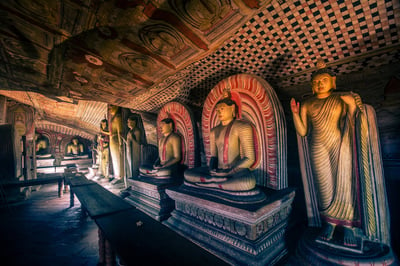
Dambulla koobastempel — rahvasuus tuntud ka kui Dambulla Kuldtempel — on Sri Lanka suurim ja parimas seisukorras koobastemplite kompleks ning üks riigi väärtuslikumaid pärandimälestisi. 1991. aastal UNESCO maailmapärandi nimekirja kantud kompleks asub graniitmassiivist kõrgendikul, mis tõuseb ümbritsevast tasandikust umbes 160 meetri kõrgusele, olles seega nähtav juba kaugelt üle Kultuurikolmnurga.
Mis on Dambulla Kuldtempel?
Ühte suurde ülerattuva kaljumassiiivi rüppe raiutud viies koobastes asub 153 Buddha kuju, kolm Sri Lanka kuningate kuju ning neli hinduistliku jumaluse kujutist, sealhulgas Vishnu ja Ganesha omad. Värvitud laed järgivad kivi loomulikke kontuure, jättes lageoleva pinna peaaegu täielikult kaetud — maalid katavad kokku umbes 2 100 ruutmeetrit ning moodustavad ühe Aasia ulatuslikumaid pidevaid freskoskeeme. Teemade hulgas on Buddha kiusamine deemon Mara poolt, tema esimene jutlus Sarnathis ning stseenid Jataka lugudest.
Kuigi viit koobast külastatakse järjestikku, on igal neist oma iseloom ja patroonajalugu. Koobas II (Maharaja Viharaya) on suurim ja kõige kaunimalt kaunistatud — umbes 52 meetrit lai — ning mahutab 56 Buddha kuju kompleksi kõige peenemate maalitud lae all. Koobas I (Devaraja Viharaya) on keskmeks üksik monoliitne lamavas asendis kuju, mida peetakse kompleksi vanimaiks.
Kui vana on Dambulla koobastempel?
Kaljuvarju elasid Sri Lanka eelajaloolised inimesed ammu enne budismi saabumist. Lähedal asuva Ibbankatuwa leiukoha väljakaevamistel on avastatud matmispaigad inimjäänustega, mille vanuseks hinnatakse umbes 2 700 aastat, mis viitab sellele, et inimesed on seda maastikku kasutanud juba aastatuhandeid.
Koobastekompleks muudeti ametlikult budistlikuks templiks esimesel sajandil eKr Anuradhapura kuninga Valagamba (tuntud ka kui Vattagamani Abhaya) poolt. Pärast Lõuna-Indiast tulnud sissetungi pagenduses ligikaudu 15 aastat elas kuningas neis koopastes. Tagasi võites Anuradhapura, pöördus ta tagasi ja pühitses koobastikud tänutäheks palvekohaks. Järgnevad valitsejad jätkasid kompleksi kaunistamist: Polonnaruwa kuningas Nissanka Malla kullatas koobastes ja lisas 1190. aastal umbes 70 Buddha kuju. 18. sajandil viisid Kandy kuningad läbi ulatusliku restaureerimis- ja ümbervärvimisprogrammi. 1938. aastal lisati koobastefassaadidele kaarsed sammaskäigud ja viilukatusega sissepääsud, andes kompleksile selle iseloomuliku valge välisviimistluse. Piki ülekattuva kivi täislaiust raiutud tilkumishari hoiab koobaste sisemuse märkimisväärselt kuivana isegi tugevate mussoonvihmade ajal.
Millised on viis koobastet Dambullas?
- Koobas I – Devaraja Viharaya (Jumalate Isanda Tempel): Vanim koobas, mille keskmeks on 14-meetrine lamavas asendis Buddha ning eraldi kambris Vishnu jumaluse kuju.
- Koobas II – Maharaja Viharaya (Suurkuningate Tempel): Suurim koobas, kus asuvad kuningas Valagamba ja kuningas Nissanka Malla kujud, peenelt maalitud lagi ning kiviveekistern, mida täidab loomulik läbivool — veekistern ei olevat kunagi kuivanud.
- Koobas III – Maha Alut Viharaya (Uus Suur Tempel): 18. sajandil Kandy kuninga tellimusel rajatud koobas, mida iseloomustavad kaunis maalitud lagi ja suur istuvas asendis Buddha.
- Koobas IV – Pachima Viharaya (Läänetempel): Väiksem koobas dagobaga (stupa) keskel; kohalik pärimus räägib, et dagoba sisaldas kunagi kuninganna Somawathie ehteid.
- Koobas V – Devana Alut Viharaya (Teine Uus Tempel): Hiljutiseim koobas, mida kasutati algselt laona ja hiljem templiks ümber ehitati; see sisaldab lamavas asendis Buddhat ning kohalike jumaluste kujutisi.
Kus asub Dambulla ja kuidas sinna jõuda?
Dambulla asub Põhja-Kesk-provintsis, umbes 148 km kirde pool Colombost, 72 km põhja pool Kandyst ning 43 km põhja pool Matalest. Kõige mugavam viis templile jõuda Colombost või Kandyst on eraauto või šoföriga juhendatav transfer, mis võimaldab ühendada Dambulla külastuse ühe päevaga ka lähedal asuvate vaatamisväärsustega, nagu Sigiriya kaljukindlus.
Avalikud bussid sõidavad regulaarselt Colombo, Kandy ja Dambulla linna vahel; koobastempli sissepääs asub umbes 1,5 km kaugusel peamisest bussijaamast. Parkimisplatsilt koobastes sissepääsudeni kestab jalgsi ronides umbes 20 minutit laial kivitreppidel. Enne koobastesse sisenemist tuleb jalatsid eemaldada, mistõttu on sandaalide kandmine praktilisem.
Millal on parim aeg Dambullat külastada?
Koobastempel on avatud aastaringselt. Koobaste sisemused on looduslikult kaitstud, mistõttu vihm harva külastust häirib. Mugavate ronimistingimuste jaoks on üldiselt eelistatumad jahedamad ja kuivemad kuud novembrist aprillini. Varahommikused külastused (kompleks avaneb tavaliselt umbes kell 7) võimaldavad koobaseid nautida enne suurte ekskursioonirühmade saabumist ja ajal, mil valgus maalitud lagede peal on kõige eredam.
Dambulla asub kuivas vööndis, mistõttu sadab seal vähem vihma kui mägipiirkonnas või edela rannikul. Jaanuarist aprillini pakub Sri Lanka selles piirkonnas tavaliselt kõige stabiilsemat ilma.
Mida peaks enne külastamist teadma?
- Riietuge tagasihoidlikult — õlad ja põlved peavad olema kaetud. Sarongid on sissepääsu juures rentimiseks saadaval.
- Eemaldage jalatsid ja mütsid enne igasse koopasse sisenemist. Jalatsihoidla on saadaval koobastes sissepääsu tasemel.
- Koobaste pildistamine on lubatud, kuid välkpildistamine suunaga maalidele on pigmentkihi kaitsmiseks ebasoovitav.
- Piletikassa asub kaljumassiiivi jalamil. Väliskülastajatele rakendatakse sissepääsutasu; täpse hinna saate teada piletikassast või oma reisikorraldajalt.
- Ahvid elavad trepi- ja tippupiirkonnas. Hoidke kotid suletuna ning vältige silmsidet ja toidu pakkumist.
- Giidiekskursioonid on saadaval ning annavad külastusele oluliselt lisaväärtust — ikonograafia on tihe ja asjatundlik giid suudab selgitada lagede üleselt maalitud narratiivseid järjestusi.
Mis asub Dambulla koobastempli lähedal?
Dambulla asub Sri Lanka Kultuurikolmnurga südames, olles suurepärane lähtepunkt mitme suurema maailmapärandikoha avastamiseks. Sigiriya, muistne kaljukindlus, asub umbes 20 km kirde pool. Polonnaruwa keskaegne linn paikneb ligikaudu 65 km kirde pool, samas kui Anuradhapura — Sri Lanka esimene muistne pealinn — asub umbes 65 km loode pool. Minneriya rahvuspark, mis on kuulus oma hooajaliste elevandikogumiste poolest, on kättesaadav tunni sõidu kaugusel. Lähedal asuv Habarana piirkond pakub ka elefandisõite ja küllaratturite väljasõite.
Kaljumassiiivi all hõlmab Kuldtempli kompleks suurt kuldset istuvat Buddha kuju, mis on nähtav peateelt, ning uuemat templihoonet koos väikese muuseumiga, mis annab ajaloolist konteksti ala konserveerimisloole.
Konserveerimine ja elav pärand
Dambulla koobastempler on tänaseni aktiivne palvepaik — mungad elavad endiselt kompleksis ning koobastikes toimuvad igapäevased ohvritoimetused ja usutseremooniad. Alates 1960ndatest on konserveerimistöö keskendunud maalide puhastamisele ja kaitsekihtide kandmisele, samas kui alates 1980ndatest on jõupingutused suunatud konstruktiivse terviklikkuse ja niiskuse sissepääsu ennetamisele. Aktiivse usupraktika ja päringurismi kooseksistents muudab Dambulla üheks Sri Lanka kultuuriliselt elavamaks paigaks — see ei ole pelgalt monument.
Lähedal asuvad kohad
Kohad umbes 25 km raadiuses (12), lähimad eespool.
- Dambulla Cave Templealla 1 km
- Rangiri Dambulla International Stadium (Dambulla)alla 1 km
- Dambulla Museum1 km
- Dambulu Somavathi complex1 km
- Dambulla linn1 km
- Gam Udawa Ground2 km
- Popham's Arboretum2 km
- Dambulla Sixers (Dambulla Thunders)2 km
- Ibbankatuwa Wewa2 km
- Ibbankatuwa megalithic burial site3 km
- Talakiriyagama City6 km
- Galewela Town14 km
Seotud lugemist
Lähedalt seotud teemade lehed: 3.