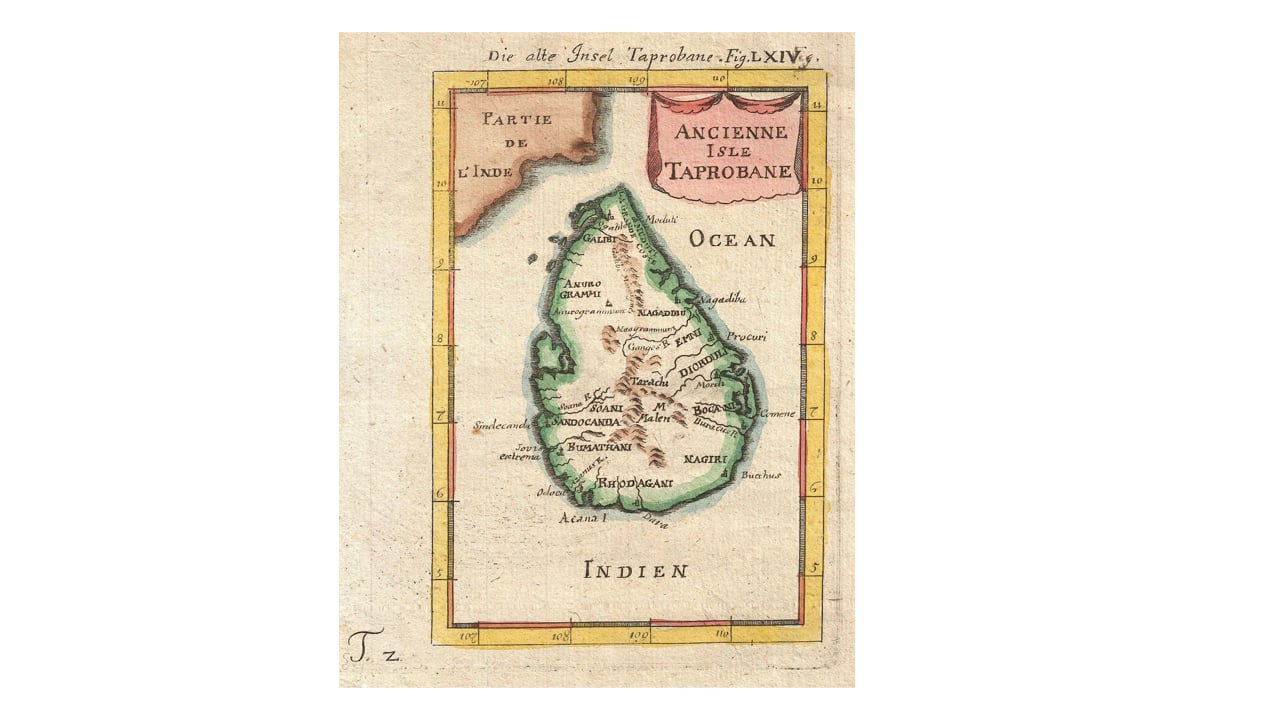


The Mahavamsa (මහාවංශය) is one of the oldest and most detailed historical chronicles in Asia. Written in Pali — the liturgical language of Theravada Buddhism — it traces the history of Sri Lanka from the legendary arrival of Prince Vijaya from northern India in the 6th century BCE through successive centuries of Sinhala Buddhist rule. For scholars, historians, and anyone seeking to understand how Sri Lanka came to be the island it is today, this text is an indispensable starting point.
Who wrote the Mahavamsa, and when?
The Mahavamsa was compiled around the 5th century CE by the Buddhist monk Mahanama at the Mahavihara, the great monastery at Anuradhapura that served as the spiritual centre of Theravada Buddhism in Sri Lanka. Mahanama drew on earlier chronicle traditions — particularly the Dipavamsa — as well as oral histories and commentaries preserved within the monastic community. The result was a text that is simultaneously a work of history, religious literature, and dynastic record.
Mahanama wrote in classical Pali verse, a deliberate choice that ensured the text would be accessible to scholars across the Theravada Buddhist world, from Burma to Thailand. That decision partly explains why the Mahavamsa still occupies a central place in the study of South and Southeast Asian Buddhism today.
What does the Mahavamsa actually cover?
The chronicle opens with the story of Prince Vijaya, said to have landed on the island on the very day the Buddha attained parinirvana. It then moves through hundreds of years of royal genealogy, military campaigns, monastic disputes, and diplomatic missions. Key episodes include:
- The mission of Mahinda Thero, son of Emperor Ashoka, who brought Buddhism to Sri Lanka during the reign of King Devanampiya Tissa in the 3rd century BCE.
- The arrival of the Sacred Bodhi Tree — a sapling from the original tree under which the Buddha attained enlightenment — and its planting at Anuradhapura, where it still stands today.
- The arrival of the Sacred Tooth Relic, which became the supreme symbol of royal legitimacy and is now enshrined in the Temple of the Tooth in Kandy, at the heart of the annual Esala Perahera Festival.
- The reign of King Dutugemunu (circa 2nd century BCE), who unified much of Sri Lanka under Sinhala Buddhist rule after a war against the South Indian king Elara — one of the most extensively narrated episodes in the entire text.
- Detailed accounts of stupa construction, including the Ruwanwelisaya and Jetavanaramaya dagobas, which rank among the largest brick structures of the ancient world.
The chronicle's treatment of stupas and religious architecture is particularly valuable to archaeologists working across the ancient cities of the north-central plains.
How does the Mahavamsa blend history and religion?
Reading the Mahavamsa purely as a factual record invites frustration. Its authors were monks writing for a monastic audience, and their primary purpose was to demonstrate the special relationship between the island of Lanka, the Sinhala kings, and the Dhamma — the teachings of the Buddha. Miraculous events, divine interventions, and prophetic utterances appear alongside credible historical details about trade, warfare, and governance.
Modern historians treat the text as a primary source that must be read critically and cross-referenced with archaeological evidence, inscriptions, and parallel chronicles from India and Southeast Asia. When handled that way, it yields a remarkably detailed picture of early Sri Lankan civilisation — its economy, its urban planning, its diplomatic relationships, and its religious culture.
What is the Culavamsa, and how does it relate?
The Mahavamsa was continued by later monks in a companion text known as the Culavamsa (Minor Chronicle), which extends the historical record from the reign of King Mahasena in the 4th century CE through to the early 19th century. Together, the Mahavamsa and Culavamsa form one of the longest continuous historical chronicles produced by any pre-modern civilisation. The Culavamsa covers, among other things, the construction of Polonnaruwa as a royal capital, the literary and religious reforms of the Polonnaruwa period, and Sri Lanka's interactions with South Indian kingdoms.
Why does the Mahavamsa still matter?
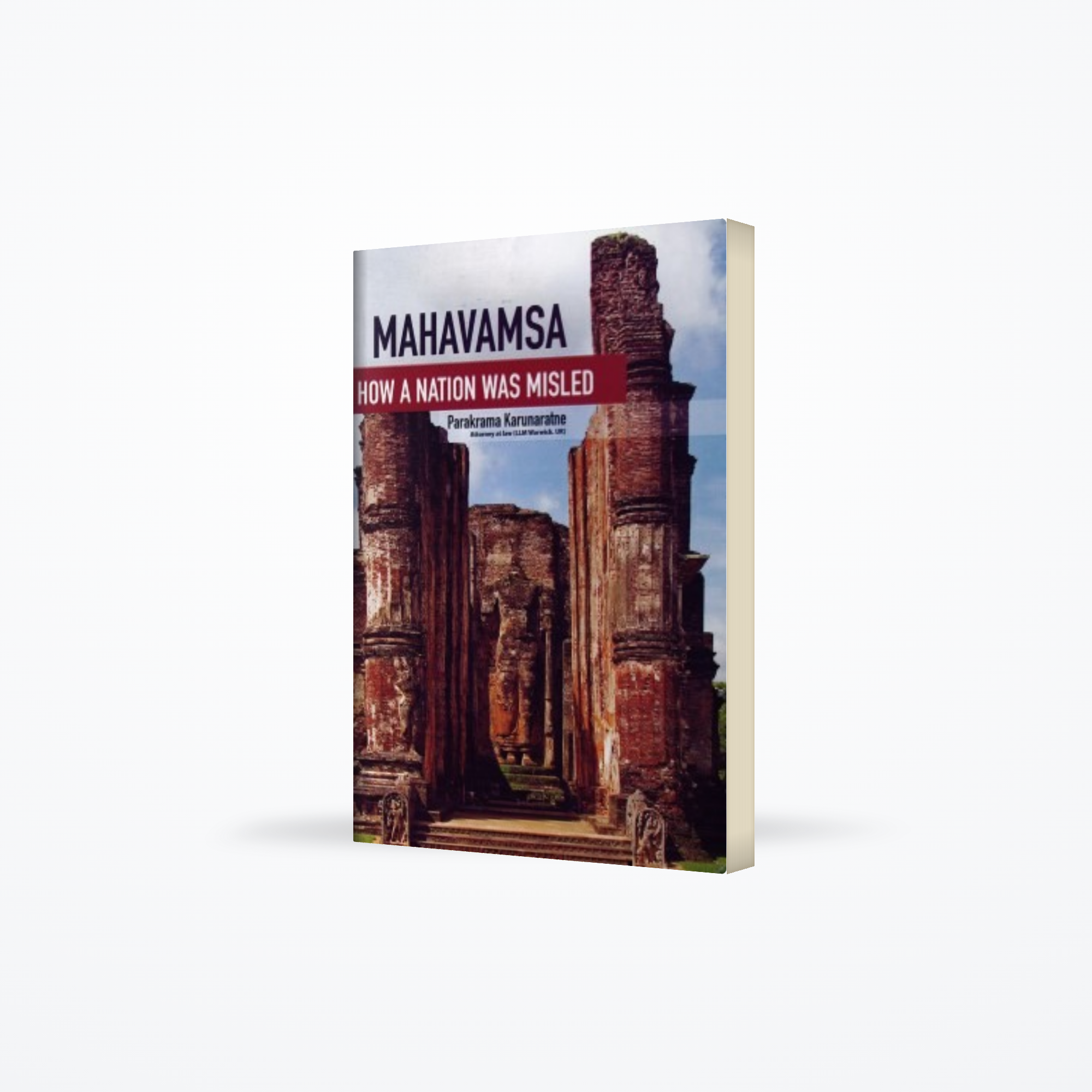
The text's significance extends well beyond academic scholarship. It provided the foundational narrative for Sinhala Buddhist identity and continues to inform political and religious discourse in Sri Lanka today. That influence is not without controversy: the chronicle's portrayal of the war between Dutugemunu and Elara has been read by some as an early articulation of Sinhala ethnic and religious nationalism, and has been the subject of serious critical analysis in works questioning how the text has been used — and misused — in modern political contexts.
For travellers visiting Sri Lanka's ancient cities, the Mahavamsa functions as an essential interpretive guide. The ruins of Anuradhapura, the rock fortress of Sigiriya, and the medieval city of Polonnaruwa all come alive when understood against the chronicle's narrative. Visiting these sites after reading the Mahavamsa — or even a good summary — transforms what might otherwise be a series of impressive ruins into a coherent civilisational story spanning more than two millennia.
Where can I read the Mahavamsa in English?
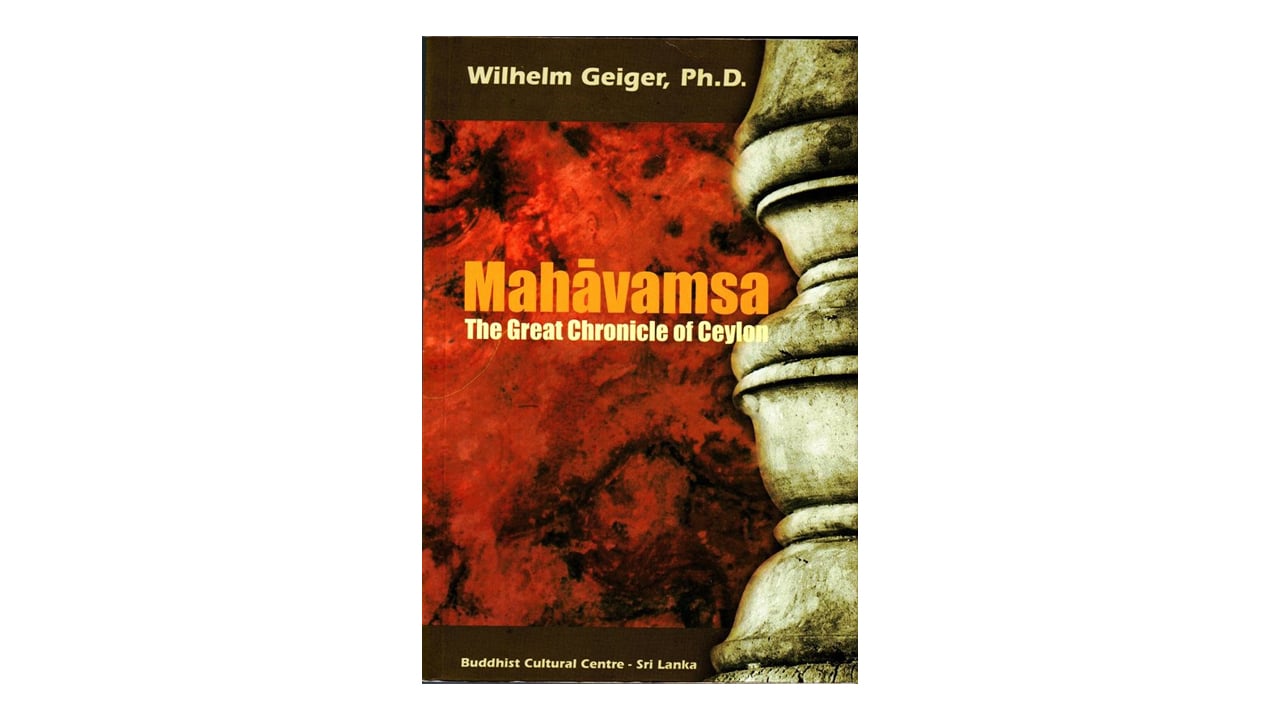
The standard English translation was produced by Wilhelm Geiger and published in 1912 under the auspices of the Pali Text Society. Geiger's translation remains the scholarly benchmark, though several more accessible modern renderings and abridged editions now exist. The full Geiger translation is available online in the public domain. Lakpura also stocks a curated selection of scholarly editions and related works for those who prefer to hold a physical copy or want to explore the text through specialist commentary.
How has the Mahavamsa influenced Sri Lankan culture?
The chronicle's reach extends into art, architecture, ritual, and political symbolism in ways that remain visible across the island. The tradition of royal patronage of monasteries and stupas, documented exhaustively in the Mahavamsa, shaped temple-building practices for centuries. The text's emphasis on the Tooth Relic as the ultimate mark of kingship still resonates in the ceremonial importance attached to the Kandy relic today. Even the concept of the dhamma raja — the righteous Buddhist king — which recurs throughout the chronicle, has echoed in the political self-presentation of Sri Lankan leaders across very different historical eras.
For students of comparative religion and literature, the Mahavamsa also rewards reading alongside texts such as the Pali Tipitaka commentaries and the Visuddhimagga of Buddhaghosa — another 5th-century monk whose life overlapped, at least in time, with that of Mahanama.