Kirinda Viharamahadevi Raja Maha Viharaya


More than 2000 years ago, there reigned over the western part of Ceylon, a king called Devanampiyatissa. As Kelaniya was his capital, he was also called Kelani Tissa. It so happened that this king thought he had good reason to suspect a monk of the temple of helping an intrigue between the queen and his brother, accordingly losing control over himself, he gave orders that the go-between be put to a painful death by immersion in a cauldron of boiling oil.
The ministers of state were horrified; the subjects of the realm were terror stricken. What was more, it appeared as if even the gods were annoyed. By way of punishment they caused the ocean to flood the land – and tradition holds that roughly a fifteen mile swathe of coast line (a yodun) in the kings realm was washed away.
Moved to penitence, Kelani Tissa thought out a method by which he could atone for his sacrilegious act. He planned, as a sacrifice, something which he considered would not only bring forcibly to the minds of his subjects the sincerity of his repentance, but would also propitiate the gods.
He built a boat of gold. He provided it with food and water to last a month and therein he placed his eldest daughter the peerless princess of the realm. Bearing an inscription which made known to all that it contained a king’s daughter, the boat was cast adrift.
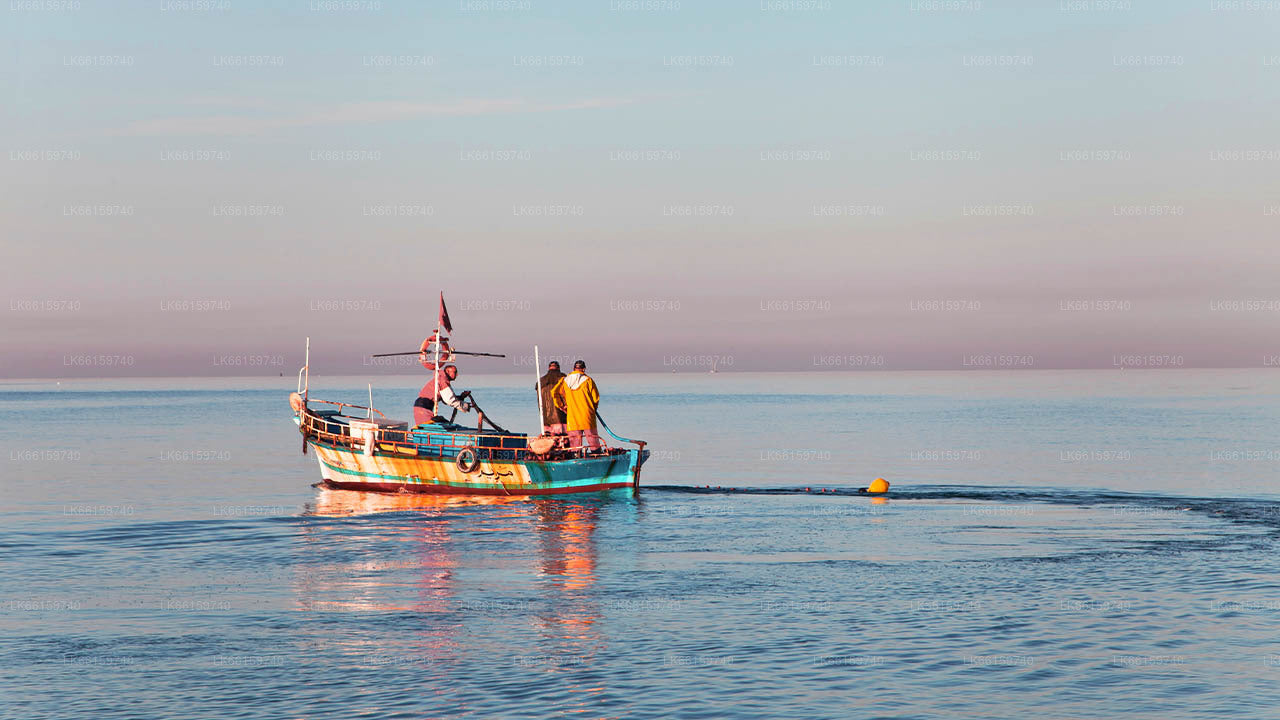
Many days later a fisherman roaming the sea-coast spied a strange craft cast ashore at a spot called Dovera, near Kirinda. Coming nearer, he beheld the princess and forthwith carried the news to the king of the southern kingdom of Rohana – where Kavantissa ruled at Magama
This king, Kavantissa, married the maiden who had been brought to him so romantically by fate and named her Vihara Maha Devi. On the summit of the cliff there stands a dagoba erected as a thank offering for the safe voyage of the princess. According to scholars the royal court of arms ( the sun and the moon) cut on a boulder nearby, commemorates this event and marks the landing place.
At Gotimbaragodaella about 2 miles inland from Kirinda are said to be the ruins of a palace where Kavantissa officially welcomed and wed the princess. And in the Ruhuna National Park near Palatupana are some ancient monuments referred to as Magul Maha Vihara where it is believed they lived after their marriage.
However these monuments and sites are subject to heavy debate by arcaeologists and historians.
Amongst the sand dunes of Pottuvil the archaeological reserve of Mudu Maha Vihara is also said to be associated with Vihara Mahadevi. Some scholars believe that this is the place where Queen Vihara Mahadevi and her entourage were washed ashore and not Kirinda. Locally it is also believed that the picturesque village of Komari just a few miles away was where King Kavan Tissa asked where the pri