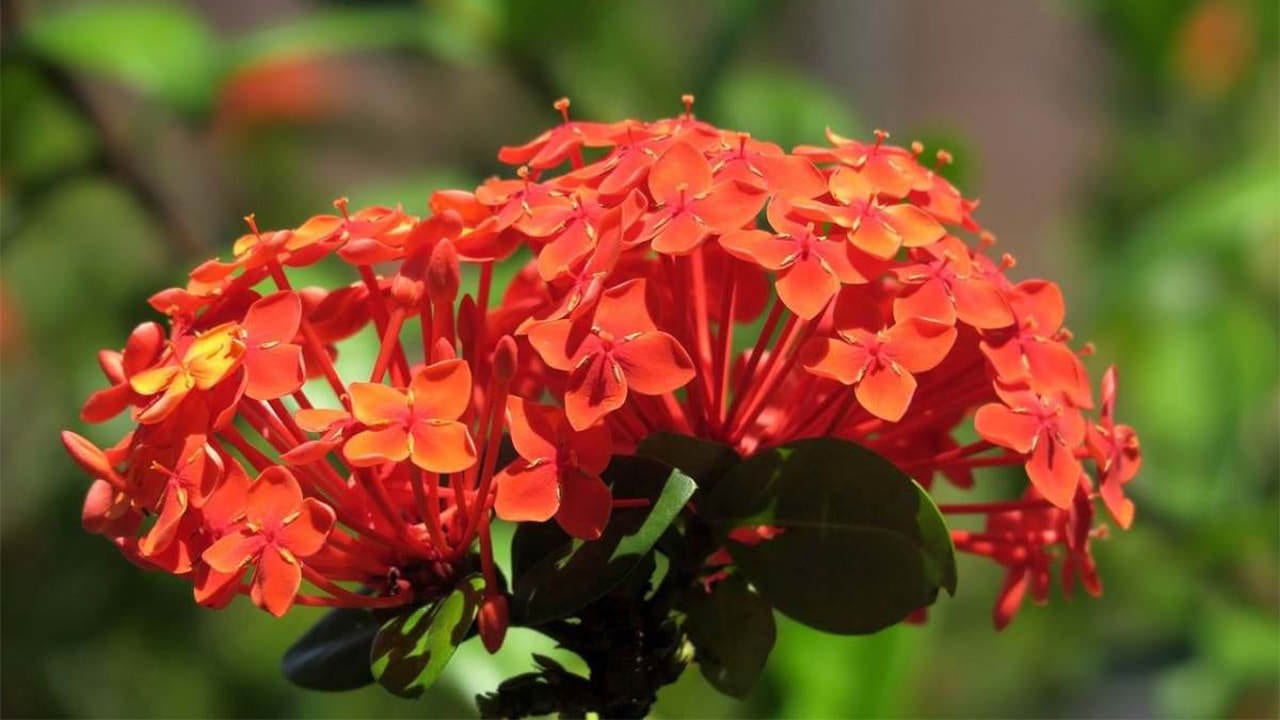
Ixora coccinea, known in Sri Lanka as Rathmal (රතු මල්), is one of the most recognisable flowering shrubs on the island. Its clusters of small scarlet tubular flowers appear in hedgerows, temple gardens, and home compounds across the country. Beyond its ornamental appeal, Rathmal carries considerable weight in Ayurvedic and folk medicine traditions — a dual role that makes it one of Sri Lanka's more commercially significant native plants.
What does Ixora coccinea look like?
Ixora coccinea is a dense, multi-branched evergreen shrub that typically grows between 1.2 and 1.8 metres in height, though in favourable conditions it can reach up to 3.5 metres. It tends toward a rounded form, and its spread can equal or exceed its height. The leaves are glossy, leathery, and oblong — carried in opposite pairs or in whorls along the stems, with smooth, unbroken margins.
The flowers are the plant's defining feature: small, scarlet, and arranged in dense, rounded clusters roughly 5–13 cm across. These flower heads appear almost continuously throughout the year, making the shrub a reliable source of colour in tropical gardens. Cultivated varieties also include orange, pink, white, and yellow-flowered forms, though the classic red remains the most widely seen in Sri Lanka.
Where is Ixora coccinea native to?
The species is indigenous to Southern India, Bangladesh, and Sri Lanka, and belongs to the family Rubiaceae — the same family as coffee. It grows naturally in tropical climates with warm temperatures, moderate to high humidity, and well-drained, slightly acidic soil. In Sri Lanka, it is found across the low and mid-country wet and intermediate zones, frequently appearing around temple grounds and village gardens. The plant is also cultivated widely across Southeast Asia, the Caribbean, and Florida as an ornamental hedge plant.
How is Ixora coccinea used in Ayurvedic medicine?
All major parts of the plant — flowers, leaves, roots, and stem — have documented applications in Ayurveda and traditional folk medicine. The breadth of these uses has driven sustained scientific interest in the plant's pharmacological properties.
- Roots: Traditionally regarded as analgesic, antiseptic, astringent, diuretic, sedative, and stomachic. Preparations from the roots are used to address abdominal pain, fever, nausea, hiccups, loss of appetite, diarrhoea, and dysentery. A decoction of the roots is also administered to support urinary health. Externally, root preparations are applied to chronic sores and ulcers, and have been used to relieve headache.
- Leaves and bark: Used as a remedy for diarrhoea, and applied externally to sores and ulcers. A fusion of leaf juice and fruit has traditional applications in managing dysentery and ulcers.
- Flowers: Used in various preparations for skin complaints and as an ingredient in tonics. The flowers are also consumed in some folk traditions for their reported cooling properties.
Modern phytochemical research has identified flavonoids, tannins, and various glycosides in Ixora coccinea that may underpin some of these traditional uses. However, any therapeutic application should be discussed with a qualified Ayurvedic practitioner or physician.
What are the main medicinal properties associated with this plant?
Traditional Ayurvedic texts and more recent ethnobotanical studies associate Ixora coccinea with the following properties, primarily attributed to the roots:
- Analgesic (pain-relieving)
- Antiseptic and antimicrobial
- Astringent (tissue-tightening)
- Diuretic (promotes urine production)
- Sedative (mild calming effect)
- Stomachic (supports digestion and stimulates gastric secretions and bile)
Ixora coccinea is also cited in preparations for managing certain skin conditions and as a supportive treatment for diabetes in traditional practice — though clinical evidence for the latter remains an active area of research rather than established medical consensus.
How does Ixora coccinea fit into Sri Lankan culture and gardens?
Rathmal has a cultural presence in Sri Lanka that goes well beyond the pharmacy. The bright red flower heads are commonly offered at Buddhist and Hindu temples, and the shrub is a staple of the traditional Sri Lankan home garden. It is frequently planted as a flowering hedge alongside other native species. Its near year-round blooming habit makes it practical as well as decorative, and it is tolerant of trimming, which makes it a popular choice for formal garden borders.
The plant's association with Ayurveda also connects it to a broader Sri Lankan wellness tradition. Practitioners of traditional medicine continue to incorporate Ixora coccinea root and leaf preparations alongside other well-known medicinal plants such as Acacia chundra and Pongamia pinnata in compound formulations.
Can Ixora coccinea be consumed or used at home safely?
In their traditional contexts, flower-based preparations of Ixora coccinea are generally considered low-risk in culinary or mild wellness uses — for instance, dried flowers steeped as a tisane. Root preparations are more potent and historically administered under guidance. Anyone considering using any part of this plant therapeutically should consult a qualified Ayurvedic physician or healthcare provider, particularly if managing a chronic condition or taking other medications.
Wildcrafted and dehydrated forms of Ixora coccinea flowers are available commercially in Sri Lanka, offering a way to access the plant's properties without cultivation. Look for responsibly sourced, chemical-free products if using for wellness purposes.
Is Ixora coccinea endangered or sustainably available?
Ixora coccinea is not considered threatened. It is cultivated widely as an ornamental and is common in secondary vegetation across its native range. Sri Lanka's warm, humid climate provides ideal growing conditions, and the plant regenerates readily. Responsible wildcrafting practices — harvesting selectively without damaging root systems — help ensure continued availability. The increasing commercial interest in the plant for herbal and nutraceutical markets does warrant attention to sustainable sourcing standards over time.