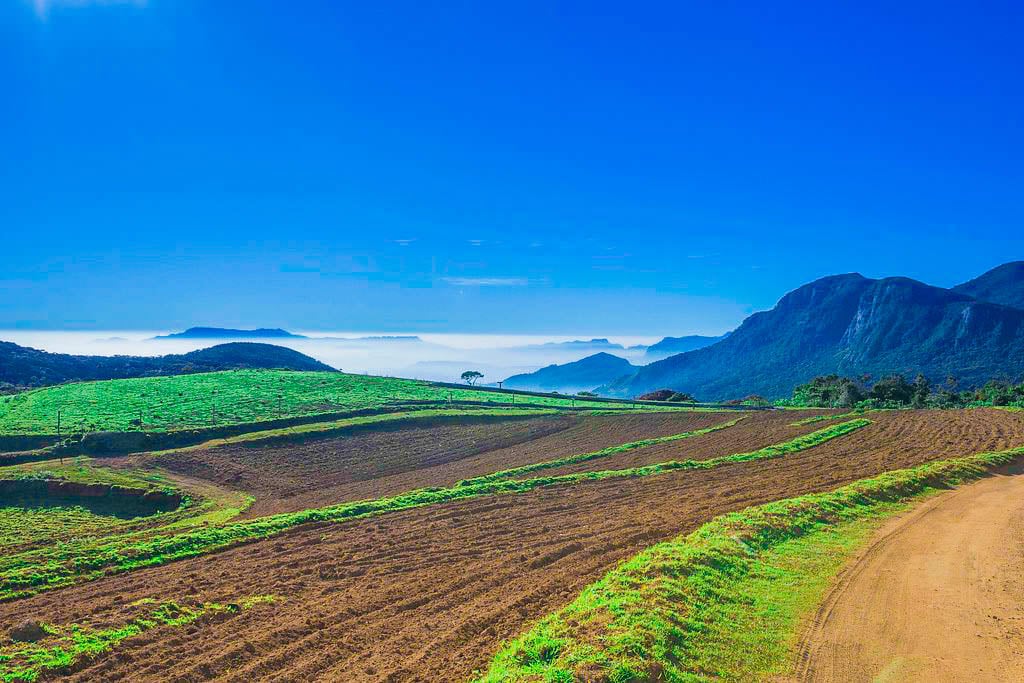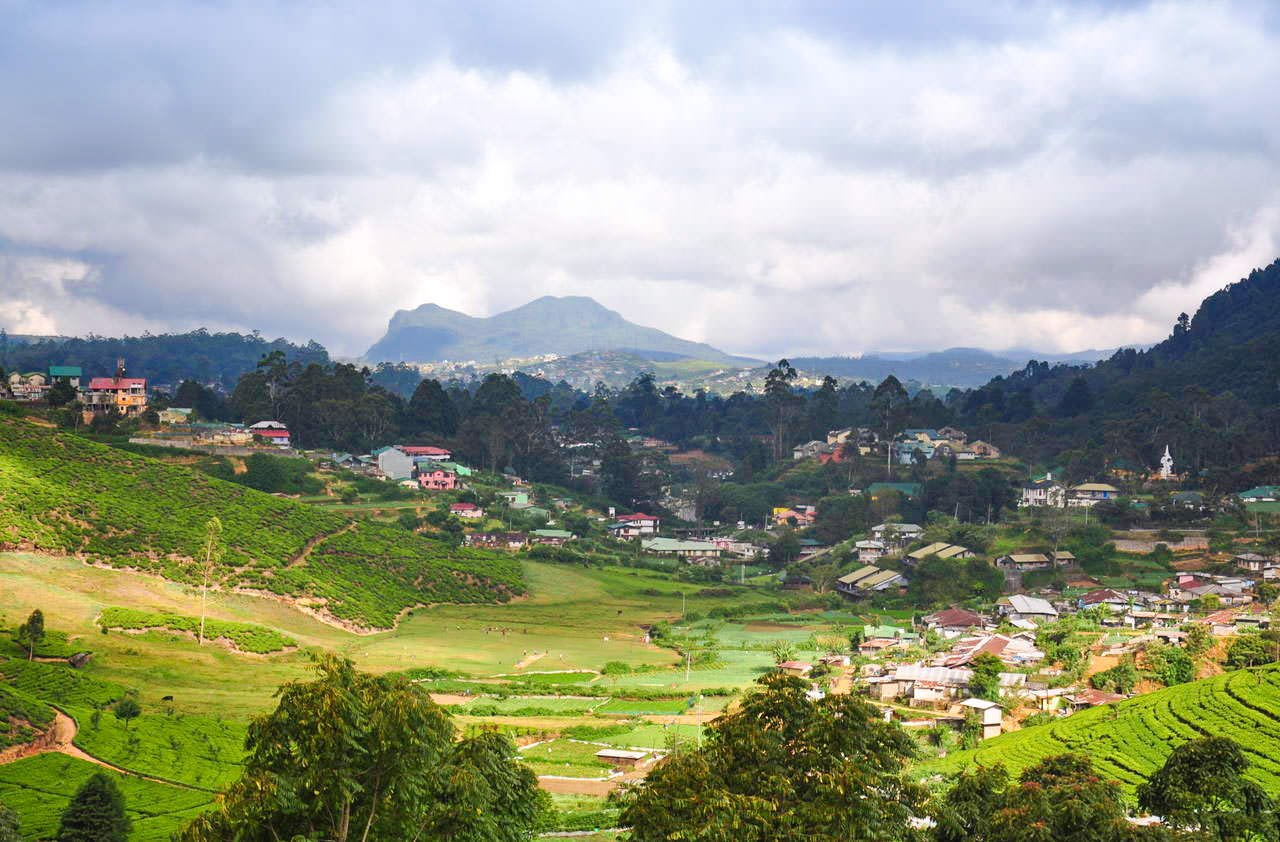
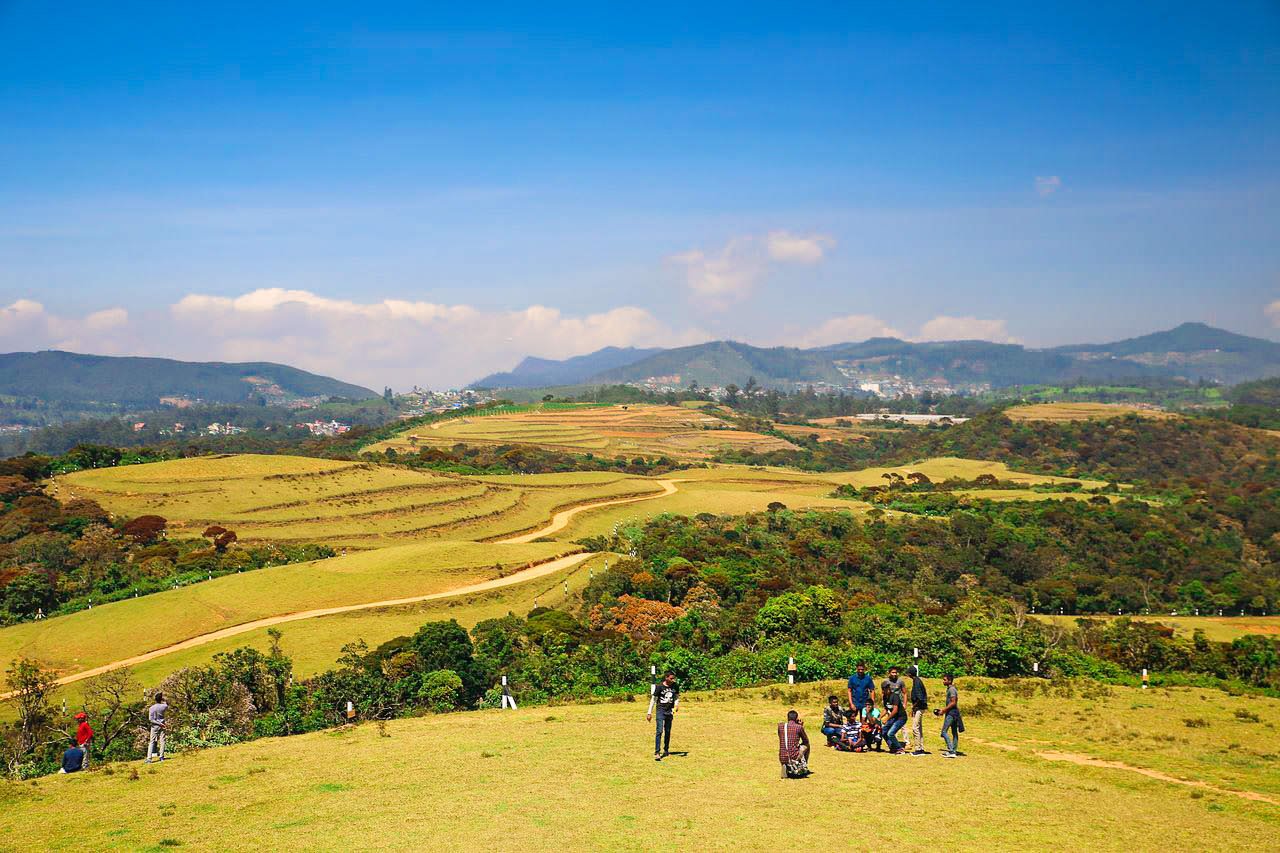
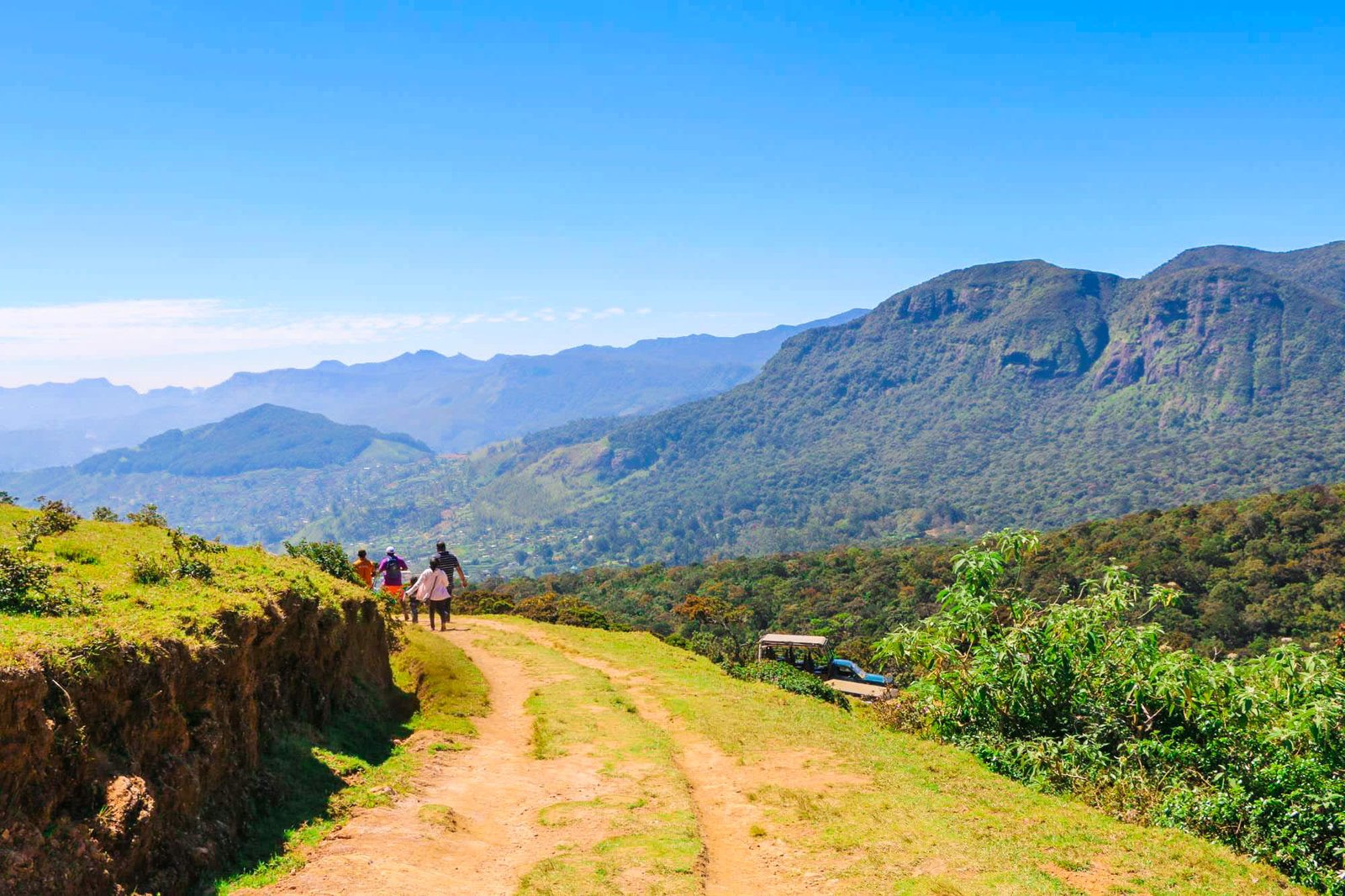
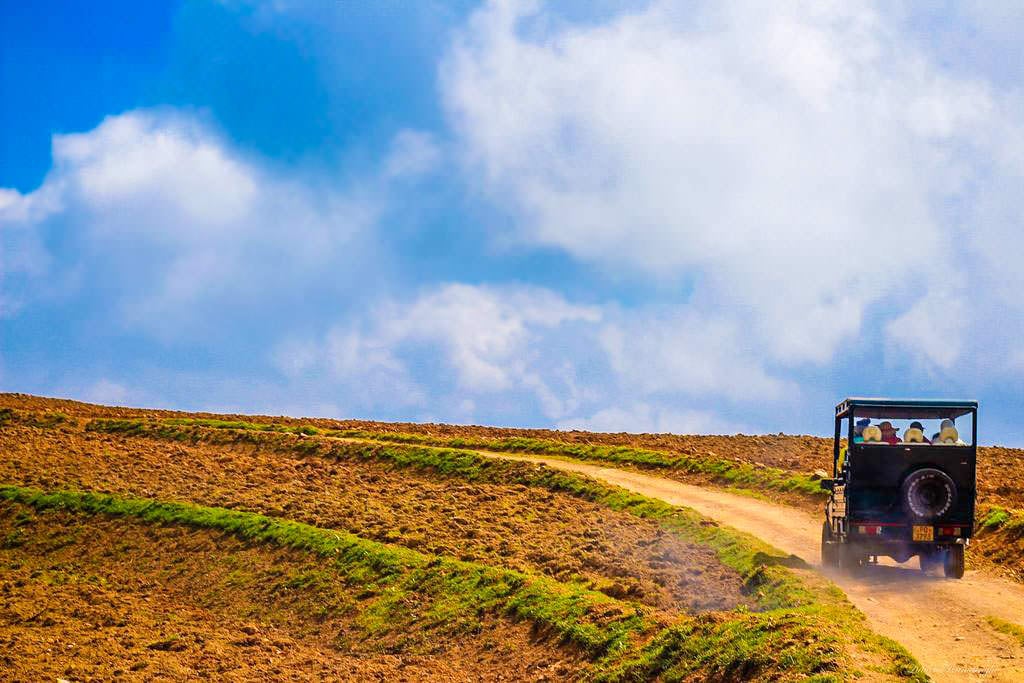
Perched above Nuwara Eliya in Sri Lanka's Central Highlands, Moon Plains is a broad, windswept plateau that surprises most visitors who expect the manicured tea gardens typical of the region. Instead, they find open grasslands, roaming wildlife, and a clifftop vantage point that rival the famous World's End at Horton Plains National Park — at a fraction of the crowds.
What is the history of Moon Plains?
The site has an unexpected past. For decades the land served as a municipal waste dump for Nuwara Eliya, and it was not until 2010 that a large-scale cleanup and ecological restoration project transformed it into the green expanse visitors see today. The Municipality of Nuwara Eliya subsequently classified it as an Agricultural and Environmental Tourism Zone, a designation that continues to regulate how the area is used and maintained. The turnaround is one of the more remarkable conservation stories in the hill country — a former landfill that now shelters leopards, elk, and endemic birds.
What wildlife can I see at Moon Plains?
The open grassland habitat supports a surprisingly diverse range of animals. Sambhur deer and wild buffalo are frequently spotted grazing across the plateau, particularly in the early morning. Sri Lankan elk (swamp deer) also move through the area, and patient observers have recorded occasional leopard sightings along the forest edges at dawn and dusk. Birdwatchers will find the plateau productive: the mix of grassland, scrub, and cloud-forest margins attracts species typical of the upper montane zone, including several endemics.
- Sambhur deer and wild buffalo — common on the open plateau
- Sri Lankan elk — best seen at dawn near the forest margins
- Leopard — rare but present; early-morning visits offer the best chance
- Endemic and migratory birds — the grassland–forest edge is productive year-round
What is Mini World's End at Moon Plains?
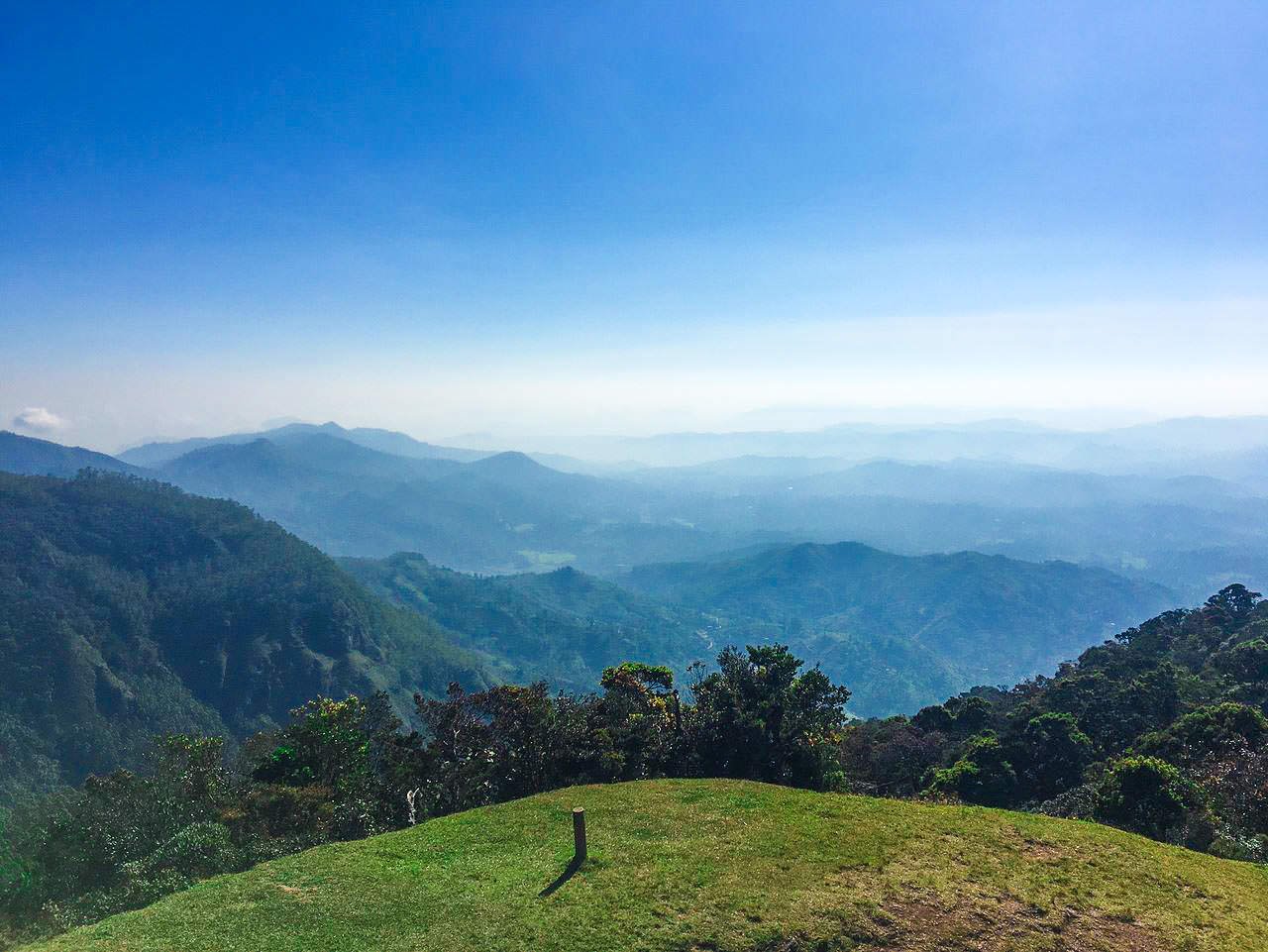
The defining feature of Moon Plains is its clifftop viewpoint, locally called Mini World's End. The escarpment drops sharply away from the plateau, opening up a panorama that sweeps approximately 239 degrees around the surrounding valleys and peaks. On a clear morning the view stretches across a rippling landscape of forested ridges and tea estates; when cloud fills the valleys below, the effect is of floating above a slow sea of mist. The viewpoint is reached by a relatively short walk across the plateau from the entrance, making it accessible to most fitness levels.
Sunrise is the preferred time to visit. The combination of golden early light and low cloud creates photographic conditions that are difficult to replicate at any other hour, and the wildlife is most active before the day warms up. Bring warm layers — temperatures at this altitude can drop sharply overnight and rarely feel tropical even at midday.
How do I get to Moon Plains from Nuwara Eliya?
Moon Plains lies just outside the Nuwara Eliya town boundary, making it one of the most accessible hill-country attractions in the region. The site is reachable by tuk-tuk, private car, or taxi from the town centre in around 15 to 20 minutes depending on the route taken. Many visitors combine it with a morning circuit that also takes in the Bluefield Tea Gardens or a stop at Ella later in the day. There is a defined entrance point managed by the municipality; a nominal entry fee is collected here, though exact rates are subject to change and are best confirmed on arrival.
| Starting point | Approximate travel time | Recommended mode |
|---|---|---|
| Nuwara Eliya town centre | 15–20 minutes | Tuk-tuk or private car |
| Kandy | Around 2.5–3 hours | Private driver |
| Colombo | Around 4–5 hours | Private driver via A7 highway |
When is the best time to visit Moon Plains?
The Central Highlands receive two monsoon seasons — the south-west monsoon from roughly May to August, and the north-east monsoon from October to January — and the plateau can be enveloped in heavy cloud or rain during peak monsoon weeks. The clearest skies and most reliable wildlife activity are typically found between February and April, and again from August to September. That said, misty mornings are part of the Moon Plains experience even in dry months, and the cloud can clear dramatically within an hour of sunrise. Visiting between 5:30 and 8:00 in the morning maximises both clear views and wildlife sightings.
What activities are available at Moon Plains?
Hiking is the primary draw. A network of trails crosses the plateau, ranging from short walks to the Mini World's End viewpoint to longer loops that skirt the forest edge. The relatively gentle gradient across most of the plateau makes it suitable for casual walkers, though trail conditions can be muddy after rain and proper footwear is advisable. Cycling tours of Moon Plains have grown in popularity, with the open terrain and moderate elevation change providing an enjoyable circuit for those who are reasonably fit.
- Hiking — marked trails to Mini World's End and around the plateau perimeter
- Cycling — guided and self-guided tours across the grassland
- Wildlife watching — dawn and dusk walks along the forest margins
- Photography — sunrise at Mini World's End is a reliable highlight
What should I know before visiting Moon Plains?
Moon Plains sits at high altitude and the temperature differential between Nuwara Eliya town and the exposed plateau can be noticeable, particularly before sunrise. Pack a warm layer even if the town feels mild when you leave. The entrance track can be rough in places and is best navigated in a vehicle with decent ground clearance after heavy rain. There is limited food and water available on site, so carry sufficient supplies for the duration of your walk. Visitors are asked to stay on marked trails and avoid disturbing the wildlife — the recovery of this ecosystem since 2010 depends on responsible tourism behaviour.
Those staying in Nuwara Eliya will find that Moon Plains pairs naturally with a visit to the Bluefield Tea Gardens, which can be combined into a satisfying half-day circuit from the town.